





Dark Wood Tapestry Frame
These dark wood tapestry frame pieces bring tactile needlework and historic timber into a room.
Dark Wood Tapestry Frame
A dark wood tapestry frame provides a sturdy structural support for stitching and displaying textile art, needlepoint and wool work. Buyers seeking a dark wood tapestry frame often find related items that incorporate period textiles, including framed wall art, screens and upholstered seating.
The pieces on offer span several eras, reaching from the eighteenth century through the Victorian period and into the early twentieth century. Common forms include adjustable needlepoint stretchers, firescreens, and framed textile panels executed in wool, silk and canvas.
Materials and construction
Makers utilised dense timbers such as mahogany and oak to construct the supportive frames and furniture pieces that house these textiles. These dark woods provide the structural rigidity necessary to hold stretched canvas and needlework under tension.
The decorative surfaces combine traditional woodworking joinery with detailed needlework, embroidery and wool work. Textiles are secured within frames or applied to screens and chairs using period mounting techniques.
Dark Wood Tapestry Frame Retail Price Guide 2026
Typical asking prices for dark wood tapestry frame among the pieces listed under this phrase on Sellingantiques today, from the lower quarter to the upper quarter. They describe what is for sale here now, not the wider market.
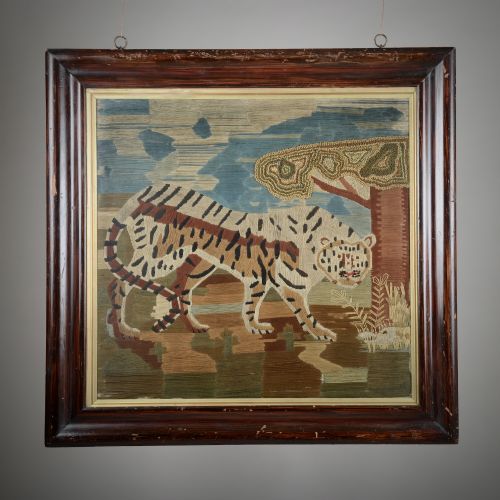
Stitching a tiger entirely in wool required immense patience before the frame could finally hang on the wall.
Distinguishing quality
Quality in these pieces rests upon the crispness of the timber carving and the complexity of the needlework. Pieces featuring detailed wool work or elaborate framing demonstrate superior craftsmanship compared to plain utility items.
The integrity of the timber and the preservation state of the textile determine the standing of an object. Intricate styles such as Renaissance Revival or Arts and Crafts display higher design ambition than standard vernacular examples.
The Dark Wood Tapestry Frame Glossary
- Needlework
- Stitched ornamentation executed on a fabric ground using yarn or thread. It forms the primary decorative surface on many framed textile panels and screens.
- Stretcher
- A wooden frame designed to hold canvas or fabric taut during the stitching process or for final display. This ensures the textile remains flat and even.
- Firescreen
- A standing panel placed before a fireplace to block radiant heat when the hearth is unlit. Many examples incorporate framed tapestry or embroidery as a decorative feature.
- Bobbin chair
- A seating form characterised by turned wooden members resembling bobbins or spools. These chairs often date from the nineteenth century.
Dark Wood Tapestry Frame: Frequently Asked Questions
What is a dark wood tapestry frame used for?
These frames were originally built to hold canvas or linen taut while artisans worked detailed needlepoint, wool work, or embroidery by hand.
Today, they are used both as historic examples of needlecraft and as decorative wall art or furnishings within a traditional interior.
How do I date a tapestry frame?
Dating relies on identifying the timber species, the joinery techniques used in the construction, and the stylistic traits of the frame itself.
Cabinetry details from the Victorian era differ visibly from eighteenth-century work or later Arts and Crafts pieces.
Are the textiles original to the frames?
Most pieces maintain their period needlework or textile fragments, which typically date from the eighteenth to the early twentieth century.
The materials span wool, silk, and canvas stitched with pictorial or floral designs appropriate to each era.
How should I care for historic needlework?
Historic textiles and wooden frames require protection from direct sunlight and excessive moisture to prevent fading and timber warping.
Gentle dusting with a soft brush helps maintain the surface without damaging delicate wool or silk threads.