


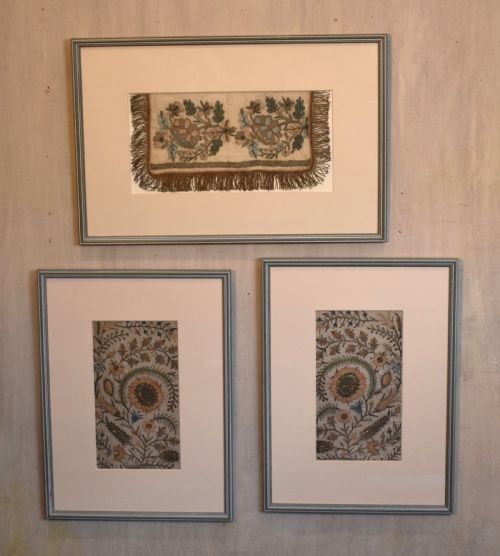


Historic Needlework Picture
Historic needlework picture works of art bring centuries of hand-stitched craft and domestic history straight onto your wall.
Historic Needlework Picture
A historic needlework picture represents textile art created across several centuries, spanning from the seventeenth century through the nineteenth century. These wall art pieces capture domestic skill, traditional sampler patterns, and courtly scenes executed by hand. When exploring this selection, a buyer encounters framed textile art alongside needlework samplers and embroidered panels.
The objects on this page bridge multiple eras, including Georgian and Victorian periods, alongside specific dates such as seventeen hundred and eighteen forty-seven. Forms range from octagonal gilt wood frames enclosing silk embroidery to oak frames housing tapestry work. Each piece offers a distinct window into historical stitchwork traditions.
How historic needlework picture pieces were made
Makers utilised natural textiles as a foundation, working primarily with linen, wool, and silk thread to build detailed compositions. These threads formed intricate figurative scenes, domestic alphabets, and decorative motifs stitch by stitch. The resulting textile works required immense patience and precise hand-eye coordination from the maker.
Finished embroideries and tapestries required structural protection, leading makers to mount them within wooden surrounds such as walnut and oak, often finished with gold leaf. Glazing with glass was applied to shield delicate silk and wool threads from dust and environmental degradation. These period frames complete the physical construction of the wall art.
Historic Needlework Picture Retail Price Guide 2026
Typical asking prices for historic needlework picture among the pieces listed under this phrase on Sellingantiques today, from the lower quarter to the upper quarter. They describe what is for sale here now, not the wider market.
Listings feature periods spanning the seventeenth, eighteenth, and nineteenth centuries, incorporating Georgian and Victorian styles alongside framed textile art forms.
What varies in quality across historic needlework picture examples
The standard of execution in needlework pictures depends heavily on the fineness of the thread work and the complexity of the stitch types employed. Finer silk embroidery and dense tapestry weaving require advanced technical skill compared to basic sampler rows. The sophistication of the design composition and the clarity of the imagery dictate the upper tier of these pieces.
The preservation of the original materials and the integrity of the housing frame influence the overall standard of an example. Pieces retaining their early glass, original wooden frames, and stable textile grounds command greater appreciation. Natural ageing affects materials differently, making the physical survival of vibrant silk threads a key differentiator.
The Historic Needlework Picture Glossary
- Needlework sampler
- A piece of textile art created to demonstrate a maker's proficiency in various stitches and alphabets. These works frequently record names and dates, serving as historical records of domestic education.
- Tapestry
- A form of heavy textile art woven or stitched with intricate pictorial designs. These pieces often depict figurative or courtly scenes intended for display on walls or furnishings.
- Silk embroidery
- Needlework executed using fine silk threads on a textile ground to produce pictorial wall art. This technique allows for subtle shading and detailed illustrative effects.
- Gold leaf
- A very thin sheet of beaten gold applied to wooden frames for decorative enrichment. It provides a luminous border around antique embroidered panels.
- Gilt wood frame
- A wooden picture surround coated with a gold-coloured finish or gold leaf. These frames protect and enhance historic needlework compositions.
Historic Needlework Picture: Frequently Asked Questions
How old is a historic needlework picture?
These textile pieces date across multiple centuries, with examples in this category originating from the seventeenth, eighteenth, and nineteenth centuries. Specific dates and periods vary widely depending on the individual maker and style.
Makers recorded dates on certain samplers, such as the mid-nineteenth century, while other works rely on stylistic indicators from Georgian and Victorian eras for dating.
How were historic needlework pictures displayed?
Historic needleworks were traditionally mounted and framed for display as wall art in domestic interiors. Original housings often included wooden frames made from oak or walnut, sometimes enhanced with gold leaf and glass.
Framing protected delicate silk and wool threads from airborne dust and physical handling while allowing the embroidered pictures to be admired as interior decoration.
Are needlework samplers different from embroidered pictures?
Needlework samplers typically display rows of alphabets, numbers, and practice stitches created to demonstrate technical proficiency. They often record the maker's name and age alongside a specific date.
Embroidered pictures focus primarily on pictorial representations, such as courtly maidens or landscape scenes, rather than fundamental stitch exercises.
How do I care for a historic needlework picture?
Preserving these antique textiles requires keeping them away from direct sunlight to prevent the fading of natural silk and wool threads. Stable indoor humidity levels protect the fragile fabric grounds from degradation.
Maintaining the original glass and frame shielding ensures the embroidery remains protected from physical disturbance and dust accumulation over time.