
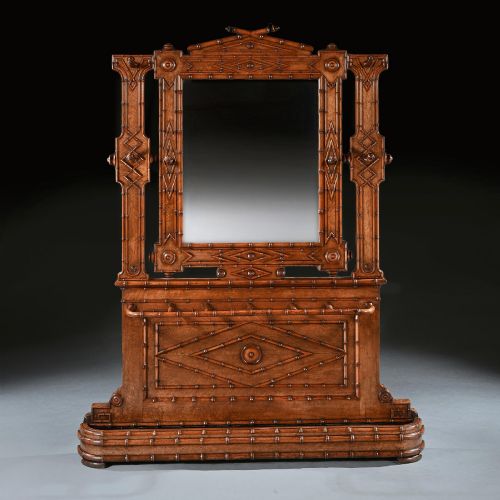
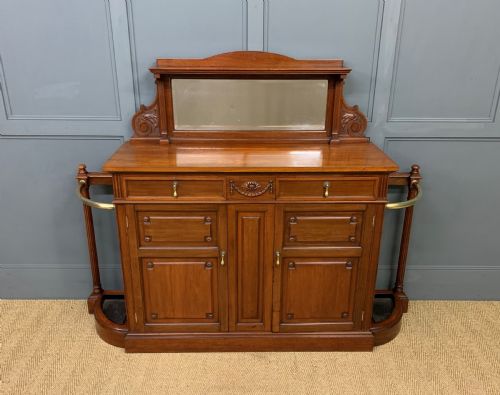
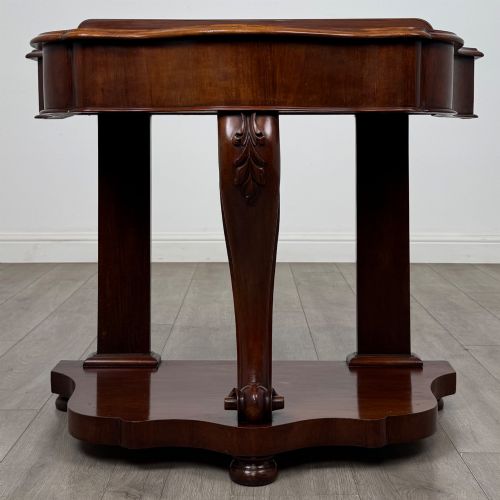
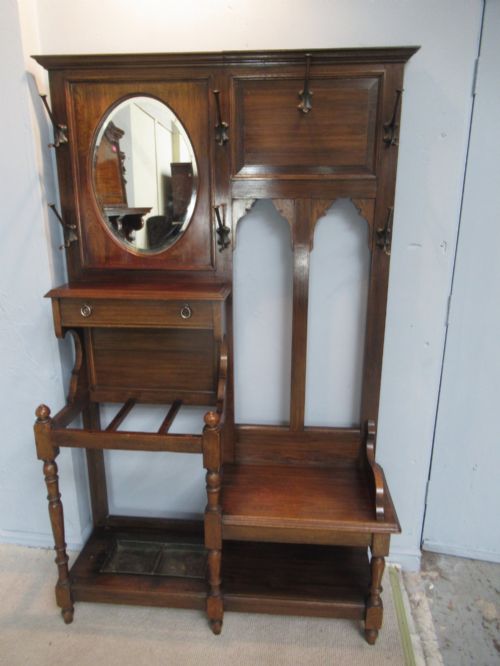
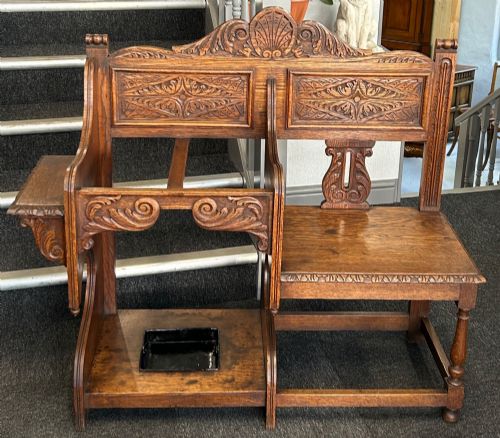
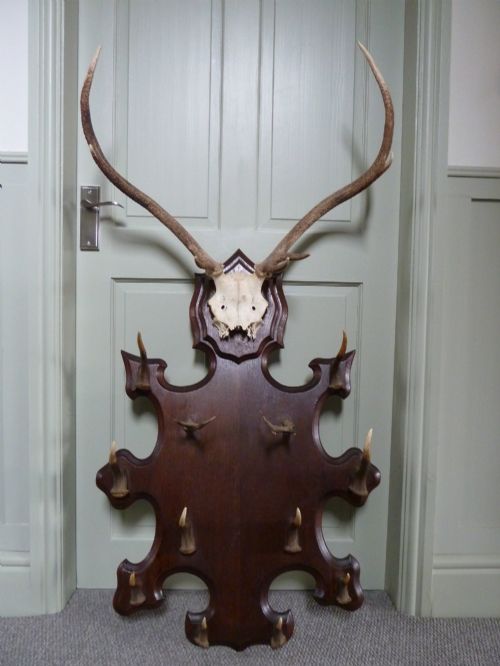
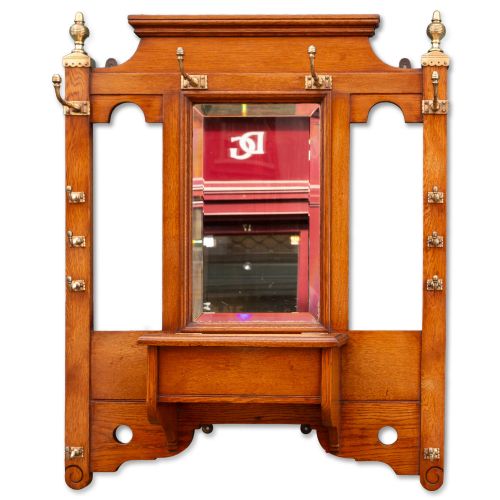
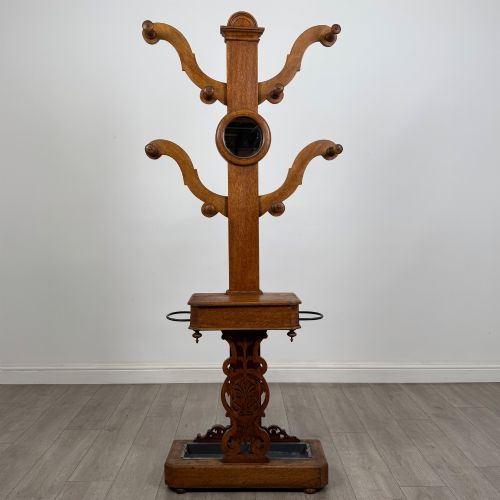
Victorian Carved Hall Stand
When you set out to acquire a victorian carved hall stand, you are choosing a commanding piece of entrance furniture designed to greet visitors and organise everyday outerwear.

Victorian Carved Hall Stand
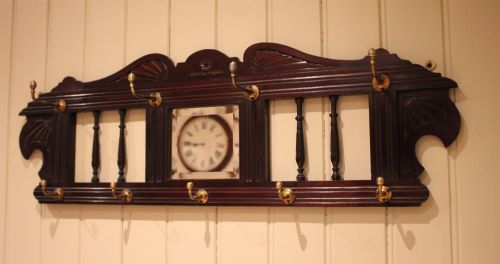
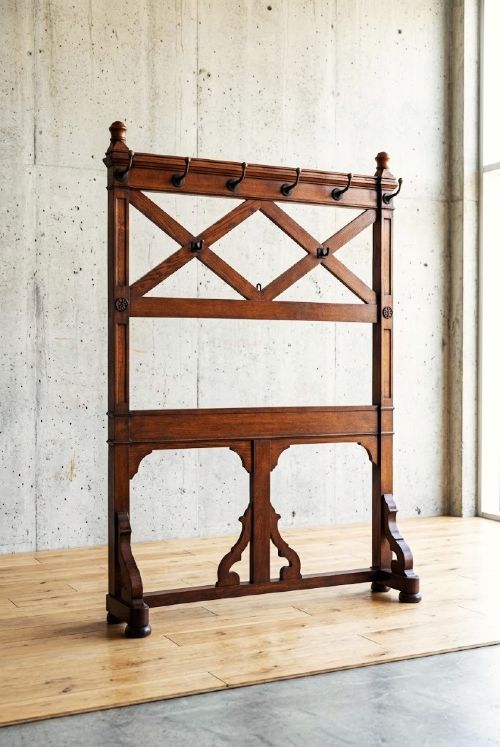
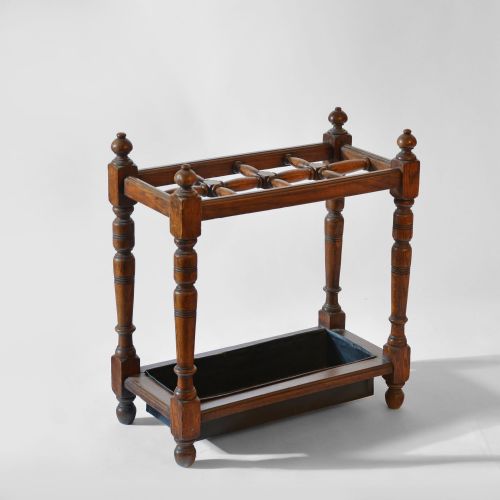
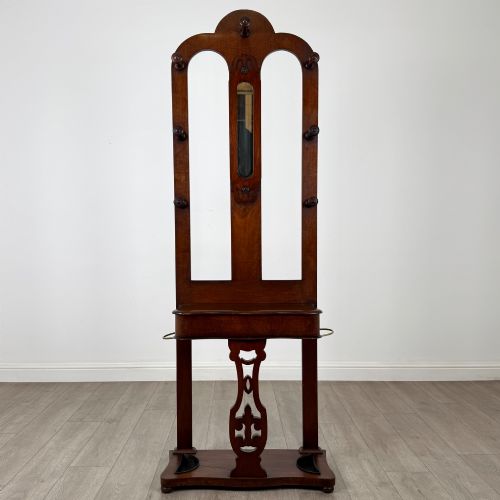
A victorian carved hall stand serves as the focal point of a traditional hallway, combining utility and robust ornamentation. These pieces typically integrate coat hooks, hat storage, umbrella wells, and frequently a central mirror alongside a glove drawer or small bench.
The versions most commonly encountered on this page are constructed from solid or figured oak and mahogany, often displaying elaborate carving such as Green Man motifs or Gothic Revival tracery. Originating predominantly from the nineteenth century, they reflect the Victorian priority for imposing, multi-functional hallway furniture.
How They Were Made
Cabinet makers utilised dense hardwoods like oak, walnut, and mahogany, selecting timbers capable of supporting heavy brass or iron coat hooks and mirrored backplates. Construction relied on sturdy mortise and tenon joinery to withstand the daily weight of winter garments and walking sticks.
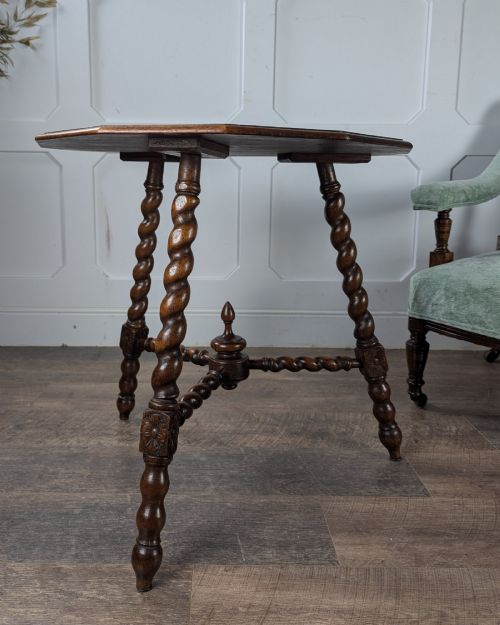
Surface enrichment involved deep hand carving, turning techniques like barley twist supports, and occasionally applied brass hardware or integrated marble drip trays for umbrellas. Carvings frequently featured naturalistic foliage, heraldic knights, or mythological figures rendered with high relief.
Listings feature oak, mahogany, walnut, and birdseye maple alongside brass and marble.
What Varies in Quality
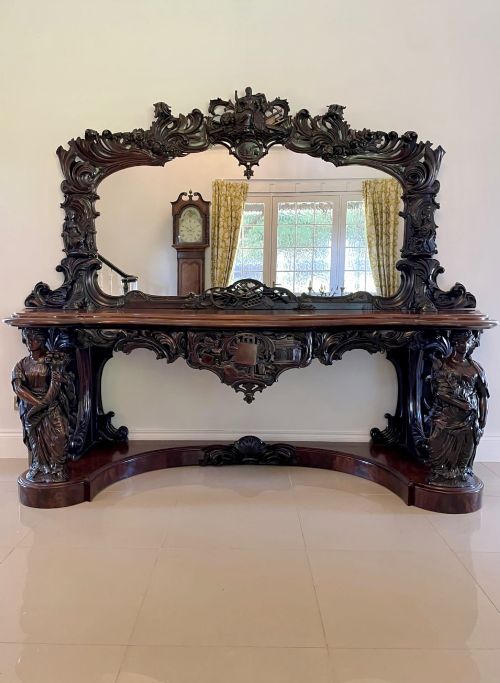
The distinction between standard production and exhibition grade pieces rests entirely on the depth and ambition of the carving. Superior examples exhibit crisp, undercut details in the foliage or figural elements, whereas lesser pieces rely on shallow, machine-roughed ornamentation.
Shoolbred & Co.·J. Parker of Woodstock·William Whiteley
The Victorian Carved Hall Stand Glossary
- Green Man
- A sculptural architectural ornament depicting a human face emerging from or entwined in foliage. This motif symbolises rebirth and appears frequently carved into nineteenth-century oak furniture.
- Gothic Revival
- A design style drawing inspiration from medieval architecture and ecclesiastical forms. Pieces in this style often feature pointed arches, tracery, and heavy structural proportions.
- Barley Twist
- A turning technique producing a rope-like helical twist along the length of a furniture leg or column. It gained popularity during revival periods referencing seventeenth-century joinery.
- Japonisme
- The influence of Japanese art and aesthetics on Western design during the late nineteenth century. This movement introduced asymmetrical compositions and natural motifs to European cabinet making.
- Drip Tray
- A removable metal basin housed at the base of an umbrella stand to catch moisture from wet sticks. These inserts protect the surrounding wooden floorboards from water damage.
Victorian Carved Hall Stand: Frequently Asked Questions
Where were these stands placed?
These pieces sat directly inside the front entrance of Victorian homes. They welcomed guests and provided an immediate drop-off point for outdoor apparel.
Positioned in hallways and vestibules, they kept damp coats and walking sticks contained before visitors stepped further into the house.
How do I use one today?
Modern hallways benefit from their original purpose by utilising the brass hooks for everyday coats and scarves. The umbrella wells accommodate modern walking aids and umbrellas alike.
Mirrored backplates prove practical for a final check before leaving the house, while small ledges hold keys and post.
What is Black Forest carving?
This distinct style originates from Central European woodworking traditions, frequently depicting realistic animals such as bears integrated into the furniture frame. The carvings render fur and muscular detail with striking naturalism.
In hall stands, these carved bears often support card trays or act as umbrella retainers.