

Antique Coat and Hat Stand
When you need an antique coat and hat stand, you are looking at functional hall furniture shaped by Victorian, Edwardian, and early twentieth-century makers.

Antique Coat and Hat Stand
An antique coat and hat stand serves as a practical entryway piece, designed to hold outerwear, headwear, and frequently sticks or umbrellas in a hallway. The versions most commonly encountered on this page span the Victorian and Edwardian eras through to the 1920s and 1930s.
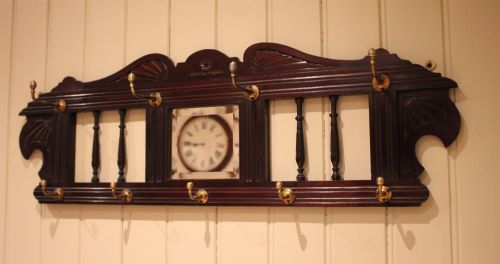
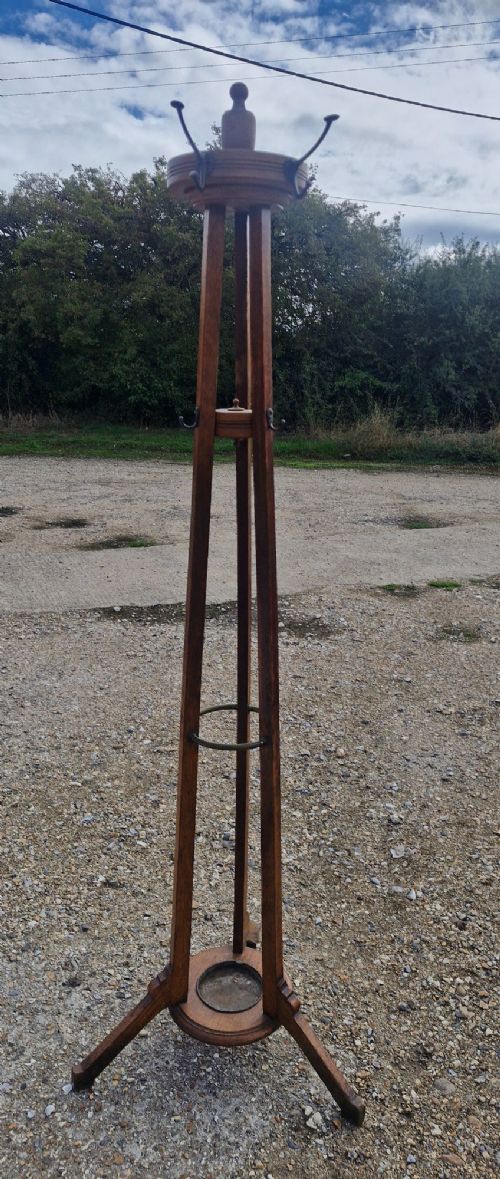
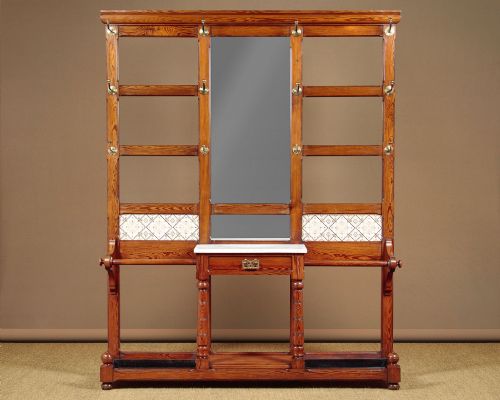
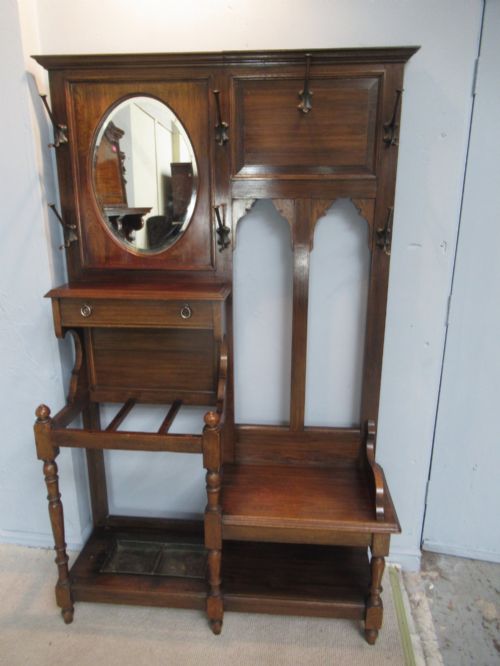
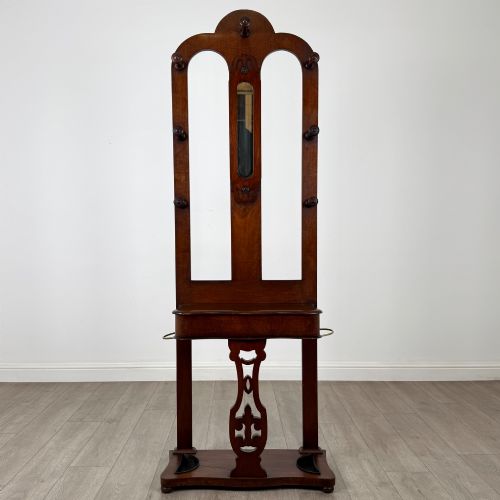
Makers produced these items in several distinct forms, including wall-mounted racks, revolving stands, and substantial floor-standing hall trees. Many incorporate mirrors, brass hooks, and metal drip trays at the base to catch water from wet umbrellas.
The materials reflect the domestic utility of their period, ranging from dense hardwoods like oak and mahogany to lighter bentwood and bamboo. Pieces often align with specific design movements such as Arts and Crafts, Aesthetic Movement, or Art Nouveau.
How they were made
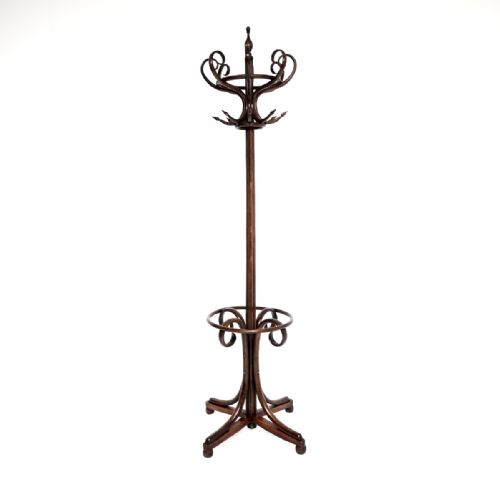
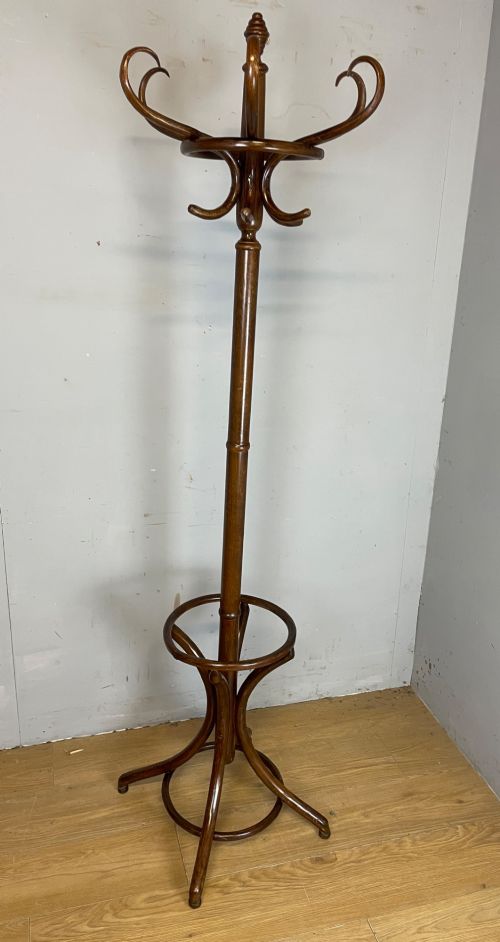
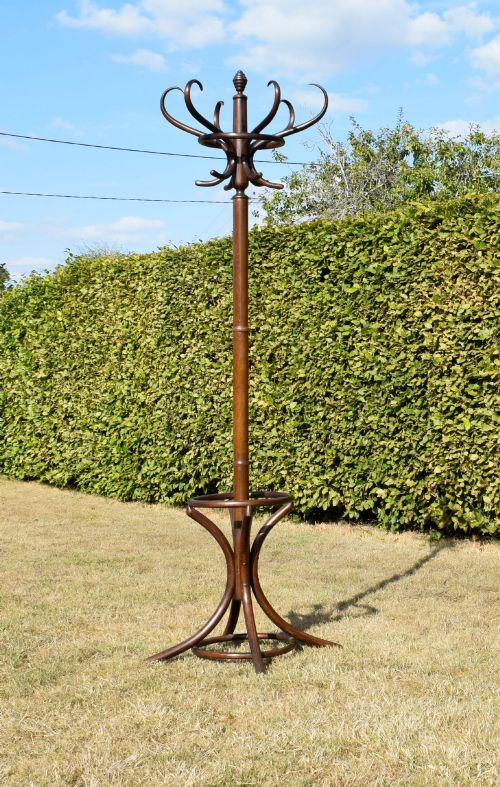
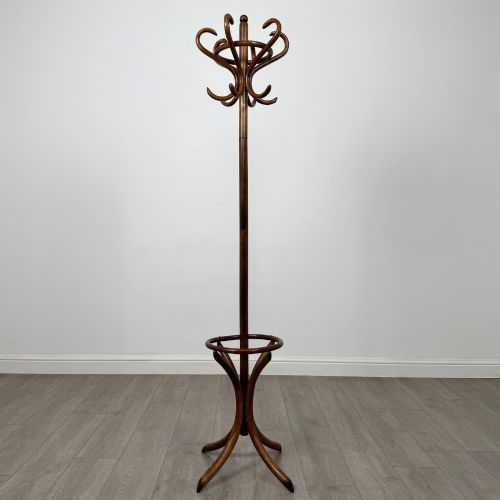
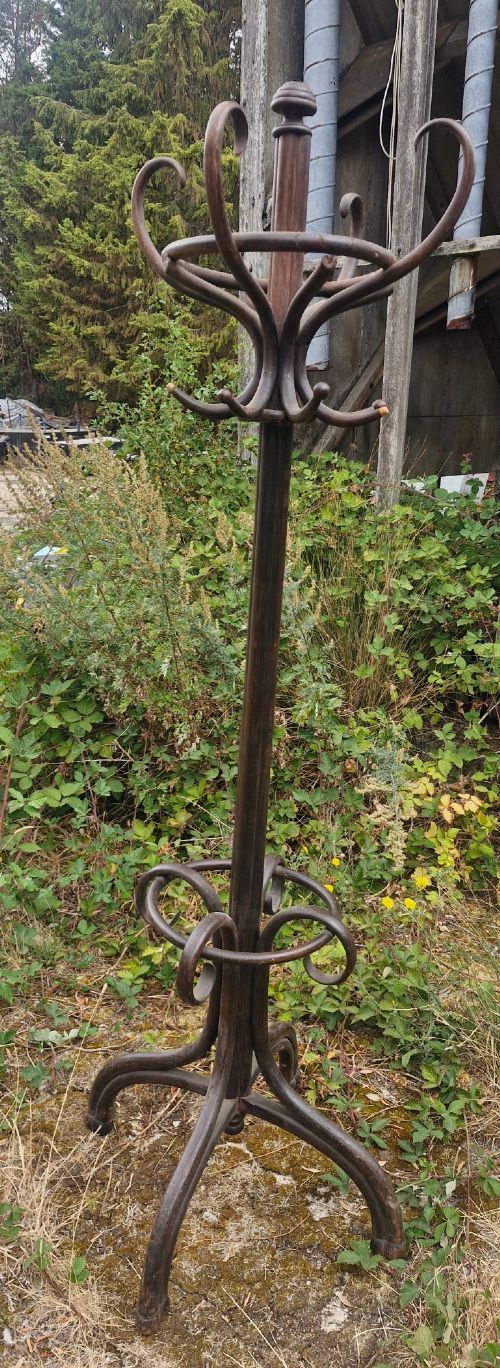
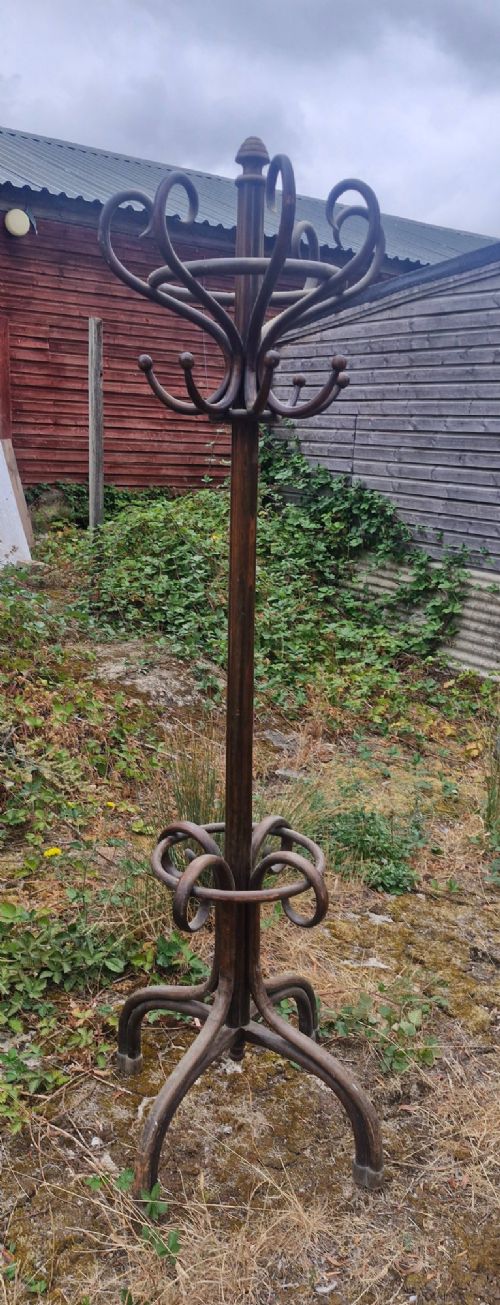
Makers utilised steam-bending techniques on beech to shape the curving components characteristic of bentwood coat stands, often associated with Thonet. This process allowed workshops to create lightweight yet resilient frames with minimal joints.
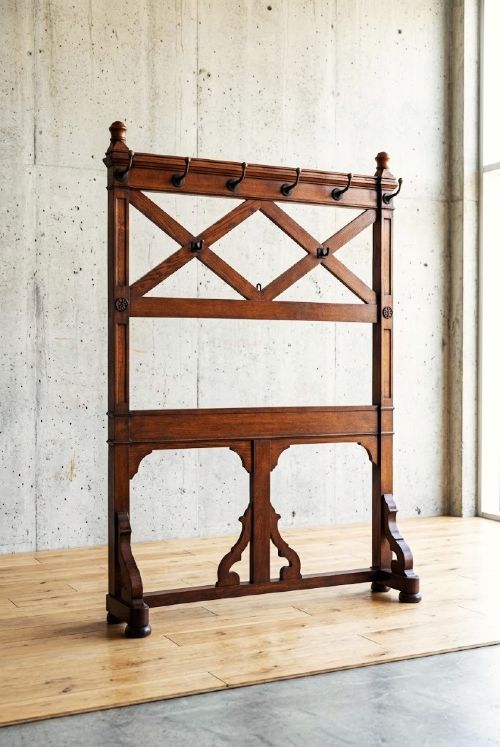
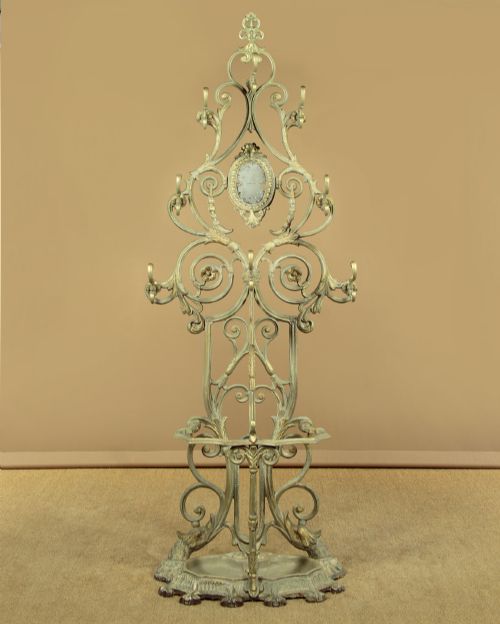
Solid timbers like oak, mahogany, and walnut formed the structure of heavier hall stands, frequently joined with traditional cabinet-making methods. Brass hooks, cast iron frames, and glass elements were integrated to provide sturdy attachment points and decorative contrast.
Listings feature oak, mahogany, beech, and metal, spanning Victorian, Edwardian, and early 20th century periods.
What varies in quality
The distinction between standard domestic hall furniture and superior examples lies in the weight of the timber and the complexity of the frame. Heavy, solid oak or mahogany construction combined with cast brass hardware indicates a higher grade of manufacture.
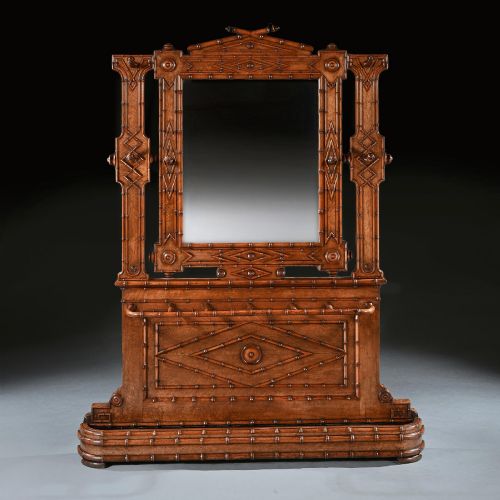
Makers who incorporated carved detailing, bevelled mirrors, or specialised rotating mechanisms for revolving hat racks produced pieces intended for grander entrance halls. Simpler beech bentwood stands represent functional utility, while detailed Aesthetic Movement bamboo or faux bamboo frames show greater artisan skill.
Thonet
The Antique Coat and Hat Stand Glossary
- Bentwood
- Wood shaped by exposure to steam, allowing manufacturers to create smooth curves without traditional joinery. This technique defined the production of numerous hall stands and hat racks.
- Demi-lune
- Half-round in shape, designed to sit flat against a hallway wall to save floor space. These half hall stands often included umbrella trays.
- Hall tree
- A freestanding piece of hallway furniture combining coat hooks, a hat rack, a mirror, and a seat or umbrella stand. They appeared in various woods throughout the nineteenth and twentieth centuries.
- Faux bamboo
- Wood carved or painted to resemble natural bamboo, popular during the Aesthetic Period and Japonisme craze. It was frequently utilised in French hall stands.
- Drip tray
- A metal or ceramic tray fitted at the base of a stand to catch water from wet umbrellas and walking sticks. These trays protected wooden floors in entrance halls.
Antique Coat and Hat Stand: Frequently Asked Questions
What is a bentwood coat stand?
A bentwood coat stand is a piece of hallway furniture created by steaming wood until pliable and bending it into curved shapes. These stands typically feature multiple prongs for hats and coats arranged around a central pillar.
They gained popularity in the late nineteenth and early twentieth centuries, prized for their lightweight strength and slender profiles. Many examples feature a half-round design or revolving top sections.
How do I use an antique hall stand?
Antique hall stands are designed for entranceways and corridors to organise outdoor garments. The upper hooks accommodate hats and coats, while lower sections often hold walking sticks and umbrellas.
Many pieces include integrated mirrors for checking appearance before leaving the house. Placing them in a hallway provides practical storage while retaining period character.
How do I date an Edwardian coat stand?
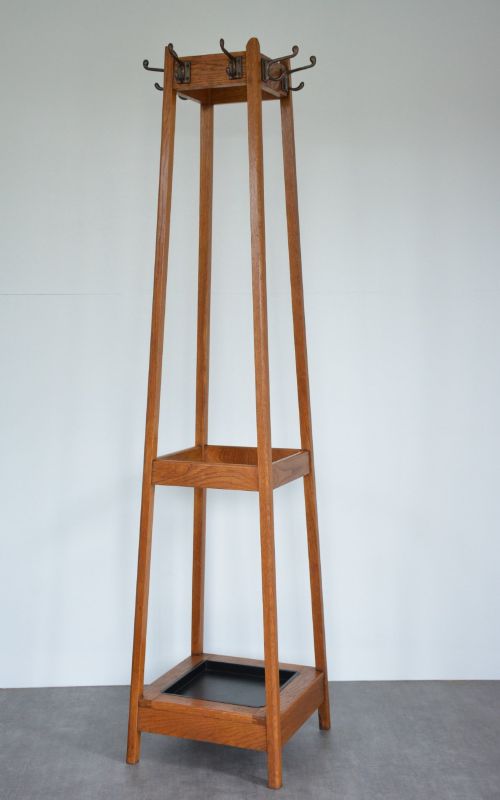
Edwardian coat stands generally date from the period between 1901 and the First World War. They frequently exhibit lighter oak or beech construction influenced by the Arts and Crafts movement.
Characteristics often include simple geometric lines, brass hooks, and functional umbrella wells with metal trays. Unlike heavier Victorian examples, Edwardian versions tend to display brighter wood tones.
What is the difference between a hall stand and a coat rack?
A hall stand is a freestanding piece of furniture that rests on the floor, frequently combining coat hooks, hat racks, mirrors, and umbrella holders. They are substantial items meant for an entrance hall.
A coat rack is typically a linear board fitted with hooks designed to be mounted directly onto a wall. Wall-mounted racks save floor space while serving the same basic storage purpose.