


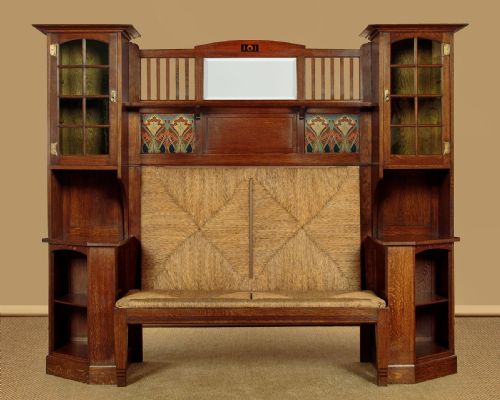


Antique Entry Hall Tree
An antique entry hall tree sets the tone of a house the moment the front door opens, offering a practical place for hats, coats and umbrellas.

Antique Entry Hall Tree
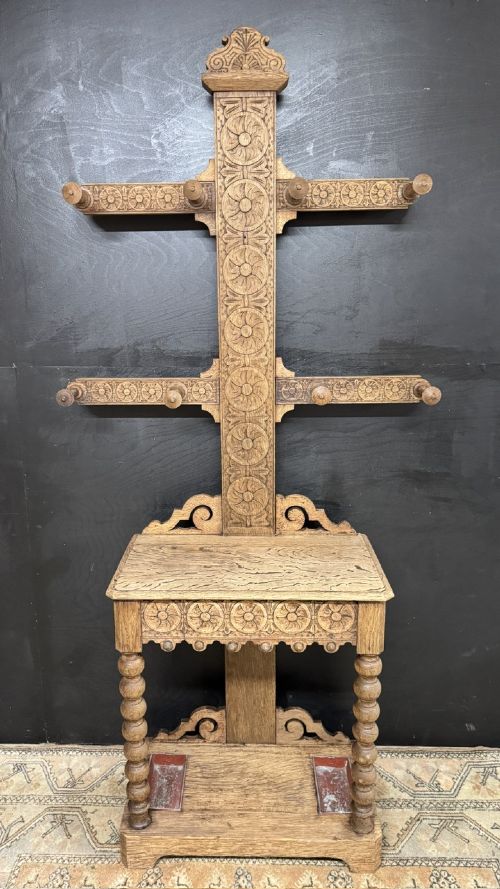
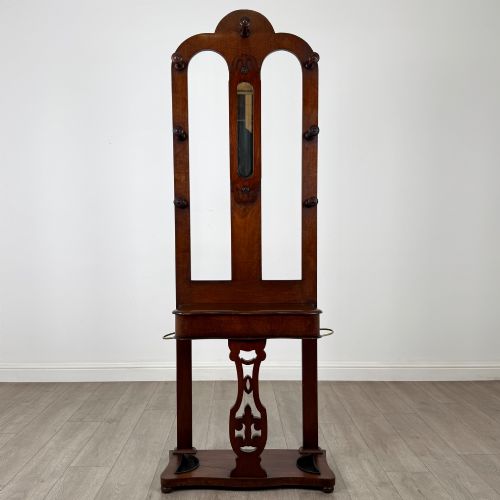
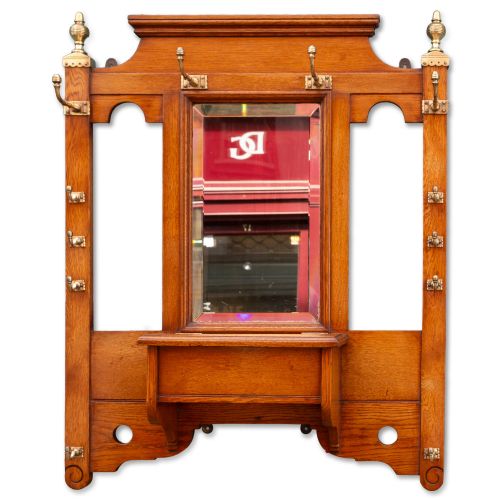
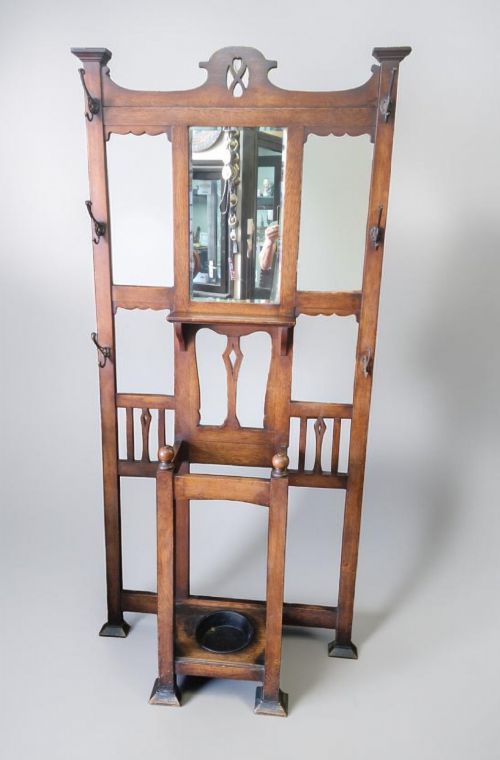
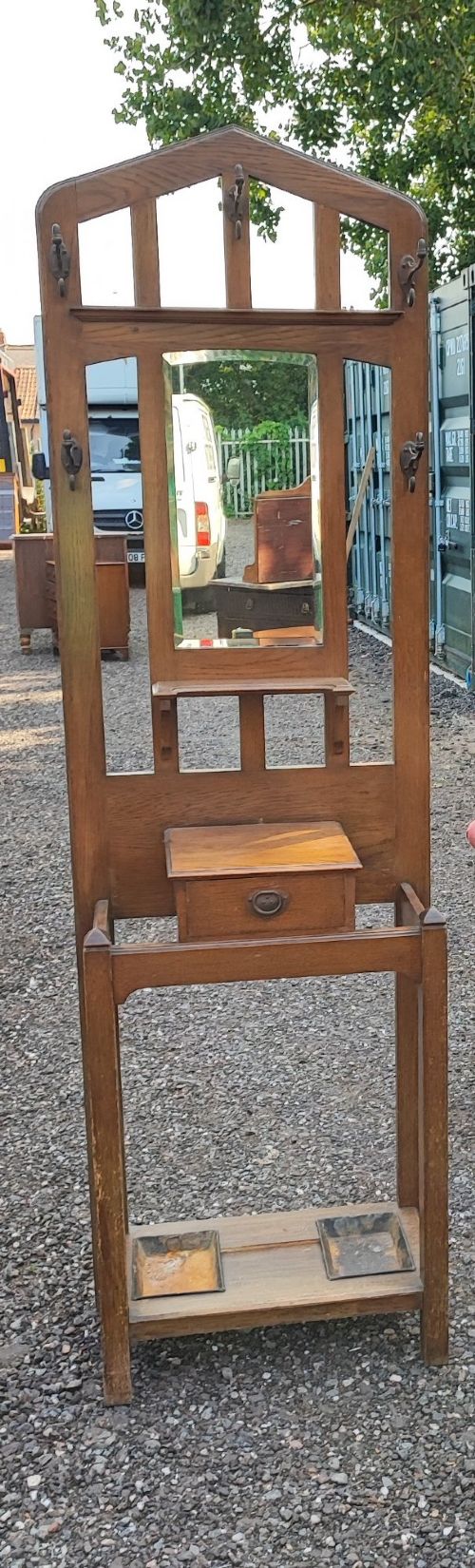
When you search for an antique entry hall tree, you encounter large structural furnishings designed for the reception rooms and hallways of period homes. These pieces combine mirror glass, umbrella storage, and hooks for outerwear into a single vertical framework.
The versions most commonly met on this page date from the Victorian and Edwardian eras, constructed predominantly from oak or mahogany. Many examples incorporate a central bench seat with a lift-up compartment, while others remain narrow and open at the floor.
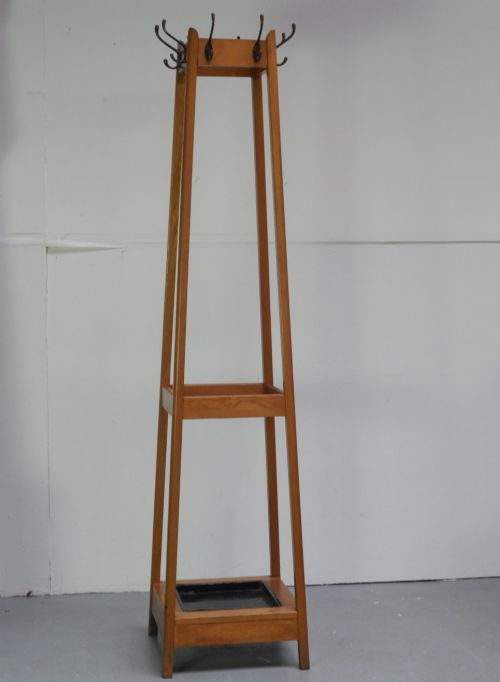
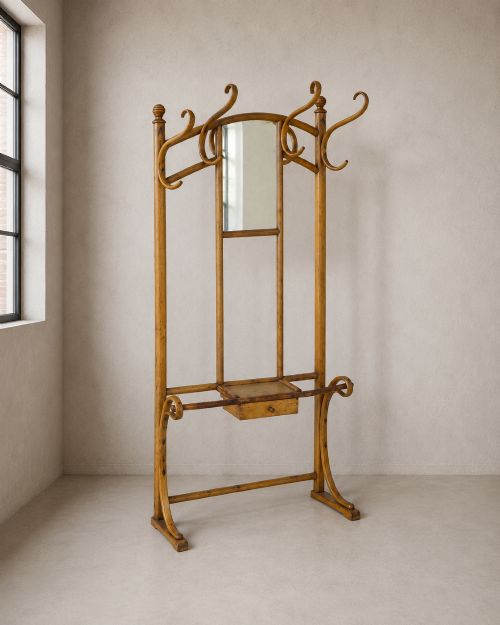
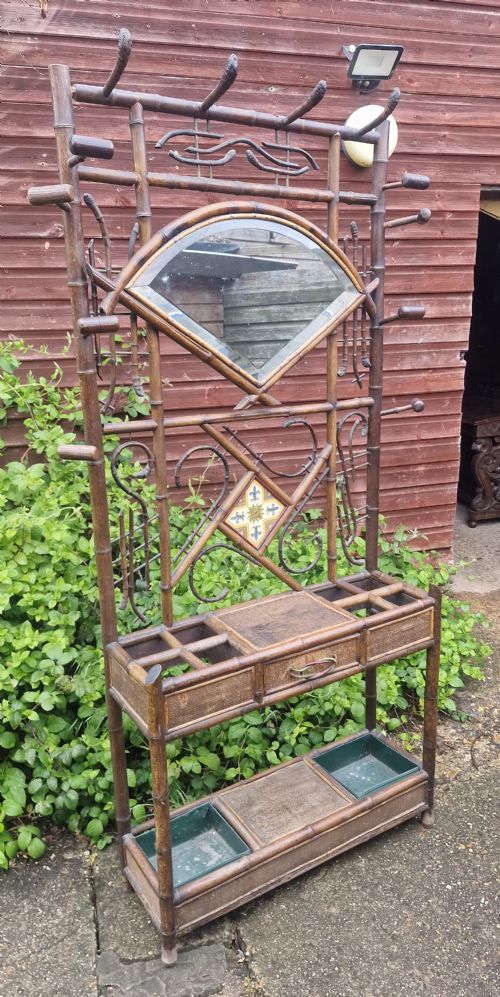
The selection ranges from substantial carved timber monuments to lighter bentwood, bamboo, and metal variations. Wall-mounted coat racks and mirrors also appear alongside freestanding hall stands and hall benches.
How they were made
Cabinet makers utilised dense hardwoods such as oak and walnut, often applying deep relief carving, turnings, and pegged joinery. Mahogany and pine also form the structural framework of many surviving examples.
Cast iron and brass provide the sturdy hooks, drip pans, and umbrella rings that endure daily use, while wrought iron appears in later twentieth-century pieces. Bentwood and bamboo techniques offer lighter, curved structural silhouettes for alternative aesthetic tastes.
Bevelled glass mirrors are secured into carved wooden surrounds, and marble inserts frequently top the umbrella wells or lower shelf units to resist moisture from wet gear.
Antique Entry Hall Tree Retail Price Guide 2026
Typical asking prices for entry hall tree among the pieces listed under this phrase on Sellingantiques today, from the lower quarter to the upper quarter. They describe what is for sale here now, not the wider market.
Listings feature oak, mahogany, walnut, and pine construction alongside cast iron, brass, and bentwood.
What varies in quality
The distinction between tiers of quality rests on the depth of the timber carving and the architectural ambition of the design. Elaborate figural details, such as carved Greenman masks or panelled backboards, separate standard utilitarian hall stands from grand country house commissions.
Material selection and hardware integrity dictate the longevity and presence of each piece. Heavy cast iron components, original brass drip trays, and thick marble inserts elevate the craftsmanship above simpler domestic iterations.
Coalbrookdale·Thonet
The Antique Entry Hall Tree Glossary
- Bentwood
- Timber softened by steam and bent into curved structural forms. This technique created light, resilient coat stands and hall furniture popular around nineteen hundred.
- Hallstand
- A freestanding hallway furnishing combining coat hooks, a mirror, and umbrella storage. These pieces organise visitors' outerwear upon entry.
- Greenman
- A sculptural architectural motif depicting a face carved with leaves and vines. This decorative detail often appears on Victorian oak hall furniture.
- Drip pan
- A metal tray placed at the base of a stand to catch water from umbrellas. These trays protect timber floors from moisture damage.
- Chinoiserie
- European artistic style reflecting Chinese decorative motifs. Bamboo hall stands frequently adopted these exotic aesthetic patterns.
Antique Entry Hall Tree: Frequently Asked Questions
What is an antique entry hall tree?
An antique entry hall tree is a large freestanding hall furniture piece designed to hold coats, hats, and umbrellas upon entering a home. Most versions integrate a mirror and a small bench seat.
These pieces served as the primary organizational hub in Victorian and Edwardian hallways, welcoming guests and storing daily outdoor apparel.
How do I choose the right size?
Measure your hallway width and ceiling height carefully before selecting a piece. Many surviving stands are exceptionally tall and heavy, requiring substantial wall clearance.
Narrower options and wall-mounted coat racks suit compact spaces, whereas large carved oak stands demand wide corridors to balance their visual weight.
How do I care for the wood?
Dust the timber regularly with a soft dry cloth and apply a quality beeswax periodically to nourish the grain. Avoid placing hall stands directly against heat sources to prevent timber splitting.
Inspect the metal drip trays and empty them regularly to protect the lower wooden framework from standing water.
How do I date an entry hall tree?
Examine the primary materials, hardware styles, and decorative motifs to determine the period. Heavy carved oak with Gothic or Renaissance Revival details typically points to the nineteenth century.
Lighter oak, bamboo, or bentwood constructions often indicate later Arts and Crafts or Edwardian manufacture around nineteen hundred.