



Carved Wooden Coat Tree
Carved wooden coat tree designs combine function and sculpture, serving as practical hallway furniture that holds hats, coats, and umbrellas.

Carved Wooden Coat Tree
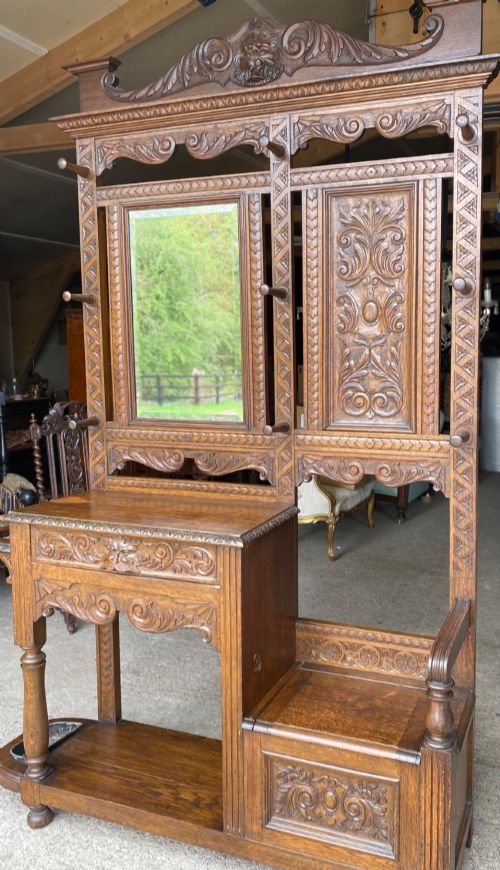
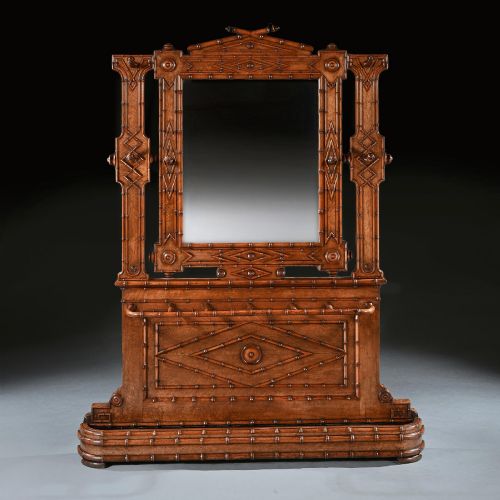
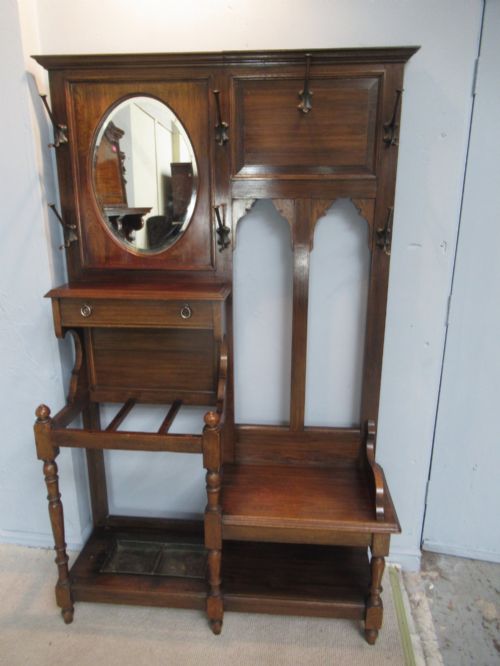
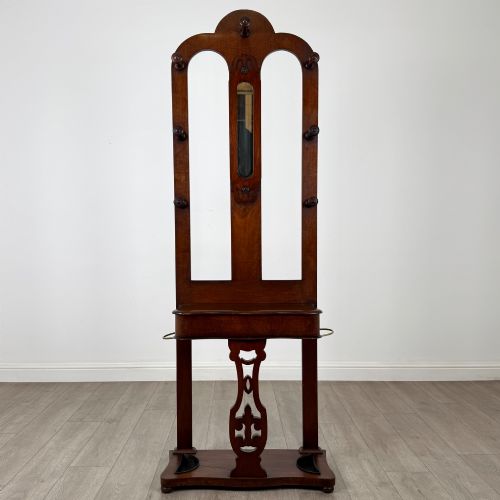
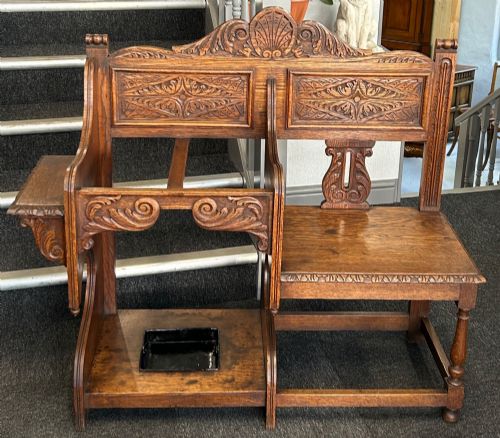
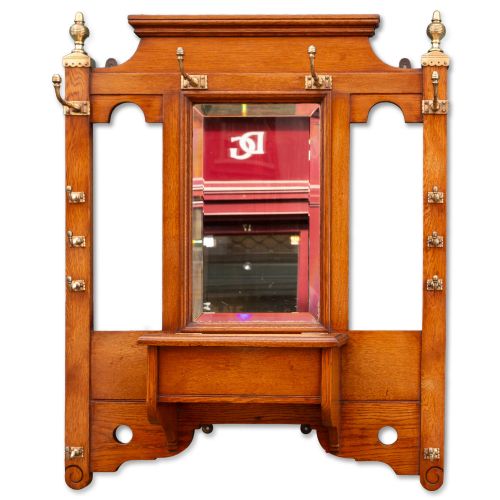
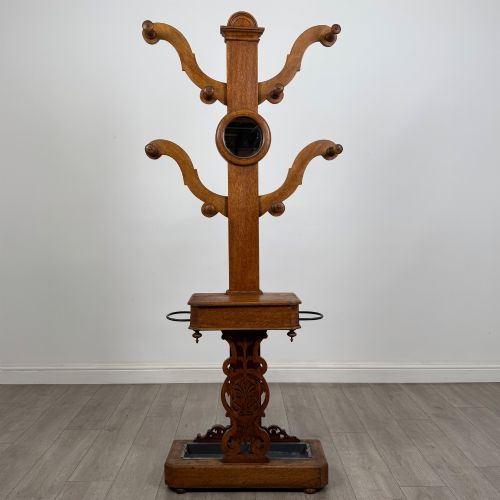
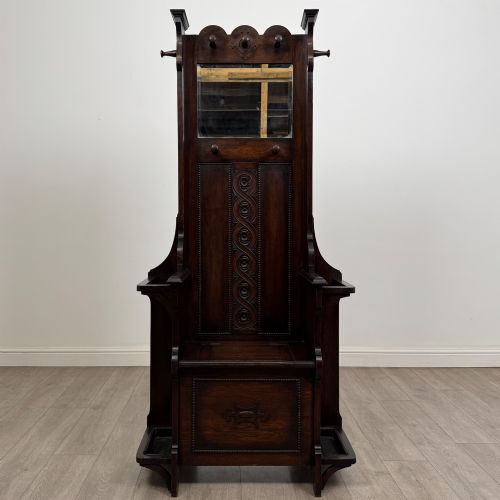
A carved wooden coat tree search brings up hall stands, coat stands, coat racks, and hall seats from the Victorian, Edwardian, and Regency eras. These items served busy hallways in large houses by organising outdoor garments and accessories.
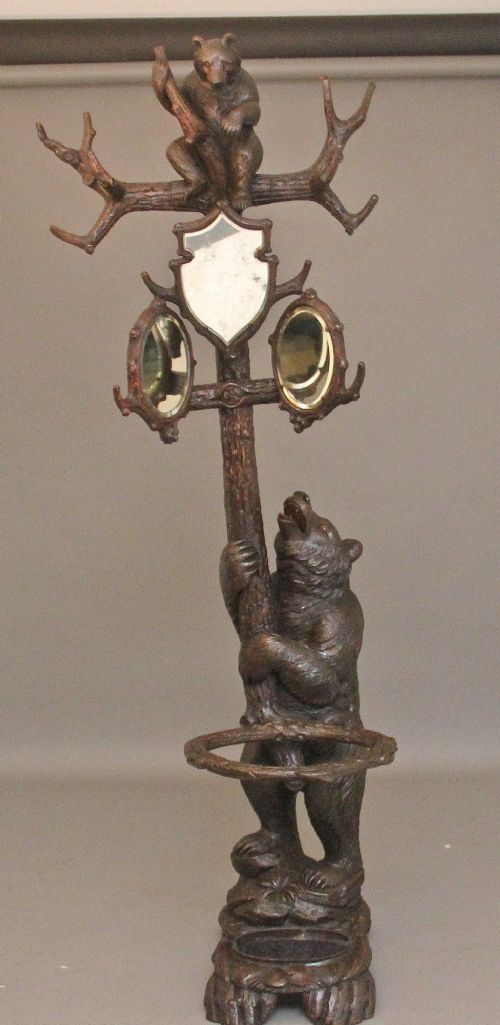
The version most commonly met on this page is the Victorian or Edwardian oak hall stand, often incorporating a mirror and umbrella wells. Examples span the nineteenth century into the early twentieth century, including turn of the century pieces and specific styles like Black Forest carvings.
Makers utilised various timber types, principally oak and mahogany, alongside walnut and birdseye maple. Functional additions such as brass hooks, marble drip trays, and glass elements appear across multiple forms.
Materials and construction methods
Cabinetmakers constructed these pieces primarily from solid hardwoods like oak, mahogany, and walnut, applying carved decoration by hand. Timber selection dictated the weight and durability of the framework, which needed to support heavy winter garments.
Carving techniques defined specific stylistic movements, seen in the deep relief animal figures of Black Forest pieces and the geometric or natural motifs of Arts and Crafts and Aesthetic Movement examples. Workshops integrated brass coat hooks, iron fittings, and bevelled mirror plates into the wooden structures.
Several pieces feature carved wooden bears standing guard with hooks for hats.
Distinctions in construction and design
Quality separates pieces through the depth and precision of the hand carving, particularly in sculptural works depicting animals or Greenman motifs. Superior examples feature well-figured timbers such as golden oak or birdseye maple rather than plain secondary woods.
The integration of secondary materials like intact marble inserts, heavy cast brass hardware, and original bevelled mirror glass elevates a piece. Structural integrity also matters, as taller hall stands require robust joinery to remain stable under daily use.
The Carved Wooden Coat Tree Glossary
- Hall stand
- A tall piece of hallway furniture combining coat hooks, a mirror, umbrella storage, and frequently a bench seat. These items anchored the entrance hall of period homes.
- Black Forest
- A style of wood carving originating from the Swiss and German mountain regions, characterised by naturalistic animals such as bears and foxes rendered in high relief. Carvers used native timbers like lime and walnut.
- Aesthetic Movement
- A late nineteenth-century design style emphasising visual beauty over narrative content, often drawing influence from Japanese art. Pieces from this movement display clean lines and exotic materials.
- Greenman
- A sculptural motif representing a human face surrounded by or sprouting from foliage, symbolising rebirth. This architectural and furniture detail appears frequently in late Victorian oak carving.
Carved Wooden Coat Tree: Frequently Asked Questions
What is a hall stand?
A hall stand is a piece of furniture designed for an entrance hallway to hold outdoor wear.
It typically combines coat hooks, a hat shelf, a mirror, and umbrella stands into one single unit.
How do I identify Black Forest carvings?
Black Forest carvings are recognised by their highly detailed, naturalistic depictions of animals, particularly bears, carved from solid wood.
These pieces often feature three-dimensional figures integrated into the structure of coat stands and hall furniture.
Where should I place a coat stand?
Coat stands and hall stands suit entrance halls, vestibules, or large landings where guests arrive.
They provide accessible hanging space for everyday coats while anchoring the hallway decor.
What woods were used in these pieces?
Cabinetmakers predominantly used oak and mahogany for structural stability and durability.
Walnut, birdseye maple, and mixed carved woods also appear across Victorian and Edwardian examples.