
Carved Wooden Serving Table
A carved wooden serving table brings robust utility and classic joinery to a dining room, offering a dedicated surface for dishes and hospitality.
Carved Wooden Serving Table
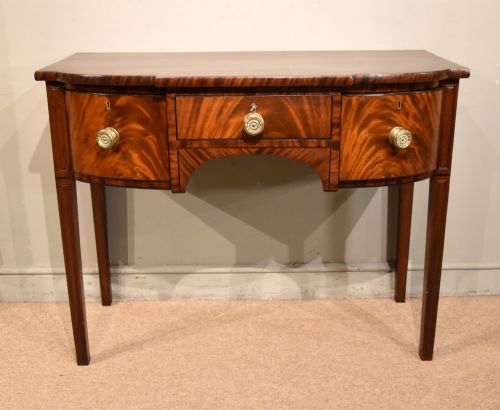
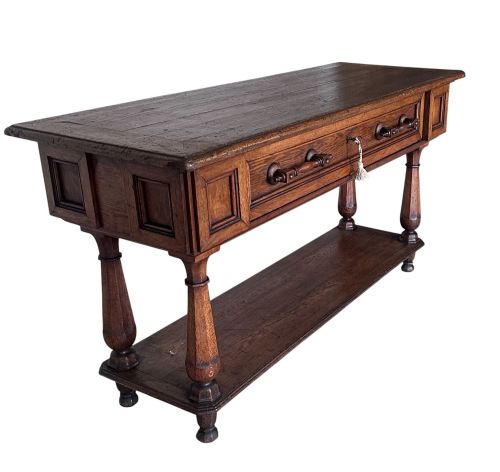
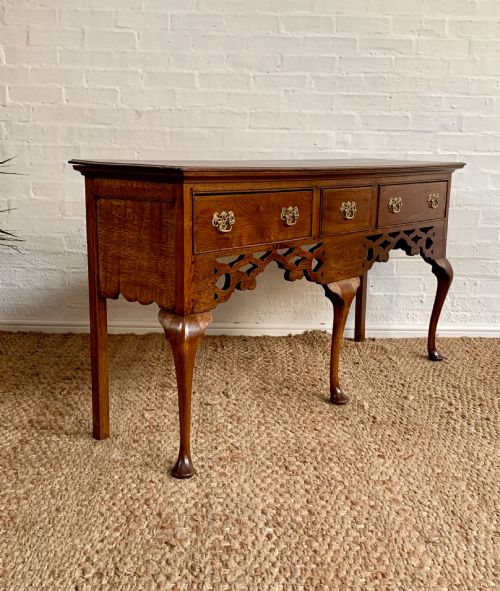
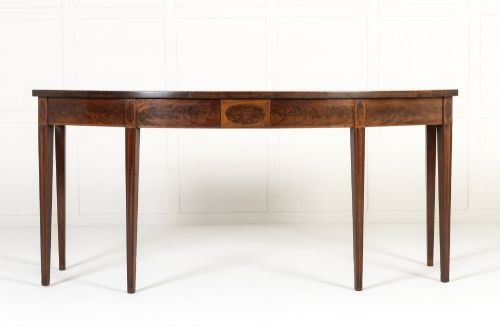
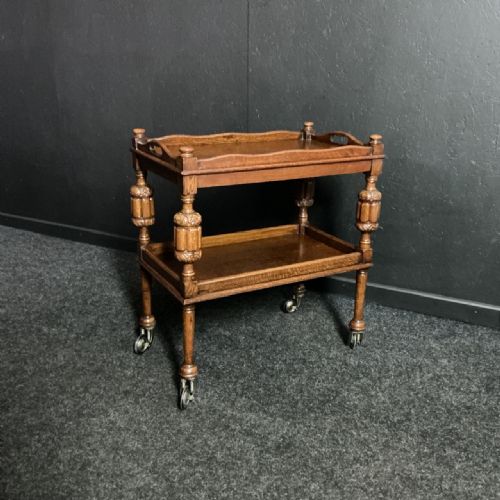
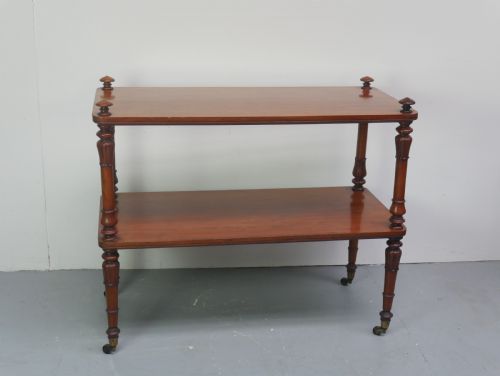
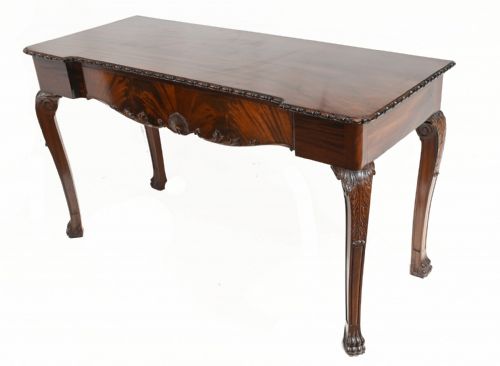
A carved wooden serving table encompasses robust oak dressers, mahogany sideboards, and occasional tray tables designed for domestic hospitality and dining. Buyers meet heavy nineteenth-century Victorian walnut buffets, Georgian mahogany servers, and vernacular oak pieces spanning the eighteenth to early twentieth centuries.
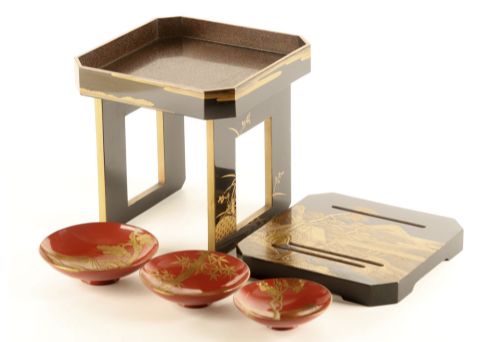
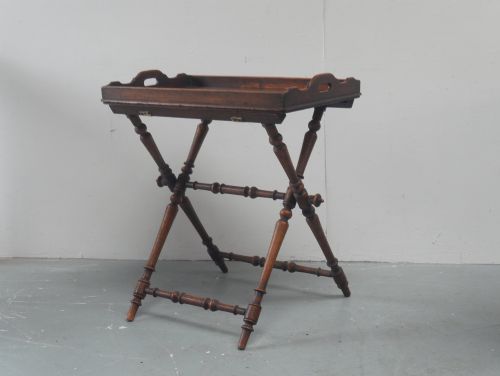
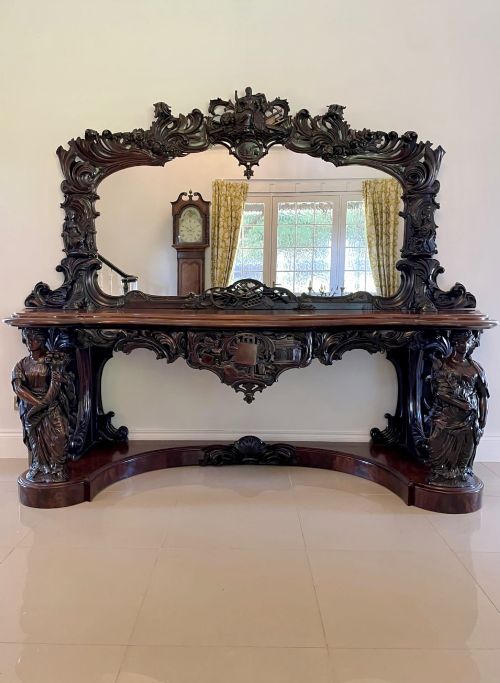
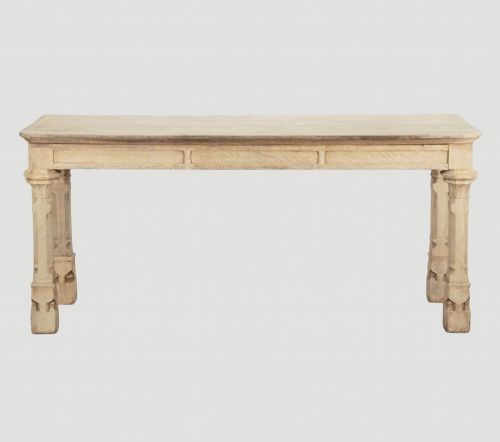
Many examples double as console tables, hall tables, or butlers trays on folding stands, reflecting the versatile domestic roles these items occupied. Scottish and English oak versions sit alongside French provincial models and occasional Japanese lacquer or sake tables.
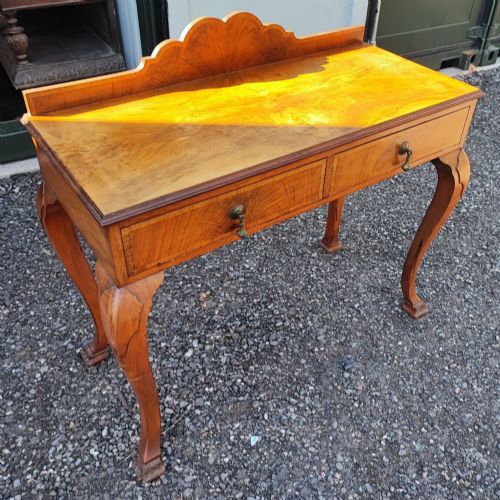
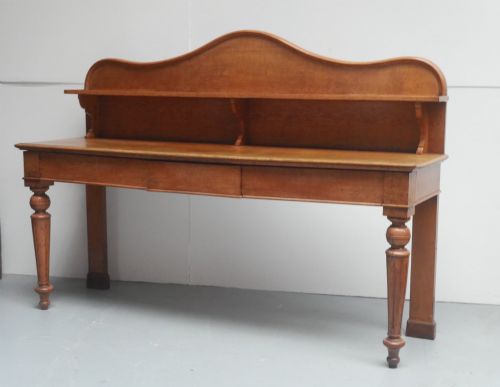
The prevailing form prioritises a long, flat wooden top supported by turned or carved legs, occasionally accompanied by drawers, low undershelves, or mirror backs. Buyers searching for a carved wooden serving table find robust regional craftsmanship adapted for dining spaces and hallways.
Materials and construction
Makers relied primarily on native hardwoods such as oak, mahogany, and walnut, selecting timber for density and grain pattern. Oak provides the structural backbone for seventeenth-century and country house pieces, while mahogany and walnut dominate formal nineteenth-century designs.
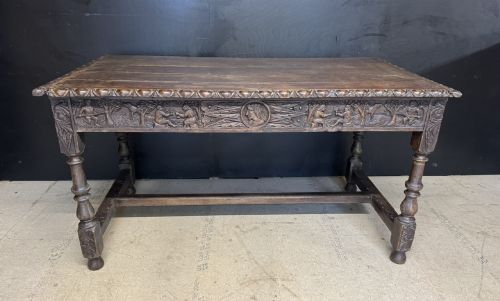
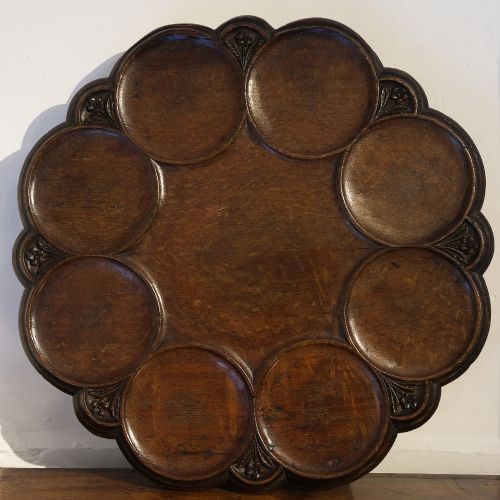
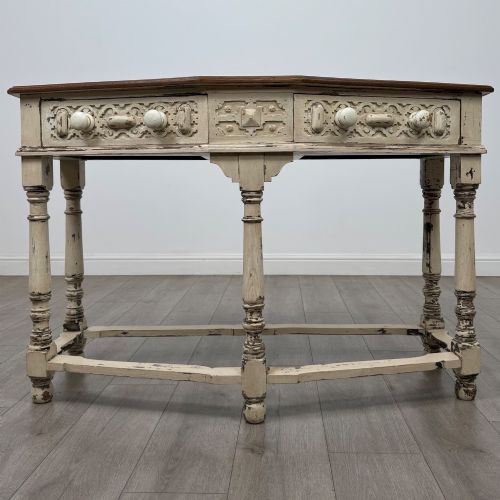
Carving was executed directly into the solid timber or onto applied mouldings, displaying deep relief work, linenfold patterns, or classical revival motifs. Secondary materials include brass handles, hinges, and occasional painted surfaces applied to pine or hardwood carcasses.
Assessing craftsmanship and execution
Quality rests in the crispness of the hand-carved detail and the selection of timber figures, such as pollard oak or figured mahogany. Superior pieces exhibit tightly fitted mortise and tenon joints, original hardware, and uncompromised structural integrity in the legs and frame.
The distinction between a standard utility item and an exhibition-grade piece lies in the depth of the carving and the proportional balance of the design. Workshops that employed skilled carvers produced items with fluid relief work that contrasts sharply with mechanical or shallow later decoration.
Gillows
The Carved Wooden Serving Table Glossary
- Butlers tray
- A portable wooden tray with panelled sides, often fitted with cut-out carrying handles, designed to sit upon a folding wooden stand.
- Buffet
- A low sideboard or serving table used for the display and service of food and drink in a dining room.
- Console table
- A table designed to be fixed or placed flat against a wall, frequently supported by carved legs or decorative brackets.
- Dresser base
- The lower section of a traditional kitchen or dining room storage unit, featuring cupboards or drawers beneath a heavy wooden top.
- Lazy susan
- A revolving circular tray placed on a table to assist in passing food and condiments across the surface.
Carved Wooden Serving Table: Frequently Asked Questions
What is a carved wooden serving table used for?
These pieces function as sturdy surfaces for laying out food, holding platters, or organising dining accessories during meals.
In modern interiors, they also serve as display consoles in hallways or living rooms for lamps and decorative objects.
How do I distinguish oak from mahogany pieces?
Oak displays a prominent, open grain with visible medullary rays and generally yields a heavy, golden-brown finish associated with earlier country styles.
Mahogany presents a tighter, reddish-brown grain that takes a high polish, typically found in formal nineteenth-century dining furniture.
Are butlers trays considered serving tables?
Yes, butlers trays mounted on folding stands function as portable serving tables designed for flexibility in entertaining.
They offer the utility of a traditional fixed console while allowing the top tray to be lifted off for clearing dishes.
How should I care for an antique wooden surface?
Protect the wood from direct sunlight and sudden humidity changes to prevent timber movement or splitting.
Apply a microcrystalline wax periodically to nourish the polish and maintain a protective barrier against moisture.