

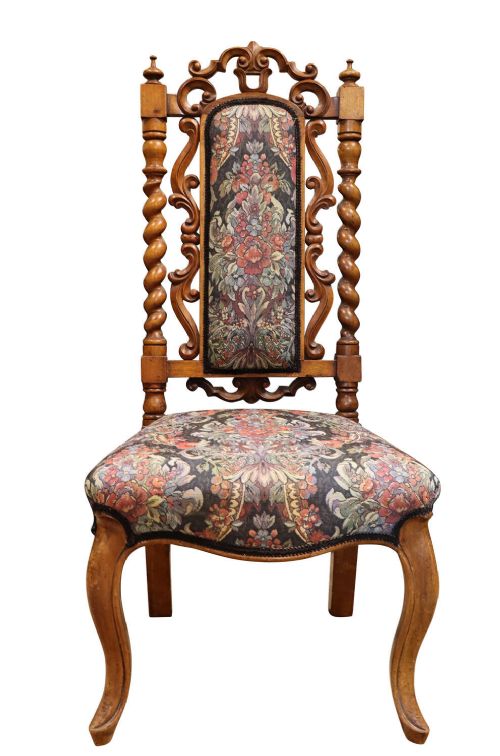


Victorian Carved Chair
A victorian carved chair brings solid nineteenth-century craftsmanship into a modern interior through rich timber and detailed ornamentation.
Victorian Carved Chair
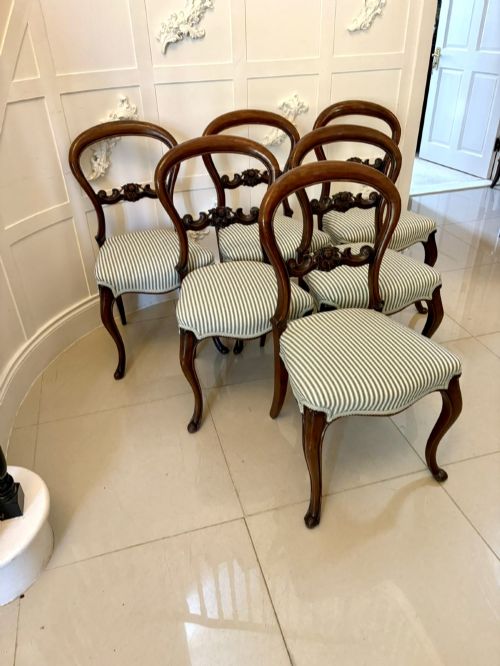
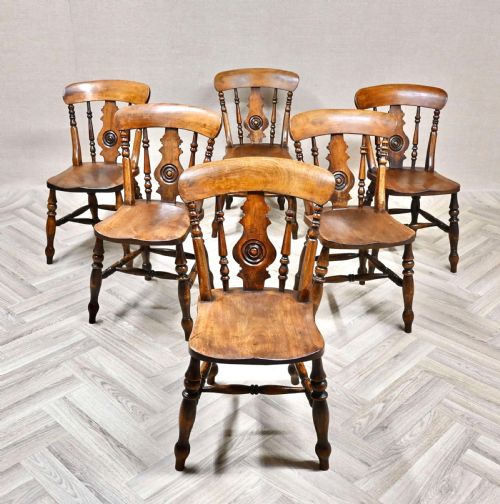
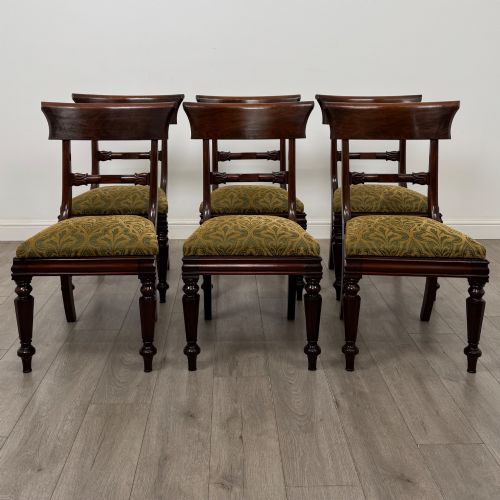
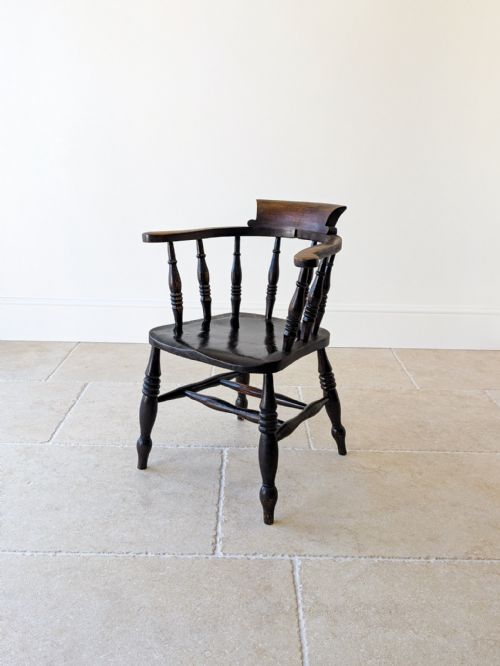
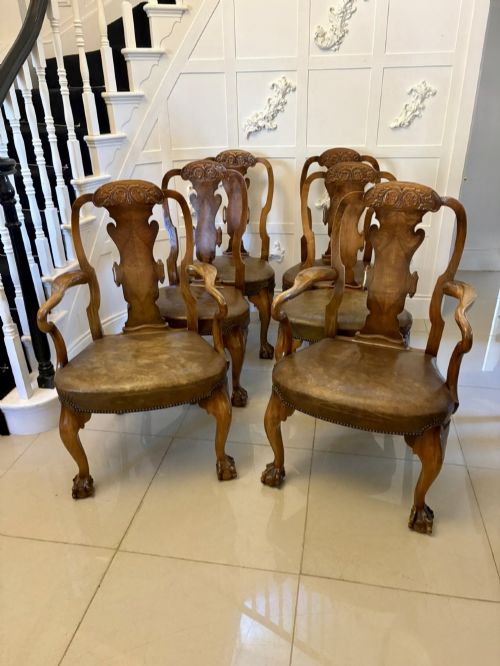
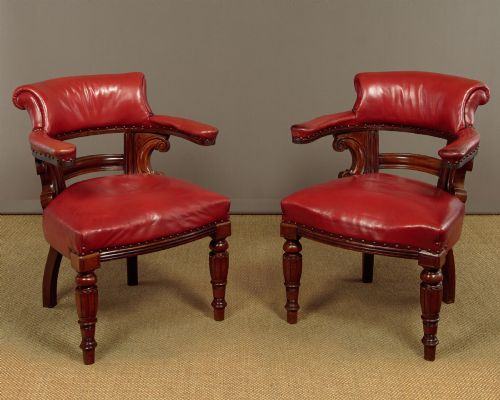
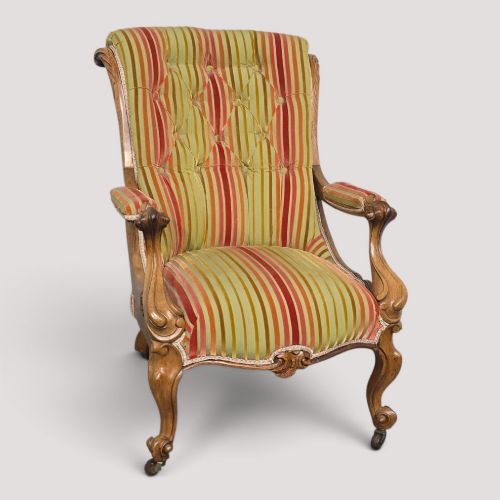
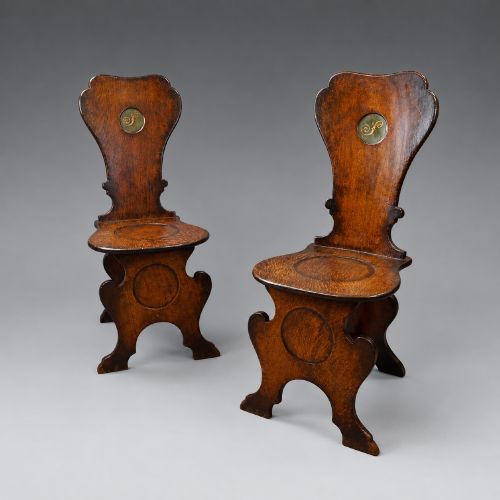
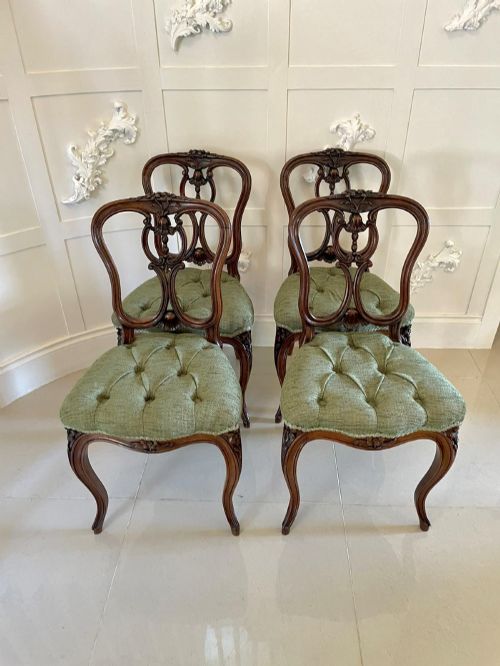
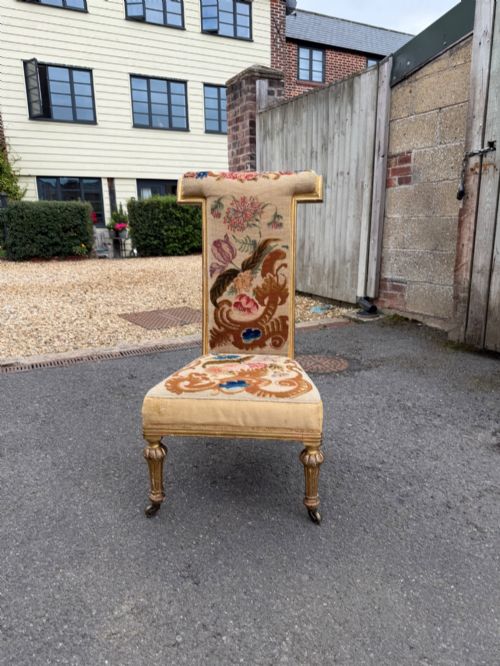
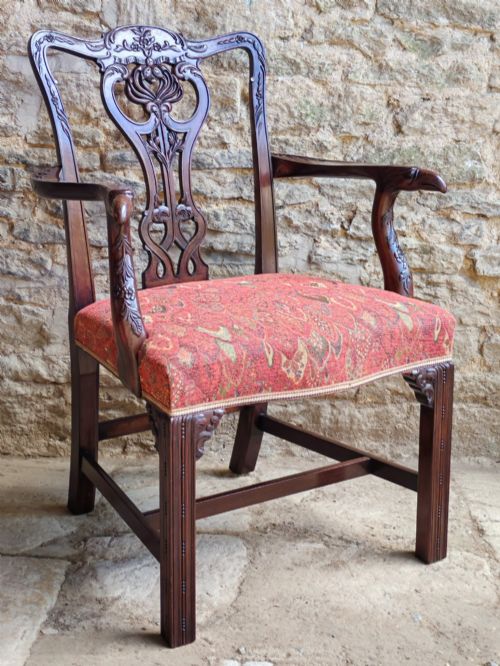
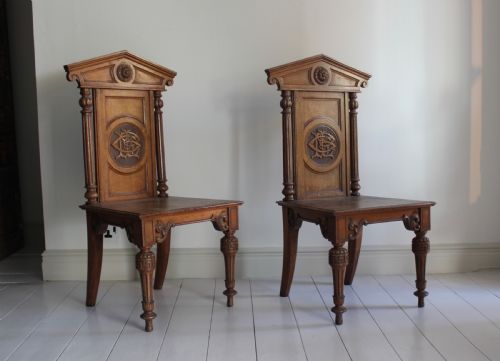
A victorian carved chair encompasses diverse seating forms ranging from robust oak hall chairs to walnut dining sets and upholstered nursing chairs. The selection spans the nineteenth century, capturing stylistic revivals including Gothic, Rococo, and Chippendale alongside vernacular Windsor and captain's chairs.
Dining chairs and side chairs appear frequently in sets, while armchairs, desk chairs, and prie-dieu items offer specialised seating. Walnut and mahogany dominate the refined parlor pieces, while elm, ash, and oak form the sturdy country and hall seating.
Materials and Construction
Timbers such as solid mahogany, figured walnut, and heavy oak provide the structural foundation, shaped with deep relief carving and applied mouldings. Joinery relies on traditional mortise and tenon methods to support heavy use across decades.
Upholstered elements incorporate horsehair stuffing, sprung bases, and coverings of leather, velvet, tapestry, or brocade, secured with brass tacks.
Victorian Carved Chair Retail Price Guide 2026
Typical asking prices for victorian carved chair among the pieces listed under this phrase on Sellingantiques today, from the lower quarter to the upper quarter. They describe what is for sale here now, not the wider market.
Certain nineteenth-century hall chairs bear secret messages carved into hidden wooden frames by long-forgotten joiners.
Markers of Distinction
The depth and crispness of the hand-carved ornamentation separate standard production from superior pieces, with crisp floral motifs or geometric strapwork indicating skilled cabinet work. Timber selection also dictates value, where highly figured walnut or dense mahogany veneers show superior grade.
Completeness of original sets and matching components heavily influence desirability, particularly for dining chairs where uniformity across a larger grouping preserves historical integrity.
Howard and Sons·Jennens and Bettridge·Warings·Turner and Son·W.A. Willcocks
The Victorian Carved Chair Glossary
- Balloon Back
- A rounded, oval-shaped chair back resembling a hot air balloon, popular in mid-nineteenth-century walnut and mahogany seating. This shape provided comfortable lumbar support.
- Sgabello
- A rigid, low-backed wooden hall chair featuring solid trestle supports rather than legs, often richly carved. These pieces historically lined grand entrance halls.
- Prie-Dieu
- A low devotional chair featuring an upper ledge for kneeling or resting arms during prayer. These items frequently feature needlepoint or tapestry upholstery.
- Gothic Revival
- A nineteenth-century design movement mimicking medieval ecclesiastical architecture through pointed arches, trefoils, and heavy tracery. This aesthetic appears frequently on oak hall and dining seats.
- Captain's Chair
- A sturdy wooden armchair featuring a rounded, low back rail supported by numerous spindles. These chairs originate from vernacular Windsor traditions.
Victorian Carved Chair: Frequently Asked Questions
How do I identify a Victorian dining chair?
Victorian dining chairs typically employ dense mahogany or walnut timbers, often featuring balloon backs, carved splats, or upholstered drop-in seats.
Stylistic cues draw heavily from earlier historical periods like Rococo or Gothic revivals, distinguishing them from simpler twentieth-century seating.
Were these chairs used for daily dining?
Many sturdy mahogany and oak sets served heavy daily use in nineteenth-century households, engineered with robust mortise and tenon joinery.
Formal parlor chairs, conversely, were built lighter and prioritized decorative carving over utilitarian comfort.
Can I mix these chairs with modern tables?
These wooden seats integrate well with contemporary dining tables, adding textural contrast through dark timber grains and antique patination.
Single armchairs or hall chairs also function effectively as standalone accent pieces in hallways or bedrooms.
What is the difference between a side chair and an armchair?
Side chairs are built without armrests, designed originally to fit compactly around a dining table or line a hallway wall.
Armchairs provide enclosed arm supports for enhanced comfort, making them suited for studies, desks, or fireside placement.