
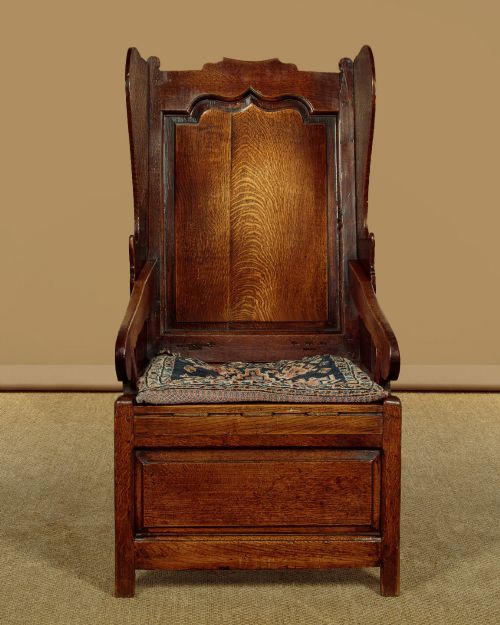
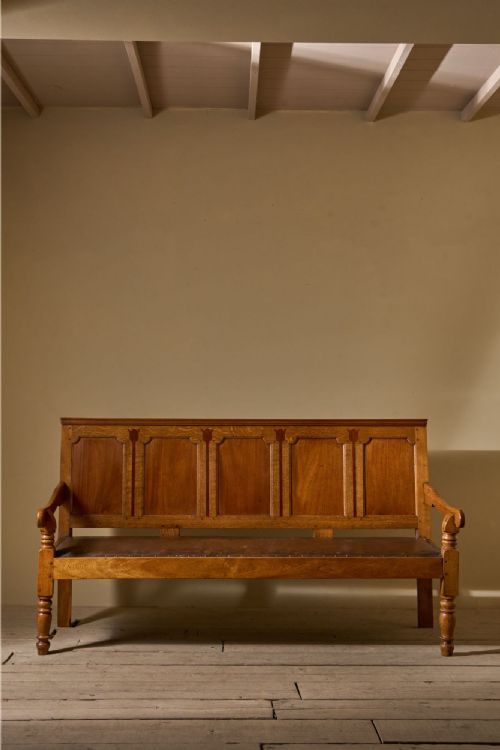
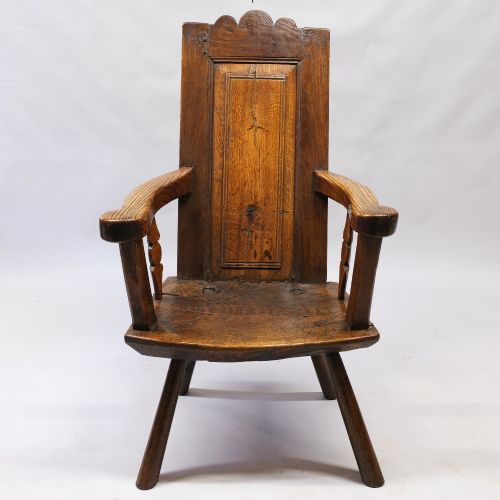
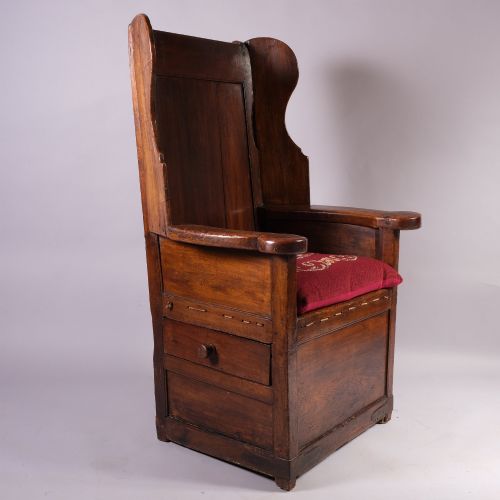
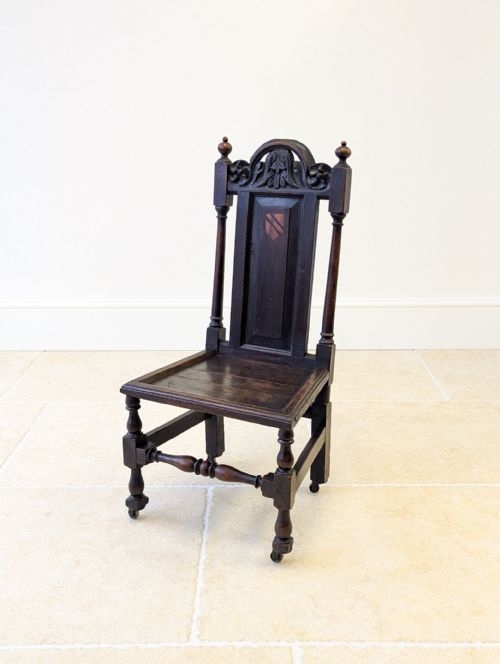
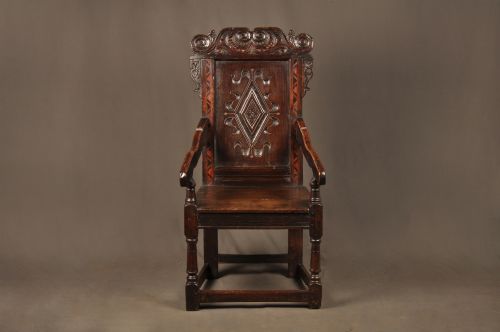
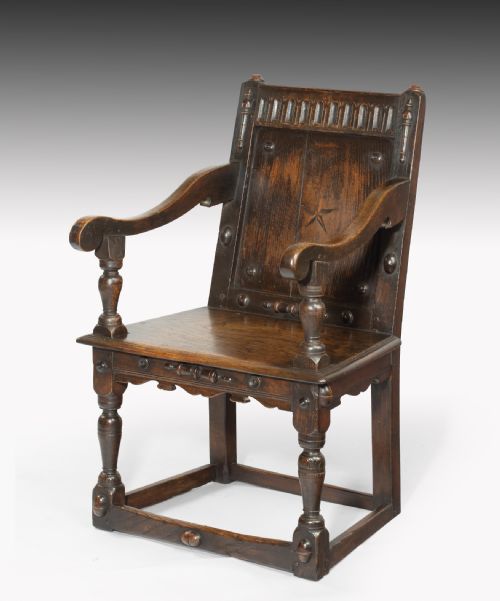
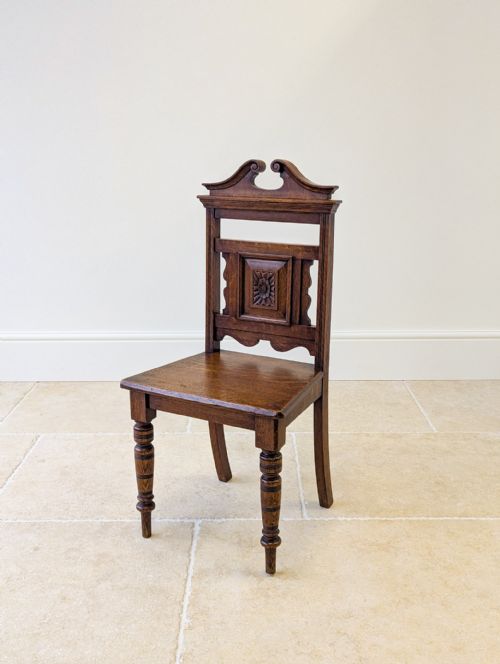
Panel Back Chair
A panel back chair is a sturdy timber seat with a solid wooden back panel, prized for its honest construction and deep historical character.
Identifying panel back chairs
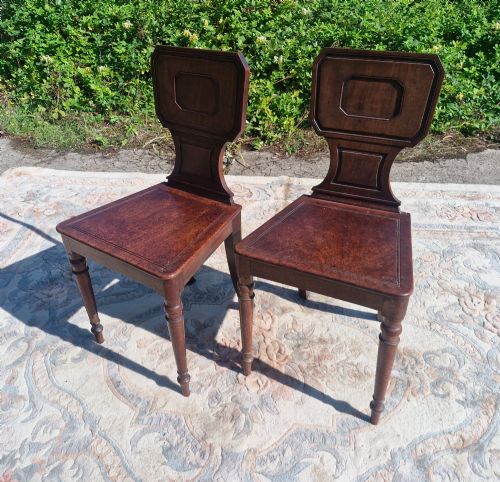
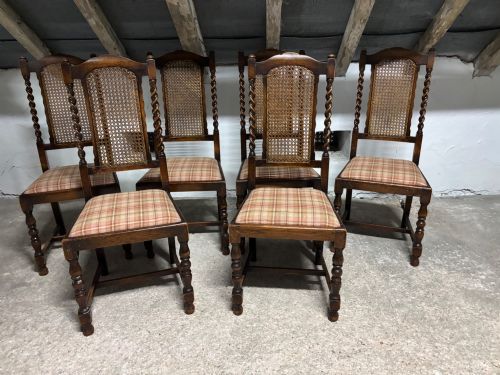
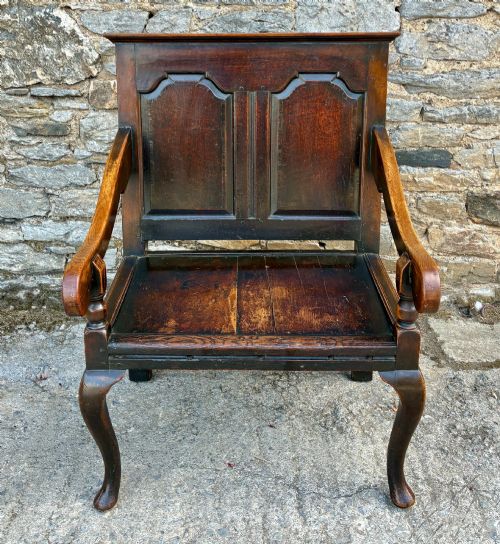
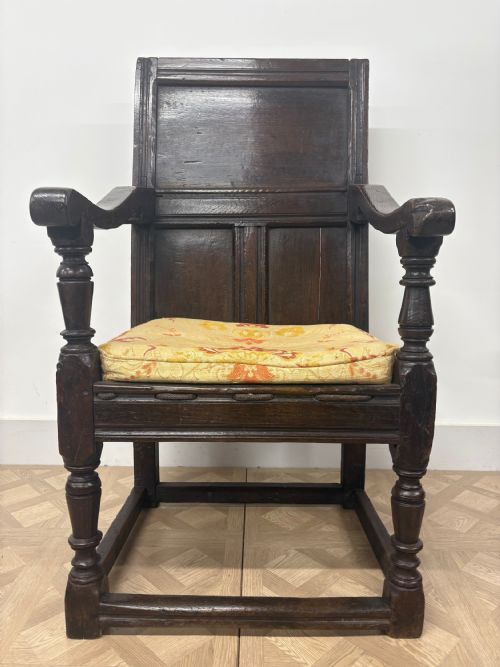
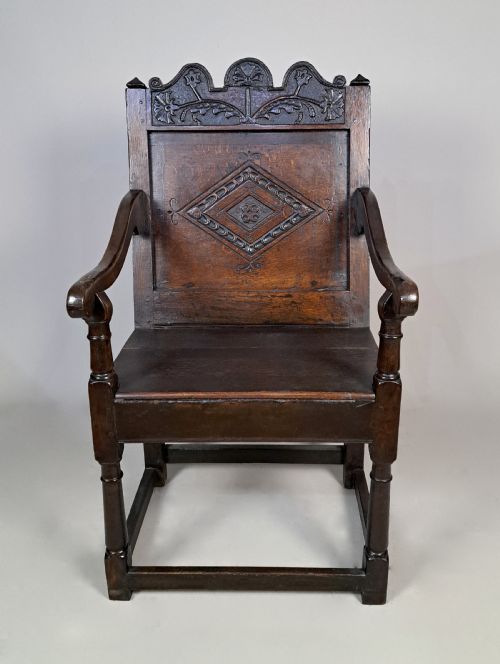
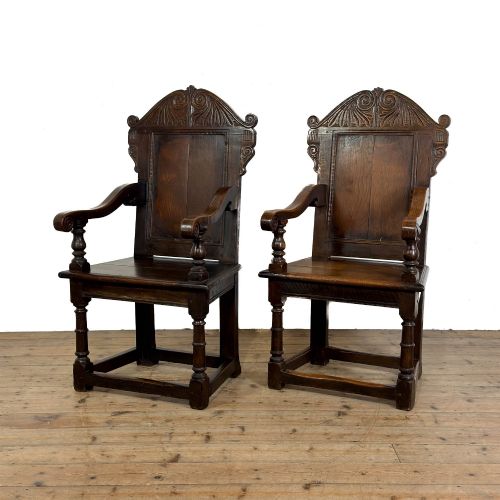
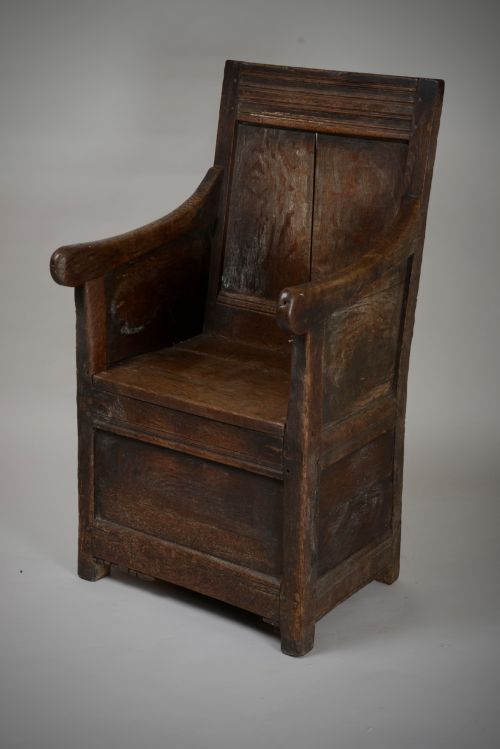
A panel back chair brings robust timber framing and architectural back panels into domestic spaces, appearing across the seventeenth, eighteenth and nineteenth centuries. Buyers encounter heavy oak wainscot armchairs alongside vernacular Windsor forms and revival pieces built in the nineteenth century in earlier styles.
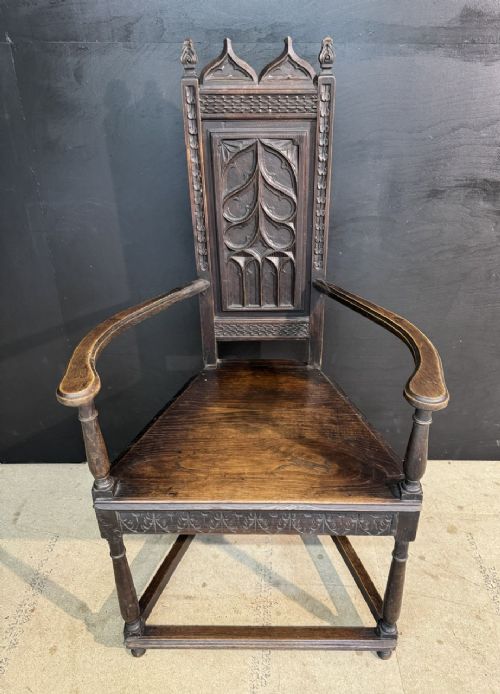
The materials are typically sturdy hardwoods like oak and elm, often associated with vernacular Georgian and earlier regional workshops. Many examples incorporate carved decoration on the wooden back panel, ranging from simple geometric motifs to elaborate scrolling foliage.
Forms span sturdy armchairs, carvers, and occasional regional variants such as Scottish lambing chairs or chairback settees. These seats served as principal pieces in domestic interiors, offering shelter from drafts through their solid timber construction.
Materials and construction
Joinery techniques define these chairs, relying on mortise and tenon joints secured with wooden pegs rather than metal nails. Carpenters shaped solid oak and elm boards using hand tools to create the heavy framework and flat back panels.
Carving was executed directly onto the solid timber back panels and crest rails using gouges and chisels. Surfaces were finished by hand, developing rich patination over centuries of use.
Retail Price Guide 2026
Typical UK retail prices for panel back chair, calculated from the Sellingantiques database of over a million retail prices indexed since 2003. This retail price guide relies exclusively on Sellingantiques data; no external sources or auction records are used, so the figures do not describe the wider market.
Listings feature oak and elm timber across the seventeenth, eighteenth, and nineteenth centuries, including Victorian revival pieces.
Assessing quality
Quality rests in the integrity of the timber and the depth of the original joinery. Pieces that retain their original construction without extensive timber replacement stand at the upper end of the range.
The crispness and depth of hand carving on the back panel separate vernacular simplicity from more ambitious workshop production. Proportion and the natural ageing of the oak surface also dictate desirability.
The Panel Back Chair Glossary
- Wainscot chair
- A heavy wooden armchair of sixteenth or seventeenth-century origin, constructed with panelled timber back and solid seat. This form preceded the widespread adoption of upholstered seating.
- Linenfold
- A style of wood carving resembling folded linen, frequently used on fifteenth and sixteenth-century panels. It gives flat wooden surfaces a textured, textile-like appearance.
- Vernacular
- Everyday furniture made by regional craftsmen for local use rather than high urban workshops. These pieces prioritise functional utility and local material availability.
- Joinery
- The method of connecting pieces of wood using fitted joints without metal fasteners. Traditional joinery relies on pegged mortise and tenon construction.
- Patina
- The surface sheen and colour developed by timber over years of handling, polishing and exposure to light. A desirable patina shows genuine age and minimal harsh intervention.
Frequently Asked Questions
How do I identify a 17th century panel back chair?
Seventeenth century examples display pegged mortise and tenon joinery, heavy oak construction, and hand-carved panels showing period motifs. The timber should exhibit deep patination and signs of genuine wear.
Examination of the underside and structural joints reveals hand-tool marks and traditional construction methods distinct from later revival furniture.
Are panel back chairs comfortable to sit in?
These chairs feature solid timber seats and upright wooden backs without upholstery. They were designed for upright posture rather than lounging.
Adding a simple loose squab cushion in a traditional fabric provides comfort while preserving the historic timber seat.
What is the difference between an original and a revival chair?
Period pieces carry the tool marks, timber shrinkage and surface wear accumulated over centuries of continuous use. Nineteenth-century revival chairs often interpret earlier styles using cleaner machine-sawn timber.
Inspect the colour and dryness of the wood to determine whether the construction dates to the period claimed or later.
How should I care for an antique oak chair?
Keep wooden chairs away from direct heat sources and sudden temperature changes to prevent the oak from splitting. Apply a traditional beeswax polish occasionally to nourish the surface.
Avoid modern liquid cleaners that can strip the historic patina accumulated on the timber.