

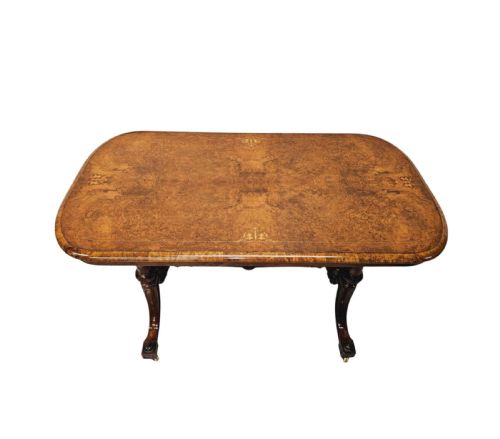


Victorian Carved Centre Desk
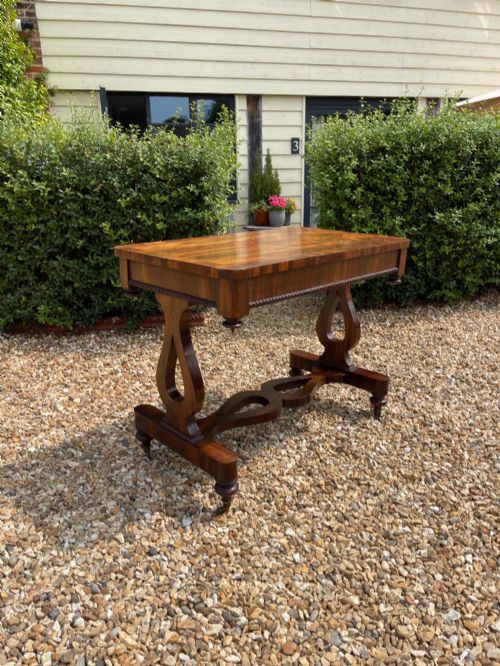
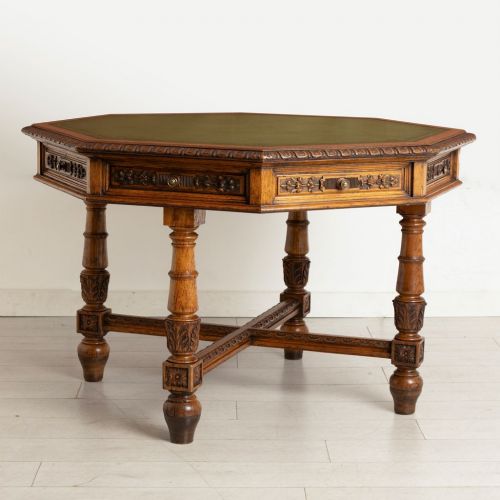
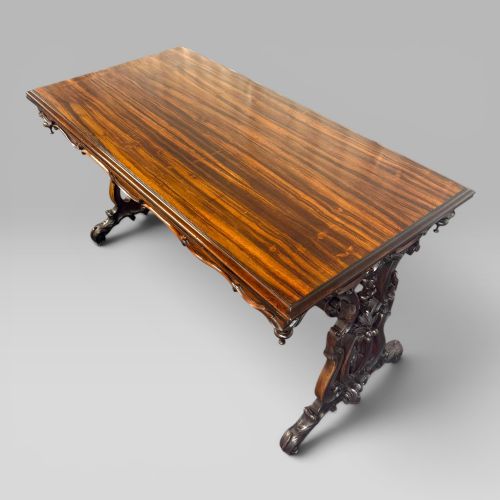
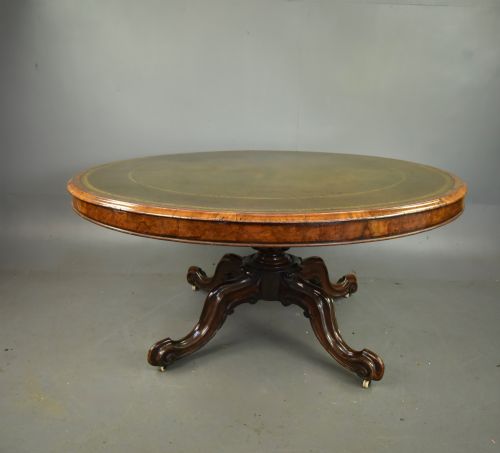
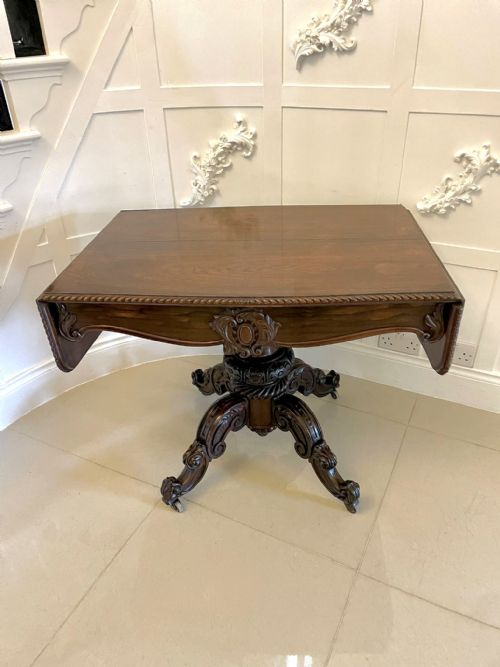
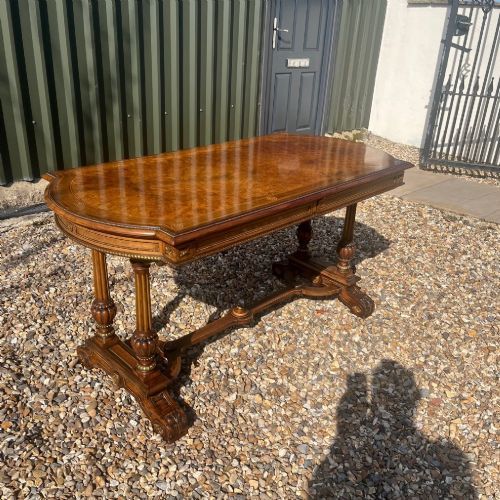
A victorian carved centre desk stands free in a room, offering rich timber surfaces and carved detail shaped for study or correspondence.
Victorian Carved Centre Desk
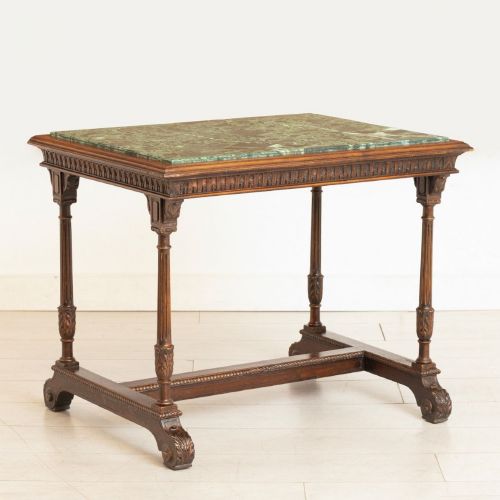
A victorian carved centre desk brings together freestanding library tables and writing tables designed to be viewed from all sides in the middle of a room. These pieces appear across the nineteenth century, including specific years like eighteen sixty and eighteen eighty, alongside general Victorian and early Victorian periods.
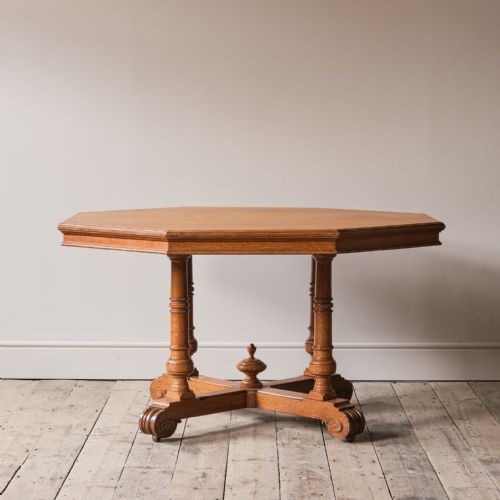
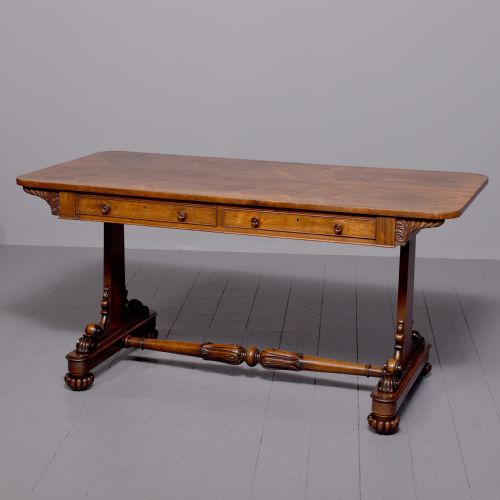
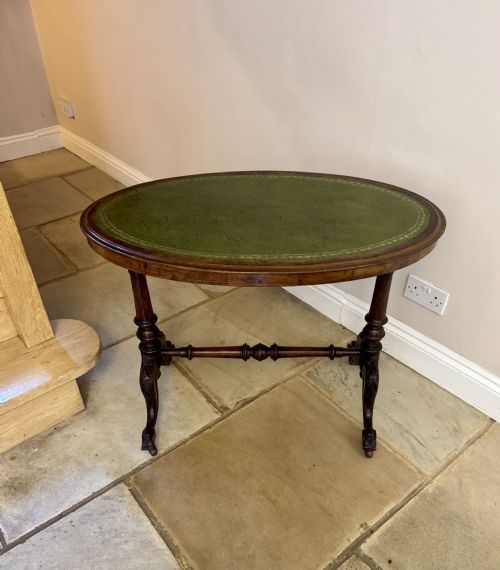
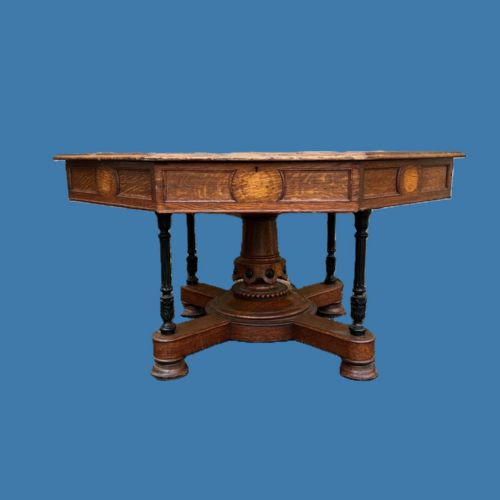
Most examples emerge in rich timbers such as walnut, burr walnut, oak, rosewood, and mahogany, frequently featuring inset leather writing surfaces. Forms range from rectangular library tables and circular shapes to octagonal formats, sofa tables, and drum tables equipped with drawers.
Stylistic variations draw on Gothic Revival, Renaissance Revival, and Victorian Rococo Revival movements. Makers and retailers such as James Shoolbred and Company, James Winter and Sons, and Holland and Son contribute notable examples to the broader category.
Materials and construction
Cabinet makers utilised dense hardwoods including mahogany, rosewood, and oak for structural integrity, applying figured veneers like burr walnut and flame mahogany to primary display surfaces. Solid timber carcases provide heavy durability, while turned and carved pedestals or legs distribute weight evenly.
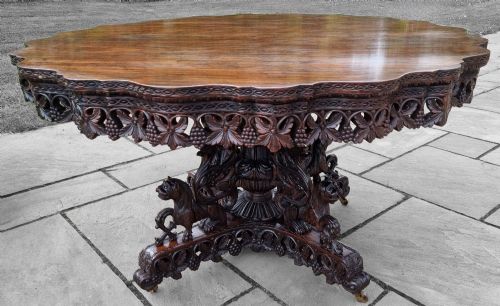
Inlaid marquetry, brass mounts, ormolu, and inset tooled leather tops demand precise joinery and specialised hand tools. Carved ornamentation such as scrolling foliage and Gothic tracery requires skilled chisel work directly into the solid wood or applied mouldings.
Some octagonal library tables include hidden revolving book compartments for secret midnight reading.
Judging quality
Quality rests upon the selection of timbers, where highly figured burr walnut, flame mahogany, or dense rosewood distinguish superior examples from plain utility pieces. The depth and crispness of hand carving separate standard production from exhibition quality work.
Construction details such as dovetailed drawer linings, original brass hardware, and intact leather writing inserts elevate a piece. The presence of documented maker stamps or attribution to established London firms adds significant weight to an item's pedigree.
James Shoolbred and Company·James Winter and Sons·Holland and Son·Mein of Kelso
The Victorian Carved Centre Desk Glossary
- Library table
- A large freestanding table utilised for writing and holding books, typically finished on all sides. These pieces often feature frieze drawers beneath the top.
- Centre table
- A table designed to stand away from walls in the middle of a room. Finished identically on every side, it functions from any angle.
- Burr walnut
- A highly prized timber veneer taken from the wart-like growths on walnut trees. It exhibits complex, swirling grain patterns that catch the light.
- Ormolu
- Gilded bronze ornamentation mounted onto furniture surfaces. This decorative technique appears on high-status Victorian pieces.
- Drum table
- A circular library table with a deep top containing multiple drawers around the circumference. It frequently rotates upon a central pillar.
Victorian Carved Centre Desk: Frequently Asked Questions
Can I use a centre desk as a regular writing desk?
Many centre tables function well as writing desks due to built-in frieze drawers and comfortable writing heights. Their finished backs allow placement anywhere in a room.
Leather top variants offer a durable surface specifically designed for writing and correspondence.
How do I identify a Victorian centre table?
Victorian pieces typically display characteristic Revival styles, heavy timber construction, and distinct stretcher bases or pedestal supports. Evidence of nineteenth-century hand joinery confirms the era.
Secondary woods inside drawers and traditional fixings further help verify the period.
What is the difference between a library table and a centre table?
Library tables generally offer larger proportions and integrated drawer space suited to holding volumes and papers. Centre tables encompass a broader range of decorative occasional and side formats.
Both types share the defining feature of being finished on all sides for freestanding placement.
How should I care for an antique leather top?
Leather writing surfaces require gentle cleaning with a slightly damp cloth and occasional treatment with appropriate leather dressings to prevent drying. Avoid harsh chemical cleaners and excessive moisture.
Keeping the desk away from direct sunlight protects both the leather inlay and the surrounding wood polish.