
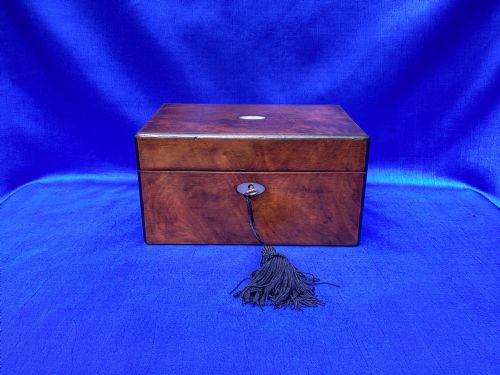
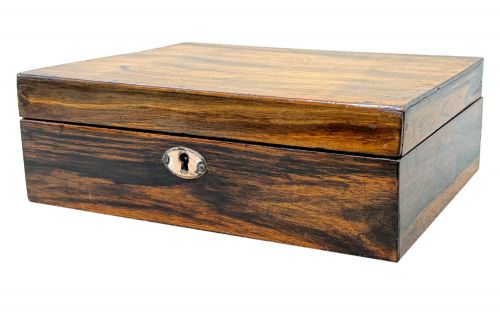


Victorian Carved Casket
A victorian carved casket is a tactile box designed to hold small treasures, prized for intricate handwork and rich timber figuring.
Victorian Carved Casket
A victorian carved casket serves to store jewellery, letters, playing cards or sewing implements on a table top or dressing chest. These pieces arrive from the nineteenth century in various domestic forms including work boxes, trinket boxes and tea caddies.
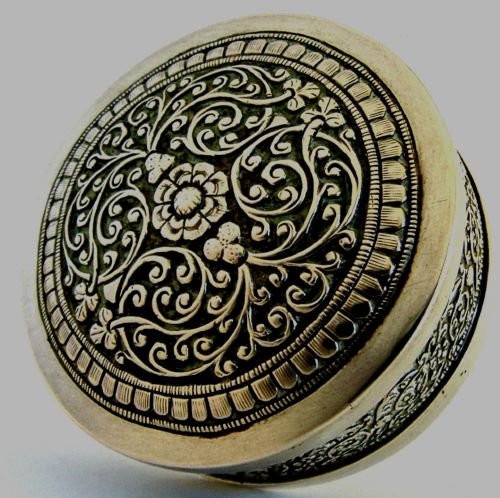
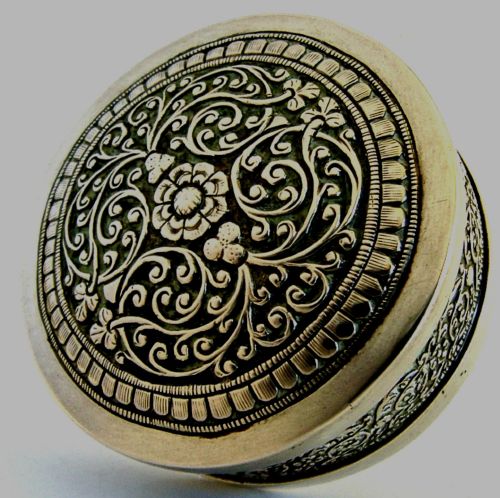
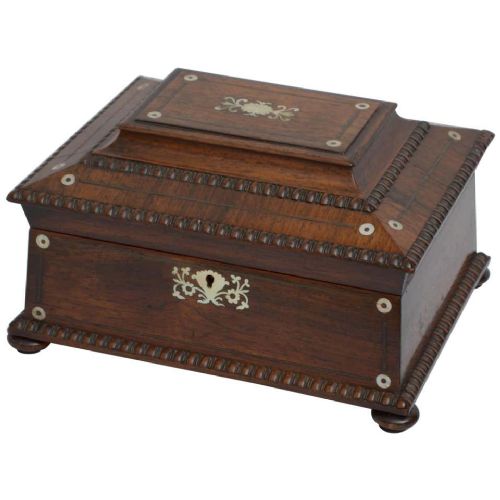
The version most commonly encountered on this page combines a timber carcass with deep relief carving or marquetry inlay. Many originate from British workshops or continental centres, whilst others travel from colonial ateliers in India and Ceylon.
Makers construct these caskets to function as secure, decorative containers that display the natural grain of woods such as walnut, rosewood and coromandel. Interiors frequently feature velvet linings, fitted compartments and small trays for organised storage.
How they were made
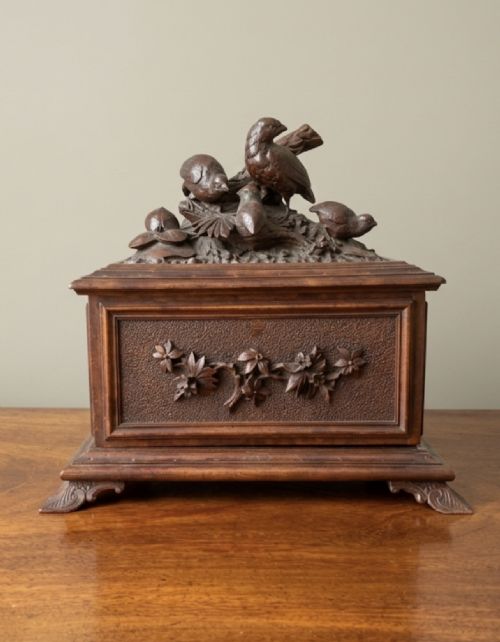
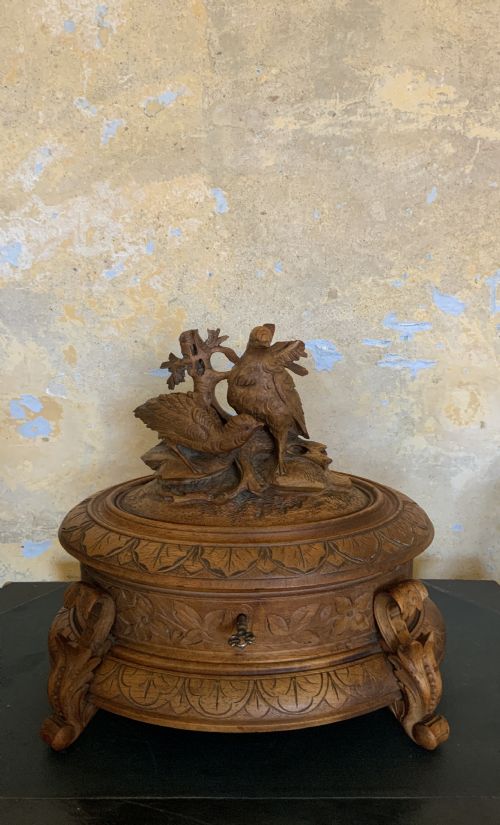
Craftsmen shape these caskets using dense hardwoods like walnut, mahogany, ebony and rosewood, often enhanced by decorative veneers and marquetry. Carved items utilise softwoods or fruitwoods that permit deep, sculptural relief work, particularly in Black Forest designs.
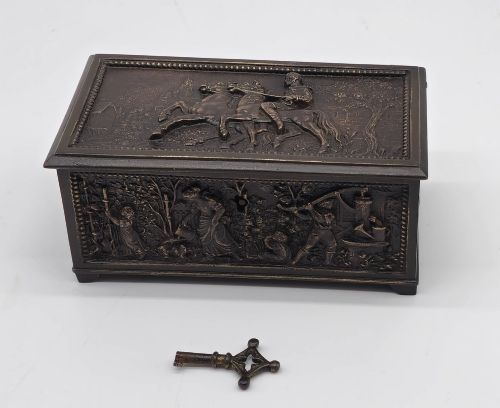
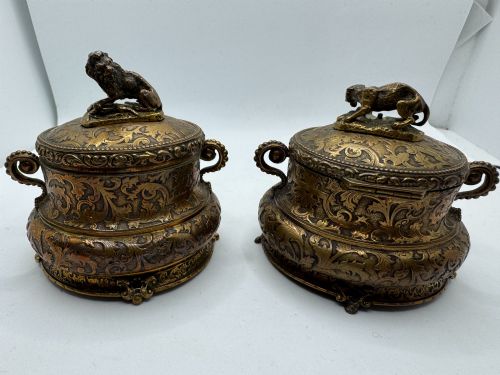
Details emerge through specialist techniques such as bone and ivory inlay, brass stringing, mother-of-pearl plaques and silver plating. Metal examples employ bronze, gilded copper or electro-form methods to achieve ornate surface decoration.
Construction relies on traditional joinery methods to house fitted interior compartments, hinged lids and lockable mechanisms. Exterior surfaces receive hand-applied polishes or varnishes to accentuate the grain and protect the carved motifs.
Listings feature woods such as walnut, rosewood, coromandel and oak alongside decorative metals and mother-of-pearl.
What varies in quality
The depth and definition of the hand-carved detail separate ordinary boxes from exceptional examples, with crisp undercutting showing superior craftsmanship. Figures, foliage and animal motifs in Black Forest or Anglo-Indian pieces demonstrate the carver's anatomical and spatial skill.
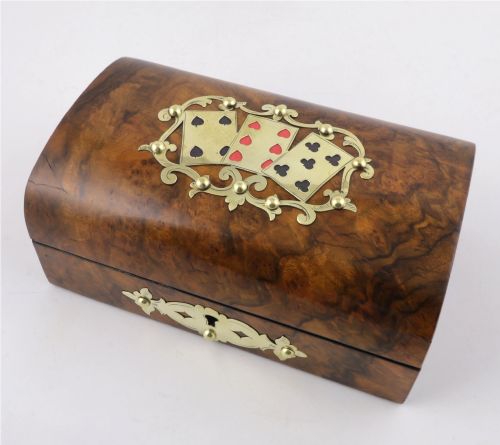
The selection and alignment of timber veneers dictate visual elegance, especially where burr walnut or coromandel grain patterns mirror across the lid. Superior caskets retain original fitted silk or velvet interiors, working locks and matching interior compartments rather than modern replacements.
Tahan of Paris·Walker and Hall
The Victorian Carved Casket Glossary
- Black Forest
- A style of wood carving originating from the mountainous region of central Europe. Pieces typically feature naturalistic animal and botanical motifs.
- Anglo-Indian
- Describing decorative arts produced in India during the British colonial period. These items often incorporate indigenous timbers combined with intricate carved bone or ivory details.
- Marquetry
- The art of applying small pieces of veneer to a structure to form decorative patterns. Craftsmen utilise contrasting woods to create pictorial designs on the lid.
- Sarcophagus
- A box shape featuring a domed or steep-sided profile resembling an ancient stone coffin. This form appears frequently on nineteenth-century sewing and jewellery caskets.
- Tunbridge Ware
- A type of woodworking characterised by mosaic patterns formed from thousands of tiny tinted wood blocks. This meticulous technique creates geometric designs on small boxes.
Victorian Carved Casket: Frequently Asked Questions
What were victorian carved caskets used for?
These boxes served domestic purposes in the nineteenth century, holding personal valuables, letters, sewing tools and gaming pieces. Owners kept them on dressing tables, desks or withdrawing room surfaces for daily access.
Their interiors often featured tiered trays, velvet cushioning and specialised compartments designed to protect delicate items like rings, necklaces and cards.
How do I identify a Black Forest casket?
Black Forest caskets are characterised by deep, naturalistic wood carvings, frequently depicting bears, dogs, deer or cascading foliage. They typically employ European walnut or lime wood with a dark finish.
The carving style prioritises three-dimensional relief, where figures project forcefully from the lid or corners of the box.
How should I care for a wooden casket?
Keep wooden caskets away from direct sunlight and steady heat sources to prevent timber from splitting or warping. Dust gently with a dry, soft cloth and avoid chemical polishes.
Maintaining a stable room humidity preserves both the exterior veneer and the delicate interior fabric linings.