

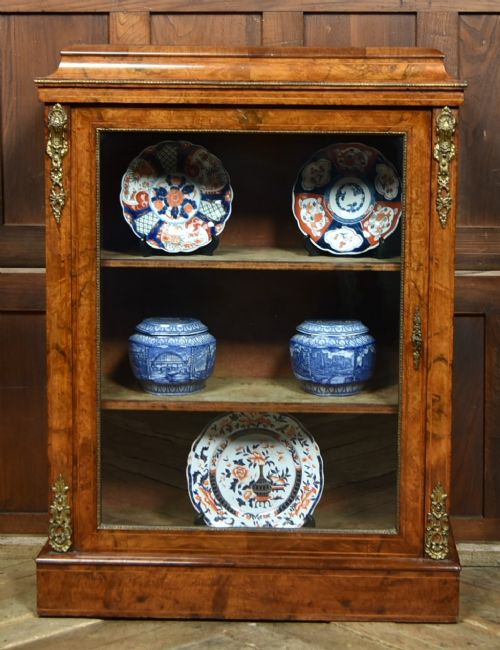
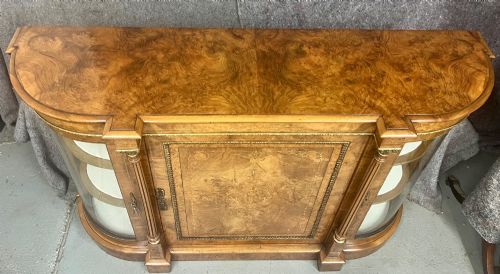
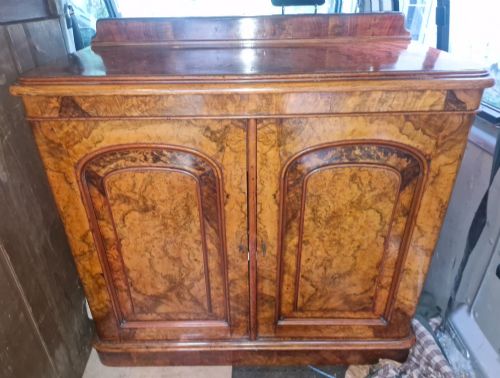
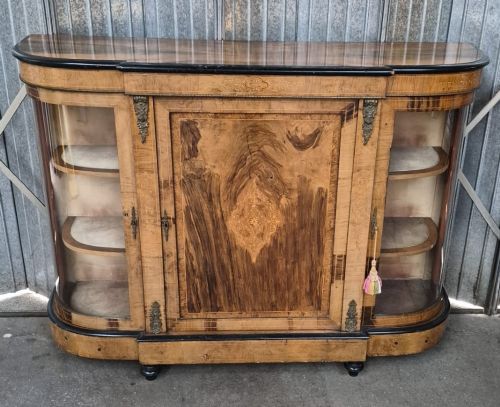

Victorian Burr Walnut Credenza
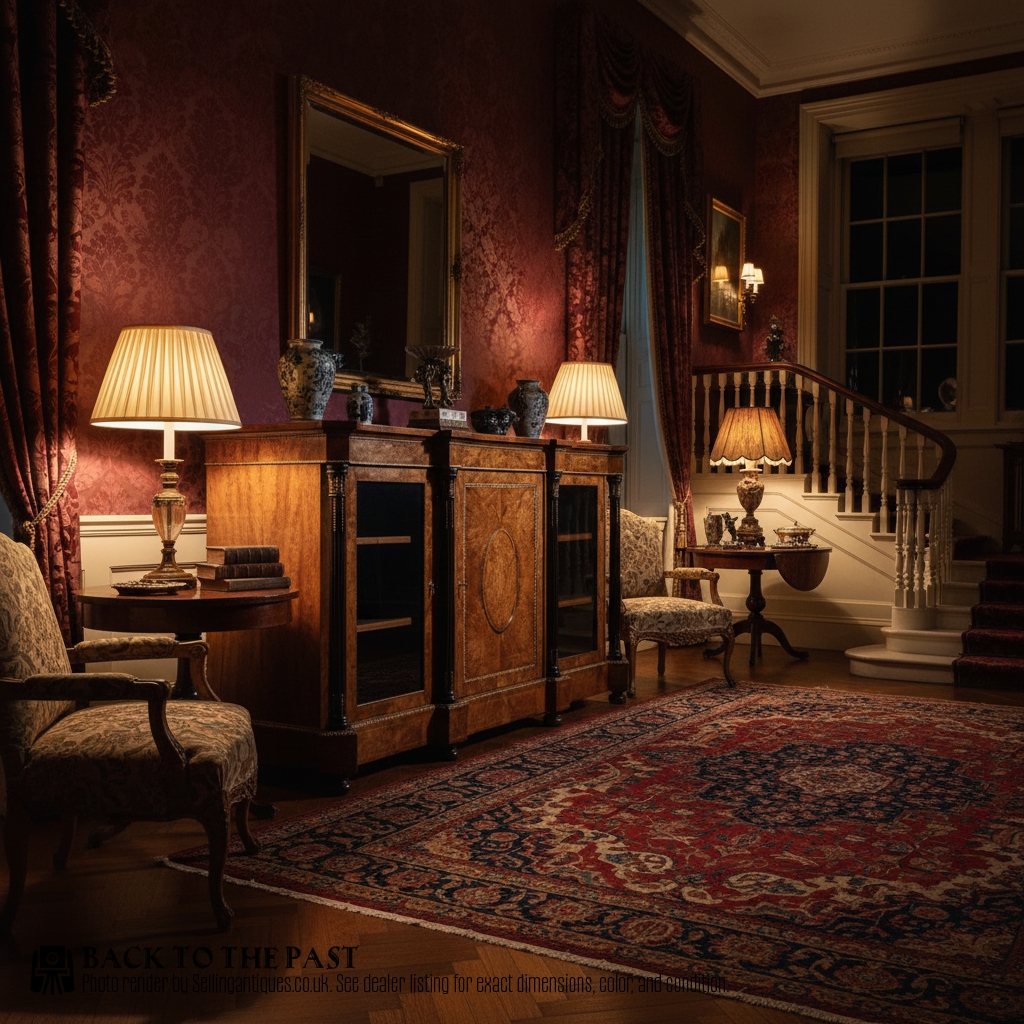
A victorian burr walnut credenza combines rich, figured timber with gilded mounts, serving as both a sophisticated display piece and a central statement for a formal reception room.

Victorian Burr Walnut Credenza
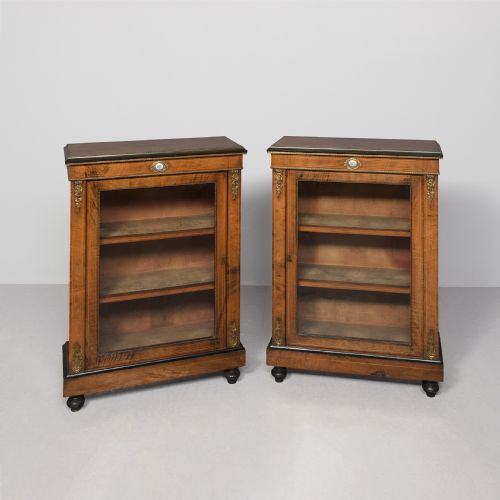
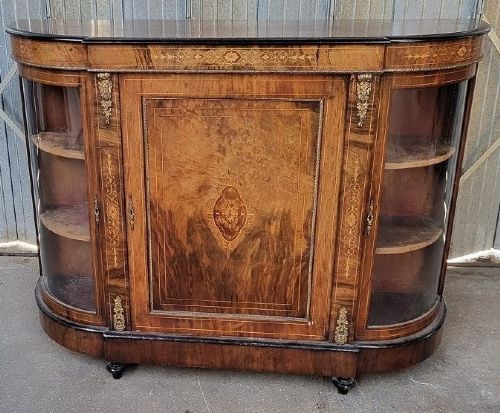
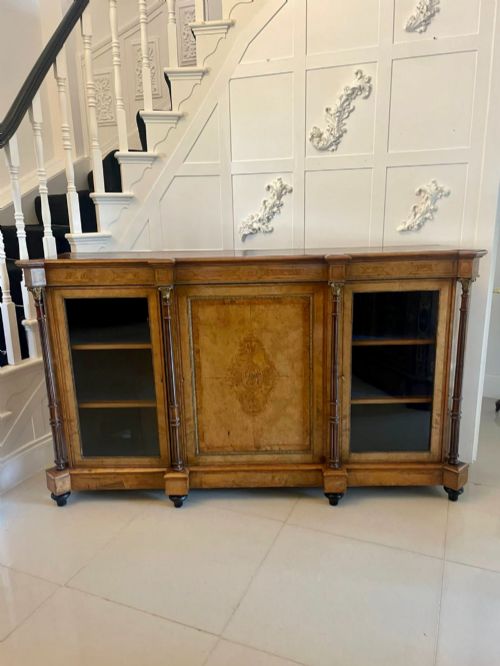
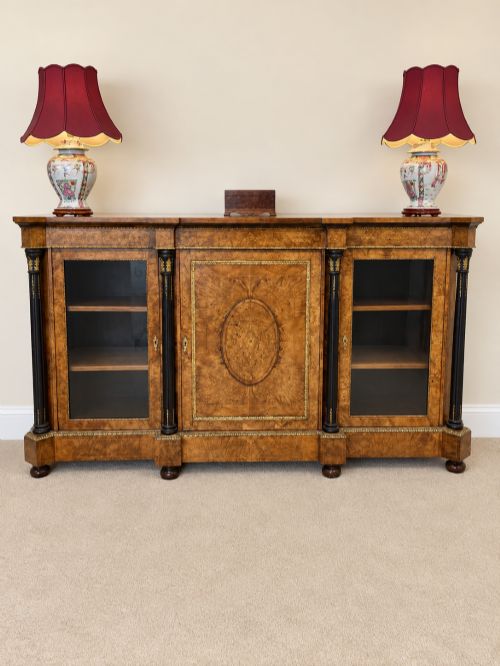
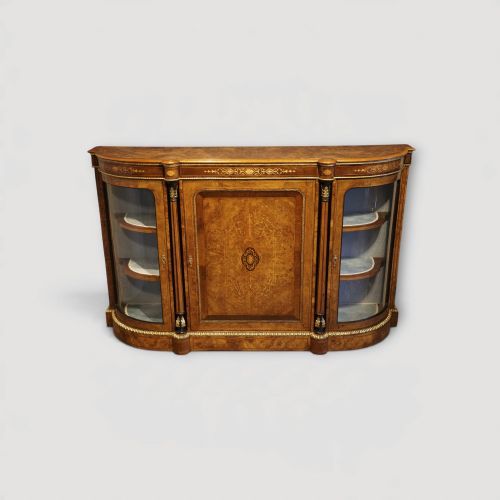
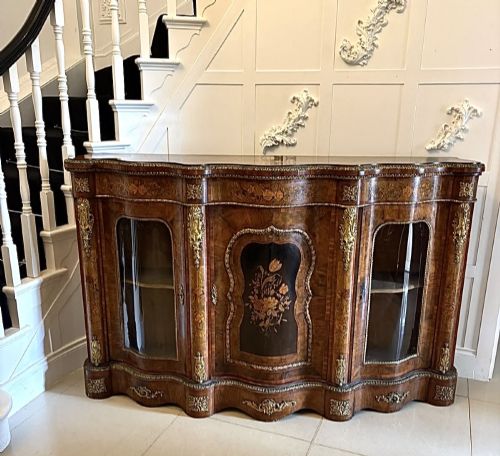
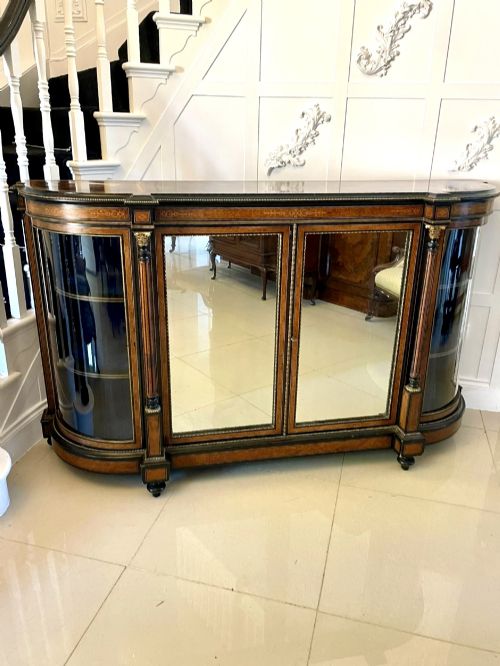
A victorian burr walnut credenza typically presents as a low, freestanding cabinet designed for drawing rooms and formal reception spaces during the nineteenth century. These pieces combine central cupboard doors with curved glass side cabinets, offering both enclosed storage and open display surfaces.
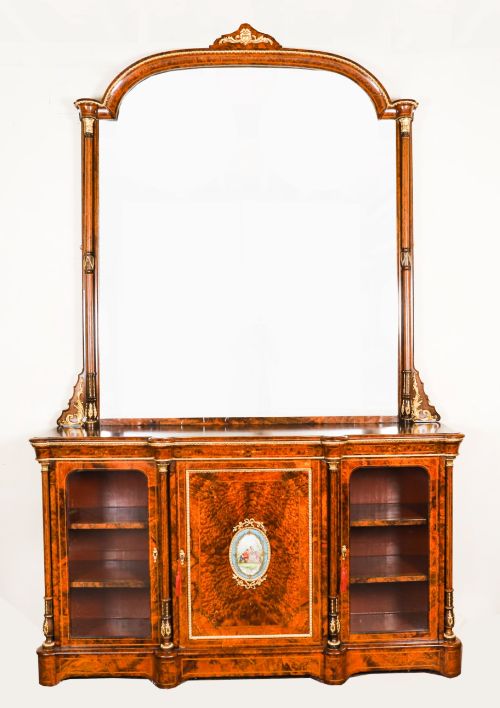
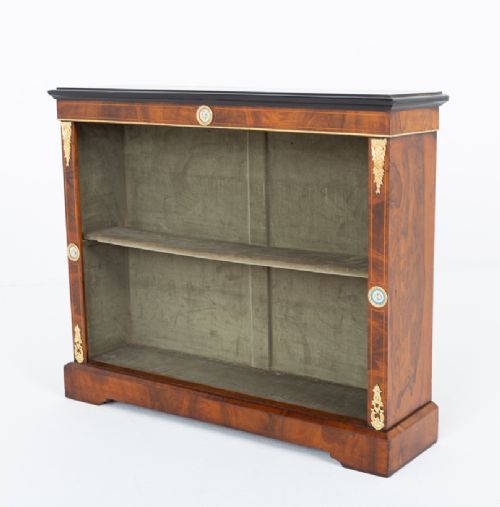
The version most commonly met on this page dates from the mid-Victorian decades, specifically between eighteen-fifty and eighteen-eighty. Alongside full-size credenzas, buyers frequently encounter related side cabinets, pier cabinets, and mirror-backed variations sharing the same timber vocabulary.
Materials and Construction
Cabinet makers utilised burr walnut veneers applied over solid carcase timbers, exploiting the swirling, highly figured grain patterns of the wood knots. This decorative veneer work was frequently enhanced with boxwood inlay, floral marquetry, and ebonised details.
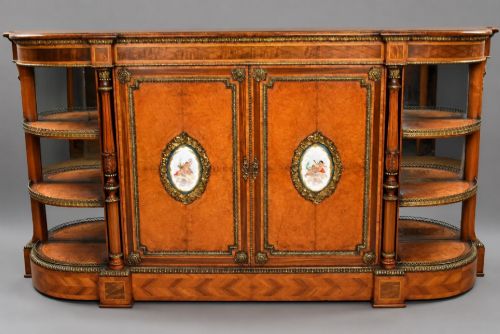
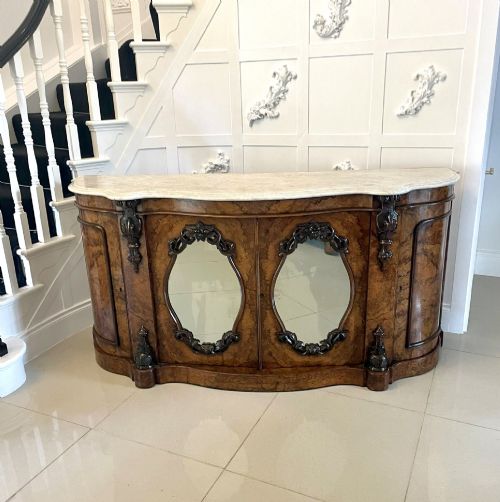
Gilded cast brass ormolu mounts typically frame the doors, pilasters, and cornices, while glass panels enclose display sections lined with velvet. Some iterations incorporate porcelain plaques or marble tops to add further colour and texture to the facade.
Victorian Burr Walnut Credenza Retail Price Guide 2026
Typical asking prices for victorian burr walnut credenza among the pieces listed under this phrase on Sellingantiques today, from the lower quarter to the upper quarter. They describe what is for sale here now, not the wider market.
Some nineteenth-century cabinet makers hid secret drawers inside side cabinets, giving owners a private place to stash love letters.
Assessing Craftsmanship and Execution
The distinction between standard cabinet work and exhibition quality pieces lies primarily in the complexity of the marquetry and the crispness of the cast ormolu mounts. Finer examples display meticulous book-matching of the burr walnut veneer across the entire curved front, creating symmetrical patterns that flow naturally across doors and panels.
Structural harmony also defines the upper tier of pieces, where secondary timbers like mahogany or oak remain robust and door frames operate smoothly despite seasonal humidity changes. The integration of mirror backs, carved walnut details, and porcelain plaques indicates a more ambitious commission from a prominent workshop.
Gillows·William Turner And Sons
The Victorian Burr Walnut Credenza Glossary
- Burr walnut
- A veneer sliced from the growth warts or knots of a walnut tree, yielding a dense, swirling grain pattern prized for its decorative movement. This figured timber forms the primary visual surface on nineteenth-century cabinet doors and panels.
- Ormolu
- Gilded bronze or brass mounts applied to the architectural corners, feet, and borders of nineteenth-century furniture. These metallic ornaments provide contrast against dark wood veneers.
- Marquetry
- The art of applying pieces of veneer to a structure to form decorative patterns and pictorial designs. Floral motifs executed in boxwood and fruitwood frequently adorn mid-nineteenth-century cabinet doors.
- Pier cabinet
- A narrow display cabinet designed to fit the wall space between windows. These upright companion pieces often share the timber and ormolu vocabulary of larger credenzas.
- Serpentine front
- A furniture facade featuring a undulating convex-concave-convex curve across the front. This shaped profile requires advanced woodworking skill to veneer accurately.
Victorian Burr Walnut Credenza: Frequently Asked Questions
What is a credenza used for?
A credenza served historically as a formal dining room sideboard or a sophisticated drawing room cabinet for displaying porcelain and decorative objects behind glass doors.
In modern interiors, these low cabinets function as media consoles, hallway statements, or living room display units that conceal modern items behind period woodwork.
How do I date a burr walnut credenza?
Dating relies on stylistic clues, timber choices, and construction methods recorded across the nineteenth century. Pieces featuring heavy ormolu mounts, serpentine fronts, and floral marquetry generally cluster around the eighteen-fifties and sixties.
Later Victorian iterations from the eighteen-eighties often incorporate aesthetic movement influences, ebonised details, or simpler geometric stringing instead of elaborate marquetry.
How do I care for burr walnut veneer?
Burr walnut veneer requires stable indoor humidity and protection from direct sunlight to prevent the timber from fading and the delicate veneer from lifting.
Routine maintenance involves dusting with a soft, dry cloth and occasionally applying a specialist beeswax polish to nourish the historic polished surface.