
Marquetry Inlay Side Cabinet
These marquetry inlay side cabinet pieces bring patterned wood veneers and useful surface space into a room.

Marquetry Inlay Side Cabinet
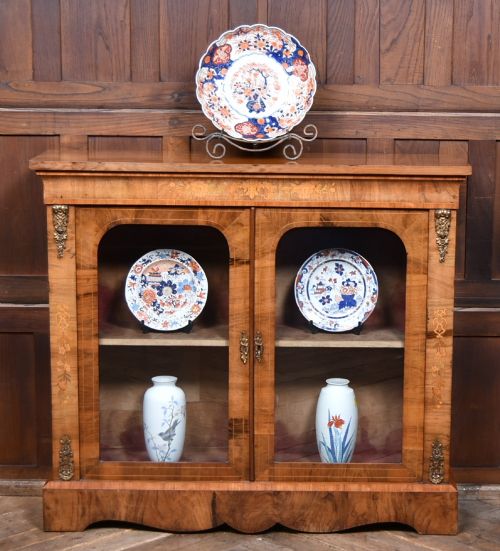
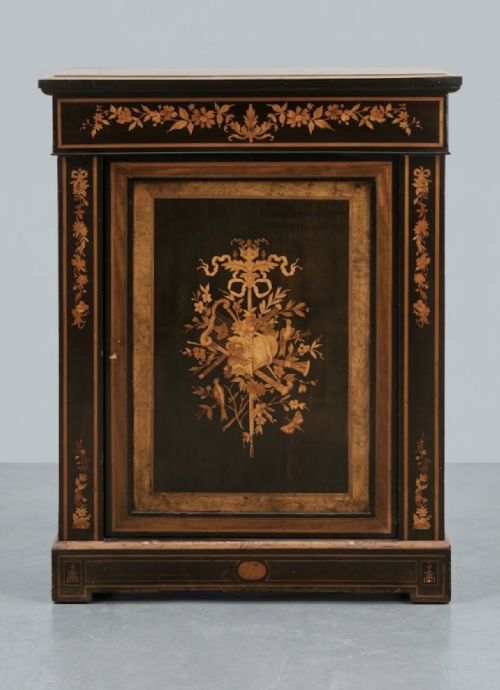
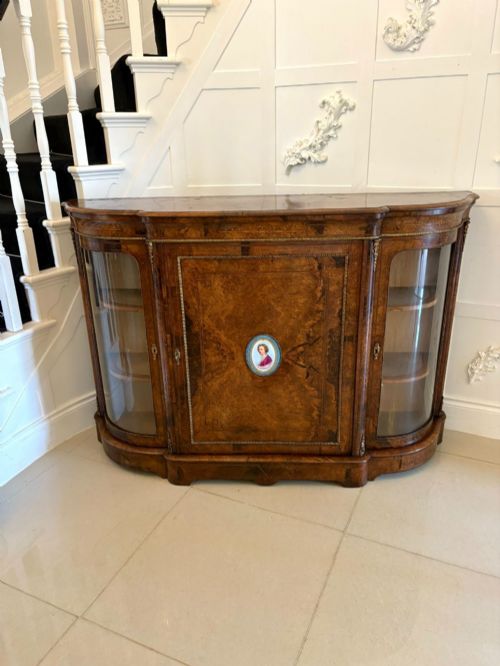
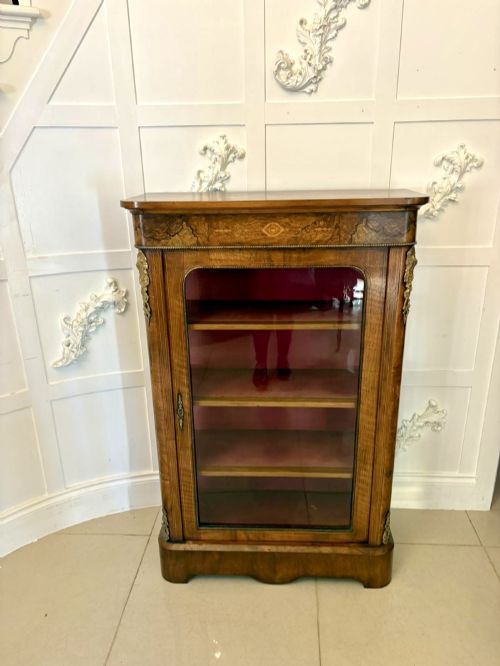
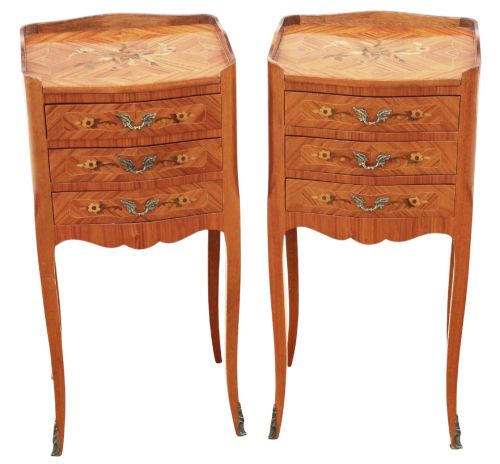
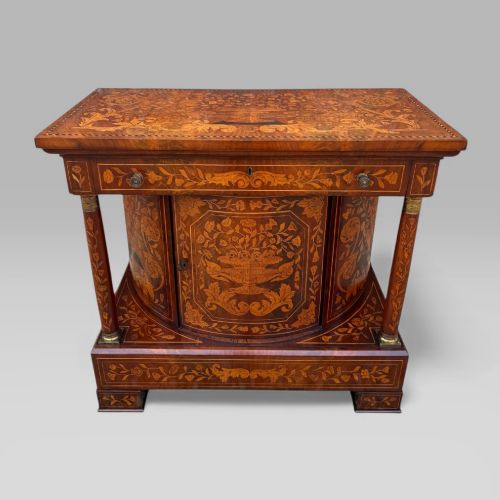
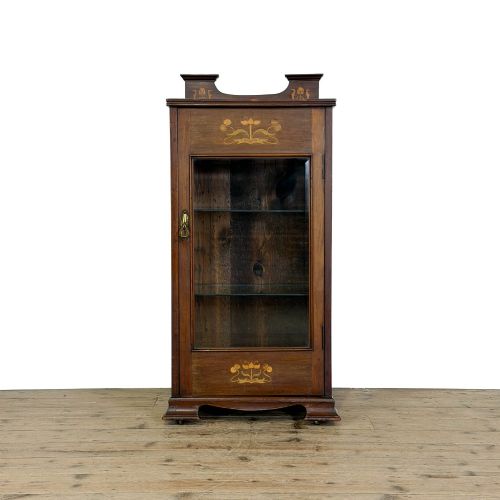
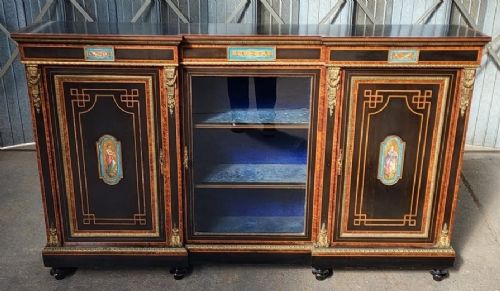
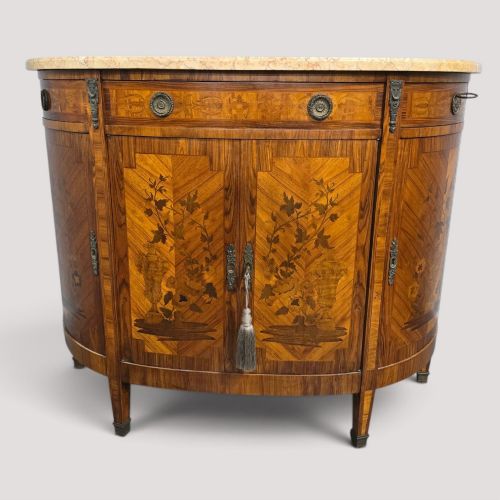
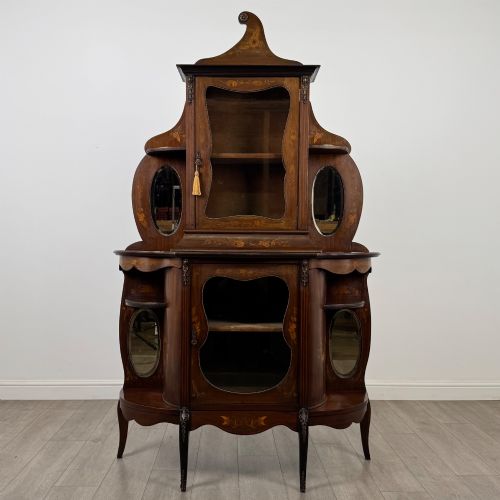
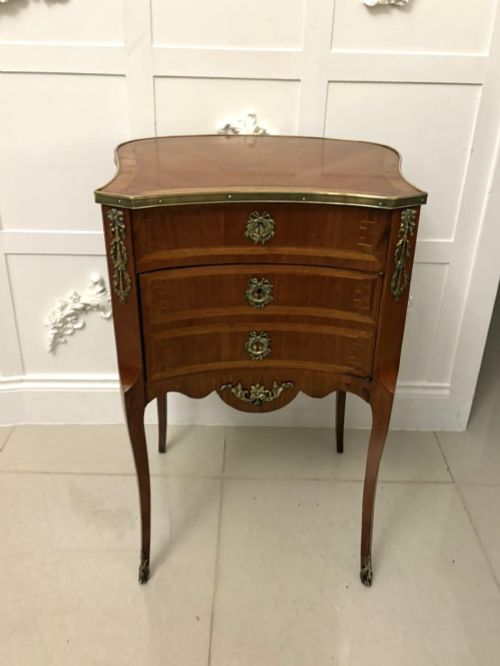
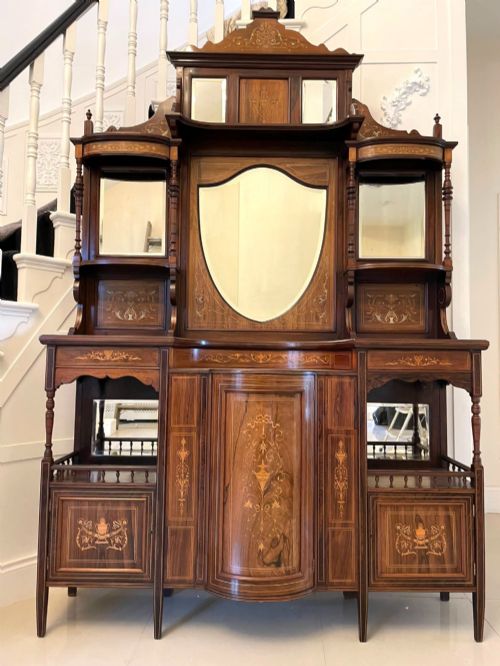
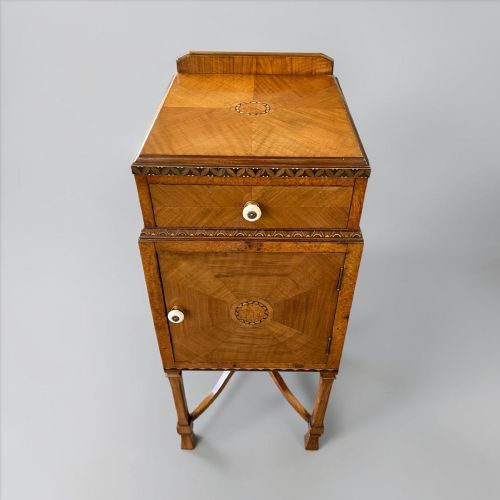
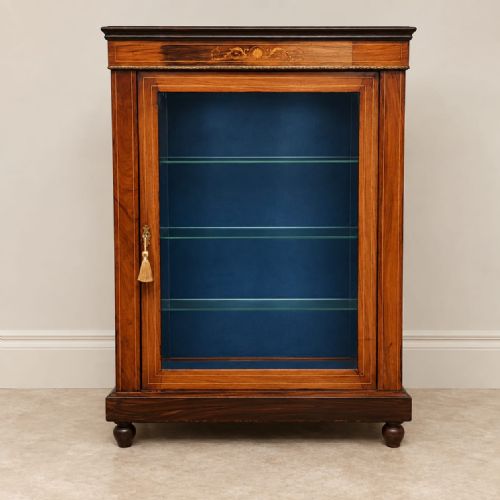
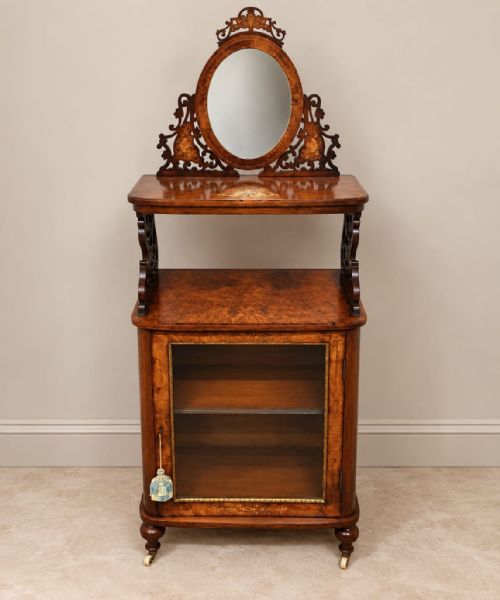
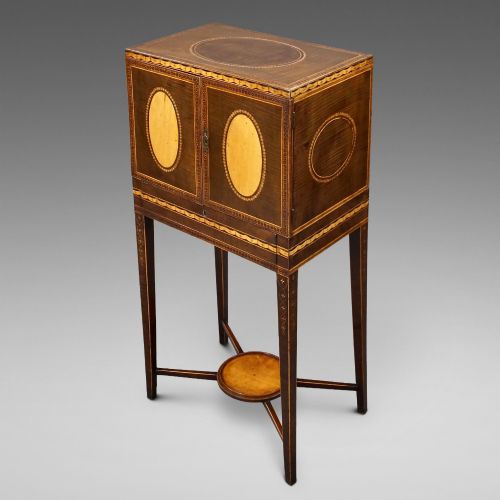
A marquetry inlay side cabinet combines structured storage with decorative wood veneers arranged in pictorial or geometric patterns. These pieces appear across various forms, including display cabinets, credenzas, pier cabinets, and bedside tables.
The versions most commonly met on this page date from the Victorian period through to the 1920s and 1930s. Makers drew inspiration from French Louis styles, Sheraton designs, and Art Nouveau aesthetics to shape these compact or large storage items.
Origins range from English workshops utilising native and exotic timbers to French cabinet makers producing glazed display units and marble-topped bedside chests. Each regional tradition applies distinct floral, scrolling, or architectural wood motifs.
Materials and construction
Carcasses typically employ solid secondary timbers like mahogany or walnut which receive thin veneers of burr walnut, rosewood, satinwood, kingwood, or harewood on their outer surfaces. Marquetry cutters slice contrasting wood types into intricate pictorial motifs before pressing them into prepared recesses.
Mounts in cast or gilt ormolu and brass edge the doors, feet, and glazed panels, while interior shelves often utilise glass or polished timber. Many cabinets feature ebonised frames that contrast sharply with the lighter inlay work and central wood panels.
Listings feature burr walnut, rosewood, satinwood, and mahogany across Victorian, Edwardian, and earlier periods.
Assessing quality
Quality rests in the precision of the veneer work and the depth of the timber selection, where tightly curled burr walnut or fine satinwood shows superior craft compared to plain secondary veneers. The intricacy of the wood matching across panel joints dictates the visual harmony of the finished surface.
Hardware and mounts distinguish standard production from exceptional examples, with chased ormolu, bevelled glass panes, and stamped maker details elevating a piece. Structural integrity in the door frames and drawer runners ensures the cabinet survives daily use without warping.
Collinson & Lock·Gillows·Lamb of Manchester
The Marquetry Inlay Side Cabinet Glossary
- Marquetry
- The art of applying decorative pieces of veneer to a structure to form ornamental patterns or pictures. Craftsmen cut contrasting woods together to ensure tight joints.
- Credenza
- A sideboard or display cabinet featuring cupboards, often mounted with ormolu and glass. Victorian iterations frequently include central mirrored back sections.
- Ormolu
- Gilded bronze furniture mounts used to decorate corners, legs, and borders. The technique involves applying mercury and gold amalgam to cast bronze.
- Pier cabinet
- A tall, narrow freestanding cabinet designed to fit against the wall space between windows. These pieces often feature glass doors and velvet-lined shelving.
- Boulle
- A style of marquetry utilising brass and tortoiseshell inlaid in contrasting patterns. This technique originates from French cabinet making traditions.
Marquetry Inlay Side Cabinet: Frequently Asked Questions
How do I clean a marquetry inlay side cabinet?
Dust surfaces regularly with a soft, dry cloth to prevent dirt accumulation in the veneer seams. Apply a quality beeswax sparingly to nourish the timber without damaging the delicate inlay work.
Avoid placing these cabinets near direct heat sources or strong sunlight which can dry out the wood and cause veneers to lift. Keep interior glass clean using standard non-abrasive glass cleaner applied to a cloth rather than sprayed directly.
Where should I place a bedside cabinet?
Position these compact units beside a bed to hold lamps, books, and night-time essentials within easy reach. Ensure the height of the cabinet matches the mattress level for practical daily use.
Allow sufficient clearance for opening drawers or cupboard doors without striking adjacent furniture. Marble-topped versions offer durable surfaces resistant to liquid spills from drinking glasses.
How can I date a Victorian display cabinet?
Examine the timber species, construction joints, and internal linings to determine the likely era of manufacture. Victorian pieces frequently utilise burr walnut or rosewood veneers over mahogany carcases with hand-cut dovetails.
Look for maker stamps or labels on the reverse or inside drawer boxes which often indicate the specific workshop. Stylistic clues like ebonised mouldings and ormolu mounts also point towards mid to late nineteenth-century production.
Can I use a credenza in a modern room?
A credenza provides substantial surface area and enclosed storage suited for contemporary dining rooms or living spaces. The decorative wood panels add warmth and texture to minimalist interior schemes.
Use the top surface to display lamps, ceramics, or books while storing tableware or media equipment inside the cupboards. Ensure the proportions of the room accommodate the length and depth of the credenza before placement.