

Gilt Mounted Credenza
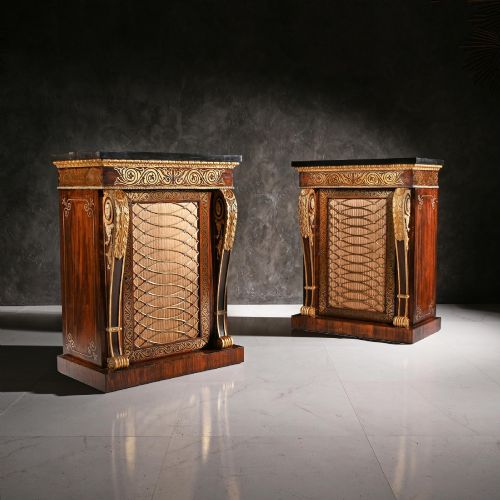
A gilt mounted credenza is a statement low cabinet carrying gilt bronze or brass mounts, sought after for grand nineteenth-century interiors.
Gilt Mounted Credenza
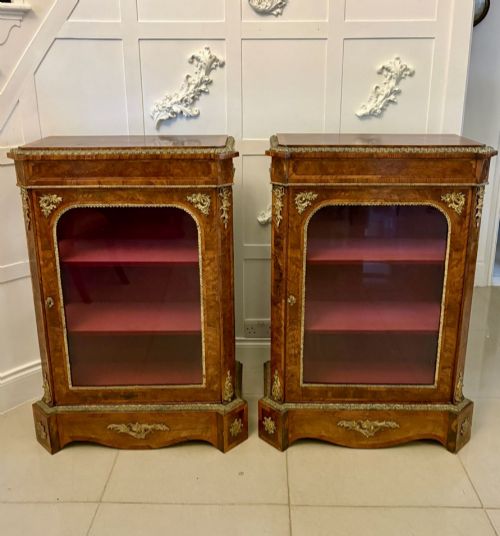
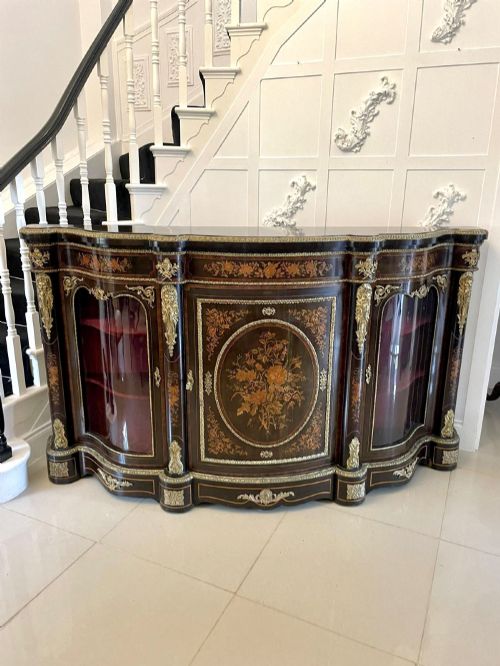
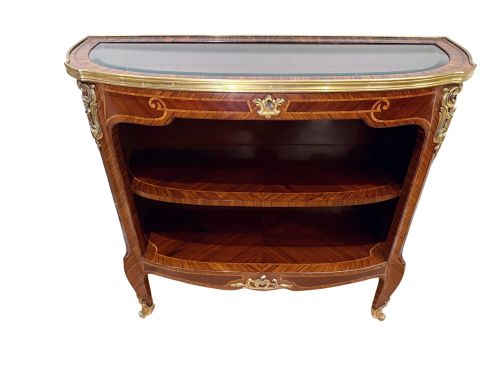
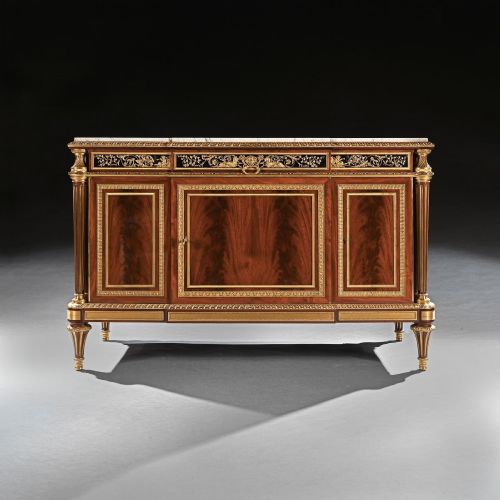
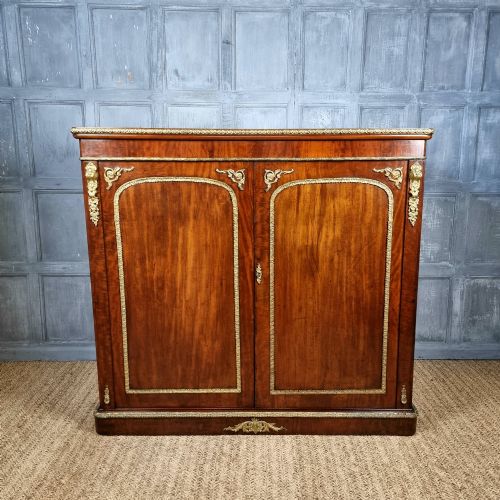
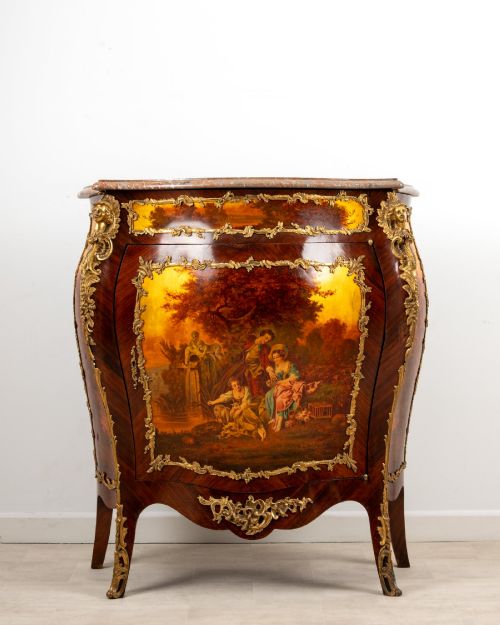
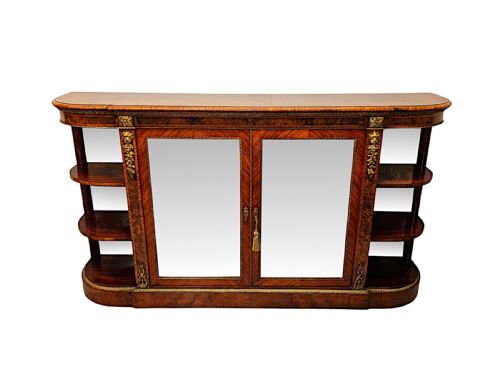
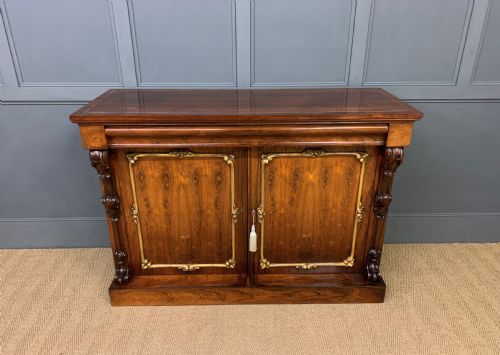
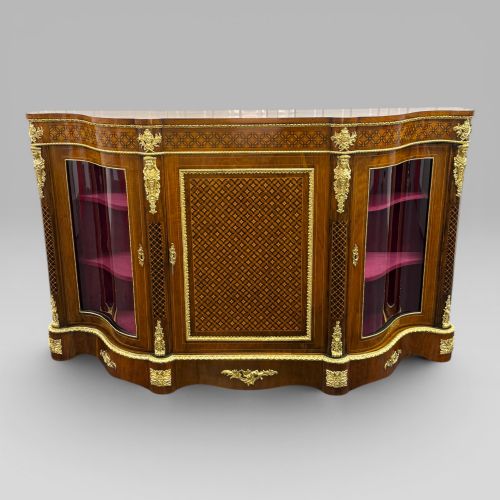
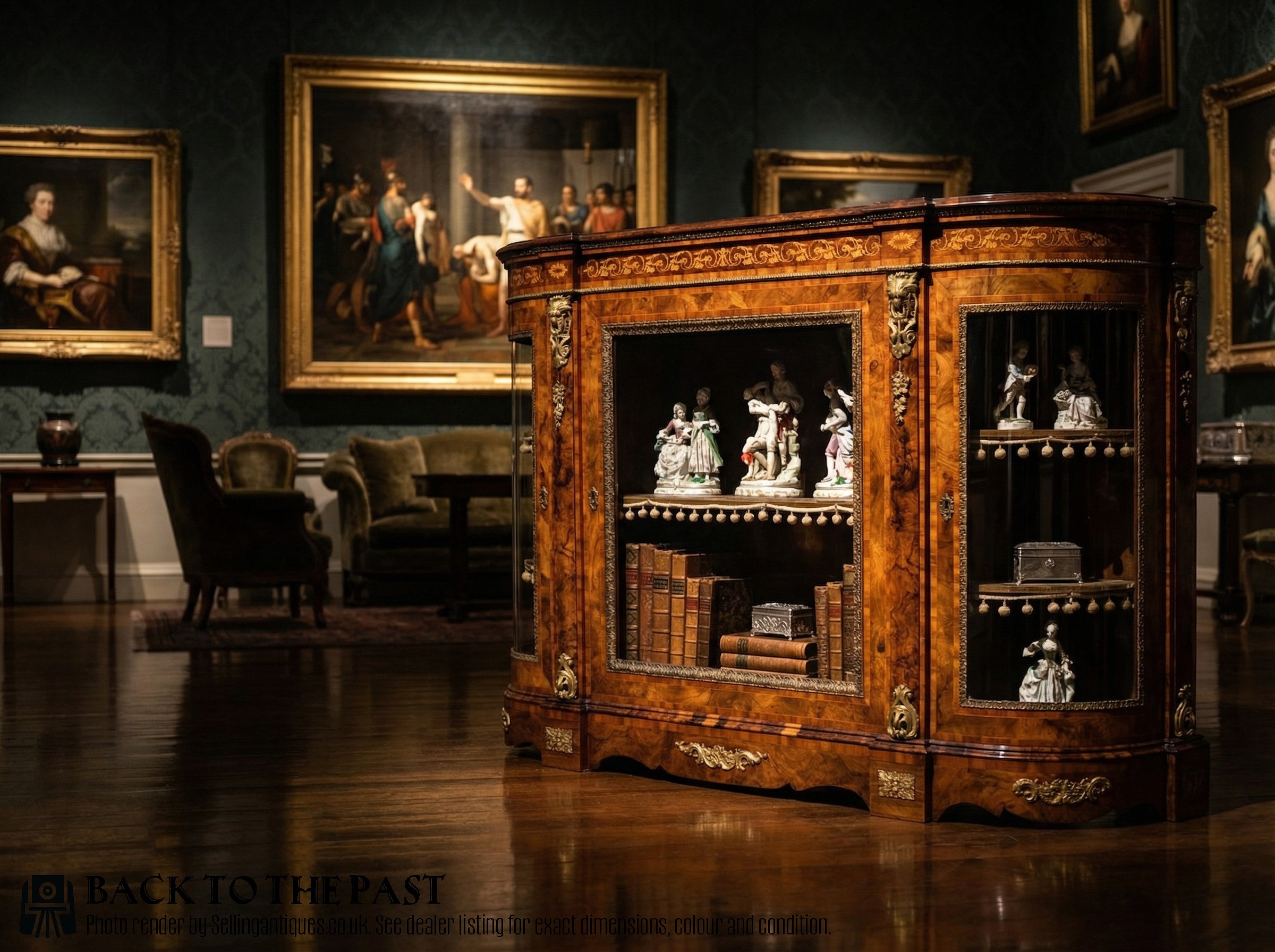
A gilt mounted credenza sits low against a wall, combining substantial timber construction with polished metal mounts that outline doors, plinths, and friezes. These pieces appear most frequently in nineteenth-century British and French iterations, often taking rectangular or serpentine forms designed to display objects of status.
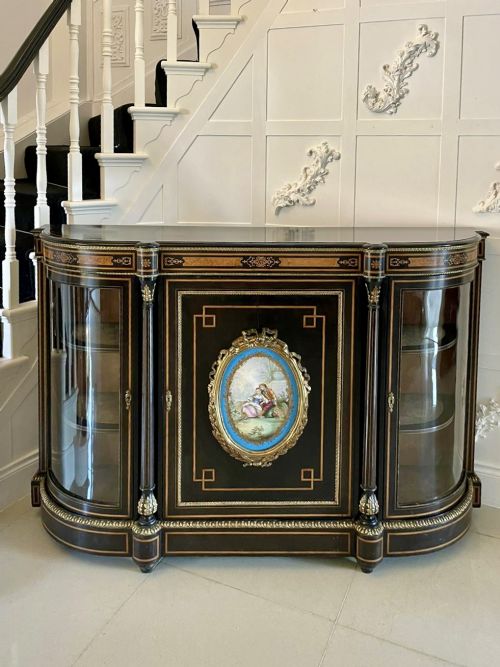
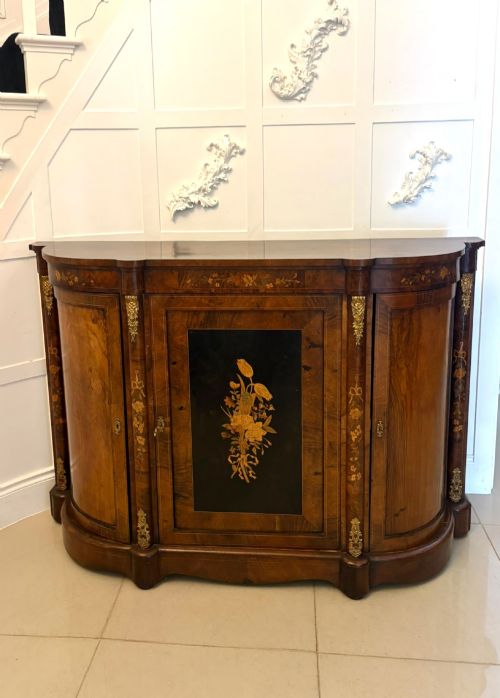
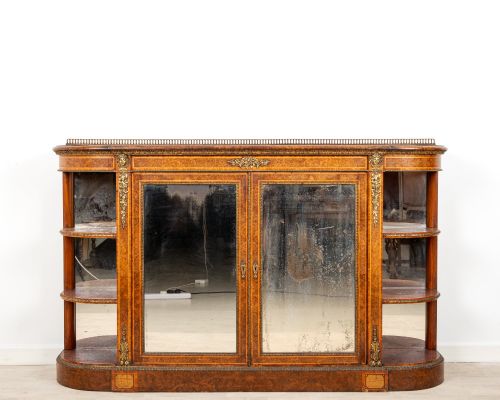
The layout typically incorporates glazed or mirrored central doors flanked by curved side cabinets, providing a commanding focal point for a principal reception room. Walnut, ebonised wood, and kingwood form the primary carcases, whilst inset panels of floral marquetry or boullework frequently enrich the surface alongside the characteristic ormolu ornamentation.

How they were made
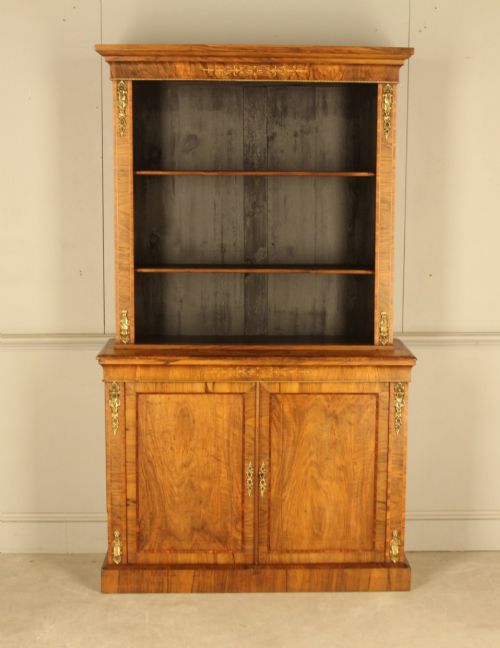
Cabinetmakers constructed the main carcase from dense hardwoods such as walnut, mahogany, or kingwood, often applying delicate veneers like burr walnut or amboyna in symmetrical patterns across the doors and panels. Marquetry details utilised contrasting tinted woods to create floral and geometric motifs inlaid directly into the primary surface.
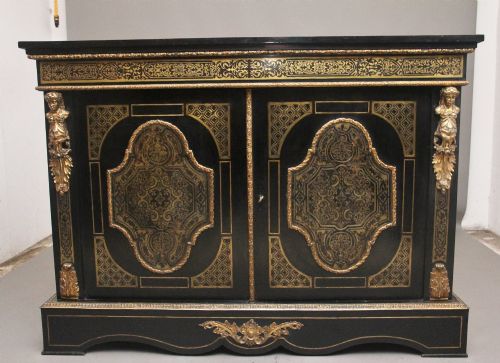
Ornate cast ormolu mounts were secured to the corners, friezes, and feet to accentuate the architectural lines of the piece, accompanied by marble tops sourced from quarries in Europe. Ebonised finishes achieved a deep black lustre through layered staining and polishing, providing a stark contrast against the gleaming gilt bronze mounts.
Tortoiseshell panels wink behind intricate brass scrollwork, proving that seventeenth-century French tastes still charmed Victorian drawing rooms.
What varies in quality
The refinement of the ormolu mounts distinguishes standard production from exceptional examples, with high-end pieces displaying hand-chiselled surface detail and crisp relief rather than flat, cast-in-the-mould uniformity. The weight and thickness of the bronze or brass components indicate the level of expenditure dedicated to the piece during its manufacture.
Marquetry execution dictates the tier of the cabinet, where master workshops utilised hand-cut veneers fitted with razor precision, avoiding heavy black filler lines around the botanical elements. The choice of underlying timber, such as heavily figured burr walnut or flawless kingwood veneer, directly reflects the original workshop's standing.
Gillows·Henry Dasson·Maison Gagneau·Beurdeley·Louis Constantin Le Gaigneur·Weisweiler
The Gilt Mounted Credenza Glossary
- Ormolu
- Gilded bronze used for decorative mounts on furniture, offering a bright golden finish that catches the light against dark woods.
- Credenza
- A low dining or reception room cabinet used for storage and display, originating in Italy before evolving into a Victorian staple.
- Boullework
- An elaborate marquetry technique combining tortoiseshell and brass inlay, named after the French cabinetmaker André-Charles Boulle.
- Marquetry
- The art of applying decorative veneer pieces of different woods to a carcase structure to create pictorial designs.
- Serpentine
- A furniture front or top shaped with a central convex curve flanked by two concave curves, creating a flowing contour.
Gilt Mounted Credenza: Frequently Asked Questions
Where should a credenza be placed?
These cabinets suit principal reception rooms or long hallways where their low profile and reflective mirrored or glass doors can enhance natural light. They work best against a clear wall space that allows the gilt mounts and figured timbers to command attention without visual competition.
Avoid positioning them in damp areas or direct sunlight, which can dry out nineteenth-century veneers and fade delicate marquetry work over time.
What is the difference between French and Victorian pieces?
French cabinets from this period frequently lean towards elaborate Louis revival styles featuring prominent ormolu mounts, vernis martin painted panels, and exotic woods like kingwood. Victorian British examples tend to favour substantial burr walnut construction with intricate floral marquetry and disciplined architectural proportions.
Both traditions utilised gilt metal mounts extensively, but French pieces often display a lighter, more exuberant decorative vocabulary.
How do I maintain the ormolu mounts?
Dust the gilt bronze mounts gently with a dry, soft-bristled brush to remove accumulation from the recessed chasing without scratching the metal surface. Avoid applying modern chemical metal polishes, which strip away the original gilding and damage the surrounding timber or veneer.
If cleaning is necessary, consult a professional conservator to preserve the historic patina and secure any loose pins.
Can I store heavy books inside?
Interior shelving is designed for display items, glassware, or linens rather than heavy library collections that can sag timber boards over prolonged periods. Distribute weight evenly across the fixed shelves and avoid overloading glass-fronted cabinets to protect the structural integrity of the carcase.
Heavier volumes belong in dedicated bookcases rather than enclosed side cabinets.