


Antique Walnut Glazed Bookcase
An antique walnut glazed bookcase brings warmth and visible storage to a room, offering everything from Victorian burr veneers to Dutch marquetry.
Antique Walnut Glazed Bookcase
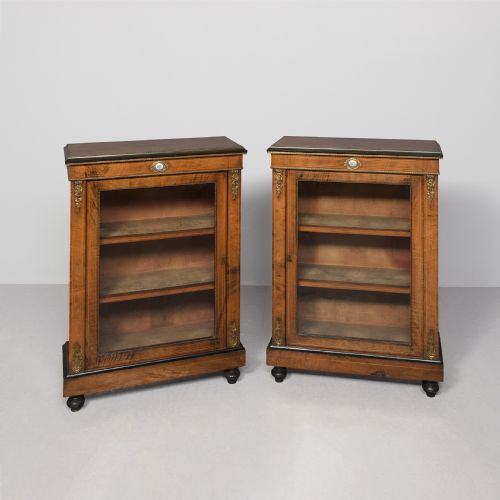
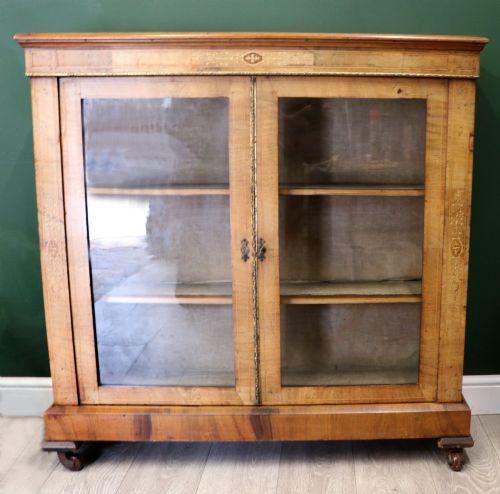
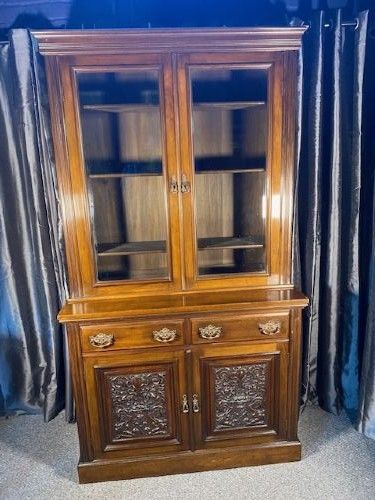
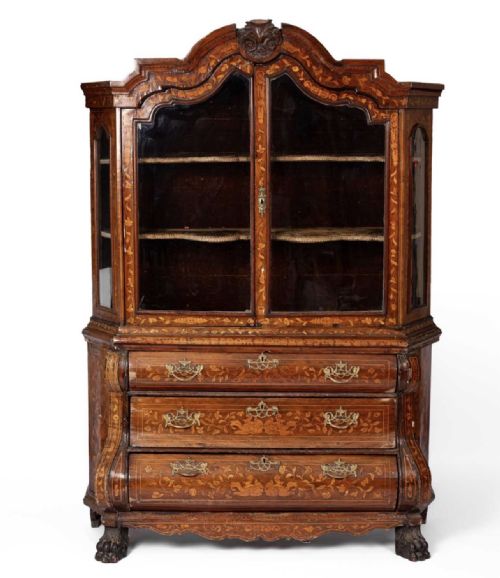
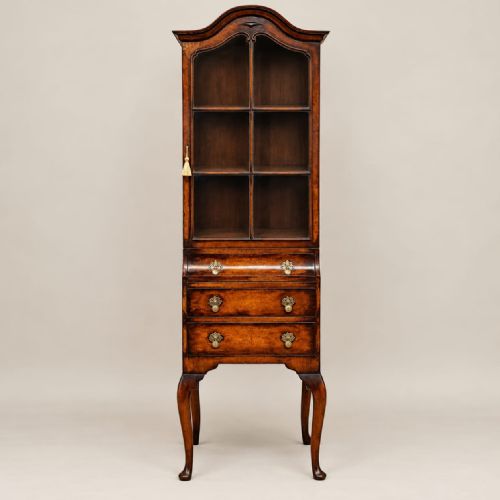
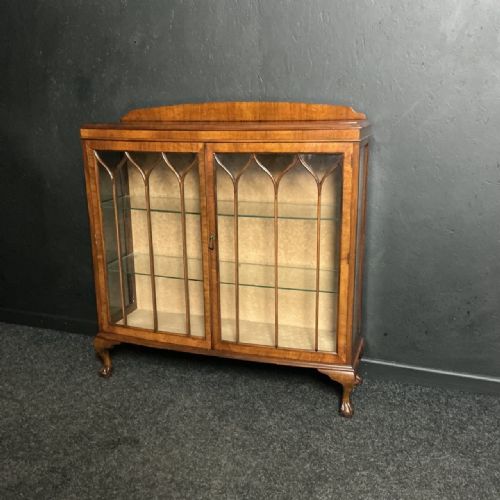
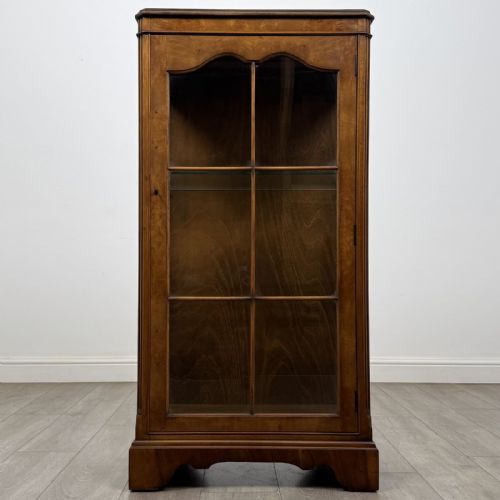
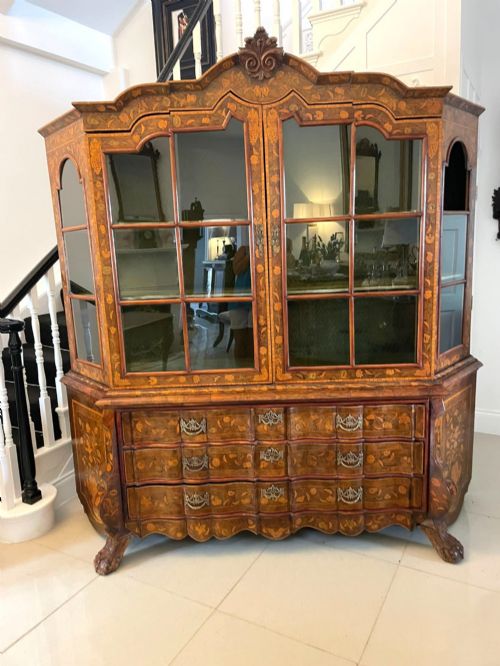
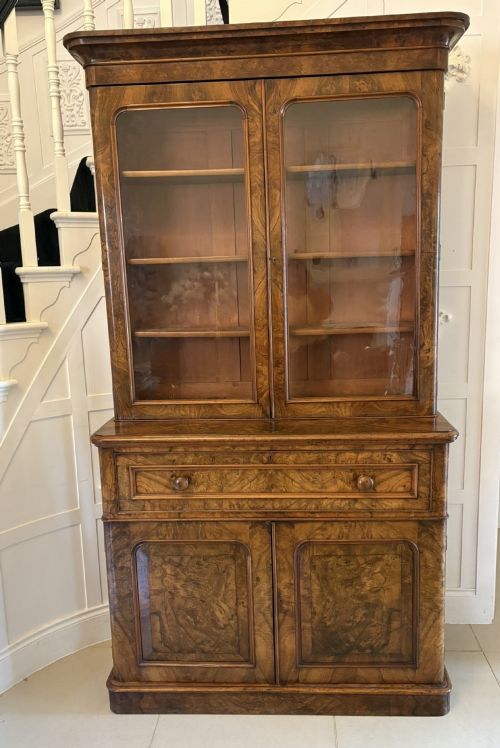
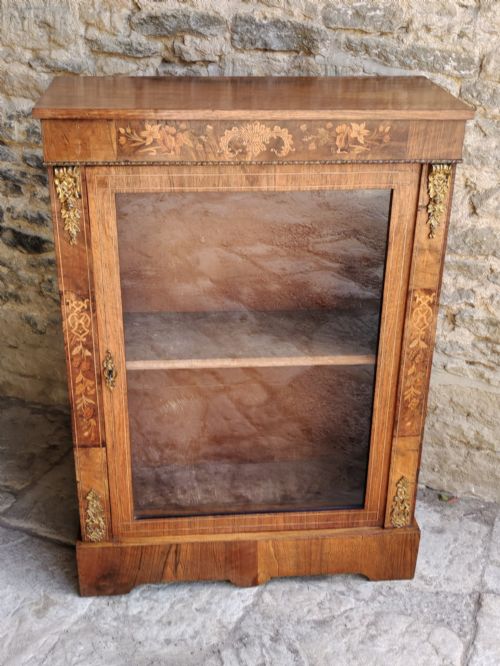
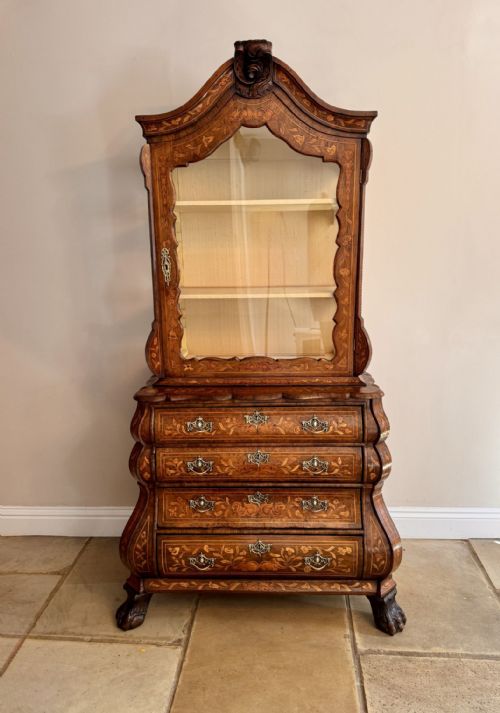
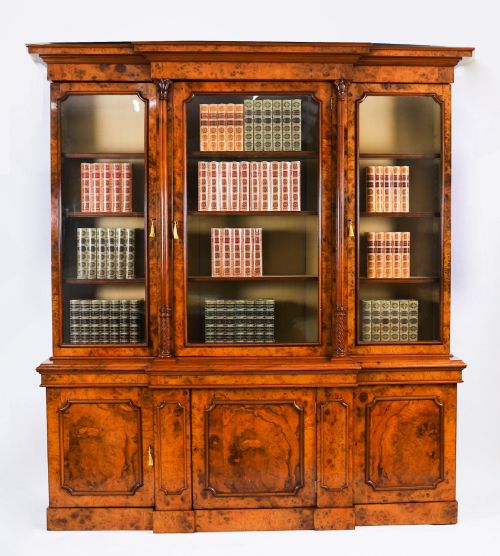
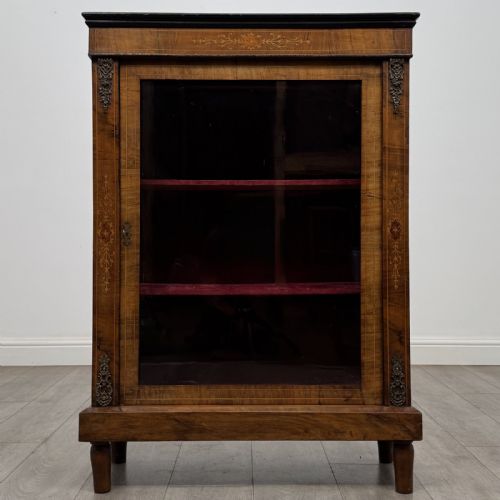
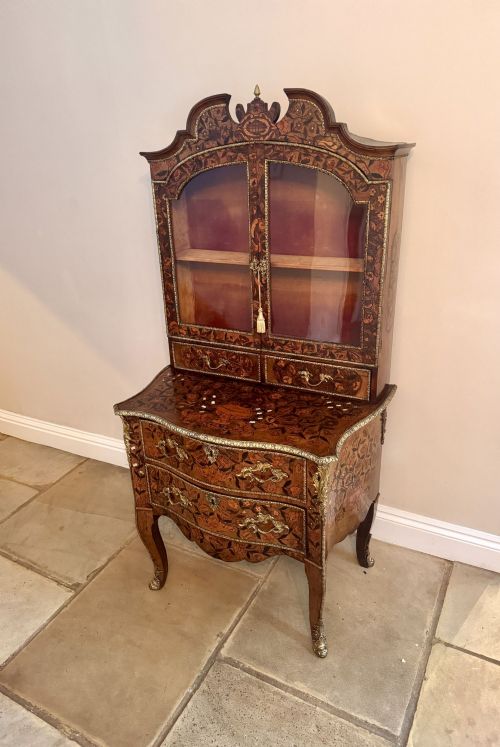
An antique walnut glazed bookcase combines timber shelving with glass panels to protect volumes whilst keeping titles legible. The form ranges from tall Victorian breakfronts to compact pier cabinets and Dutch marquetry display pieces.
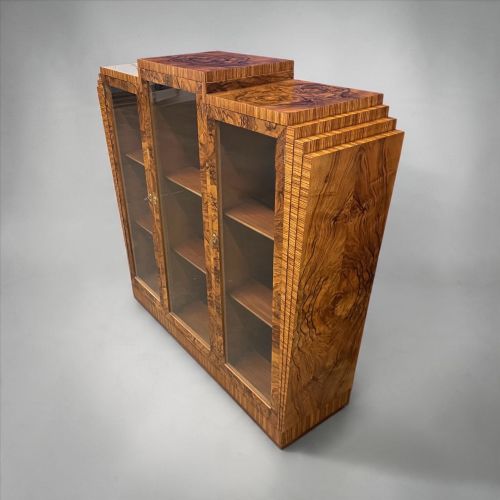
Victorian examples in burr walnut dominate the selection alongside 18th-century Dutch pieces and later Art Deco interpretations. Buyers encounter varying proportions, from narrow upright cabinets to broad credenzas and bombe bases.
Makers such as Maple & Co and Lamb of Manchester appear amongst the English works, sitting alongside continental revival styles. The overarching constant is the use of glass doors paired with walnut timbers.
How they were made
Cabinetmakers utilised walnut veneers, particularly burr walnut, laid over sturdy carcases to create dramatic figured grain patterns across large surfaces. Floral marquetry inlay appears on Dutch examples, requiring precise hand-cut sections of contrasting wood.
Glazing bars divide the glass panels into geometric or arched panes, secured within timber framework. Ormolu mounts, brass hardware, and velvet linings feature on select Victorian and revival pieces, adding decorative contrast to the dark timber.
Antique Walnut Glazed Bookcase Retail Price Guide 2026
Typical asking prices for walnut glazed bookcase among the pieces listed under this phrase on Sellingantiques today, from the lower quarter to the upper quarter. They describe what is for sale here now, not the wider market.
Some walnut cabinets include secret compartments to hide your letters from prying eyes.
What varies in quality
The selection of the walnut veneer dictates visual impact, with symmetrical burr patterns and intricate marquetry separating standard production from finer workshop output. Match of grain across doors and drawer fronts reveals the cabinetmaker's discipline.
Construction methods and secondary woods define structural longevity, while the crispness of carved details, ormolu mounts, and inlay work indicates the original investment in craftsmanship. Original glass panes and intact brass fittings retain higher integrity.
Maple & Co·Lamb of Manchester
The Antique Walnut Glazed Bookcase Glossary
- Burr walnut
- A figured wood grain taken from the growth excrescence of a walnut tree. It yields intricate swirling patterns prized for cabinet fronts.
- Marquetry
- Decorative patterns formed by fitting together small pieces of veneer into timber surfaces. Dutch pieces often employ floral designs.
- Ormolu
- Gilt bronze mounts applied to furniture as decorative hardware. It appears frequently on Victorian and French revival pieces.
- Pier cabinet
- A low freestanding cabinet designed to sit against a wall space between windows. These often feature single glazed doors.
- Breakfront
- A piece of furniture where the central section projects forward from the flanking wings. This creates architectural depth on large bookcases.
Antique Walnut Glazed Bookcase: Frequently Asked Questions
How do I date an antique walnut bookcase?
Dating relies on stylistic markers, construction joints, and secondary timbers used in the carcase. Victorian pieces often display rich burr veneers, whilst 18th-century Dutch examples feature distinct marquetry and bombe silhouettes.
Hardware, hinge types, and glass characteristics also provide clues. Comparing the piece against documented examples from periods like the Regency or Art Deco confirms its era.
Are these bookcases suitable for modern books?
Most antique walnut bookcases accommodate standard volumes, though internal shelf depth varies by period. Pier cabinets and narrow display pieces generally suit smaller collections or decorative objects.
Adjustable shelving is common in later Victorian and Edwardian iterations. Buyers should verify internal dimensions if housing oversized folios or modern hardbacks.
How should I care for walnut veneer?
Walnut requires stable room humidity and protection from direct sunlight to prevent veneer lifting and timber bleaching. Gentle dusting with a dry cloth maintains the polished finish.
Occasional application of appropriate wax feeds the grain without building up heavy residue. Avoid placing cabinets near direct heat sources.