



Pair Victorian Pier Cabinets
These pair victorian pier cabinets bring symmetry and rich timber grain to nineteenth century drawing rooms.
Pair Victorian Pier Cabinets
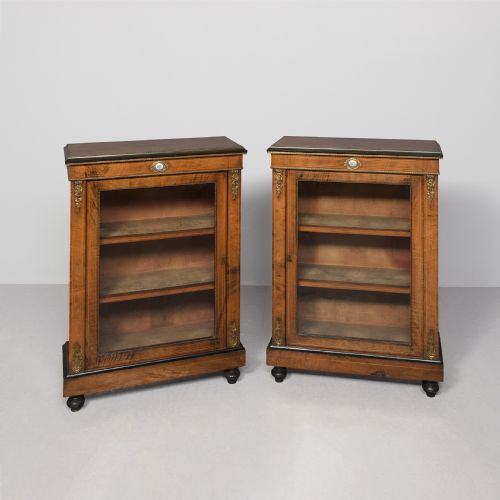
Pair victorian pier cabinets are matched twin display and storage pieces designed to stand against the narrow wall spaces, or piers, between windows in nineteenth century reception rooms. These matching units frequently appear in burr walnut, ebonised wood, and rosewood, often standing upon bracket or plinth bases.
Most examples encountered date from the Victorian era and mid nineteenth century, ranging from simple glazed door side cabinets to ornate display furniture. The forms extend to pedestal cabinets and dwarf pier cabinets, which provide low surfaces for ornaments while housing books or collections behind glass doors.
How they were made
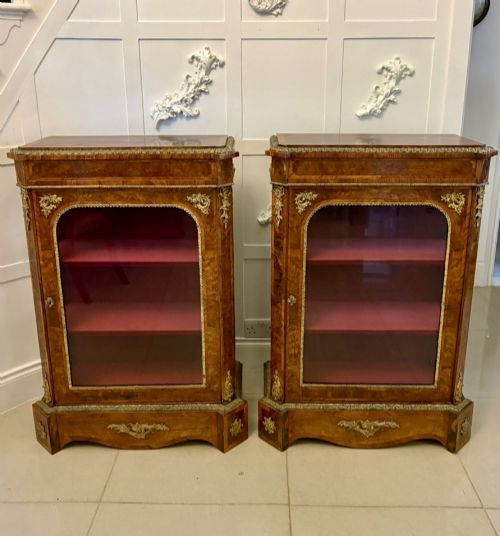
Cabinet makers utilised dense hardwood foundations of walnut, rosewood, and mahogany, applying highly figured burr walnut, satinwood, amboyna, and kingwood veneers to the exterior surfaces. Marquetry inlays of floral and geometric motifs adorn the panels alongside brass stringing and Boulle tortoiseshell work.
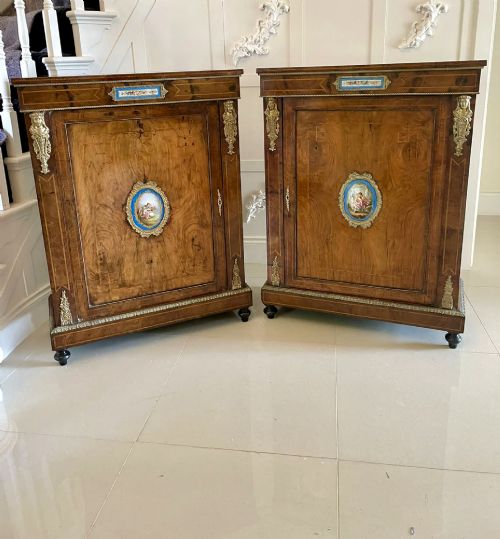
Metal mounts in cast ormolu and gilt bronze edge the glass doors, columns, and plinths, while porcelain plaques are frequently inset into the timber frames. Glass panels are fitted into single or double doors to protect the interior shelves from dust.
Pair Victorian Pier Cabinets Retail Price Guide 2026
Typical asking prices for pair victorian pier cabinets among the pieces listed under this phrase on Sellingantiques today, from the lower quarter to the upper quarter. They describe what is for sale here now, not the wider market.
Materials recorded across these listings include burr walnut, ebonised wood, rosewood, ormolu, porcelain, and Boulle marquetry.
What varies in quality
The sophistication of the timber veneers and the intricacy of the marquetry dictate the distinction between standard and exceptional pieces, with figured burr walnut and multi-wood inlay representing higher workshops. The precision of the cast ormolu mounts and the integration of hand-painted porcelain plaques also elevate the standing of a pair.
Construction fidelity is evident in the matching grain alignment across twin cabinets and the seamless joinery of the ebonised or polished frames. Pairs that retain their original matched glass, gilt mounts, and interior velvet-lined shelving demonstrate superior preservation.
Wilkinson & Sons·Edwards & Roberts
The Pair Victorian Pier Cabinets Glossary
- Pier cabinet
- A low or medium height display cabinet designed specifically for the wall space between tall windows. They typically feature glazed doors and decorative mounts.
- Burr walnut
- A timber taken from walnut tree growths that produces highly figured, swirling grain patterns. It was heavily utilised by nineteenth century cabinet makers for luxury veneer work.
- Marquetry
- The art of applying decorative pieces of veneer to a structural structure to form pictorial or geometric designs. Various exotic woods create contrasting tones within the pattern.
- Boulle
- A style of marquetry utilising brass and tortoiseshell inlaid in counterchange patterns. It gained popularity during revival periods of the nineteenth century.
Pair Victorian Pier Cabinets: Frequently Asked Questions
Where were pier cabinets placed?
These twin cabinets were positioned against the narrow expanse of wall situated directly between two drawing room windows. This placement made effective use of awkward architectural spaces while reflecting natural light from the glass doors.
Today, they adapt well to similar architectural gaps in period or modern interiors, providing symmetry on either side of a fireplace or low console.
What did people store inside them?
Owners kept delicate porcelain, glassware, small ornaments, and treasured books behind the glazed doors to protect them from dust and soot. The enclosed shelving kept valuable collections visible yet secure within busy household rooms.
Modern owners continue to use them for display purposes, housing small collections, ceramics, or curated objects on the fitted interior shelves.
How do you style a pair?
Placing the two matching cabinets symmetrically in a room creates formal balance, whether they flank a doorway, a large mirror, or a fireplace. Keeping the display items inside balanced rather than identical allows the wood grain and gilt mounts to remain the primary focus.
Ensuring adequate surrounding wall space lets the proportions of the timber and ormolu mounts stand out without visual clutter.
How do walnut and ebonised styles differ?
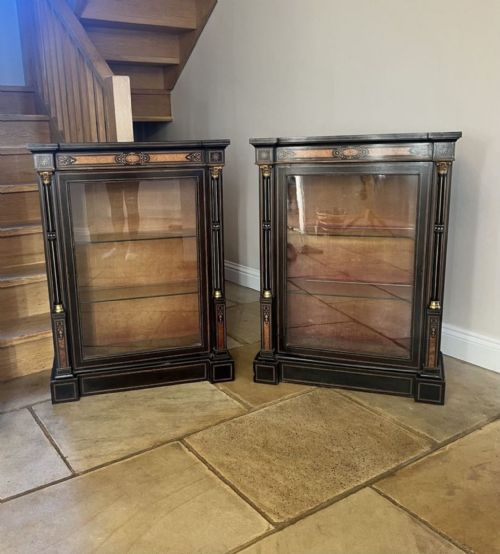
Walnut versions highlight the natural swirling grain and warm tones of burr timber, frequently enhanced with marquetry flowers and brass inlay. Ebonised examples rely on dark, painted or stained finishes contrasted with amboyna, kingwood, or gilt metal mounts for a dramatic appearance.
Both finishes reflect different aesthetic revivals of the nineteenth century, ranging from French influences to Gothic revival designs.