

Walnut Glazed Side Cabinet
Walnut glazed side cabinets are timber storage and display pieces combining glass doors with rich grain, most often seen from the Victorian period.
Walnut Glazed Side Cabinet
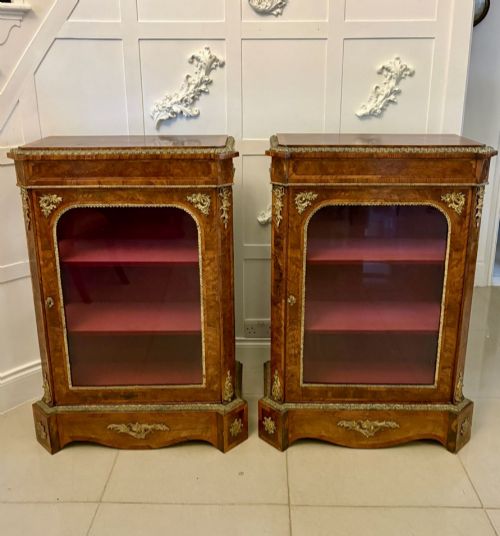
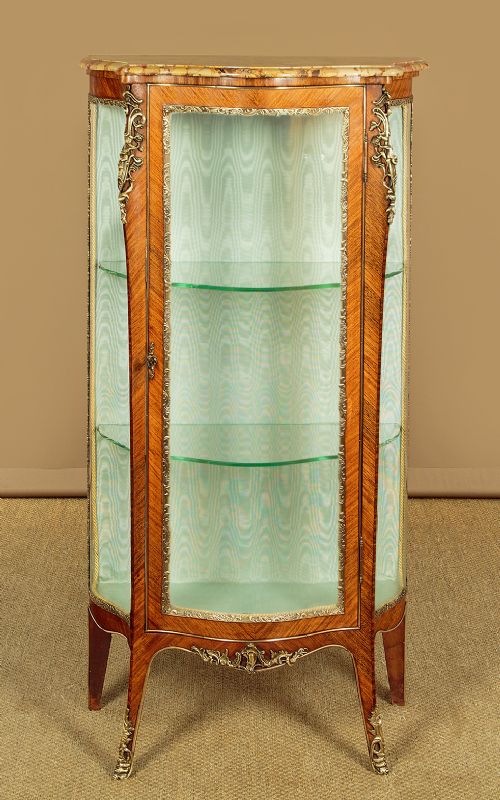
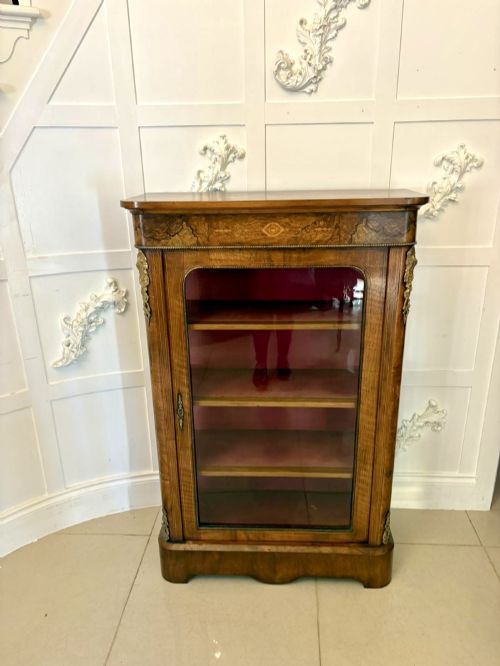
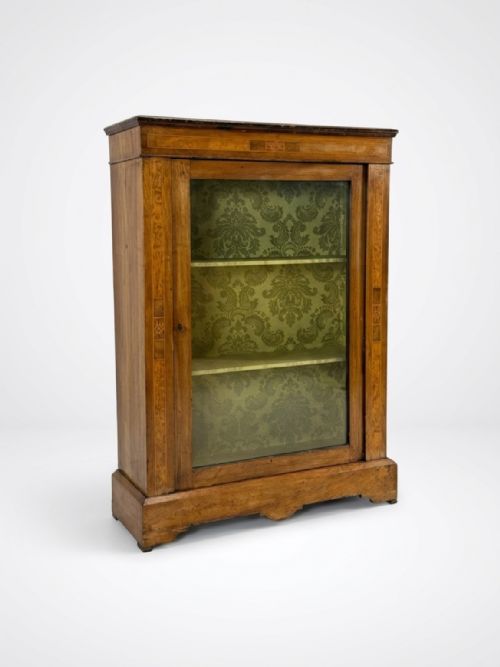
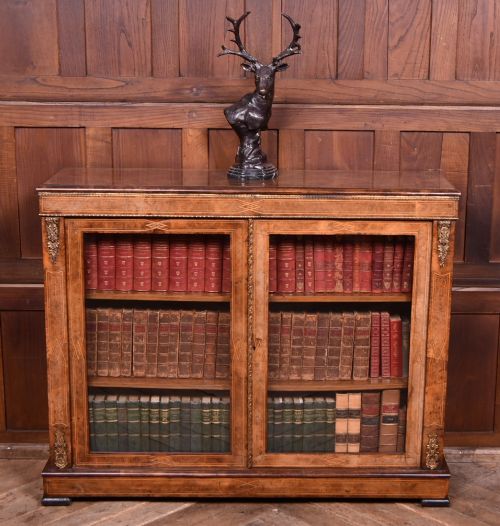
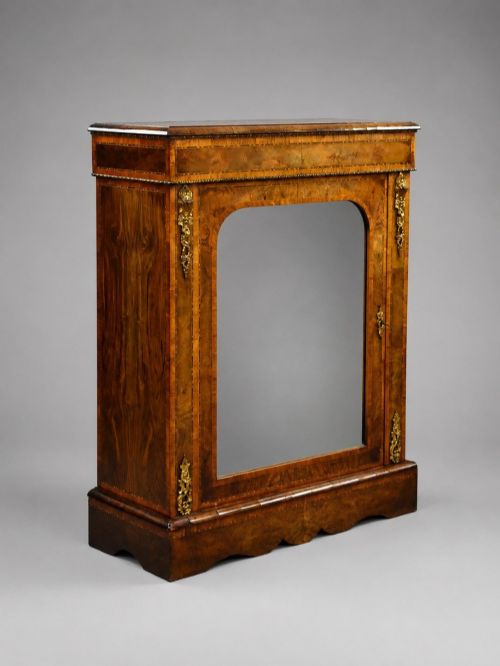
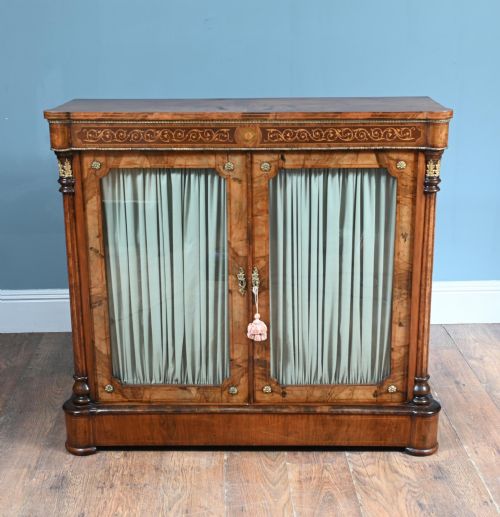
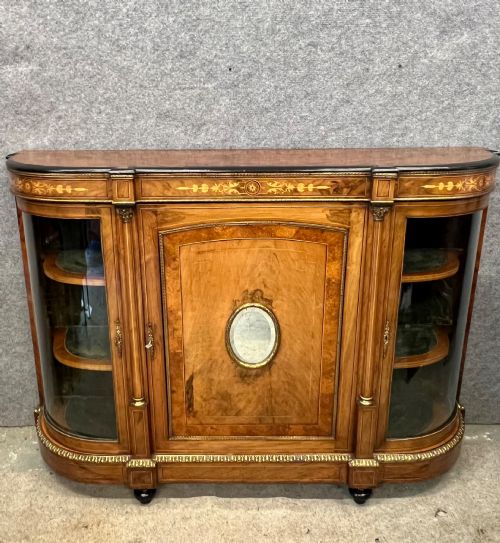
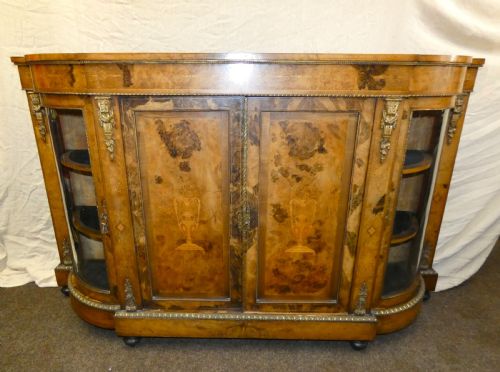
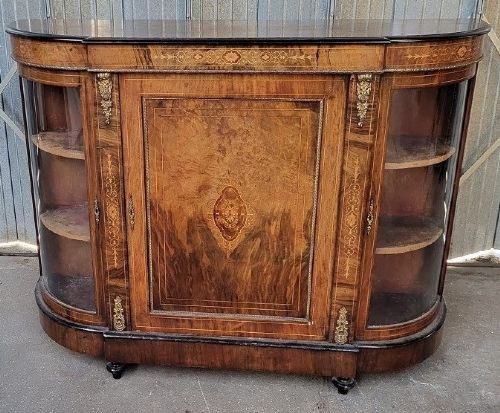
A walnut glazed side cabinet is a domestic furnishing designed for display and storage, prominently featuring glass doors and timber construction. When searching this phrase, a buyer encounters pieces primarily from the nineteenth century, with Victorian pier cabinets and credenzas dominating the selection.
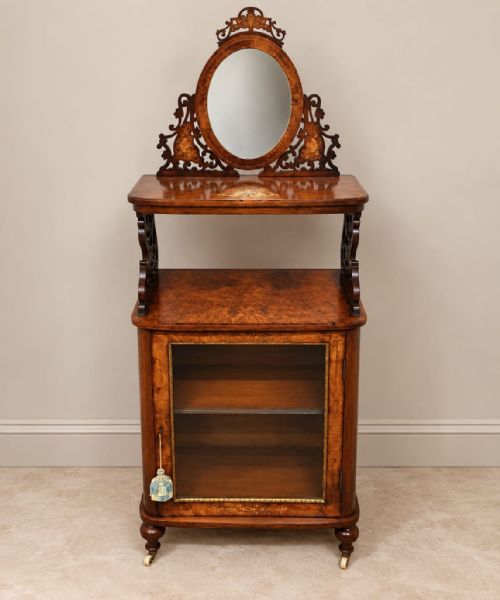
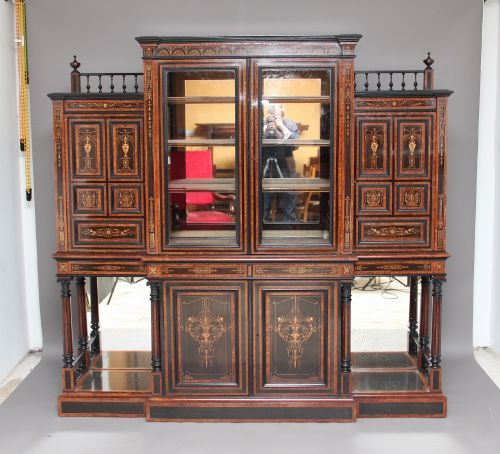
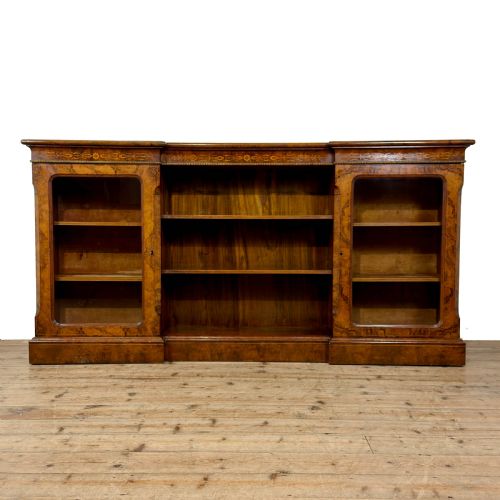
The forms span narrow pier cabinets, low credenzas, breakfront bookcases, and music cabinets. Most examples rely on the distinctive dark grain of walnut or burr walnut, frequently ornamented with glazed panels for displaying porcelain or books.
Materials and construction
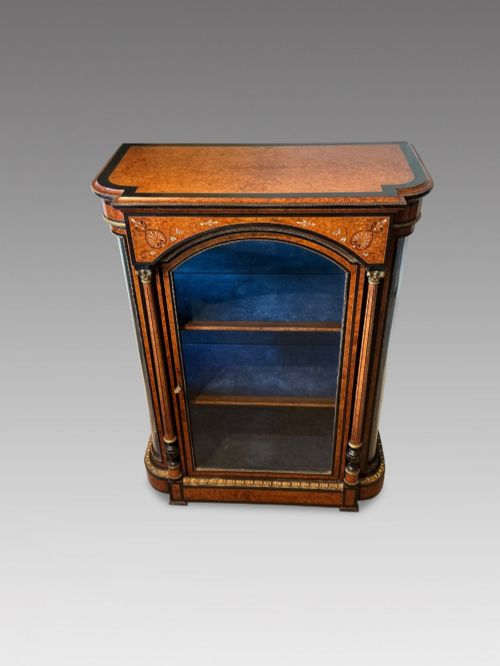
Cabinet makers utilised solid walnut and decorative burr walnut veneers applied to secondary woods, creating striking figured surfaces across the front panels. Glass doors were fitted to display compartments, while internal shelving provided functional storage.
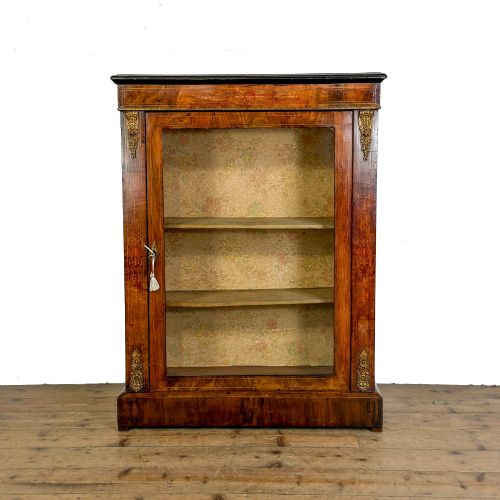
Metal mounts in ormolu and brass reinforced corners, trims, and door surrounds, particularly on French Revival and credenza forms. Inlays in boxwood and satinwood introduced contrasting linear details and floral marquetry.
Listings span the Victorian and Edwardian eras, incorporating French Revival and Aesthetic Movement styles alongside brass, velvet, and boxwood details.
Evaluating quality and craftsmanship
The quality of a walnut glazed side cabinet rests on the selection of the timber veneer and the precision of the marquetry inlay. Superior pieces exhibit lively burr walnut figures and tightly fitted brass or ormolu mounts rather than plain timber surfaces.
Joinery execution defines the enduring structure, visible in the snug fit of glazed doors and the crispness of boxwood stringing. Pieces bearing maker attributions or complex breakfront forms generally represent higher standards of period cabinet making.
Lamb of Manchester
The Walnut Glazed Side Cabinet Glossary
- Pier cabinet
- A narrow cabinet designed to stand against the wall space between windows. These upright pieces typically feature a single glazed door and flat sides.
- Credenza
- A low cabinet or sideboard designed for display and storage, frequently incorporating curved glass end doors and central cupboards. This form became prominent in Victorian drawing rooms.
- Burr walnut
- A prized timber cut from walnut tree growths, producing an intricate swirling grain pattern. Cabinet makers used veneers of this wood on primary display surfaces.
- Ormolu
- Gilded bronze mounts applied to furniture for decorative enrichment. Makers cast these metal details to accent the corners and borders of fine cabinets.
- Marquetry
- Decorative patterns formed by fitting contrasting veneers into a timber surface. Floral and geometric motifs appear frequently on Victorian cabinet doors.
Walnut Glazed Side Cabinet: Frequently Asked Questions
What is a pier cabinet?
A pier cabinet is a narrow display piece designed to fit the wall space between windows in a formal room.
These upright units usually feature a single glazed door protecting delicate items of porcelain or glassware.
How were credenzas used?
Credenzas served as formal display and storage furniture in nineteenth century reception rooms and drawing rooms.
Their long, low proportions allowed owners to display decorative objects on top while keeping collections secured behind glass doors.
What is burr walnut?
Burr walnut is a decorative timber taken from the gnarled growth of a walnut tree, showing swirling grain patterns.
Cabinet makers sliced this wood into thin veneers to cover the primary exterior surfaces of high quality furniture.
How do I date these cabinets?
Dating relies on observing construction methods, timber choices, and stylistic influences recorded in the piece.
Nineteenth century examples often display Victorian proportions, ormolu mounts, and marquetry inlay typical of revival design movements.