



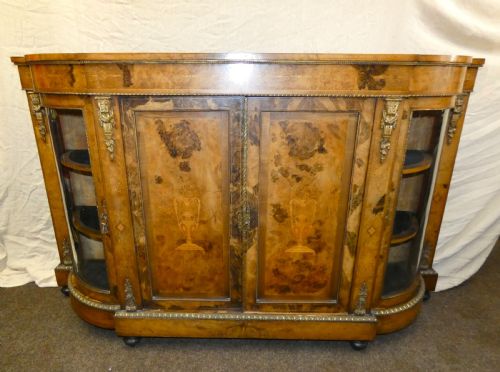
Curved Glass Walnut Cabinet
A curved glass walnut cabinet brings together rich timber figures and rounded glazing, offering a refined way to display treasured objects.
Curved Glass Walnut Cabinet
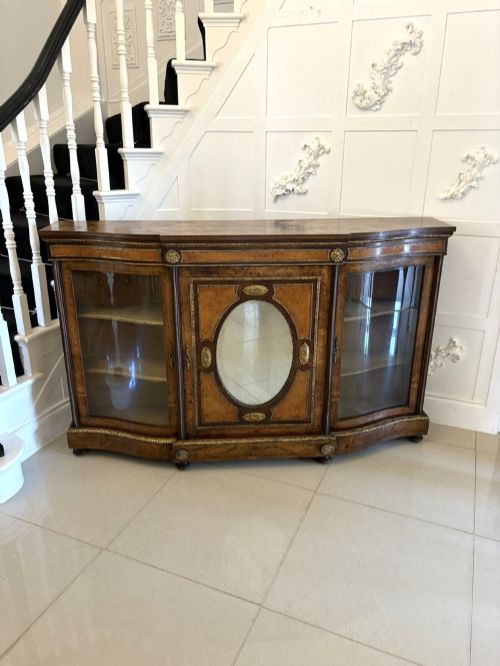
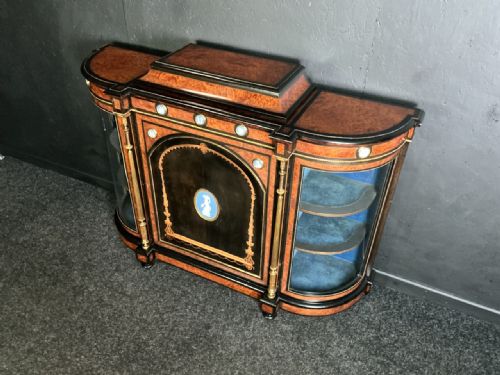
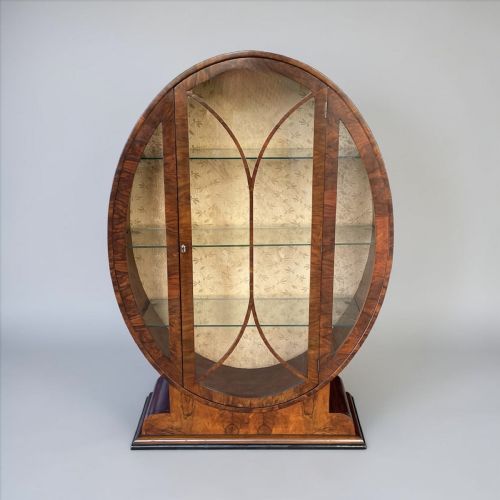
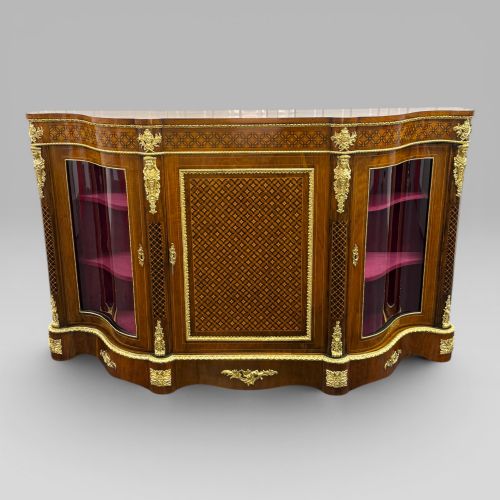
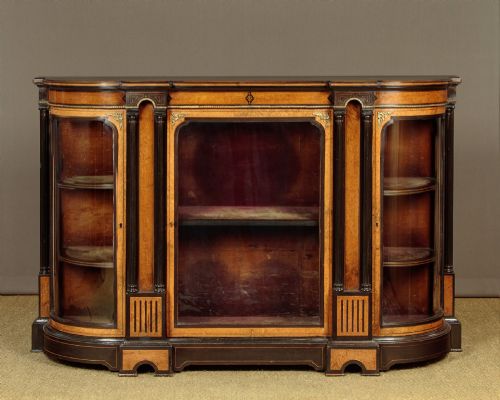
When you search for a curved glass walnut cabinet, you are looking at sophisticated display pieces designed to showcase collections behind rounded or shaped glazing. The version you are most likely to meet on this page is the Victorian credenza or side cabinet, alongside Art Deco display cabinets and vitrines.
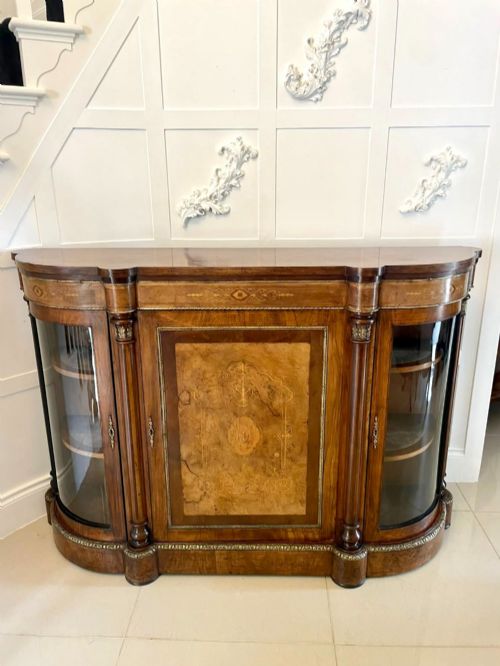
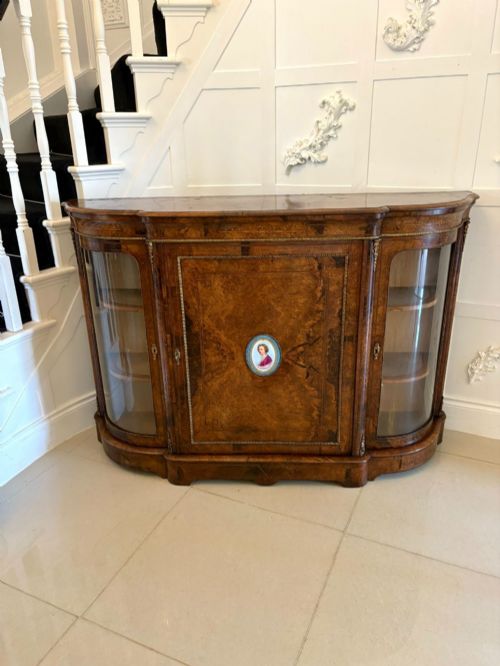
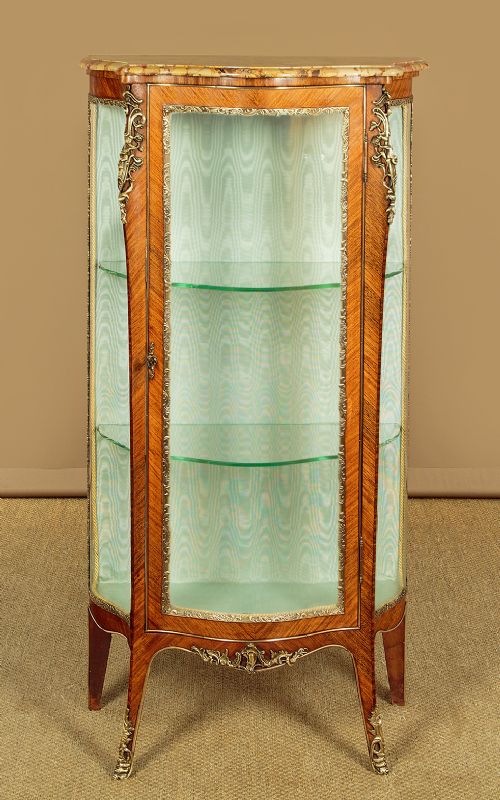
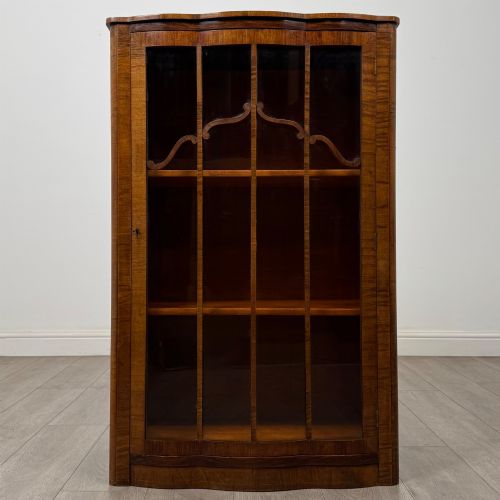
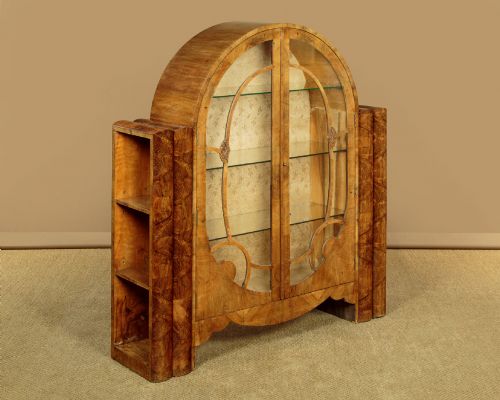
The evidence spans the mid-nineteenth century through to the Art Deco period of the 1930s. Forms range from low credenzas with glazed side doors and central cupboards to tall oval, circular, and cathedral-shaped display cabinets.
Makers and workshops of the Victorian era utilised rich veneers and mounts, while later Art Deco pieces emphasised clean geometric lines paired with figured timber grains. These furniture forms served both decorative and practical functions in formal reception rooms.
How they were made
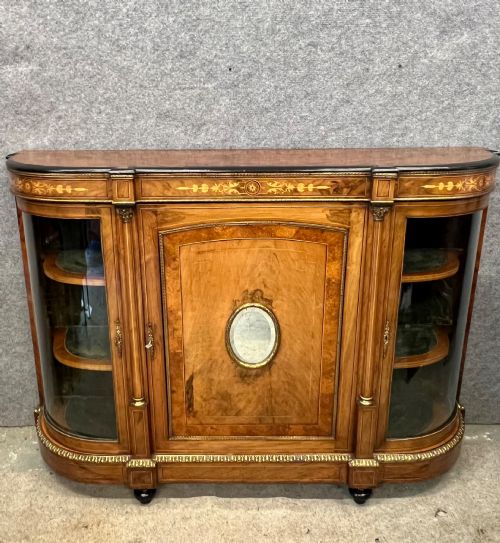
Cabinet makers built these pieces using solid walnut and applied burr walnut, burr yew, or figured walnut veneers to create striking grain patterns across the primary surfaces. Boxwood inlay, marquetry, and satinwood detailing added intricate contrast to the dark timber grounds.
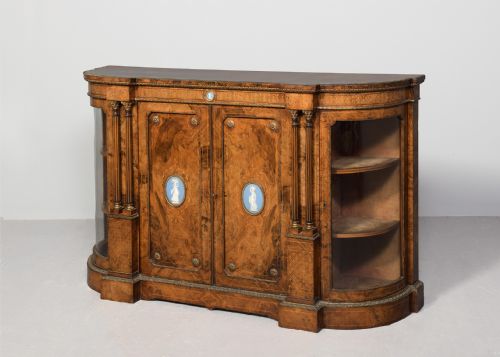
Gilding and metalwork played a significant role, with cast ormolu mounts framing panels and doors, often accompanied by brass details. Porcelain plaques, such as Sevres inserts, and mirrored backs completed the complex decorative schemes found on nineteenth-century examples.
One cabinet adopts a clove-shaped profile, proving that cabinet makers refused to let geometry limit their timber work.
What varies in quality
The calibre of a curved glass walnut cabinet rests upon the selection and matching of the veneer figures across the main doors and panels. High-tier examples display symmetrical burr walnut grains that flow seamlessly around curves and corners.
The sophistication of the secondary decoration dictates the tier of the piece, distinguishing standard production from exhibition pieces. Finely cast ormolu mounts, crisp marquetry, and the integration of porcelain plaques elevate the execution significantly.
Maison Gagneau·Gillow·Maurice Adams
The Curved Glass Walnut Cabinet Glossary
- Burr walnut
- A highly prized timber cut from the growth warts or burls of walnut trees, yielding turbulent and swirling grain patterns. It forms the primary decorative surface on many Victorian credenzas.
- Credenza
- A low dining or reception room cabinet, typically featuring a central cupboard flanked by curved or straight glazed side compartments. It developed into a major display piece in the nineteenth century.
- Ormolu
- Gilt bronze mounts applied to furniture edges and panels to provide architectural definition and metallic contrast. French and English makers utilised these decorative elements extensively.
- Marquetry
- The art of applying small pieces of wood veneer to form decorative patterns and pictures on a surface. It appears frequently on the friezes and doors of Victorian walnut cabinets.
- Vitrine
- A glass-fronted display cabinet designed specifically for the exhibition of porcelain, silver, and curiosities. The term covers both freestanding upright cabinets and low table-height cases.
Curved Glass Walnut Cabinet: Frequently Asked Questions
How do I clean walnut and ormolu surfaces?
Maintenance requires dry dusting with a soft, lint-free cloth to prevent the accumulation of abrasive particles on the veneer. Avoid silicone-based polishes, opting instead for traditional microcrystalline wax applied sparingly to nourish the timber.
Ormolu mounts should be cleaned with extreme care using a dry brush, keeping moisture and cleaning agents away from the surrounding wood and veneer.
How do I distinguish Victorian from Art Deco cabinets?
Victorian examples rely on heavy ornamentation, including intricate marquetry, boxwood inlay, ormolu mounts, and glazed side curves framing central wooden cupboards. Their timber is typically dark burr walnut with rich figuring.
Art Deco pieces from the 1930s favour minimalism, showcasing large expanses of figured walnut without historical revival motifs, often featuring full glass doors and geometric shapes like oval or cathedral profiles.
What is the purpose of the mirrored back?
Mirrored interiors inside display cabinets and credenzas amplify the light entering through the glass panels. This reflection illuminates the displayed objects from behind, revealing details on all sides of porcelain and glassware.
In nineteenth-century rooms with limited natural light, these mirrors also created an illusion of greater depth within the cabinet.