


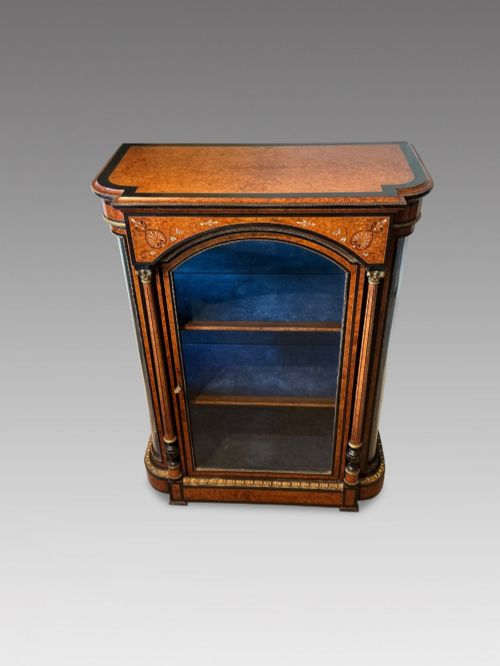
Marquetry Burr Walnut Cabinet
A marquetry burr walnut cabinet combines figured wood with delicate inlay, offering both functional storage and striking period elegance.
Marquetry Burr Walnut Cabinet
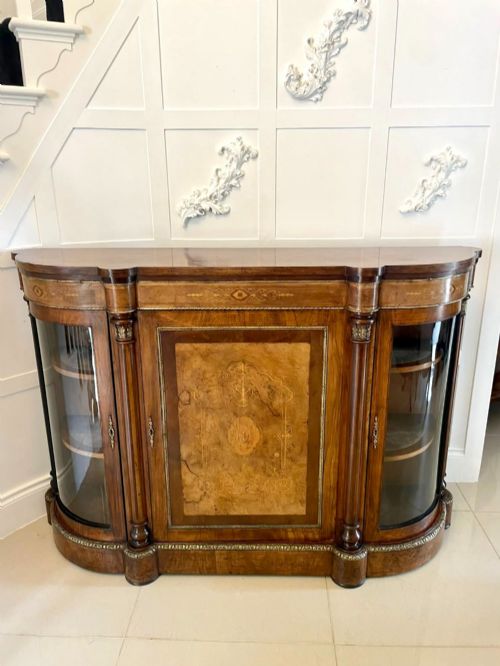
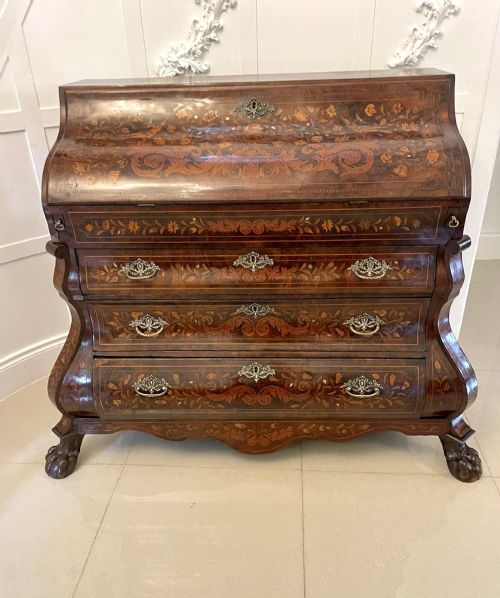
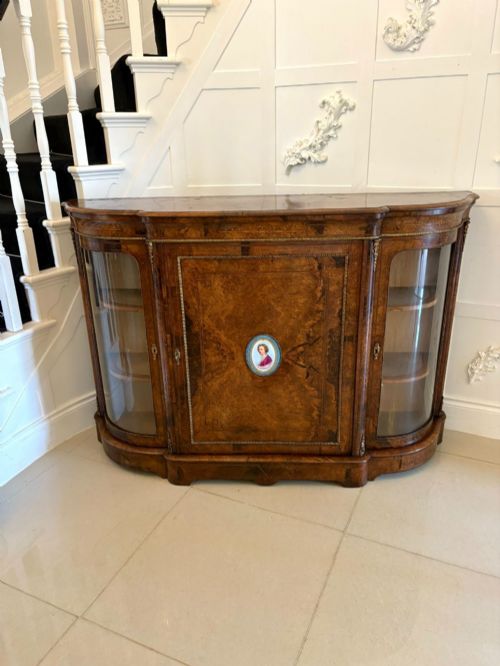
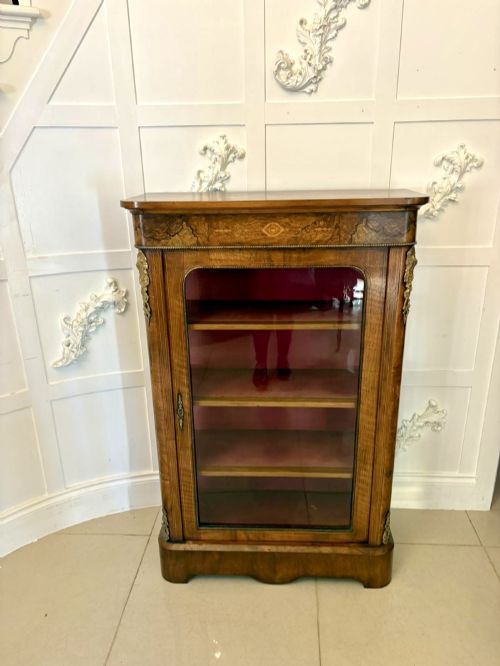
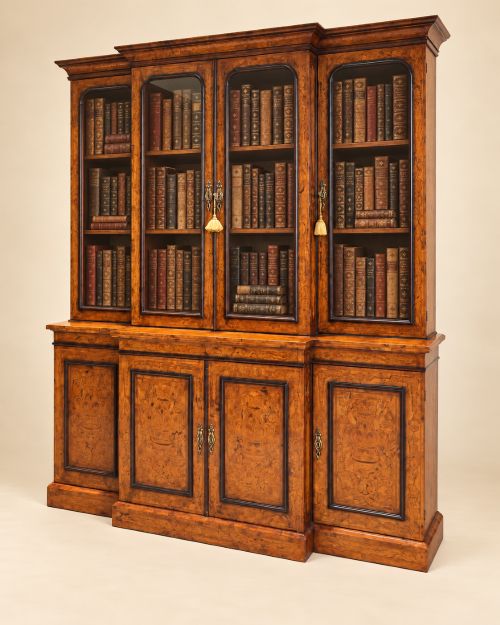
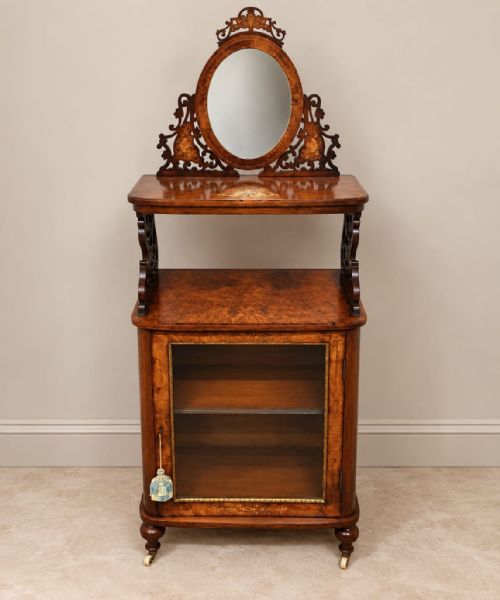
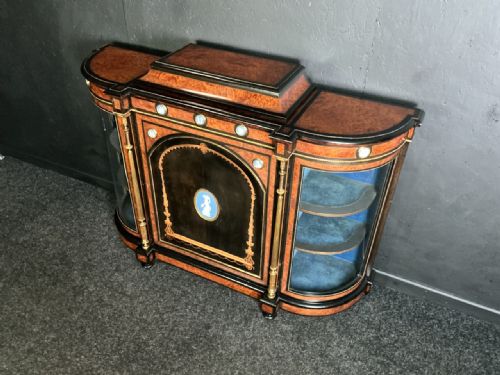
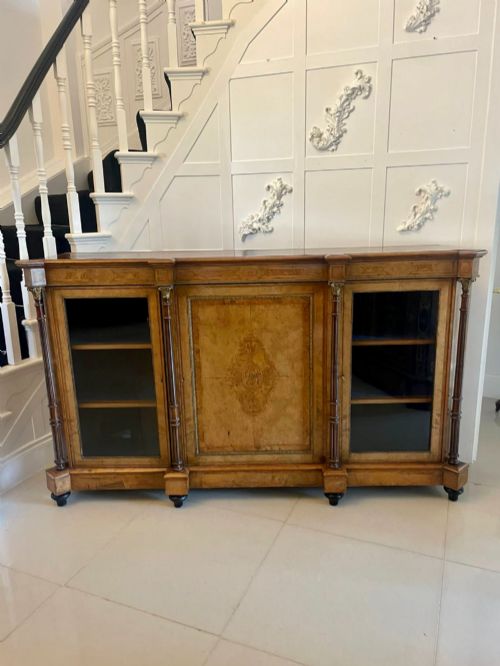
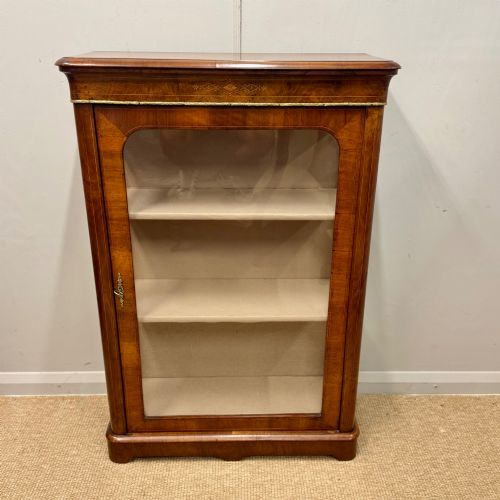
A marquetry burr walnut cabinet encompasses a wide range of forms designed for display and storage, from compact pier cabinets to large credenzas and bookcases. The selection frequently includes pieces from the Victorian era alongside 18th-century examples and later Art Deco designs.
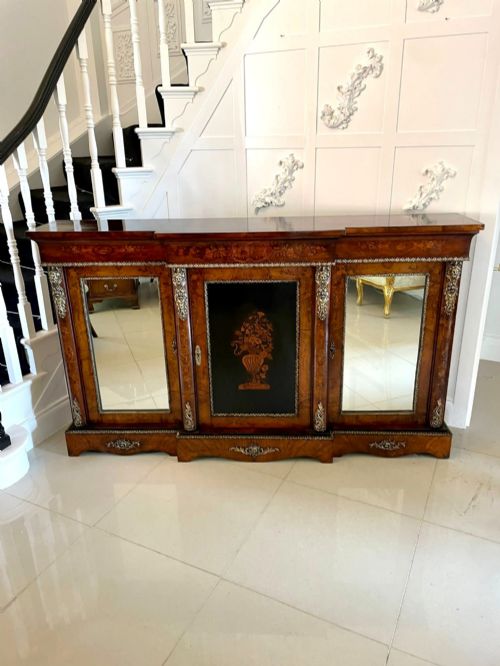
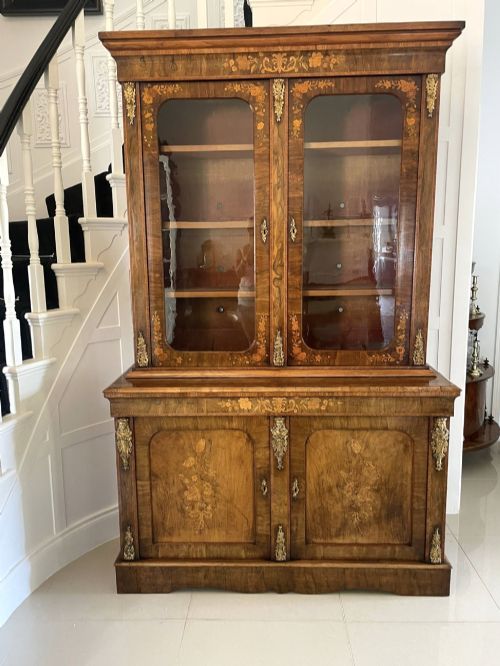
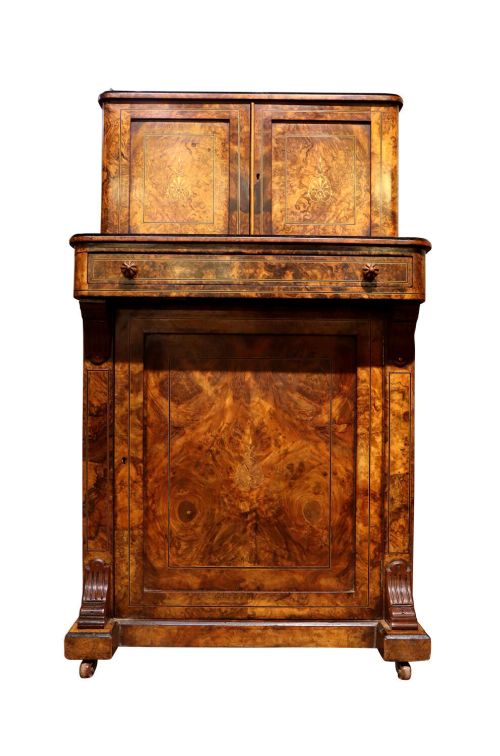
Credenzas and side cabinets dominate the available selection, often featuring glazed doors, shelving, and elaborate floral marquetry. Smaller pier cabinets and bureau bookcases also appear regularly, originating primarily from English and Dutch workshops across the nineteenth century.
Materials and Technique
Craftsmen built these pieces using solid timbers overlaid with highly figured burr walnut veneers, prized for their swirling grain patterns. Boxwood and other contrasting woods were then meticulously hand-cut and inlaid into the surface to form intricate floral and geometric motifs.
Metal mounts in brass or ormolu frequently accent the corners, borders, and doors, complementing the glazed panels and velvet-lined interiors seen on display pieces.
Materials recorded on this page include burr walnut, ebonised wood, boxwood inlay, brass, and ormolu mounts.
Assessing Craftsmanship
The distinction between standard and exceptional pieces rests upon the complexity of the marquetry and the choice of the burr walnut veneer. Finer examples display tightly swirled, symmetrical grain across the entire surface without interruption, paired with crisp, multi-toned floral inlays.
The integration of cast ormolu mounts and the precision of the cabinetwork itself further elevate a piece. Superior construction ensures doors close flush and structural elements remain entirely stable.
Gillows·Epstein
The Marquetry Burr Walnut Cabinet Glossary
- Marquetry
- Decorative patterns formed by fitting together small pieces of veneer into wooden panels. This technique creates detailed pictorial designs, often featuring flowers and foliage.
- Burr Walnut
- Timber taken from the growth excrescence of a walnut tree, yielding rich, swirling grain patterns. Cabinetmakers sliced this wood into thin veneers to cover primary carcases.
- Ormolu
- Gilded bronze mounts applied to furniture for decorative accent. These metal fittings were cast and chased before being attached to corners and doors.
- Credenza
- A low cabinet featuring cupboards or glazed display sections, historically utilised in principal rooms. Victorian iterations often incorporate central bow-front doors flanked by curved glass panels.
- Pier Cabinet
- A narrow display cabinet built specifically to fit the wall space between windows. These slim pieces typically house delicate shelving behind a single glazed door.
Marquetry Burr Walnut Cabinet: Frequently Asked Questions
Where were these cabinets placed?
These cabinets were primarily designed for formal reception rooms, drawing rooms, and parlours where guests gathered. Larger credenzas anchored long walls, while narrow pier cabinets fitted neatly into the masonry spaces between tall windows.
Interior shelving allowed owners to display porcelain, books, and decorative objects behind glass panels, keeping prized possessions protected from dust.
How do I identify the period?
Dating relies on combining the overall silhouette, secondary timbers, and mounting styles with historical design shifts. Victorian examples frequently utilise elaborate ormolu mounts and floral marquetry, whereas earlier 18th-century pieces often display bombe profiles and distinct Dutch influences.
Art Deco variations from the twentieth century lean towards geometric simplicity and streamlined veneers, stepping away from revivalist ornamentation.
How should I care for burr walnut?
Burr walnut veneer requires stable indoor humidity and protection from direct sunlight to prevent the thin wooden surfaces from drying out or fading. Gentle dusting with a dry, soft cloth maintains the finish without stripping natural oils from the antique polish.
Avoiding placement near heat sources ensures the underlying carcase wood and delicate marquetry inlays remain secure and properly aligned.