
Victorian Walnut Side Credenza
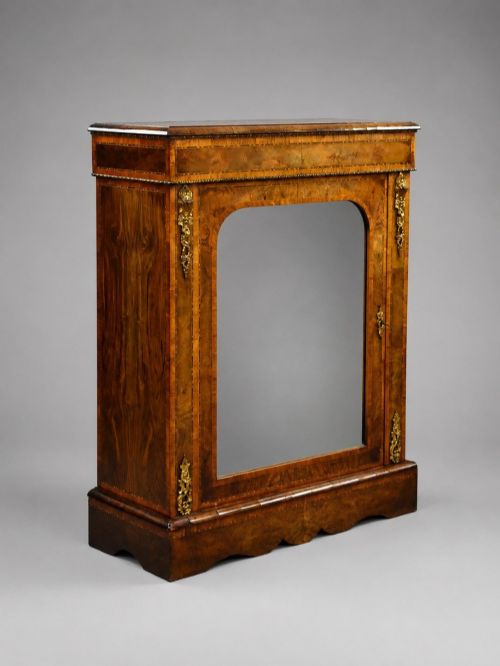
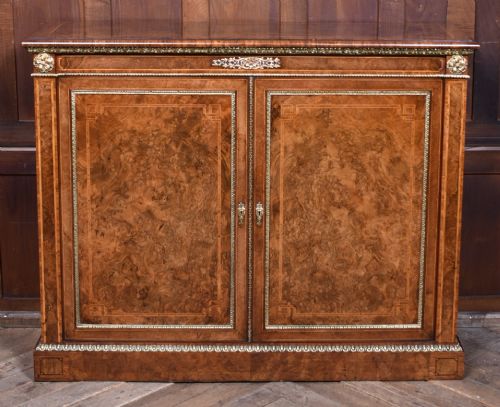
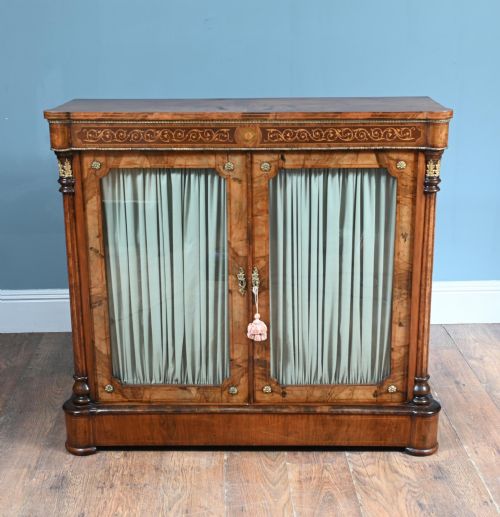
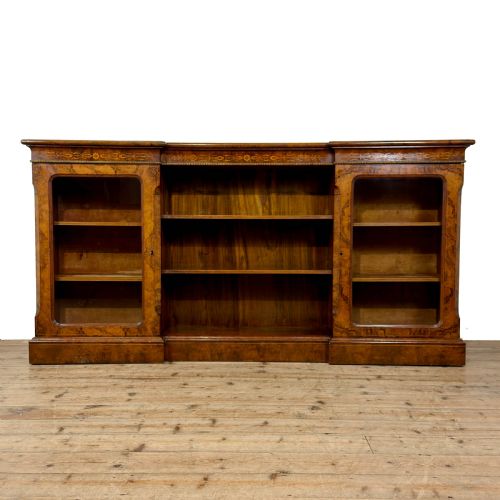
When you search for a victorian walnut side credenza, you encounter sophisticated nineteenth-century display furniture designed to anchor a formal drawing room.
Victorian Walnut Side Credenza
A victorian walnut side credenza represents a refined class of nineteenth-century domestic cabinetry, encompassing low freestanding cupboards, pier cabinets, and glazed display pieces. These items originate predominantly from the Victorian period, with production spanning the mid to late nineteenth century.
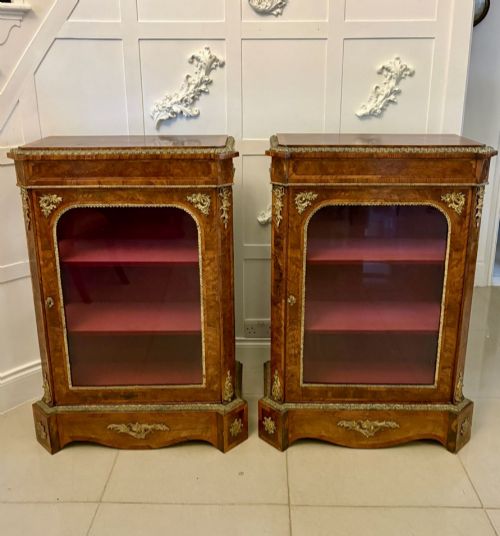
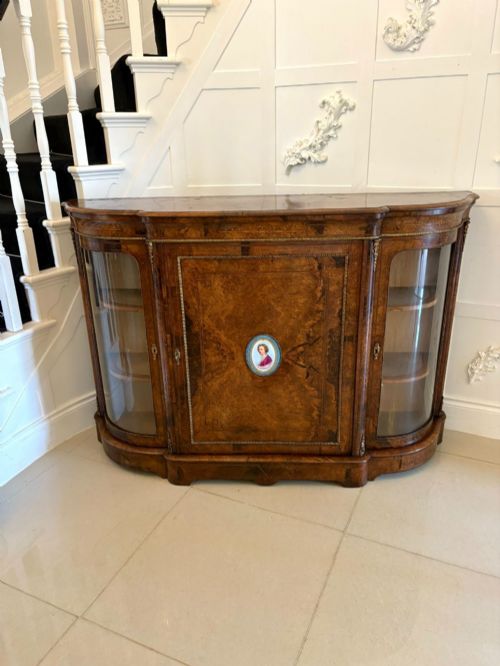
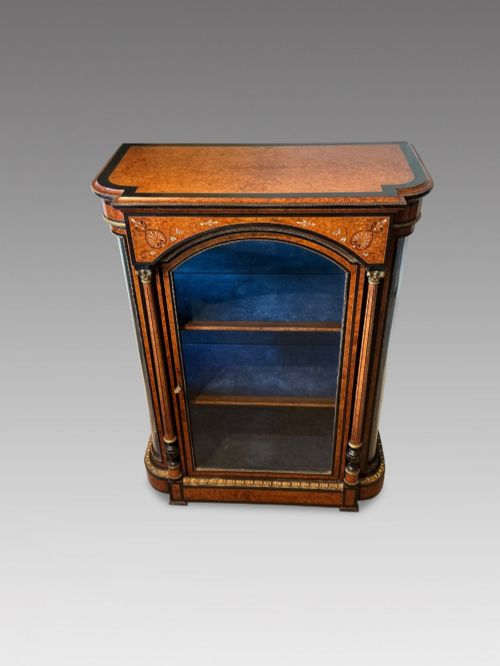
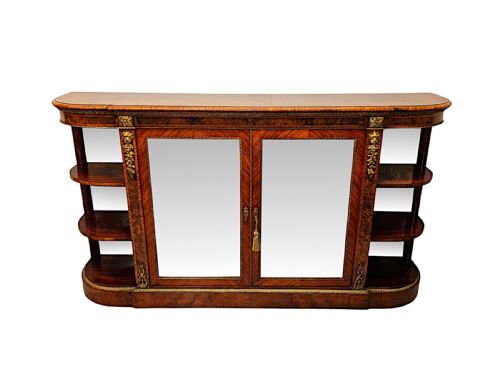
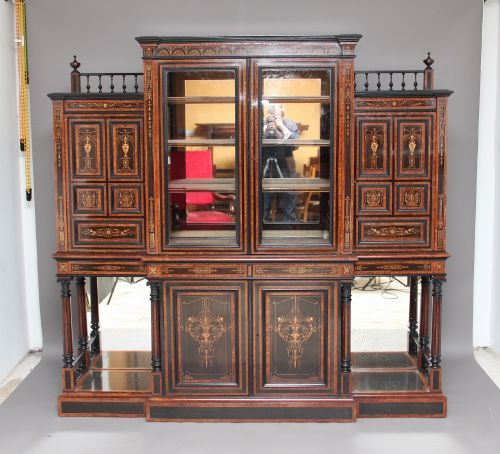
The most common formats on this page include serpentine and breakfront credenzas alongside narrower pier cabinets, frequently featuring central glass doors flanked by curved side compartments. Such pieces served to display ornaments, porcelain plaques, and treasured books in formal reception rooms.
Makers and workshops of the era employed diverse revival styles, incorporating French Louis XVI, Rococo, and Aesthetic Movement details into standard side cabinet forms. Pieces range from modest single-door cupboards to large multi-door credenzas with marble tops and mirrored backs.
How They Were Made
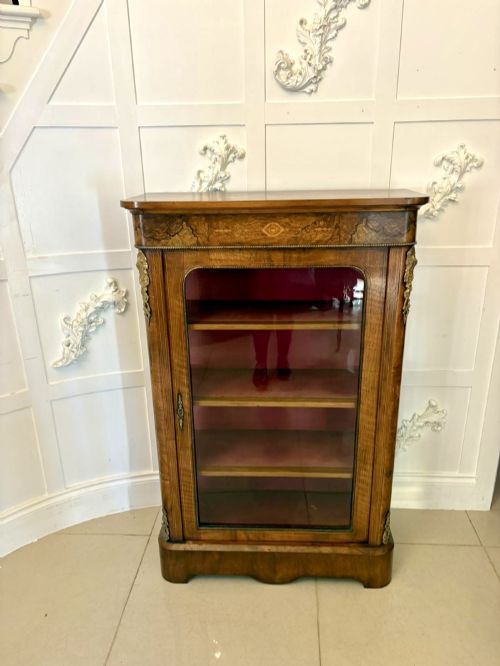
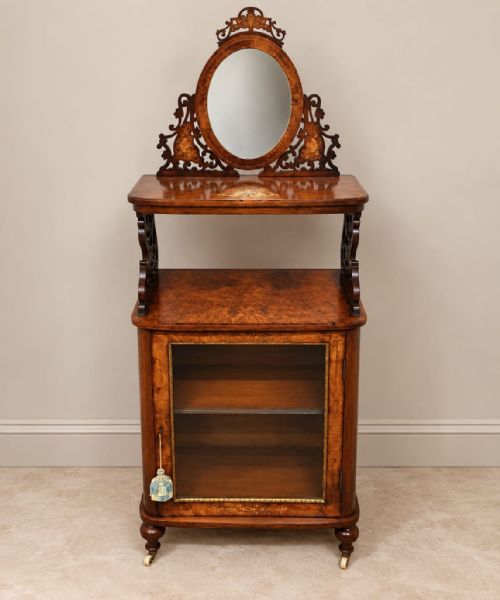
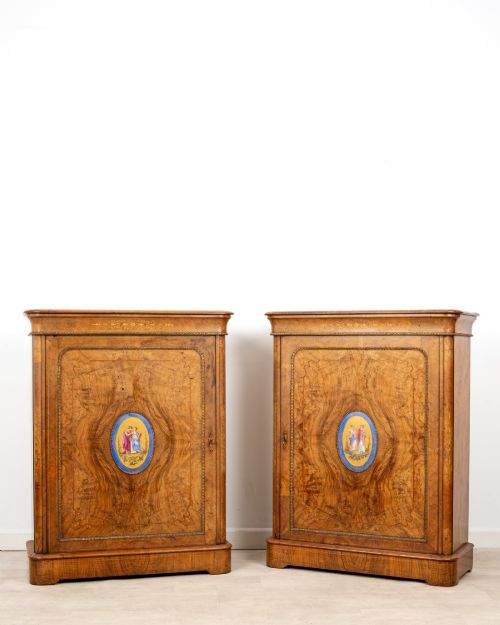
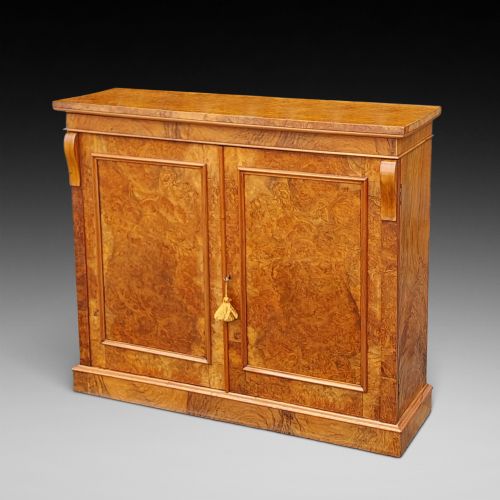
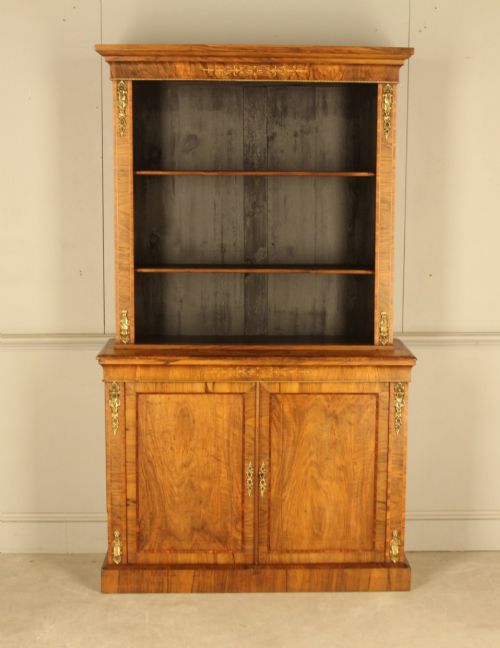
Craftsmen utilised figured burr walnut veneers applied over solid secondary timbers to create rich, swirling grain patterns on flat surfaces and curved doors. Marquetry inlays of floral motifs and delicate scrolling lines frequently decorate the primary panels.
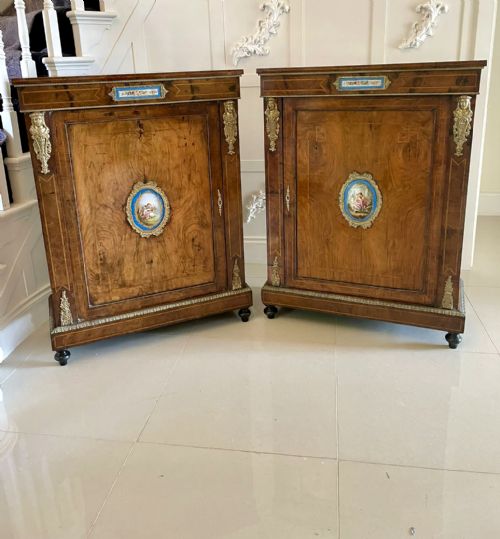
Gilt bronze or brass ormolu mounts punctuate the timber framework, accentuating corners, stiles, and door borders. Selected examples integrate painted porcelain plaques or panels into the upper frieze and door centres.
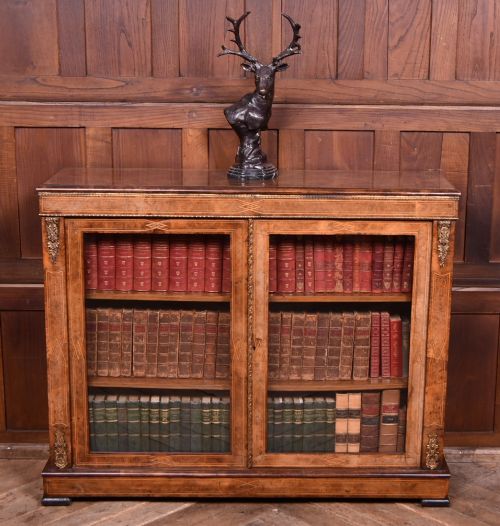
Glass panels are typically glazed into timber framework for display cabinets, while interiors are fitted with adjustable wooden shelving and lined compartments. Ebonised wood details and contrasting dark stringing provide structural definition to the lighter walnut surfaces.
Listings feature Victorian walnut cabinets incorporating burr walnut veneers, glazed doors, porcelain plaques, and gilt bronze ormolu mounts.
What Varies in Quality
The distinction between standard commercial output and superior craftsmanship rests on the selection and matching of the burr walnut veneers. High-tier examples display symmetrical, richly figured grain across every surface without awkward joints or mismatched patches.
The precision and depth of floral marquetry inlay indicate the skill invested by the cabinetmaker, alongside the crispness of cast ormolu mounts and applied brass detailing. Finer pieces also feature integrated locks stamped by established makers and robust internal carcases built from quality timbers.
Gillows·Lamb of Manchester·Edwards and Roberts of London
The Victorian Walnut Side Credenza Glossary
- Credenza
- A low cabinet or sideboard designed for display and storage, popular in Victorian drawing rooms. It usually comprises a central cupboard flanked by curved glass-fronted side cabinets.
- Burr Walnut
- A specialised timber veneer harvested from the wart-like growths on walnut trees. It yields intricate, swirling grain patterns highly prized for Victorian decorative furniture.
- Ormolu
- Gilt bronze mounts attached to furniture surfaces for decorative effect. The technique involves applying a gold amalgam to bronze fixtures.
- Marquetry
- The art of applying pieces of veneer to a structure to form decorative patterns and pictures. Floral designs and geometric banding are common on nineteenth-century cabinets.
- Pier Cabinet
- A narrow display cabinet designed to fit against the wall space between windows. These upright cases often feature glazed doors and velvet-lined interiors.
Victorian Walnut Side Credenza: Frequently Asked Questions
What is a victorian walnut side credenza used for?
These cabinets served primarily as formal display and storage furniture in nineteenth-century reception rooms. Homeowners utilised the glass-fronted sections to showcase fine porcelain, decorative objects, and bound volumes.
The flat top surface provided space for lamps, clocks, and occasional ornaments during social gatherings. Cupboard interiors also held table linen, papers, or tea service items out of sight.
How do I identify a burr walnut cabinet?
Burr walnut is recognisable by its distinct, swirling grain patterns filled with small knot clusters and organic eyes. The veneer creates a highly decorative, mottled surface texture quite different from straight-grained timber.
Cabinetmakers carefully matched these figured sheets across door panels to produce symmetrical patterns. This timber was selected specifically for high-status Victorian reception furniture.
How do I care for antique walnut furniture?
Keep walnut cabinets away from direct sunlight and heat sources to prevent the burr veneer from drying out or splitting. Maintain a stable indoor humidity level in the room where the furniture stands.
Dust the timber gently with a dry, soft cloth rather than using silicone-based polishes. Wax can be applied sparingly to nourish the polished surface when the wood appears dry.