

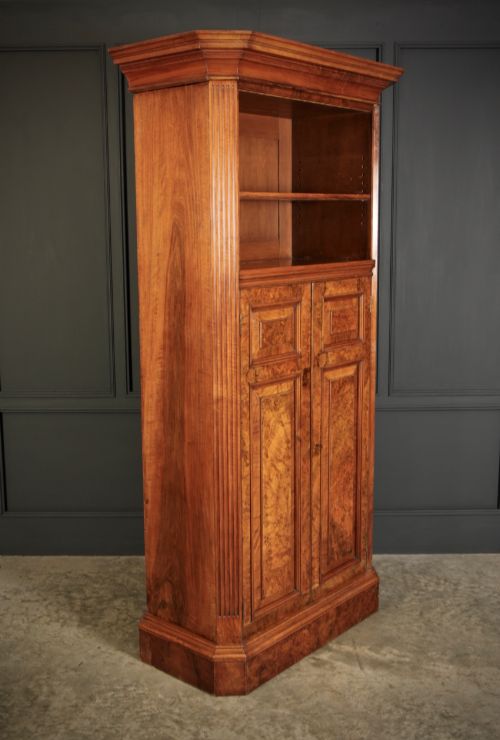
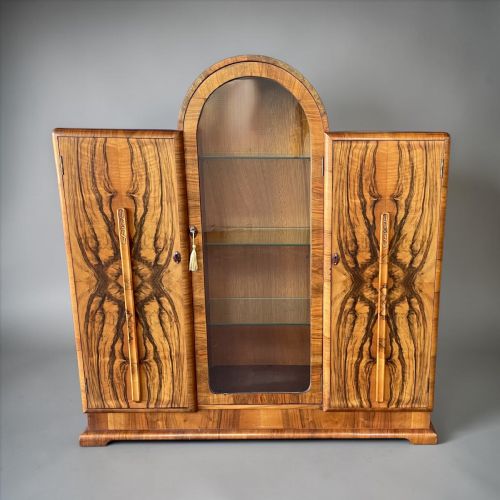
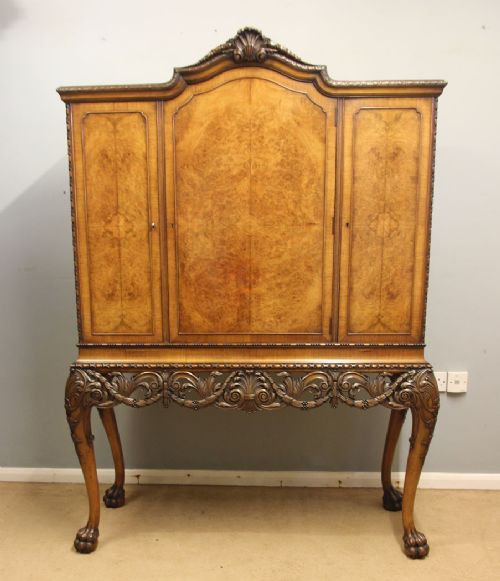
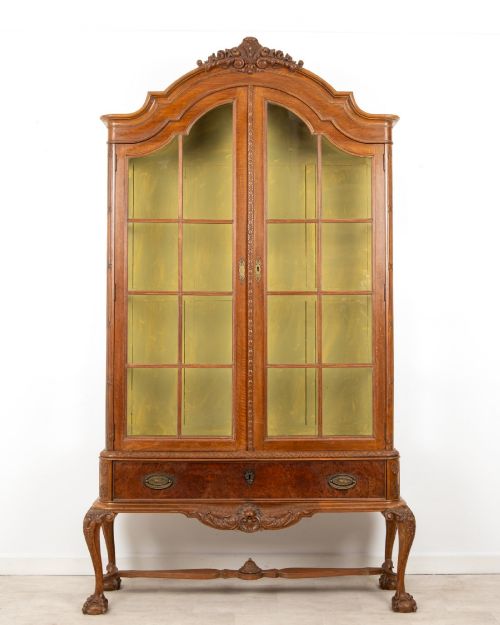
Burr Walnut Display Cupboard
A burr walnut display cupboard brings extraordinary figured timber and glazed shelving into a room, offering both presence and storage.
Burr Walnut Display Cupboard
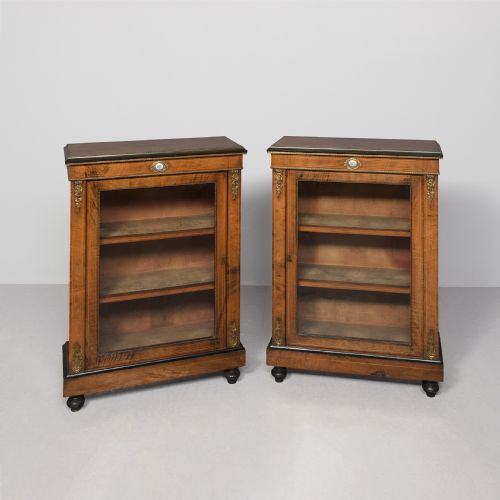
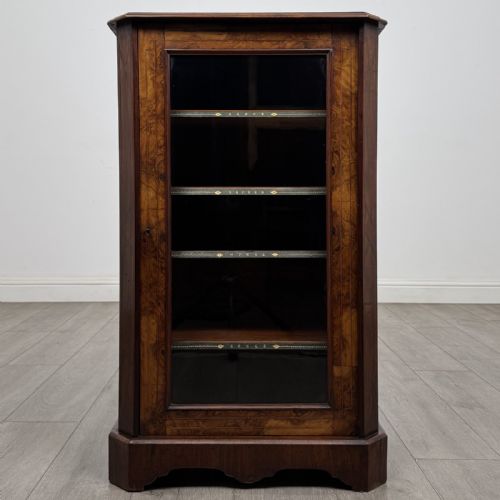
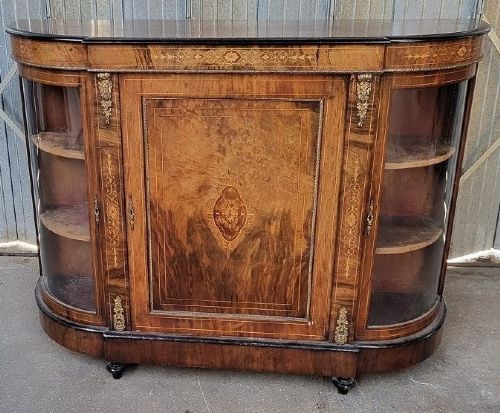
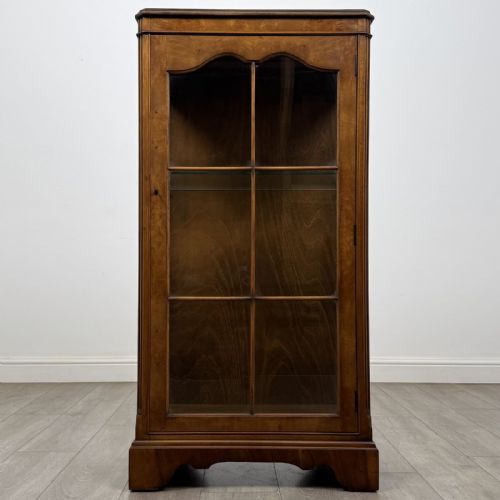
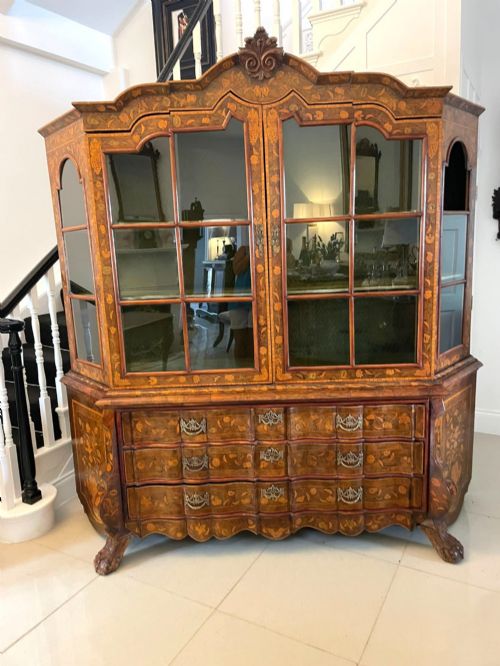
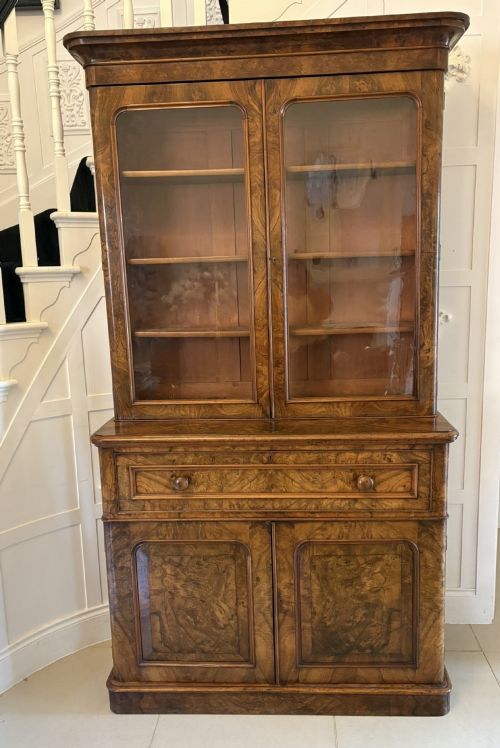
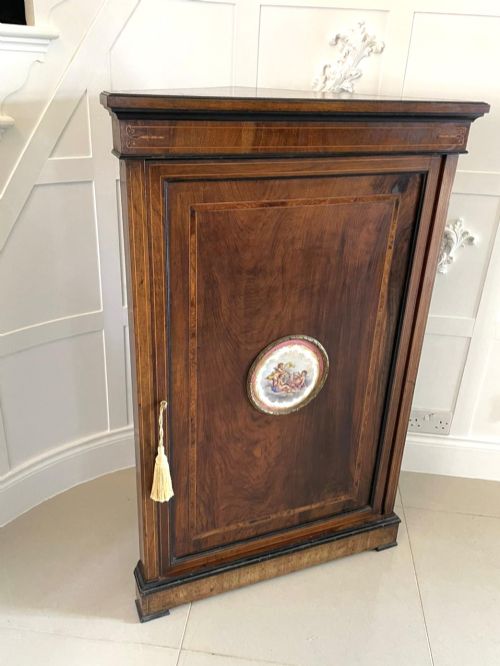
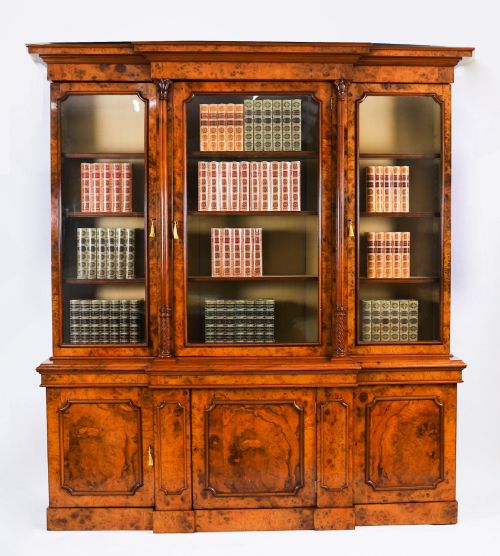
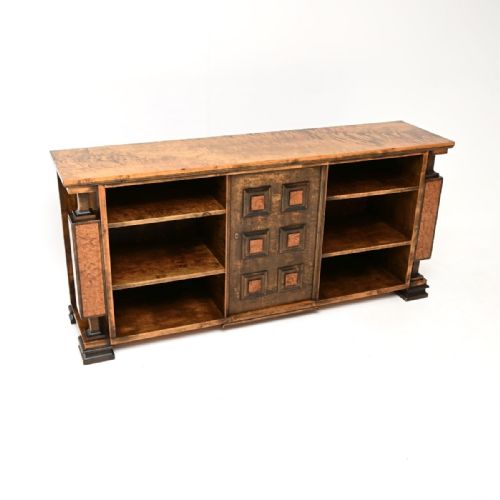
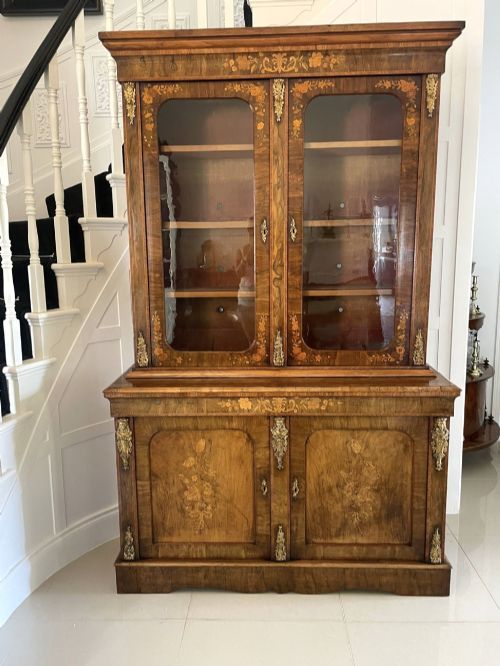
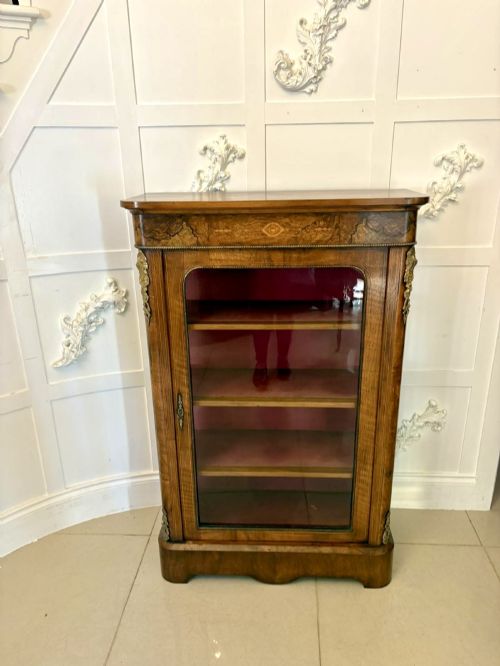
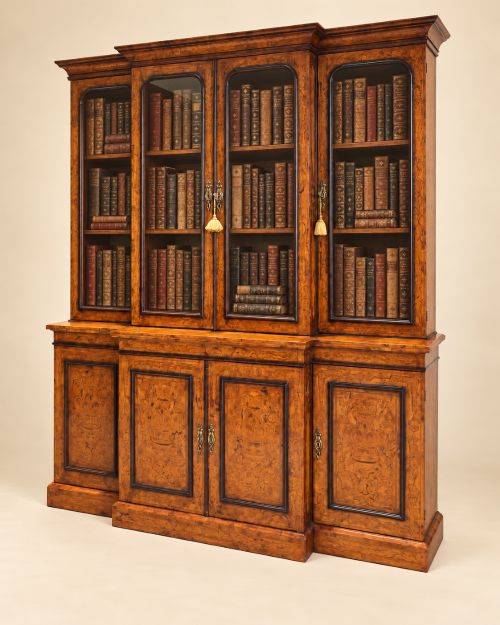
A burr walnut display cupboard is primarily encountered in Victorian and Art Deco iterations, spanning the nineteenth and twentieth centuries. These pieces manifest in diverse formats such as pier cabinets, breakfront bookcases, corner cabinets, and credenzas.
The Victorian examples lean towards marquetry inlay, ormolu mounts, and glazed doors designed to exhibit fine collections. Later twentieth-century items, including Art Deco designs, streamline these forms while retaining the distinctive patterned grain.
Makers and workshops across these periods employed the timber to create functional storage that doubled as principal reception room furniture.
Gradations in Quality
Quality rests in the intensity and symmetry of the burr walnut figuring across the primary facades, coupled with the precision of any marquetry inlay. Superior pieces exhibit continuous grain matching across doors and drawers.
The integration of cast ormolu mounts, heavy plate glass, and robust internal carcass construction separates standard production from workshop pieces of the highest order.
Burr Walnut Display Cupboard Retail Price Guide 2026
Typical asking prices for burr walnut display cupboard among the pieces listed under this phrase on Sellingantiques today, from the lower quarter to the upper quarter. They describe what is for sale here now, not the wider market.
Listings span multiple eras, encompassing Victorian, Regency, and Art Deco periods alongside Dutch Baroque revivals.
Epstein
The Burr Walnut Display Cupboard Glossary
- Burr walnut
- A veneer sliced from the woody growths on walnut trees, yielding intricate, swirling grain patterns. This material forms the primary visual draw of these cabinets.
- Ormolu
- Gilded bronze used for decorative mounts and accents on nineteenth-century furniture. It is often found framing glass doors or corner pieces.
- Marquetry
- Decorative patterns formed by fitting together thin veneers of various woods. It frequently outlines the panels on Victorian pieces.
- Pier cabinet
- A low cabinet designed to stand against the wall space between windows. These are common among the Victorian items in this category.
- Breakfront
- A piece of furniture where the central section projects forward from the side sections. This layout creates depth in larger bookcases and credenzas.
Burr Walnut Display Cupboard: Frequently Asked Questions
How do I date a burr walnut display cupboard?
Dating relies on carcass construction, hardware, and stylistic clues such as ormolu mounts or art deco geometry. Victorian examples typically display rich marquetry and brass galleries, whereas 1930s pieces favour streamlined veneers.
Examining the interior linings, timber thickness, and backboards helps confirm whether a piece belongs to the mid-nineteenth century or the twentieth-century revival periods.
Where should I place a display cupboard?
These cabinets suit drawing rooms, dining rooms, or reception spaces where their figured grain and glass panels can catch the light. Placing them away from direct sunlight protects the walnut veneer and internal velvet linings from fading.
Ensure the floor is level so the glazed doors hang correctly and latch smoothly into their brass fittings.
How do I care for walnut veneer?
Maintain the timber by dusting with a soft, dry cloth and avoiding silicone-based polishes. Occasional application of a quality wax helps preserve the sheen of the burr walnut without building up a residue.
Keep the room at a stable humidity to prevent the veneer from lifting or shrinking over the secondary wood carcass.
What is the difference between a credenza and a pier cabinet?
A credenza is a long, low cabinet often featuring glass-fronted side cupboards and central doors, frequently mounted with ormolu. A pier cabinet is narrower and taller, specifically built to occupy the wall space between two windows.
Both utilise burr walnut veneer, but their proportions and intended room placements differ significantly.