

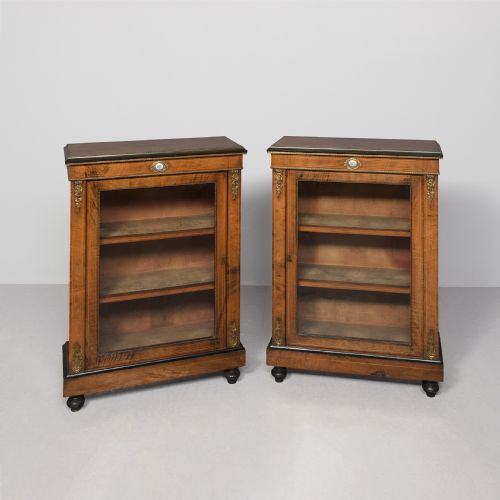
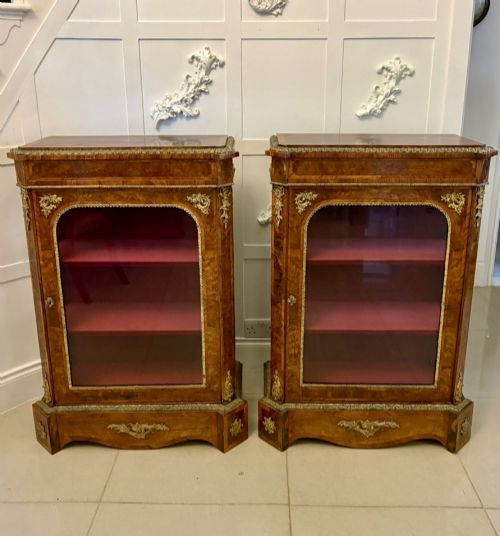
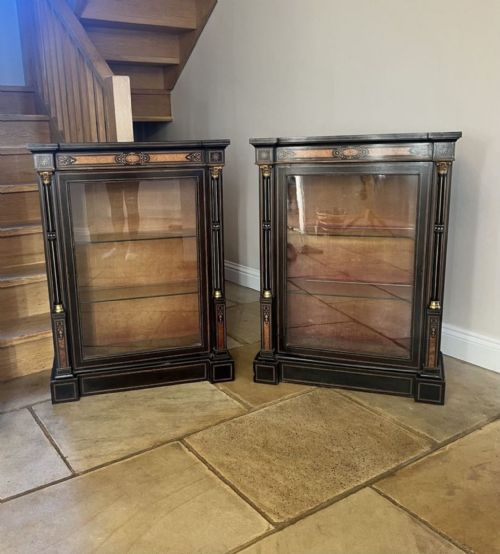


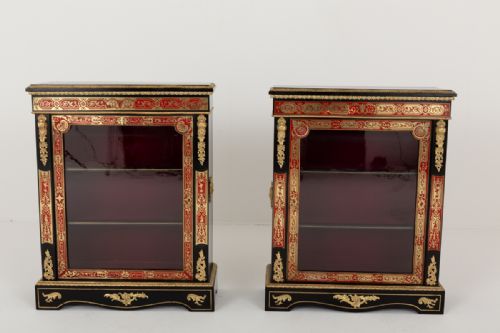


Pair Glazed Side Cabinets
These pair glazed side cabinets offer symmetrical display space for precious objects, combining period timbers with fine glass doors.
Pair Glazed Side Cabinets
When you search for pair glazed side cabinets, you encounter matching sets of upright display furniture designed to house books, ceramics, and curiosities behind protective glass doors. The examples on this page span the Victorian era through the early twentieth century, originating from British workshops and French cabinet makers.
The most common forms you meet are pier cabinets and side cabinets shaped to fit narrow wall spaces or flank a fireplace. Many incorporate glazed doors that reveal fitted interior shelving while keeping dust away from delicate collections.
Makers utilised various regional aesthetics, moving from rich burr walnut and ebonised timber in nineteenth-century Britain to elaborate Boullework and Louis XVI Revival styling inspired by French traditions. These paired pieces balance symmetry in a room, offering equal proportions and matching decorative schemes.
How they were made
Cabinet makers built these pieces using solid timbers and decorative veneers such as burr walnut, mahogany, satinwood, and ebonised wood over sturdy carcases. They applied intricate brass marquetry, tortoiseshell inlay, and ormolu mounts to enrich the exterior surfaces.
Glass panels were fitted carefully into wooden door frames to create secure viewing areas for display items. French pieces frequently integrated Boulle technique, combining brass and tortoiseshell marquetry with cast ormolu details to achieve a dramatic visual effect.
Pair Glazed Side Cabinets Retail Price Guide 2026
Typical asking prices for pair glazed side cabinets among the pieces listed under this phrase on Sellingantiques today, from the lower quarter to the upper quarter. They describe what is for sale here now, not the wider market.
The listings show pieces spanning the Victorian era, the nineteenth century, and the early twentieth century.
What varies in quality
The grade of timber veneer and the precision of the marquetry set the finer examples apart from standard workshop production. Grain selection in burr walnut and the crispness of cast ormolu mounts indicate the amount of skilled labour invested in the piece.
Construction details such as the thickness of the timber, the snugness of the glazed door joints, and the sophistication of the interior shelving determine the lasting integrity of the cabinet.
The Pair Glazed Side Cabinets Glossary
- Pier cabinet
- A low or medium height cabinet designed specifically to stand against the narrow wall space between windows.
- Boulle
- A form of marquetry using contrasting panels of brass and tortoiseshell, popular in French furniture design.
- Ormolu
- Gilded bronze metalwork used for decorative mounts and feet on nineteenth-century cabinets.
- Burr walnut
- Wood grain featuring swirling knot patterns, highly prized by Victorian cabinet makers for decorative veneer.
- Bijouterie table
- A glass-topped display table intended for showing small valuable objects and ornaments.
Pair Glazed Side Cabinets: Frequently Asked Questions
Where did people place these cabinets?
These cabinets were designed for formal reception rooms, parlours, and drawing rooms where homeowners wished to display prized porcelain, books, and small collectables.
Because they frequently came as matching pairs, they were often positioned symmetrically on either side of a fireplace or between tall windows to balance the room layout.
How do I care for the timber?
Maintain the wood surfaces by keeping them away from direct sunlight and extreme temperature shifts, which can dry out old veneers and cause cracking.
Apply a traditional beeswax polish occasionally to nourish the grain and protect the polished finish without building up heavy residue.
Can I adjust the internal shelving?
Most period cabinets feature fixed wooden supports or early rack-and-pinion mechanisms for holding the shelves at set intervals.
Altering the original interior layout is rarely recommended, as it can disrupt the historic structure and the alignment of the glass doors.
How do I distinguish French and British styles?
French cabinets from this era often display elaborate Boulle marquetry, tortoiseshell inlay, and heavy ormolu mounts influenced by Louis XVI and Rococo revivals.
British pieces tend to focus on the natural beauty of burr walnut or ebonised timbers, relying on subtle marquetry and restrained brass details rather than lavish ornamentation.