


Victorian Bronze Urn
When you search for a victorian bronze urn, you are looking at substantial nineteenth-century metalwork that brings classical presence and rich texture to a room.
Victorian Bronze Urn
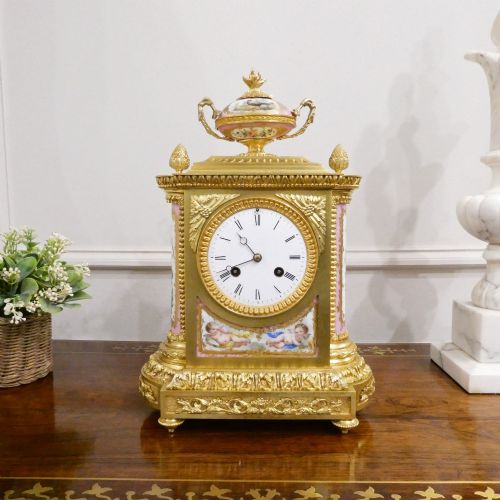
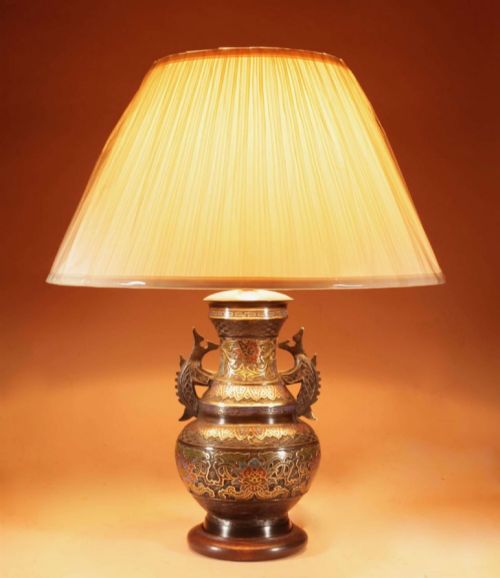
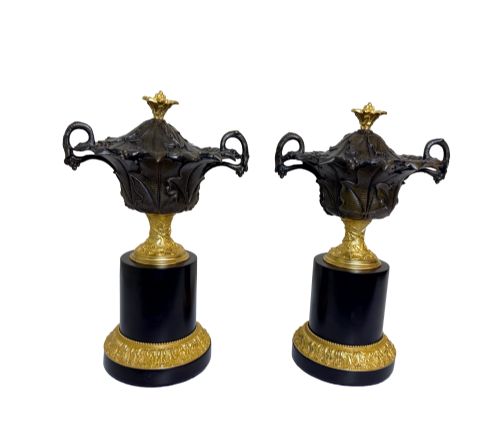
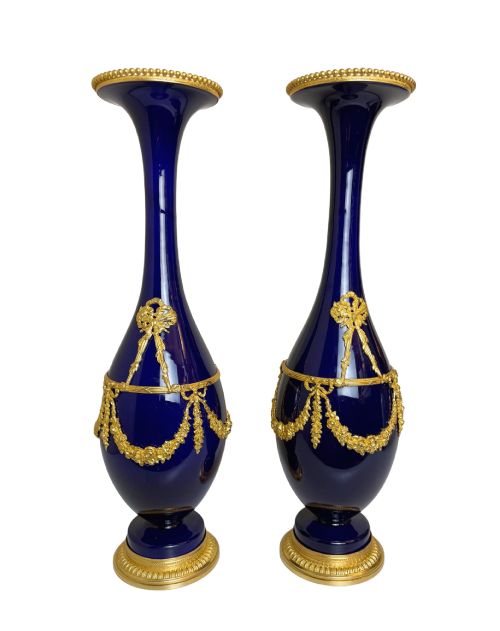
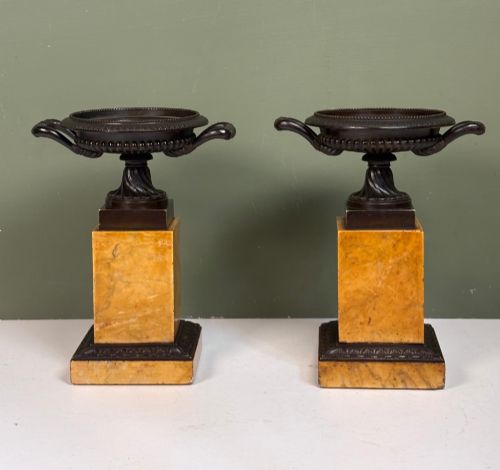
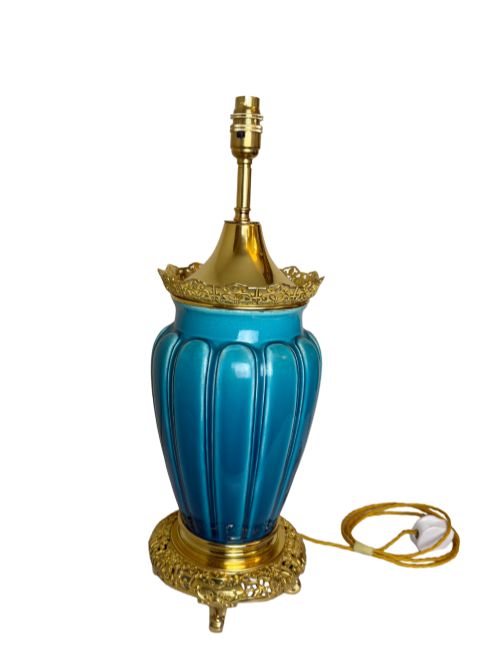
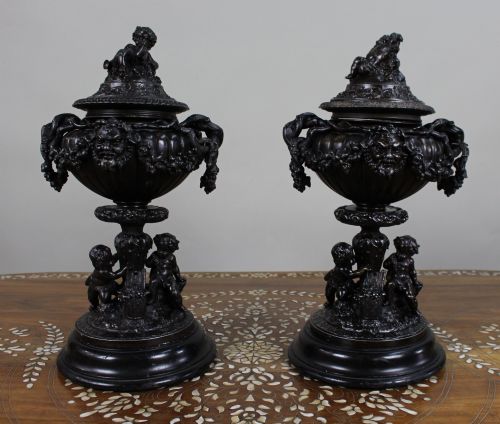
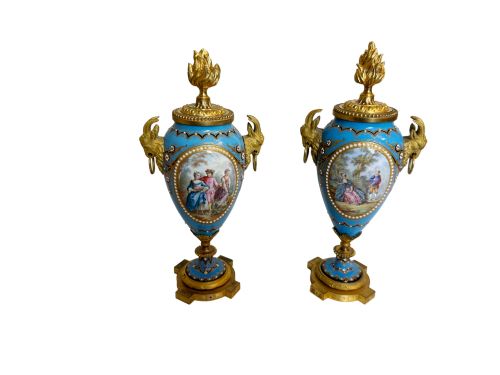
A victorian bronze urn encompasses a broad array of nineteenth-century decorative vessels, from Grand Tour reductions of ancient monuments to French mantel garnitures and Japanese export vases. These pieces often arrive as matched pairs designed to sit symmetrically upon a mantelpiece, side table, or pedestal base.
The aesthetic draws heavily on classical revivals, featuring the heavy Neoclassical lines, Egyptian motifs, and French Rococo flourishes popular during the Victorian era. Many items fulfilling this search span decorative cassolettes, ewers, and lidded vessels rather than strict garden urns.
Origins vary across European workshops and international trade pieces, capturing the eclectic taste of nineteenth-century collectors who prized both classical antiquity and exotic craftsmanship.
Materials and Construction
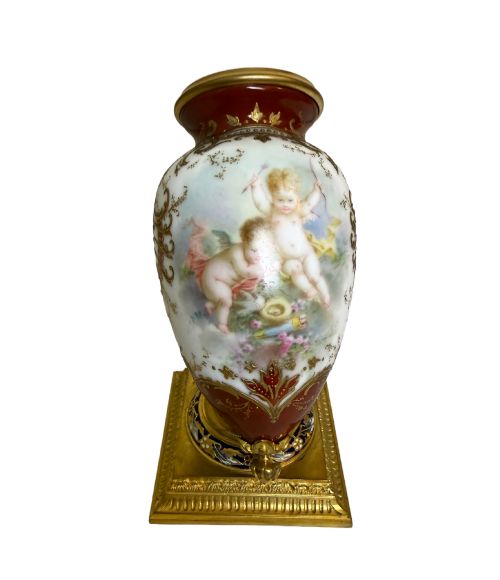
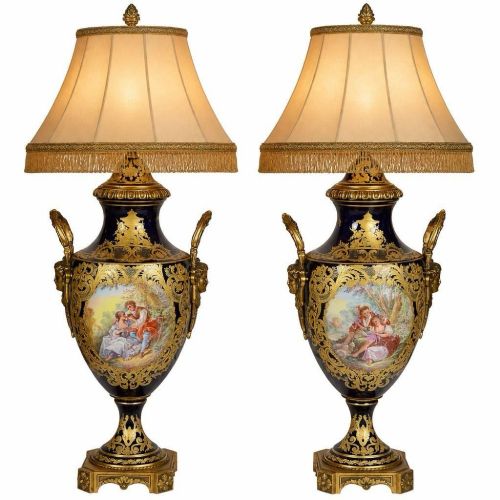
Makers utilised cast bronze, ormolu, and patinated brass, frequently combining these metals with contrasting elements like white marble pedestals, onyx bases, or hand-painted porcelain bodies. Gilding and chemical patination created the deep, rich surface tones found across the period.
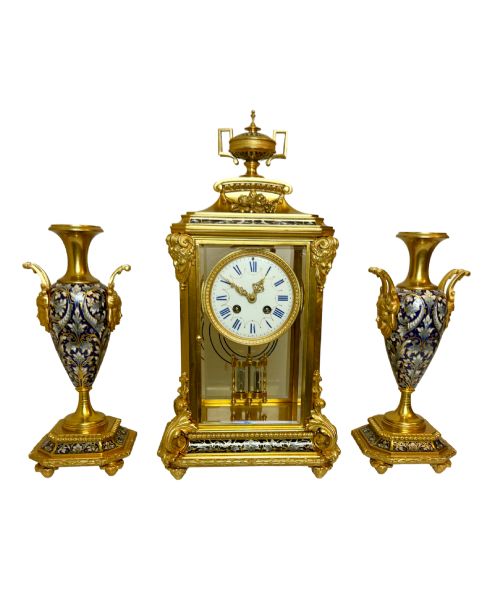
Many finer works incorporate intricate decorative techniques such as champlevé enamel or applied porcelain plaques, requiring precise hand-finishing by skilled artisans in European and Asian workshops.
Listings feature nineteenth-century pieces incorporating porcelain, marble, and enamel alongside traditional cast bronze.
Assessing Craftsmanship and Detail
Quality reveals itself in the crispness of the casting and the depth of the chased details, particularly around figural mounts, handles, and classical masks where lesser pieces lose definition. The weight of the metal and the integrity of joints or fitted lids separate standard decorative objects from superior examples.
The choice of secondary materials, such as genuine marble or fine hand-painted porcelain inserts rather than substitute substitutes, elevates a piece within its period.
Jean-Baptiste Delettrez·Benetfink And Co·Thomas Hope
The Victorian Bronze Urn Glossary
- Ormolu
- Gilt bronze produced by applying a finely ground high-carat gold mercury amalgam to a bronze object, common in French decorative arts. This technique yields a warm, durable finish that resists tarnishing over centuries.
- Cassolette
- A decorative vase or urn featuring a reversible lid that transforms the vessel from a closed potpourri container into a candlestick or incense burner. They frequently appear in pairs flanking mantel clocks.
- Grand Tour
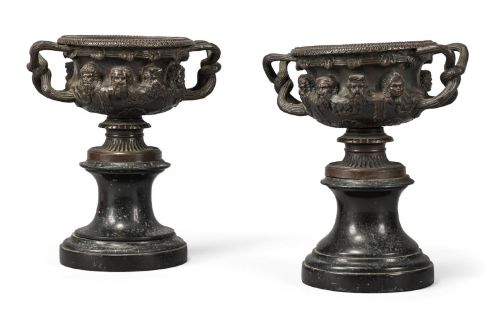
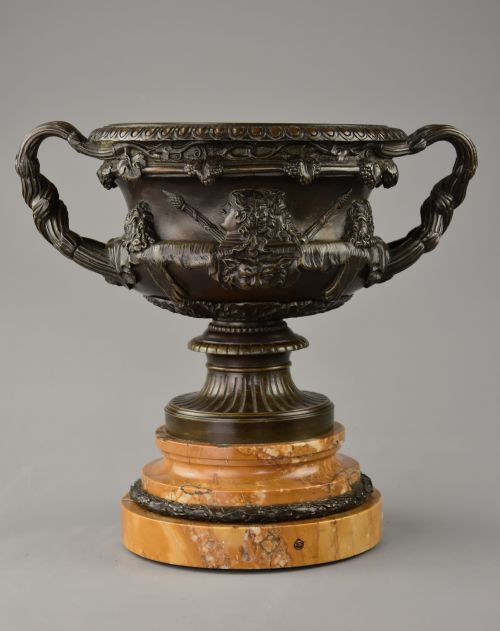
- The cultural journey undertaken by wealthy nineteenth-century Europeans to collect classical antiquities and miniature bronze reductions of famous ancient monuments. These souvenir pieces often replicate famous archaeological finds like the Warwick Vase.
- Champlevé
- An enamelling technique where troughs or cells are hollowed out of the metal surface and filled with vitreous enamel powder before firing. The resulting coloured patterns provide striking contrast against the dark bronze ground.
- Ewer
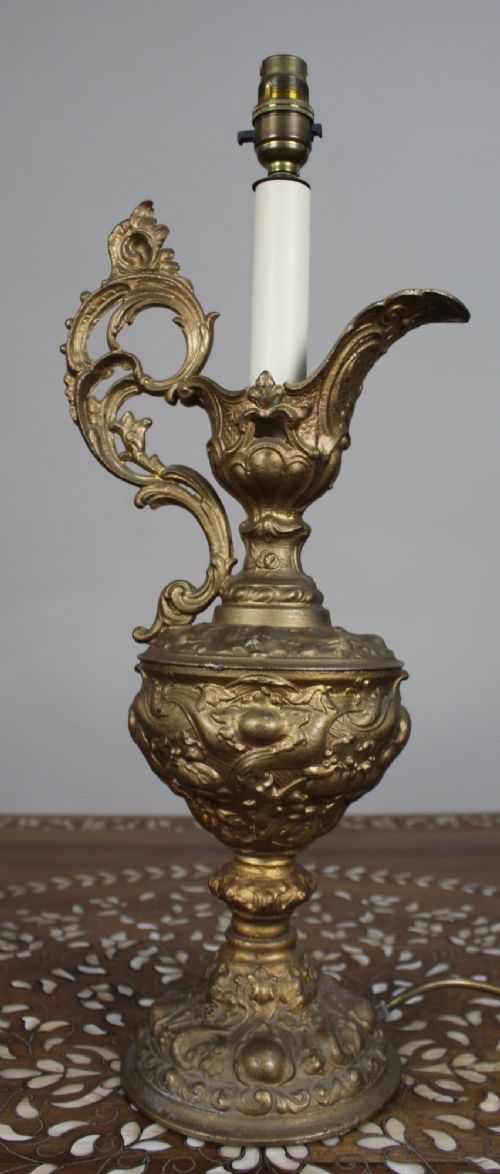
- A large jug with a flared spout and an ornate handle, often executed in bronze or gilt metal purely for display alongside matching urns.
Victorian Bronze Urn: Frequently Asked Questions
What is a bronze urn used for?
These nineteenth-century vessels served primarily as decorative garnitures, centrepieces, or display objects designed to anchor a mantelpiece or console table. They reflect the Victorian enthusiasm for classical antiquity and opulent interior display rather than practical storage.
Some lidded versions functioned as cassolettes or potpourri holders, releasing fragrance through pierced covers, while others remained strictly ornamental statements of wealth and classical taste.
How can I tell a Grand Tour piece apart?
Grand Tour bronze urns are typically miniature reductions of famous ancient Roman or Greek sculptures and architectural finds, collected by travellers in Italy during the nineteenth century. They often feature deep patination and mount onto dedicated marble or onyx plinths.
These pieces emphasise archaeological accuracy and sculptural precision, frequently bearing the distinct dark brown or greenish patinas associated with burial and age.
Are these urns solid bronze?
While many pieces feature heavy cast bronze construction, the listings also include items made from gilded brass, bronzed spelter, and mixed media incorporating porcelain or marble. Spelter, a zinc alloy finished to resemble bronze, was a popular and slightly lighter alternative during the period.
Examining the underside, weight, and interior surfaces helps determine whether the body is cast bronze or an alternative metal with applied patination.
How do I clean an antique bronze surface?
Antique bronze requires minimal intervention to preserve its historical patina, which is valued by collectors. Dusting gently with a soft, dry brush or cloth is usually sufficient for regular maintenance.
Avoid commercial metal polishes or harsh chemical cleaners, as these can strip away the original patination and permanently diminish the value and appearance of the piece.