




Victorian Bronze Tazza
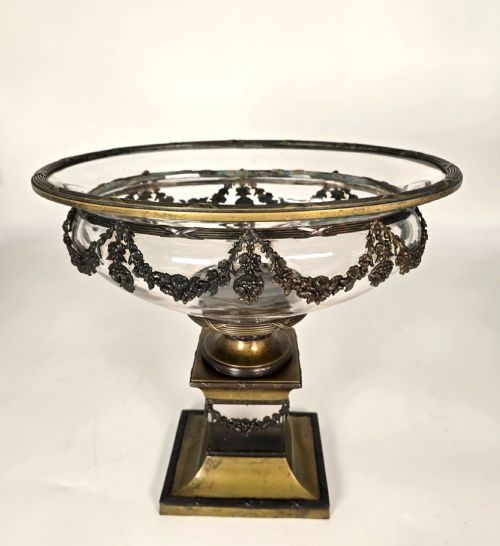
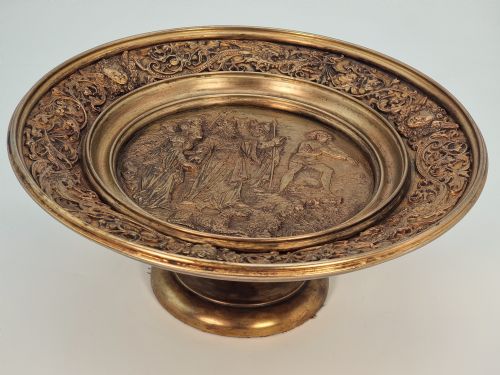
These nineteenth-century bronze tazza pieces combine classical form with decorative mounts, offering a striking centrepiece for a table or mantel.
Victorian Bronze Tazza
A victorian bronze tazza stands as an elevated shallow bowl or dish, typically supported by a central stem and a firm base. When searching this phrase, buyers encounter pedestal bowls, centrepieces, and comports designed for display.
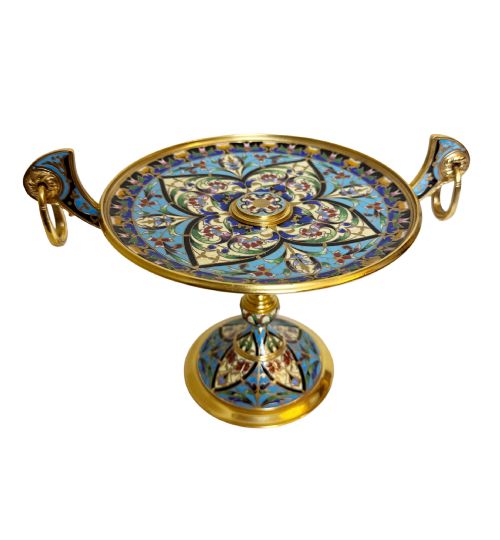
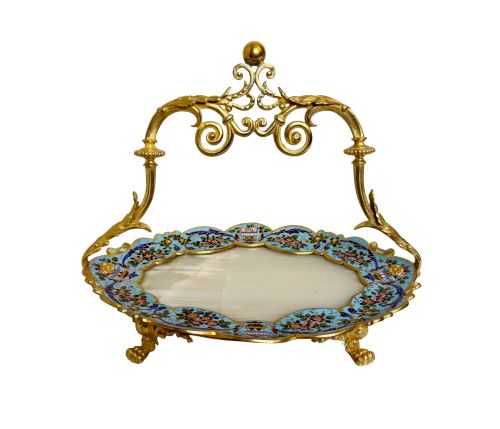
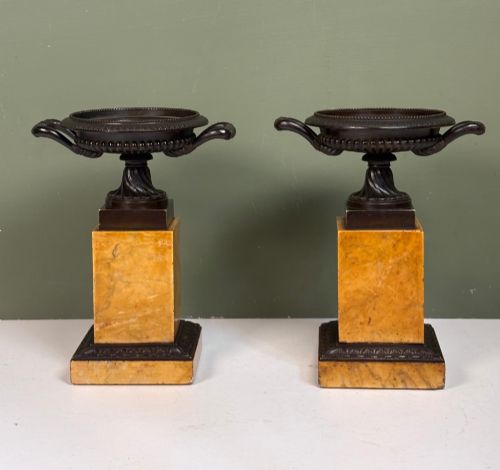
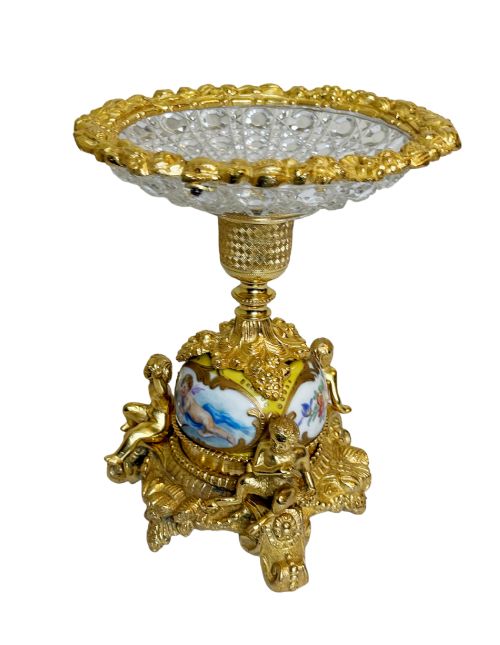
The pieces on this page span the nineteenth century, including French rococo revival, neoclassical, and aesthetic movement styles. Many combine cast metal with contrasting materials such as marble, onyx, or porcelain.
Origins range from French workshops influenced by Sevres to Italian Grand Tour souvenirs and English Victorian production. Forms vary from simple classical basins to elaborate comports featuring cherubs, enamel, and crystal.
How they were made
Metal components are cast in bronze or ormolu, sometimes finished with silver plating or gilding. Skilled artisans combined these metal mounts with turned marble bases, onyx columns, and cut glass dishes.
Decorative surfaces frequently incorporate champleve enamel and agate cabochons, requiring precise hand-working of the metal cells to hold the fused glass pastes. Porcelain inserts, particularly in the Sevres style, are painted and glazed before mounting into the metal framework.
Design styles represented span French Rococo Revival, Neoclassical, Victorian Gothic Revival, and the Aesthetic Movement.
What varies in quality
The refinement of the casting separates standard production from exceptional work, particularly in figural details such as cherubs or classical motifs. Crisp chiselling and clean finishing on the bronze surfaces indicate superior craftsmanship.
Materials also dictate the tier of the piece, with genuine hardstones like agate and onyx, or heavy champleve enamel work, marking out the more ambitious examples from simpler glass and porcelain combinations.
The Victorian Bronze Tazza Glossary
- Tazza
- A shallow bowl or cup mounted on a stem and foot, used historically for display or serving. The form derives from ancient drinking vessels and classicised during the nineteenth century.
- Ormolu
- Gilt bronze produced by applying a mercury-gilding process to cast brass or bronze. The technique gives a rich, golden surface finish characteristic of French decorative arts.
- Champleve enamel
- A technique where troughs or cells are hollowed out of the metal surface and filled with enamel powder before firing. This creates vibrant coloured patterns flush with the surrounding metal.
- Comport
- A large standing dish or bowl used as a table centrepiece for fruit or confectionery. It shares a similar elevated form to the tazza.
- Grand Tour
- A cultural journey undertaken by nineteenth-century travellers who collected souvenirs such as small bronzes and classical replicas. These items were often mounted on marble bases.
Victorian Bronze Tazza: Frequently Asked Questions
What is a tazza used for?
These pieces served primarily as decorative centrepieces on dining tables or sideboards, often holding fruit or sweetmeats during formal meals.
In modern rooms, they function well as standalone decorative objects on side tables, or as display pieces on mantelpieces.
How do I date a bronze tazza?
Dating relies on stylistic clues, such as the exuberant curves of French rococo revival or the disciplined symmetry of neoclassical design.
Material combinations also help, as champleve enamel and onyx mounts frequently point towards the later decades of the nineteenth century.
Are these pieces purely French?
While many examples reflect French manufacture and the influence of Sevres porcelain, the selection also includes English aesthetic movement designs and Italian Grand Tour souvenirs.
Maker styles and material choices generally indicate the regional origin of each piece.
How should I clean a bronze and enamel tazza?
Dusting with a soft, dry cloth is sufficient for routine maintenance to protect the delicate enamel and gilt surfaces.
Harsh metal polishes and chemical cleaners must be avoided, as they can strip the original gilding and damage stone or porcelain components.