
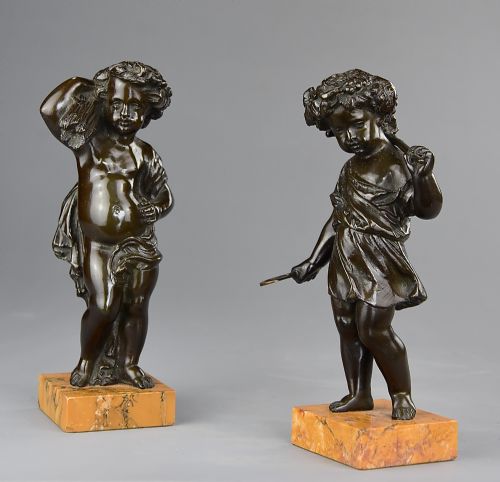
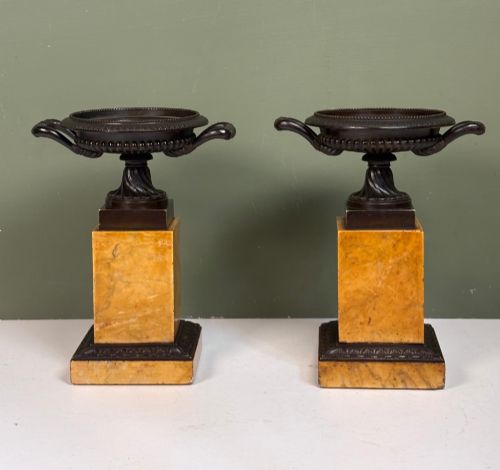

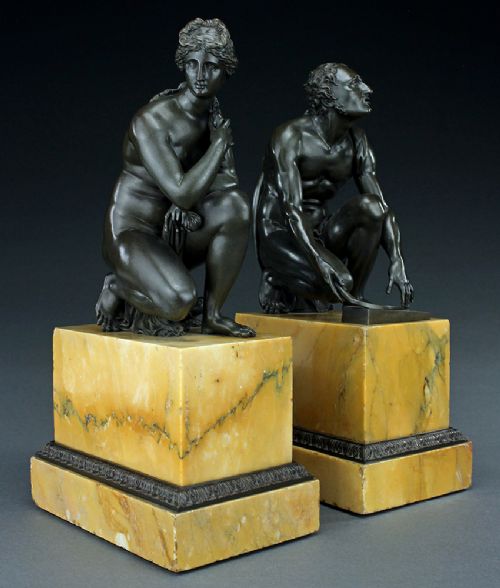
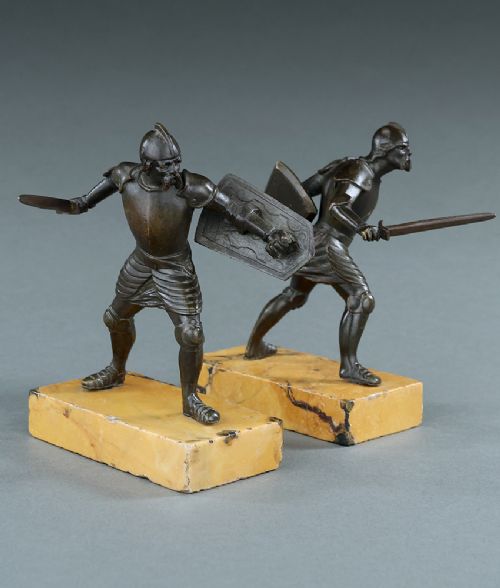

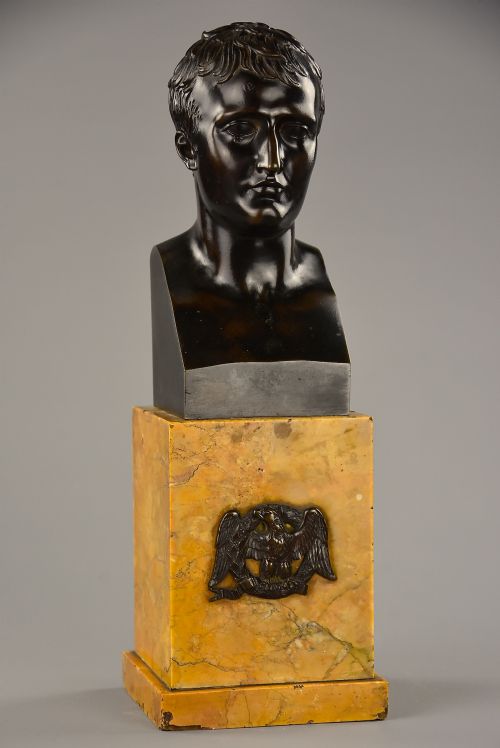


Dark Bronze Yellow Marble
Dark bronze yellow marble objects combine cast metal figures with rich stone bases, offering collectors classical elegance and sculptural presence.
Dark Bronze Yellow Marble
When searching dark bronze yellow marble, buyers encounter a specific class of nineteenth-century decorative metalwork and sculpture mounted on distinctive golden stone bases. These pieces span French Empire, Regency, and Neoclassical styles, originating primarily from nineteenth-century European workshops.
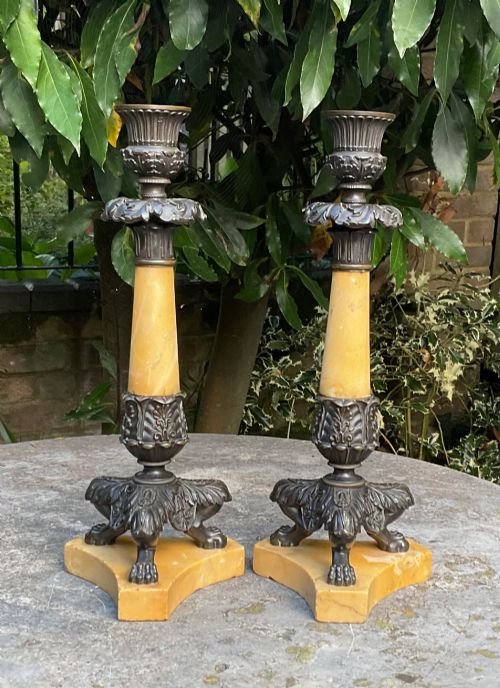
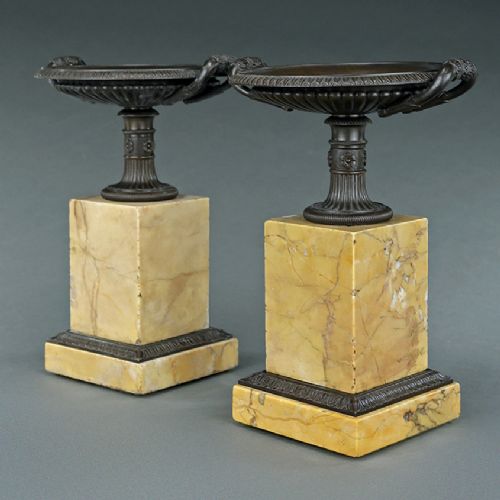
The objects listed on this page appear in various utilitarian and decorative forms, including candlesticks, tazzas, candelabra, library vases, and figural sculptures. Among these, pairs of candlesticks and sculptural groups on sienna marble plinths dominate the selection.
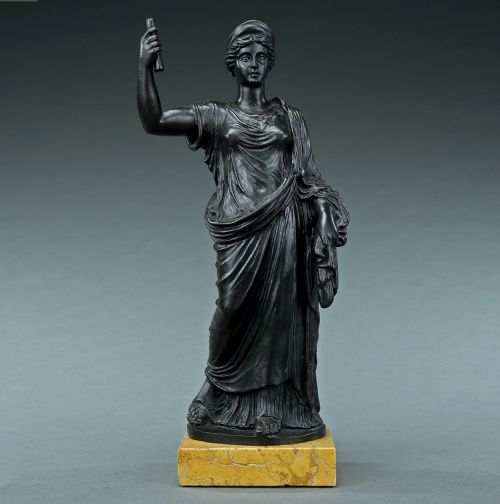
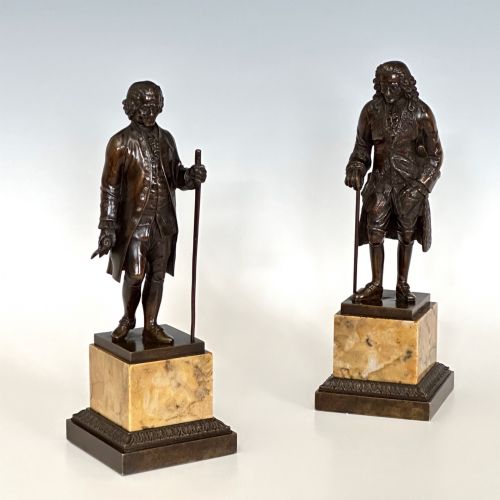
Most items date from the nineteenth century, encompassing periods such as the Regency era, the French Restauration, and the late nineteenth century. Subjects range from mythological figures like Juno and Venus to historical personalities such as Napoleon Bonaparte and classical philosophers.
How they were made
The metal components of these pieces utilise traditional bronze casting techniques, often finished with a dark patination to accentuate the musculature and drapery of figures. Ormolu highlights sometimes accompany the dark bronze, creating a contrast between the polished gold tones and the deep brown or black metal surfaces.
The stone elements employ natural yellow marble, specifically referred to in the evidence as sienna or Siena marble. Masons shaped and polished this dense stone into square plinths, circular bases, and column sections to support the heavier bronze sculptures above.
Philosophers and resting hounds share shelf space with harvest putti, proving that nineteenth-century desks welcomed both deep thought and tumbling cherubs.
What varies in quality
The refinement of the bronze casting determines much of the visual success in these works, separating sharply rendered figures with crisp chiselling from softer, less detailed productions. Artisans who spent more time chasing the cooled metal achieved finer textures in hair, fabric, and facial expressions.
The choice and preparation of the yellow marble base also indicate the standard of manufacture. Blocks featuring rich, varied veining and precise corner angles elevate the overall architectural balance of the mounted bronze.
The Dark Bronze Yellow Marble Glossary
- Sienna marble
- A decorative yellow marble quarried in Italy, known for its warm ground and darker veining. It frequently serves as a solid base for nineteenth-century bronze figures and vases.
- Patinated bronze
- Bronze that has been chemically or thermally treated to alter its surface colour. This process creates deep brown, black, or greenish tones on the metal.
- Empire period
- A design style spanning the early nineteenth century characterised by classical motifs, military symbols, and rich materials. Pieces from this era often pair dark bronze with contrasting stone plinths.
- Grand Tour
- The nineteenth-century practice of young Europeans travelling the continent to collect classical antiquities and bronze reductions. These souvenirs form a significant portion of sculptural metalwork.
Dark Bronze Yellow Marble: Frequently Asked Questions
What is sienna marble?
Sienna marble is a distinctive yellow stone quarried in Italy, featuring deep brownish veining across a warm golden ground.
In nineteenth-century decorative arts, craftsmen frequently used this dense marble to create solid plinths and bases for dark bronze sculptures.
How do I date these bronzes?
Dating relies on stylistic clues, historical subject matter, and the specific combinations of metal finishing and stone mounting.
Nineteenth-century pieces often reflect broader movements like the French Empire or Regency styles through their classical drapery and architectural bases.
Where were these pieces made?
The majority of these decorative objects originate from nineteenth-century European workshops, with a strong representation of French foundry work.
Many items also derive from the Grand Tour tradition, where travellers acquired bronze reductions of classical monuments and sculptures in Rome.
How should I clean them?
Maintenance requires gentle dusting with a soft, dry cloth to prevent the accumulation of grit on the patinated bronze and marble surfaces.
Harsh chemical cleaners and excessive moisture must be avoided, as they can strip the dark metal patination and stain the porous stone.