

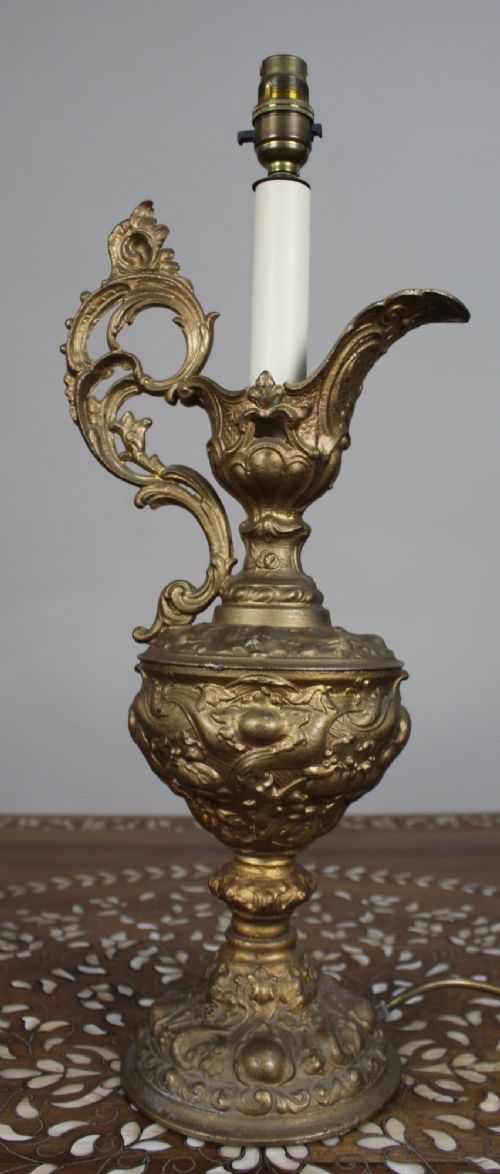
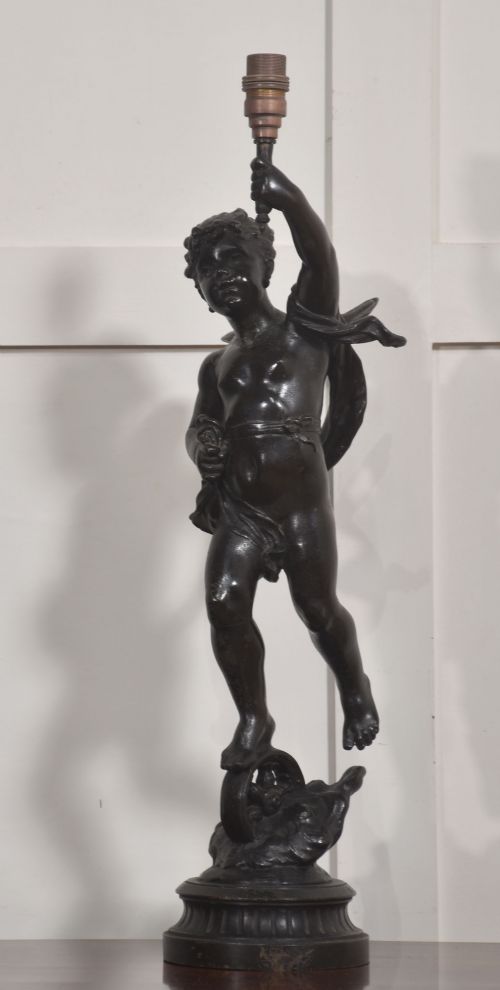


Victorian Bronze Desk Lamp
These Victorian bronze desk lamp pieces combine heavy cast metalwork with period lighting utility, offering collectors a striking mix of nineteenth-century craftsmanship and decorative presence.
Victorian Bronze Desk Lamp
When you search for a victorian bronze desk lamp, you encounter pieces spanning the nineteenth century, including items originating from English and French workshops alongside Japanese export pieces. The selection predominantly includes table lamps, lamp bases, and converted inkwells or candelabra carrying heavy metal mounts.
Many examples utilise figural elements such as cherubs, putti, and mythological subjects, while others rely on columnar, urn, or ewer forms. You also find creations incorporating porcelain bodies, marble bases, and opaline glass columns alongside the primary bronze or ormolu structure.
How they were made
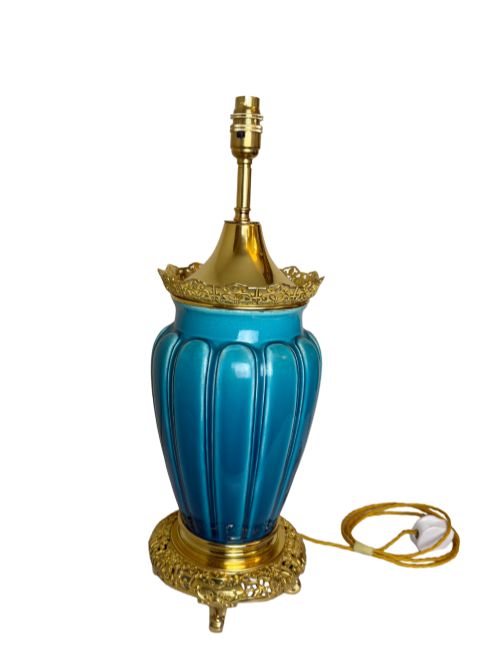
The construction of these pieces relies on metal casting techniques to shape the bronze, brass, or ormolu frameworks, often complemented by fire-gilding or cold painting. Artisans frequently integrated contrasting media, mounting the cast metal components onto white marble bases or pairing them with blue glass, porcelain, and rock crystal columns.
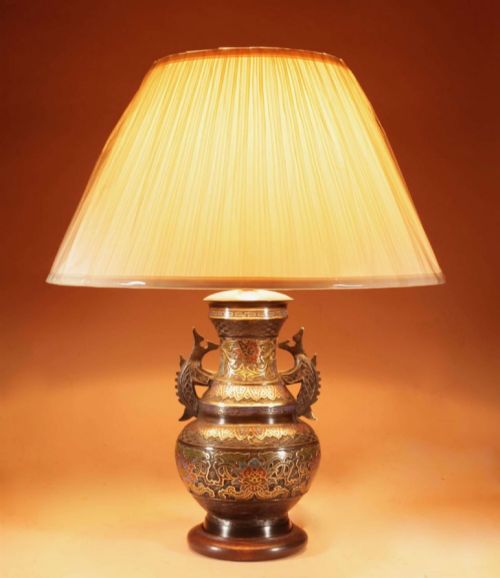
Many lighting fixtures in this category began life as ewers, vases, or figural statuettes before undergoing later conversion into table lamps. Makers also employed champlevé and cloisonné enamelling to add surface pattern to the Japanese bronze bodies seen within the period style.
Object forms range from classical column lamps and ewers to figurative cherub and mermaid designs.
What varies in quality
The standard of the casting defines the upper tier of these pieces, showing crisp relief in figural details like cherubs and drapery compared to softer, commercially mass-produced alternatives. The refinement of the chasing and the preservation of the original fire-gilding or patination also separate superior examples from plainer items.
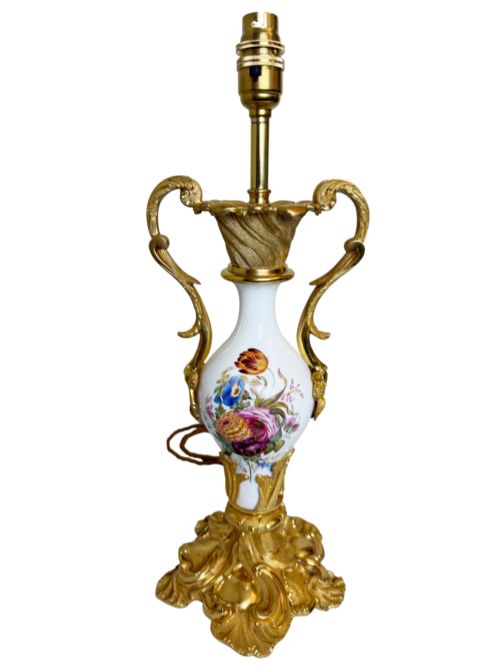
Material integration marks another distinction, where high-end designs combine substantial ormolu mounts with genuine marble plinths, porcelain bodies, or hand-painted enamel work. The harmony between the original object and its conversion into a lamp affects the overall aesthetic integrity of the piece.
Emile Picault·Joseph Hinks·Aug. Moreau·Adrien Gaudez
The Victorian Bronze Desk Lamp Glossary
- Ormolu
- Gilded bronze, typically produced by applying a mercury-gold amalgam to a cast bronze base. This technique creates a rich golden finish seen on many French and English nineteenth-century mounts.
- Champlevé
- An enamelling technique where troughs or cells are hollowed out of the metal surface and filled with vitreous enamel powder before firing. It appears frequently on Japanese export pieces of the period.
- Spelter
- A zinc alloy frequently used as a cheaper substitute for bronze in figural statuary and lamp bases. It often received a bronze-coloured finish to mimic more costly metalwork.
- Ewer
- A large jug with a wide spout and elaborate handle, commonly adapted into a tall table lamp during the nineteenth century. These vessels often feature classical or Renaissance revival motifs.
- Cloisonné
- A method of decorating metal objects by applying wire compartments to the surface and filling them with coloured enamel. This technique decorates several Japanese table lights from the era.
Victorian Bronze Desk Lamp: Frequently Asked Questions
How do I identify a genuine period piece?
Examine the weight, the quality of the metal casting, and the signs of historical wear on the patination or gilding. Genuine nineteenth-century examples display hand-chased details and heavy construction materials such as solid bronze or marble.
Look closely at the fittings and the method of wiring conversion, as older pieces often show appropriate ageing around the lamp holder and base junctions. Comparing the style against documented French, English, and Japanese manufacturing techniques of the era helps confirm authenticity.
Were these always electric lamps?
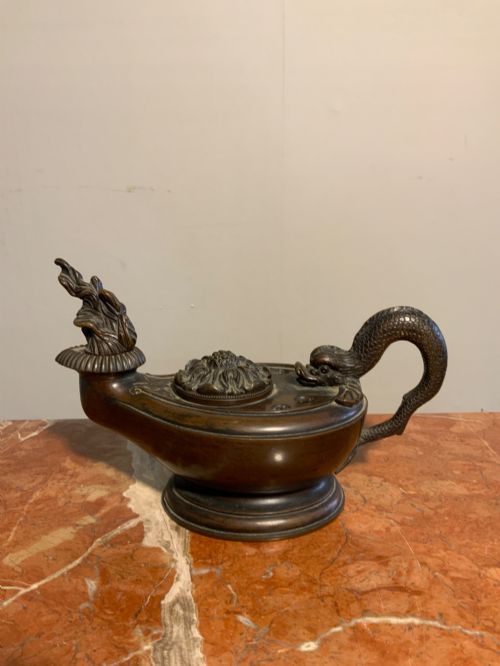
Most of these objects began life as oil lamps, candelabra, inkwells, or decorative figures before being converted to electricity at a later date. The original nineteenth-century makers designed them to burn oil or hold candles, and electrification typically occurred during twentieth-century updates.
When inspecting a piece, you can often trace the path where wiring was threaded through former burner assemblies or hollowed bases. This conversion history is standard for antique lighting and adds to the utilitarian evolution of the object.
How do I clean and care for bronze?
Dust the bronze and ormolu gently with a soft, dry cloth to prevent the buildup of grime in the recessed details of the casting. Avoid using chemical metal polishes, abrasive cloths, or water, as these can strip away the historical patination or damage delicate fire-gilding.
Keep the lamp away from direct sunlight and damp environments to protect any integrated marble bases, enamel work, or fabric components. Regular, careful maintenance preserves the original surface finish without altering the character of the metal.
What is the difference between bronze and spelter?
Bronze is a heavy alloy of copper and tin that accepts fine chasing and holds crisp detail in figural casts. Spelter is a softer zinc alloy that feels lighter and was frequently employed as an economical alternative for decorative figures and lamp bases.
While both metals could receive a dark patinated finish or metallic paint, bronze offers superior durability and historical value. You can often distinguish them by checking the underside for weight and the characteristic greyish colour of spelter beneath any worn surface coating.