
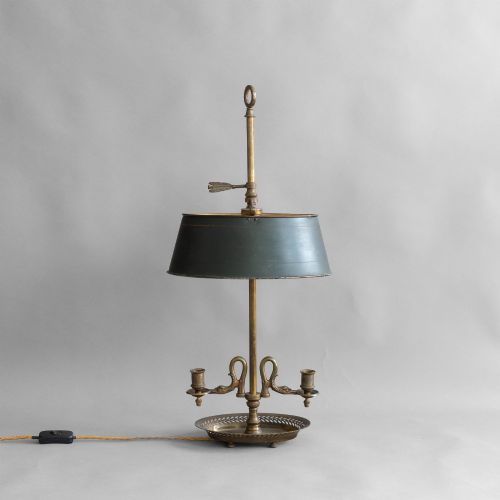



French Second Empire Lamp
A french second empire lamp brings heavy nineteenth-century bronze and marble into a room with striking presence.
French Second Empire Lamp
A french second empire lamp sits firmly within the nineteenth-century tradition of ornate interior lighting, drawing upon Napoleon III, French Empire, and French Rococo Revival styles. These pieces range from monumental ormolu table lamps and figural lamp bases to converted oil lamps and desk lamps.
The most likely versions to meet on this page combine materials like gilt bronze, patinated bronze, marble, and brass. Many items bridge functional lighting and sculptural decor, reflecting the decorative ambitions of their period.
Materials and Construction
Makers utilised cast bronze, ormolu, and brass as the structural foundations for these heavy lamps, often combining gilt and patinated finishes for visual contrast. Marble served as stable bases for figural and monumental designs.
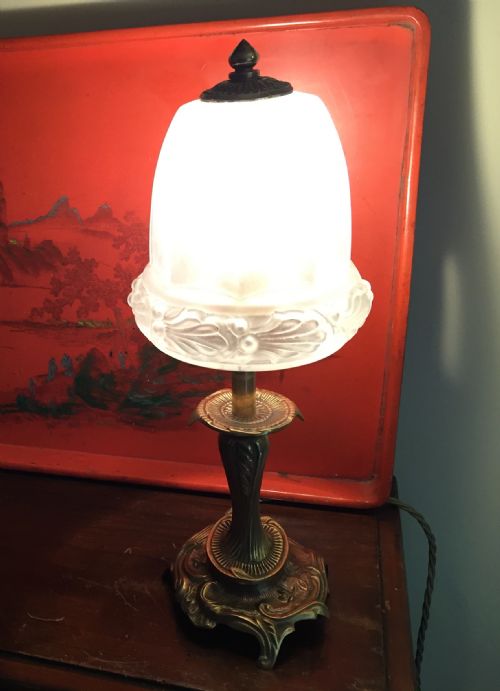
Detailing relied on skilled metal-chasing and casting techniques, visible in figural motifs like cherubs and classical ornamentation. Converted oil lamps incorporate copper on brass and frosted glass elements.
Cherubs appear with surprising frequency across nineteenth-century lamp bases, occasionally caught mid-orchestra.
Quality and Craftsmanship
The distinction between standard production and superior work rests on the crispness of the bronze chasing and the weight of the materials. Finer examples display deeply articulated facial expressions, sharp drapery folds, and securely mounted multi-component construction.
Patination and gilding depth further separate ordinary items from exceptional ones. Original gilding and well-preserved patinated bronze surfaces retain tonal richness that lesser or later recast pieces lack.
François-Christophe-Armand Toussaint
The French Second Empire Lamp Glossary
- Ormolu
- Gilded bronze produced by applying a mercury-gilding amalgam to cast bronze. This technique creates a durable, luminous golden finish characteristic of nineteenth-century French luxury goods.
- Patinated bronze
- Bronze treated with chemical solutions to produce a controlled surface colour, usually dark brown or green. It provides contrast against brighter gilt ormolu details.
- Napoleon III style
- A wildly eclectic nineteenth-century French aesthetic reviving Rococo, Renaissance, and Neoclassical elements. It defines much of the ornamentation found on these lamp bases.
- Gueridon
- A small occasional table, sometimes utilised as a lamp table. These often feature circular marble tops supported by decorative legs.
- Torchère
- A tall ornamental stand or candlestick adapted for lighting. Large examples often incorporate figural bronze casting.
French Second Empire Lamp: Frequently Asked Questions
What is a french second empire lamp?
It is a nineteenth-century lighting fixture originating from France, typically constructed from heavy bronze, ormolu, or marble.
These pieces often feature classical figural motifs, cherubs, or ornate scrollwork reflective of the Napoleon III period.
How were old oil lamps converted?
Many nineteenth-century oil lamps were later adapted to accept modern electrical wiring and standard bulb fittings.
This conversion process usually involved threading a cord through the original central burner mechanism while preserving the copper, brass, and bronze exterior.
Where should I place a heavy bronze lamp?
Due to their substantial weight and ornate presence, these lamps suit sturdy side tables, console tables, or large desks.
They function best as focal points in rooms with traditional nineteenth-century or eclectic decor schemes.
How do I distinguish Napoleon III style from Regency?
Napoleon III pieces tend to exhibit heavier, more exuberant ornamentation with mixed revival influences like Rococo scrolls and rich gilding. Regency items lean toward strict neoclassical symmetry and restrained classical restraint.
Examining the casting depth and secondary woods or metals helps clarify the specific period of manufacture.