


19th Century Figural Lamp
These 19th century figural lamps unite sculpture and illumination, bringing human and mythological forms into period interiors.
19th Century Figural Lamp
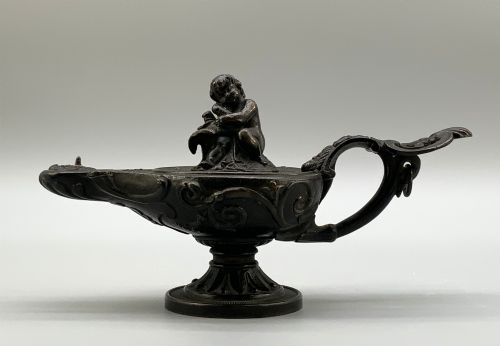
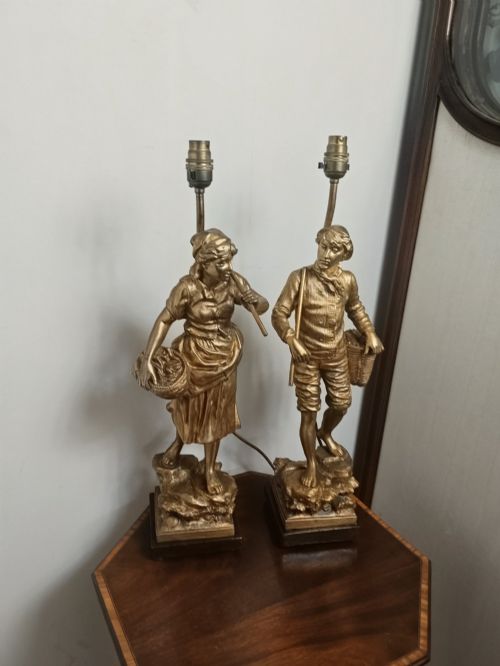
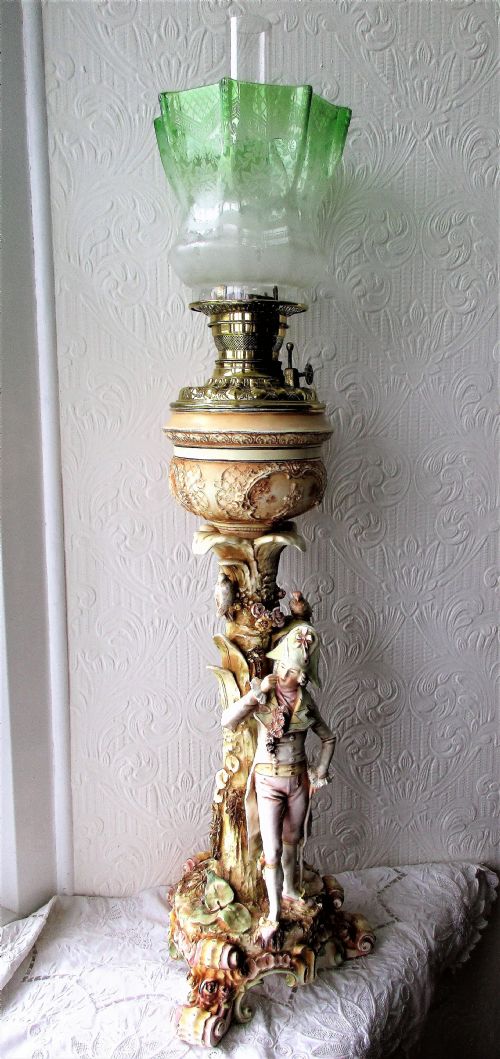
A 19th century figural lamp incorporates sculpted human figures, putti, or deities into the body of the lighting piece. These works frequently draw on Classical, Neoclassical, and French Second Empire idioms.
Table lamps and floor lamps dominate the selection, often converted from earlier oil lamps or torchères. Bronze and porcelain bodies support the transition from functional lighting to sculptural ornament.
French workshops and Asian export studios provide the primary origins for these pieces. Parisian foundries and Chinese or Japanese export workshops supply the sculptural bases seen on this page.
Materials and construction methods
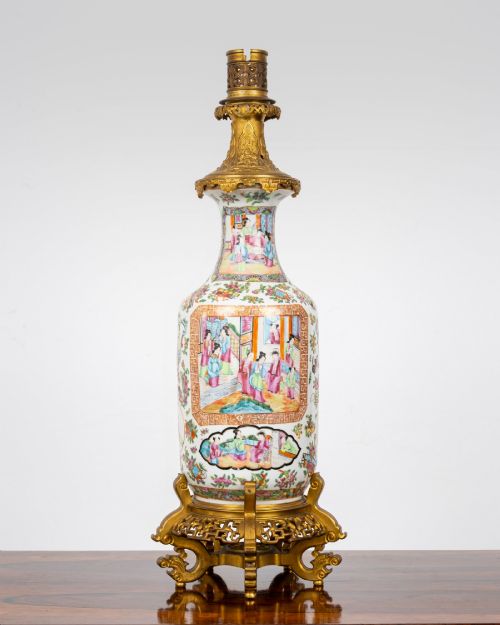
Porous materials such as porcelain, crackleware, and carved root wood serve as primary bodies for Asian and European lamps. Mounts in ormolu and brass secure these ceramic or wooden sections to marble plinths.
Fabric shades and glass elements complete the upper assembly, balancing the heavy metallic or ceramic bases. Artisans mounted electrical wiring through existing oil font channels during later conversions.
Young girls blowing kisses and cherubs bearing torches ensure these functional lamps double as theatrical companions in the room.
Distinctions in execution and design
The precision of the metal chasing and the depth of the casting define the sculptural merit of the piece. Sharp details in hair, drapery, and expression separate high-grade foundry work from generic production.
The integration between the sculptural figure and the mounting hardware dictates the structural harmony. Masterpieces balance the weight of marble plinths and bronze figures without awkward adapters.
E Rousseau·Emile Picault·H Moreau·Aug Moreau·François-Christophe-Armand Toussaint·Coutan·Henri Honore Ple·Adrien Gaudez·Auguste Moreau
The 19th Century Figural Lamp Glossary
- Spelter
- A zinc alloy used as a cheaper alternative to bronze for sculptural castings. This metal receives patination to mimic bronze or silver finishes.
- Torchère
- A stand or tall lamp designed to hold a light source. These figures often hold torches or lights aloft.
- Ormolu
- Gilded bronze produced by applying a mercury and gold amalgam to a bronze base. This technique creates a durable golden surface on French mounts.
- Grand Tour
- Eighteenth and nineteenth-century travel by young upper-class Europeans to cultural sites. Figures from these journeys often depict classical statues and mythological subjects.
- Chinoiserie
- European artistic style reflecting Chinese artistic traditions. These pieces incorporate Asian porcelain and motifs into western room schemes.
19th Century Figural Lamp: Frequently Asked Questions
Were these always electric lamps?
Most of these objects began life as oil lamps, torchères, or decorative vases before conversion to electricity.
Craftsmen adapted the original vessels and figures during the twentieth century to house internal wiring and lamp holders.
How do I identify the foundry or artist?
Signatures and foundry marks usually appear cast directly into the bronze base or inscribed near the lower edge of the figure.
Archival records for Parisian foundries help match these signatures to specific nineteenth-century sculptors.
Where should I place a figural lamp?
These tall sculptural pieces require sturdy side tables, pedestals, or consoles where the figures remain fully visible.
Placing them away from heavy foot traffic protects delicate porcelain bodies and projecting bronze elements.
What separates bronze from spelter?
Bronze offers a heavy, durable metallic composition that takes sharp chisel work and deep patination during the casting process.
Spelter proves lighter and softer, showing more surface wear where the outer finish has rubbed away from the zinc alloy underneath.