

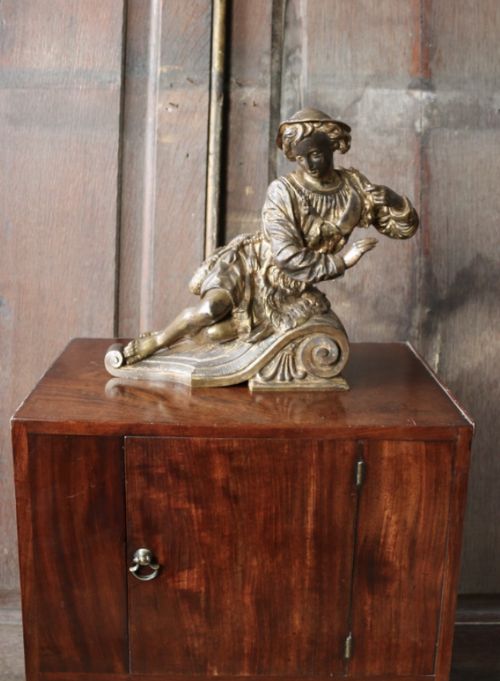
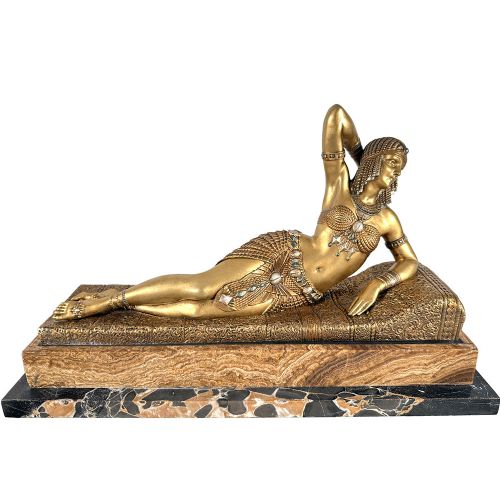


French Gilded Bronze Statue
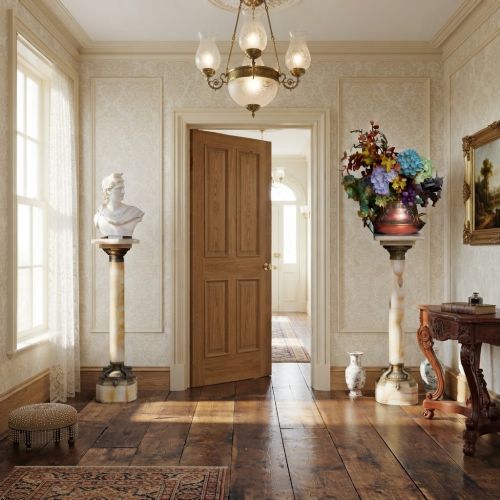
A french gilded bronze statue brings sculptural weight and bright metallic warmth to a room, shifting from neoclassical poise to art deco drama.
French Gilded Bronze Statue
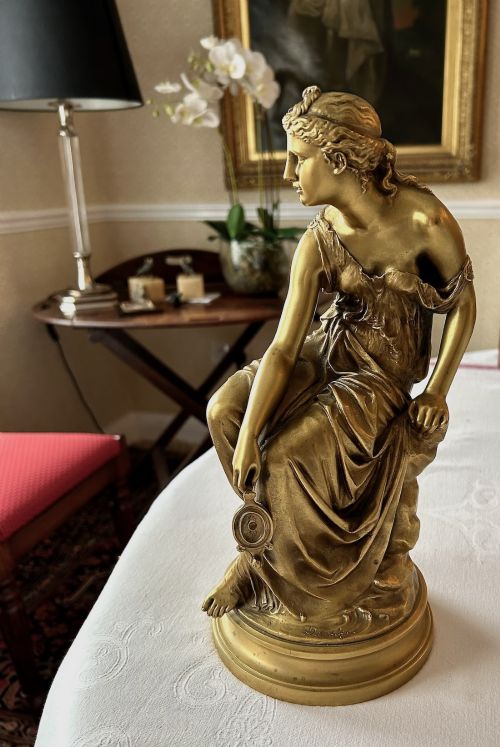
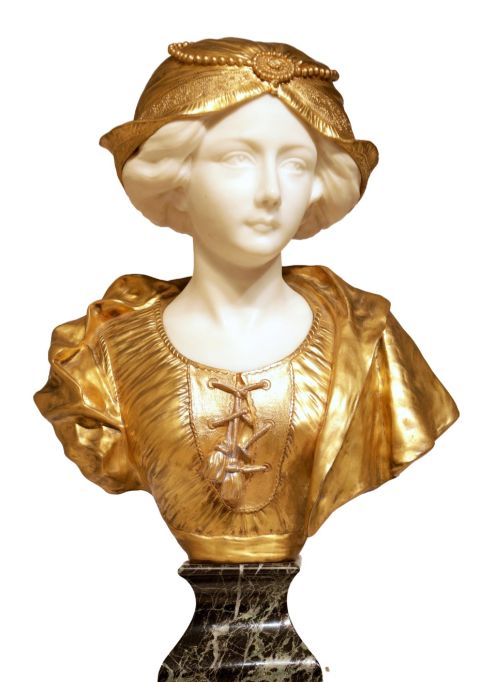
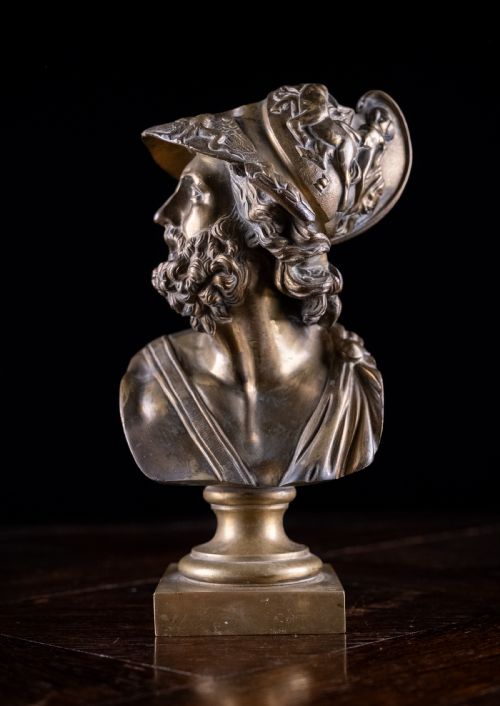
A french gilded bronze statue combines cast metal with applied gold finishes, capturing figures, animals, and classical subjects. Buyers find classical maidens, dancers, and allegorical subjects spanning the eighteenth century through to the art deco era.
The selection extends beyond standalone figures into practical objects that incorporate sculptural elements, including mantel clocks, inkwells, and torchere columns. Many pieces pair the metallic surface directly with contrasting marble or onyx bases.
The tradition encompasses work from major nineteenth-century founders and sculptors alongside later twentieth-century modernist creations. These sculptures reflect changing tastes across French periods, moving from rococo and empire styles toward animalier studies and modernist lines.
How they were made
Workers applied gold leaf or mercury gilding to the bronze surface, producing the characteristic bright finish known as ormolu. Patinated bronze alternatives relied on chemical treatments to darken the metal, sometimes highlighting specific details with partial gilding.
Listings feature 19th-century French bronzes alongside Art Deco pieces from the 1920s and 1930s, utilising marble and onyx bases.
What varies in quality
The durability and depth of the gilding or patination dictate how well the surface ages over centuries of handling. Heavy mounts and substantial stone bases of marble or onyx indicate higher material ambition in the original construction.
Etienne-Henri Dumaige·Affortunato Gory·Demetre Chiparus·Barbedienne·Louis Riche·Ernst Barrias·Christophe Fratin·Claire Colinet·Aug. Moreau·A. L. Barye·Jean Jacques Pradier·Victor Paillard·Coutan·Charlotte Monginot·Albert Ernest Carrier-Belleuse·A. Marionnet·Raymond Leon Rivoire
The French Gilded Bronze Statue Glossary
- Gilt bronze
- Metal cast in bronze and subsequently covered with a layer of gold. This treatment protects the base metal and provides a reflective, golden appearance.
- Ormolu
- A term for gilded bronze ornaments and mounts produced in France. The technique involves applying finely ground gold amalgam to a bronze object before heating.
- Spelter
- A zinc alloy frequently utilised as a cheaper alternative to bronze for figures. It is softer than bronze and often painted or electroplated to imitate precious metals.
- Animalier
- A nineteenth-century artistic style focusing on the realistic portrayal of animals. Sculptors in this tradition studied anatomy closely through observation at menageries.
French Gilded Bronze Statue: Frequently Asked Questions
How do I clean a gilded bronze statue?
Dust the metal gently with a soft, dry brush to prevent accumulation in the crevices. Avoid abrasive cloths, water, and chemical cleaning agents that can strip the delicate gold surface.
Keep the piece away from direct sunlight and moisture to preserve the underlying bronze and any attached stone bases.
How can I tell bronze from spelter?
Bronze is heavier, harder, and cooler to the touch than zinc-based spelter. Inspecting the underside often reveals the darker, heavier grain of genuine bronze.
Spelter is softer and may show signs of fatigue, scratching, or flaking paint where the underlying grey metal is exposed.
What is the difference between ormolu and gilt bronze?
Ormolu is historically the French term for applied gold finishes on bronze, particularly during the eighteenth and nineteenth centuries. Both terms describe the same fundamental material combination.
Collectors often use ormolu to describe decorative mounts and furniture elements, while gilt bronze refers more broadly to sculptural figures.
Where should I display these statues at home?
Place figures on stable surfaces such as mantelpieces, dedicated pedestals, or heavy sideboards where their weight is supported. Ensure the display area remains at a stable room temperature away from heat sources.
Pairing pieces with contrasting marble columns or wooden furniture highlights the reflective quality of the metallic finish.