



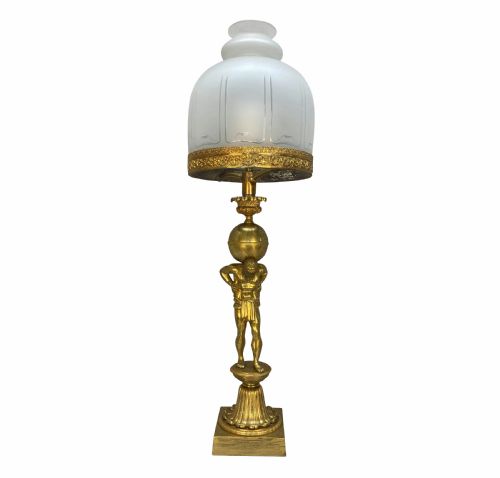


Figural Brass Lighting
Figural brass lighting combines human, animal, or mythological forms with functional illumination from the nineteenth and early twentieth centuries.
Figural Brass Lighting
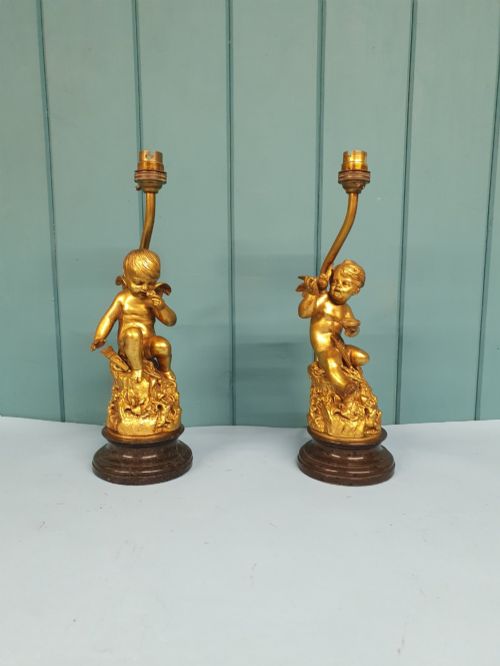
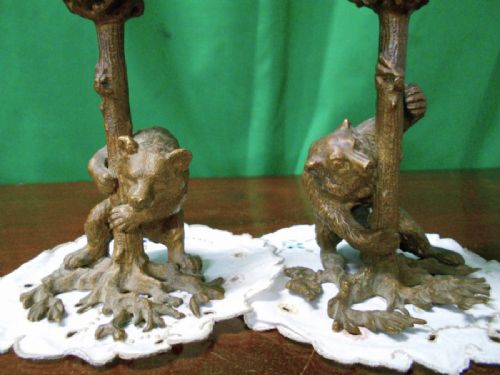
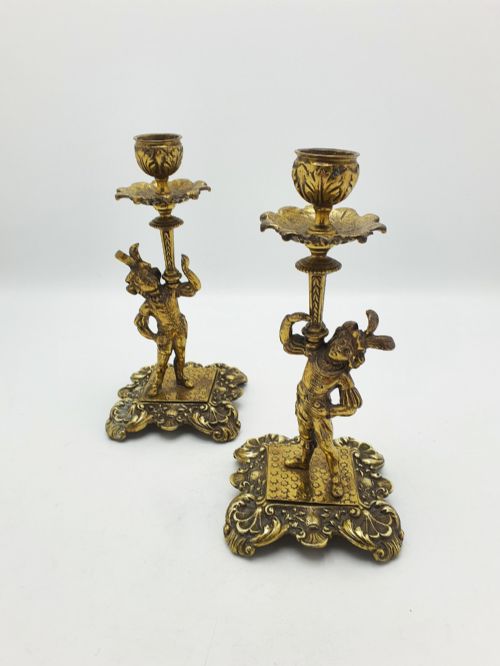
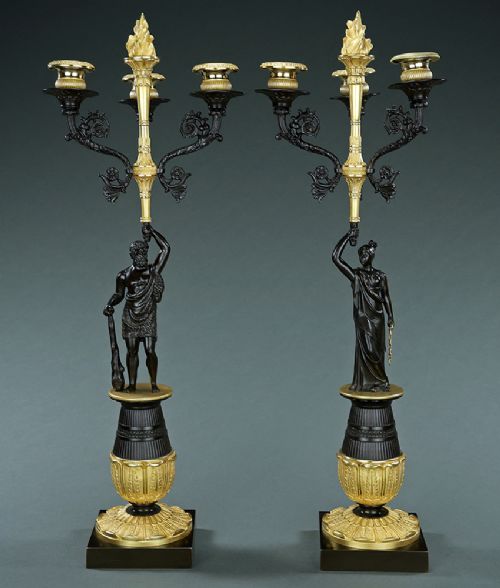
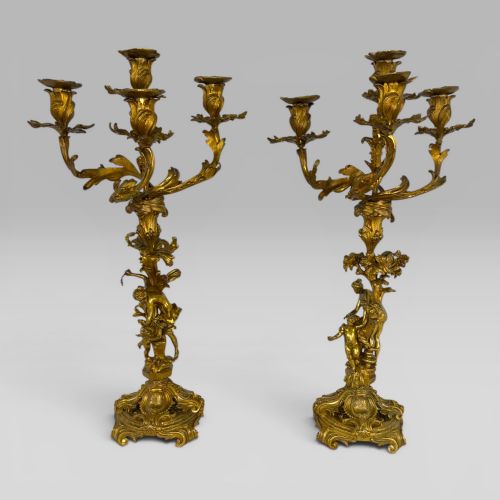
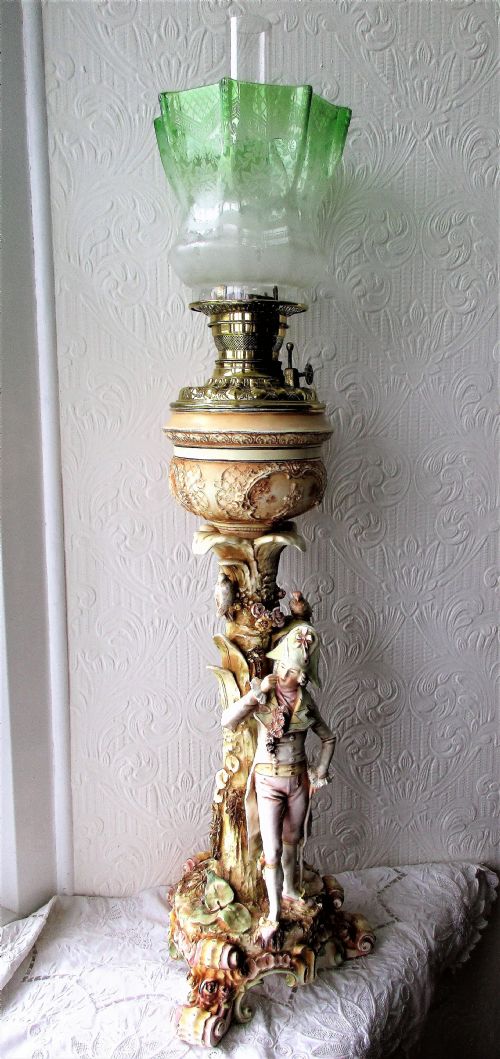
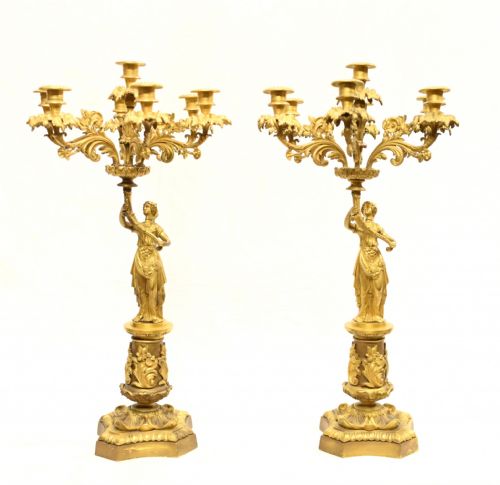
Figural brass lighting encompasses table lamps, candlesticks, candelabra, oil lamps, and wall sconces that incorporate sculpted figures into their design. When exploring figural brass lighting, buyers encounter diverse forms ranging from classical cherubs and mythological figures to animals and human characters. These pieces serve both a decorative and a practical purpose, often acting as sculptural centerpieces within a room.
The selection spans multiple periods, with nineteenth-century examples and 1920s pieces appearing frequently. Styles stretch across Victorian, Art Nouveau, Art Deco, and French Rococo revivals, showing how different eras interpreted sculptural illumination.
Assessing quality and craftsmanship
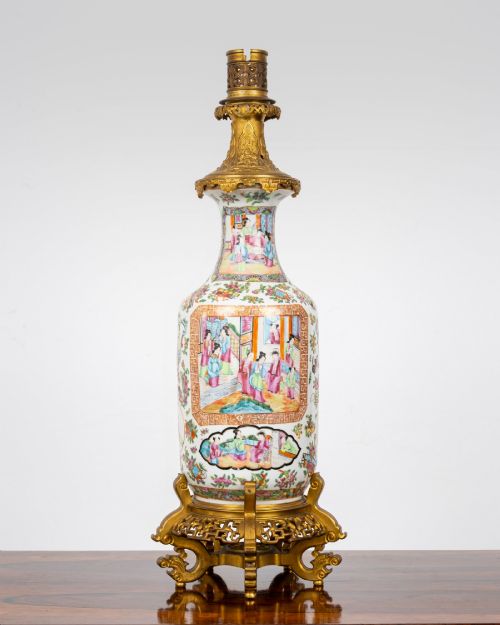
The choice of secondary materials also dictates the standard of the piece, such as solid marble bases versus simpler plinths, or high-grade hand-painted porcelain bodies paired with fire-gilded bronze mounts.
Several pieces feature cherubs caught in the act of flying, dancing, or holding up lights as if domestic chores were entirely optional.
L and F Moreau·Karl Ens·Anton Buschelberger·Sitzendorf
The Figural Brass Lighting Glossary
- Ormolu
- A technique of applying finely ground, high-carat gold to a bronze object using a mercury amalgamation process. This finish provides a rich, warm golden lustre that endures on nineteenth-century French mounts.
- Spelter
- An alloy of zinc and lead often used as a less costly alternative to bronze for figural sculptures. It takes patination and paint well, though it is softer and lighter than solid bronze.
- Candelabra
- A branched candlestick designed to hold multiple taper candles simultaneously. Many period examples incorporate figural stems supporting the candle arms.
- Patina
- The surface sheen and coloration developed by metal through age, handling, or intentional chemical treatment. Original patination preserves the historic character of the brass or bronze.
- Candelstick
- A portable holder with a single socket or spike for supporting a candle. In figural pieces, the stem takes the form of a human, animal, or allegorical subject.
Figural Brass Lighting: Frequently Asked Questions
Were these pieces originally wired for electricity?
Most nineteenth-century lighting was originally designed for candles or oil, and was converted to electricity during the twentieth century. Surviving candlesticks and candelabra often retain their original function without electrification.
When purchasing converted lamps, check the internal wiring and consult a professional electrician to ensure safety. Many modern buyers choose to display oil lamps and candlesticks with their original fittings intact.
How can I tell the difference between bronze and spelter?
Bronze is heavier, harder, and rings with a clear tone when tapped gently, whereas spelter is softer and more brittle. Spelter pieces often display a characteristic greyish metal showing through where the surface finish has worn away.
Examining the underside or interior of the casting usually reveals the denser, darker grain of bronze compared to the lighter, silvery metal of spelter.
What styles are most common in figural lighting?
French Rococo and Victorian revivals dominate many nineteenth-century pieces, featuring scrolling foliage, dancing cherubs, and classical figures. These decorative styles emphasised ornate, theatrical compositions.
Later pieces from the 1920s shift toward Art Nouveau and Art Deco aesthetics, introducing streamlined silhouettes, stylized animals, and geometric porcelain components alongside the traditional metalwork.