



Gold Bronze Figure Lamp
A gold bronze figure lamp brings sculptural presence and warm illumination to a room, combining cast metal figures with practical lighting.
Gold Bronze Figure Lamp
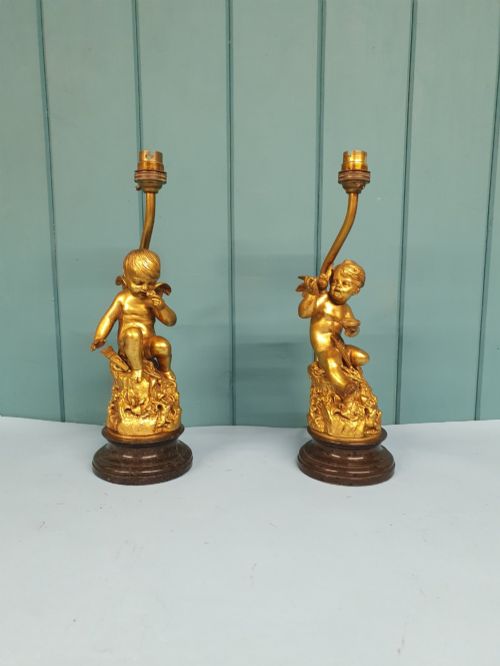
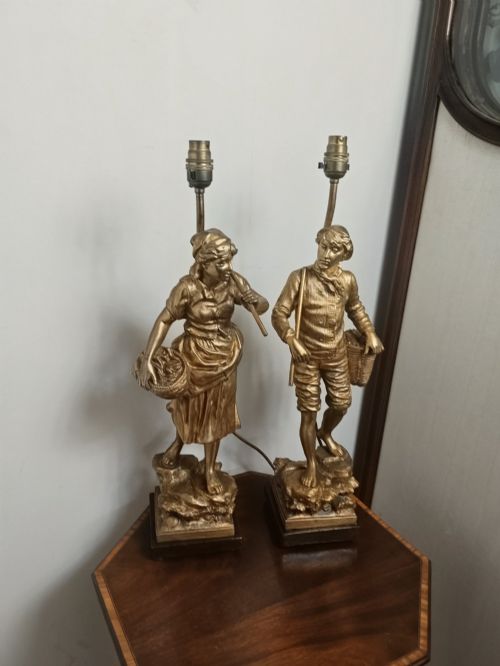
When you search for a gold bronze figure lamp, you encounter sculptural lighting pieces that integrate cast human figures or cherubs into table lamps and wall lights. These decorative objects date from the nineteenth and early twentieth centuries, spanning periods such as the nineteenth century, eighteen-eighties, eighteen-nineties, nineteen-hundreds, nineteen-tens, nineteen-twenties, and nineteen-thirty.
Makers and artists represented in these pieces include E Rousseau, Franz Bergman, and L & F Moreau, alongside unsigned works executed in cast metals. The forms range from pairs of matching table lamps to large single desk lamps and twin wall brackets.
Materials and construction
These lamps were constructed using cast metals such as bronze, gilt bronze, brass, and spelter to form the primary figural bodies and structural mounts. Many pieces incorporate surface treatments like cold-painting and gilding to enhance the visual detail of the figures.
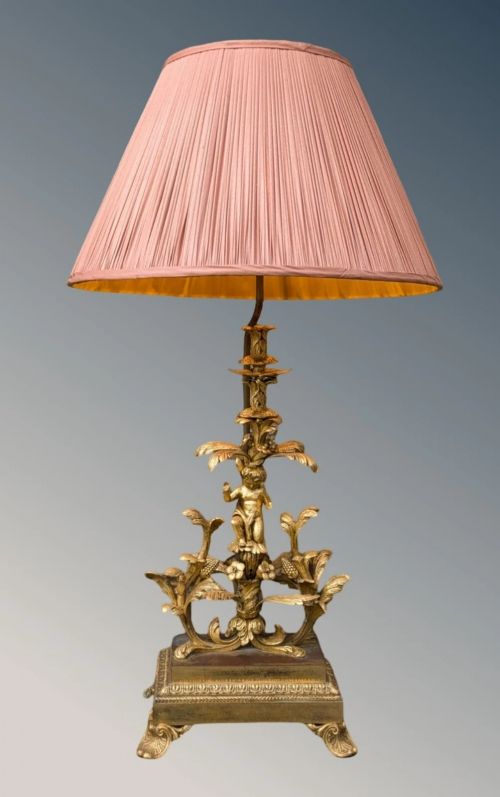
Secondary materials including marble, glass, fabric, and porcelain frequently complement the metalwork, forming bases, shades, or decorative inserts. The combination of these materials allowed makers to achieve contrasting textures between the metallic figures and their supporting elements.
Listings feature items from the nineteenth century up to nineteen-thirty, utilising bronze, spelter, marble, and porcelain across multiple decorative styles.
Judging quality in figural lamps
The choice and integration of secondary materials, such as heavy marble bases or porcelain elements, dictate the overall substance and visual balance of the lamp. Superior workmanship is evident in the harmonious union between the sculptural figure and the functional lighting components.
E Rousseau·Franz Bergman·L & F Moreau
The Gold Bronze Figure Lamp Glossary
- Gilt bronze
- Bronze that has been coated with a thin layer of gold or gold-coloured alloy to give a rich metallic finish. This technique protects the underlying metal while providing a bright surface.
- Spelter
- A zinc-based alloy commonly used as a cost-effective alternative to bronze for sculptural castings. It is often painted or plated to imitate heavier metals.
- Cold-painted bronze
- Bronze sculptures painted with oil or enamel paints without firing in a kiln. This method allows for vivid multi-coloured details on the metal surface.
- Art Nouveau
- A decorative style characterised by flowing, organic lines inspired by natural forms. It flourished around the turn of the twentieth century.
Gold Bronze Figure Lamp: Frequently Asked Questions
What periods do these lamps come from?
The pieces span the nineteenth and early twentieth centuries, with dates ranging from eighteen-eighty through the nineteen-thirties. You will find items representing nineteenth-century revival styles as well as twentieth-century Art Nouveau and Art Deco designs.
Each period brings distinct aesthetic choices, from ornate nineteenth-century classical styling to the streamlined geometry of the nineteen-thirties.
What materials are used in these figures?
The construction relies heavily on metals such as bronze, gilt bronze, brass, and spelter for the figural components. These are often combined with marble, glass, fabric, and porcelain.
Different metals create varied weights and finishes, with gilt bronze and cold-painted bronze offering particularly intricate surface detail.
How were these lamps used historically?
These pieces served as functional indoor lighting while doubling as prominent sculptural ornaments for desks, tables, and walls. They provided ambient or task illumination in domestic interiors.
The inclusion of figures such as cherubs or ladies allowed the lighting to function as decorative art objects within a room.
How do I identify different design styles?
Styles range from ornate French Rococo Revival and Neoclassical motifs to organic Art Nouveau curves and geometric Art Deco forms. Examining the motifs on the base and the posture of the figure helps determine the stylistic category.
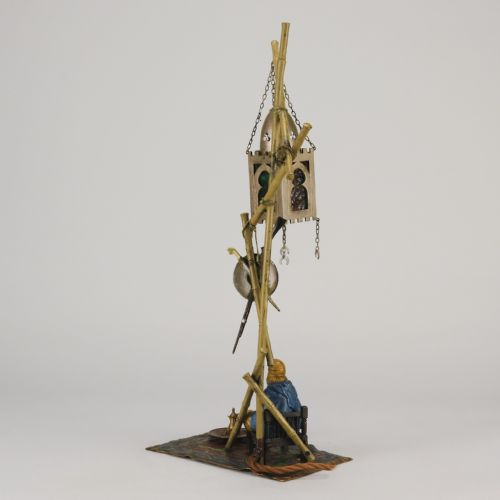
Orientalist themes also appear, depicting specific cultural scenes like the seated Arab lamp.