




Victorian Bronze Bedside Lamp
A victorian bronze bedside lamp brings heavy metal and rich patina into a quiet room, offering a warm and grounded light source.
Victorian Bronze Bedside Lamp
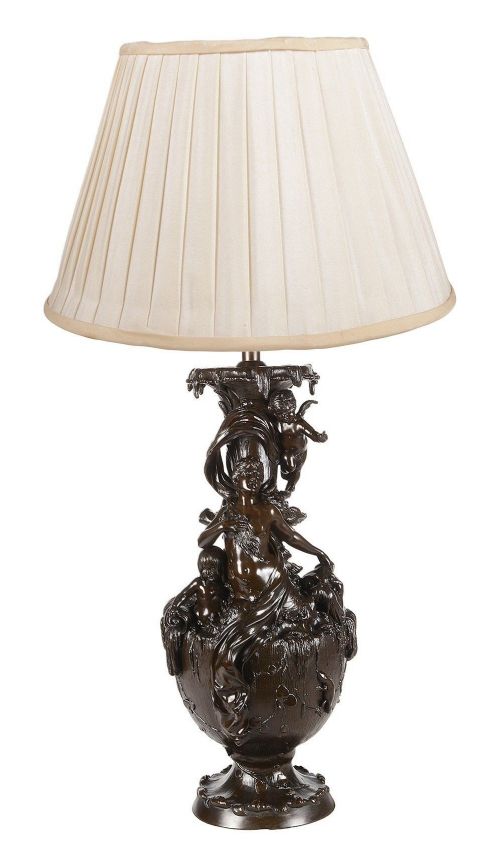
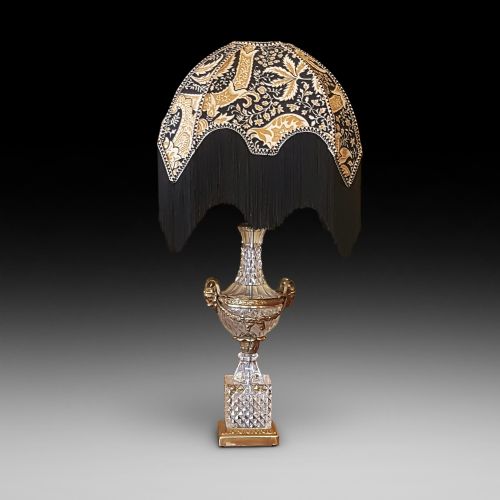
A victorian bronze bedside lamp is essentially a table lamp adapted from earlier lighting forms, candelabra, or ornamental vessels, capturing the eclectic tastes of the nineteenth century. These objects frequently utilise heavy cast metal bodies paired with contrasting elements such as porcelain, marble, or glass.
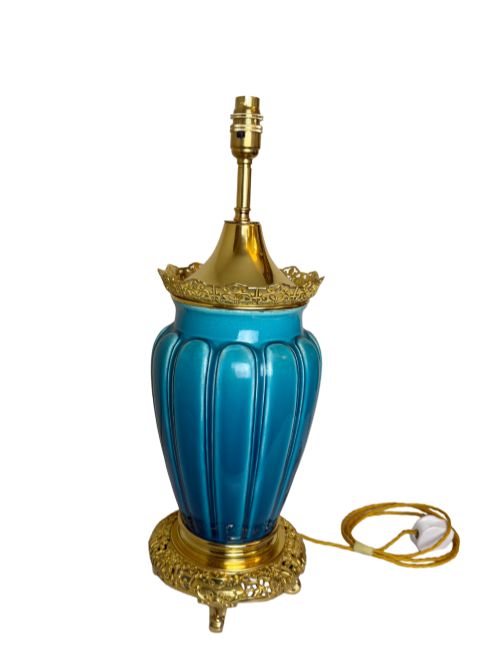
Buyers will encounter items ranging from simple gilt bronze mounts on ceramic bases to elaborate figural sculptures and converted ewers. The aesthetic leans heavily into classical revivalism, French styles, and occasional Meiji period Japanese influences.
Most examples function as table lamps with origins spanning the nineteenth century into the Edwardian era. They sit comfortably on low surfaces where their dense materials and intricate castings create an immediate focal point.
What varies in quality
Quality rests heavily on the sharpness of the metal chasing and the weight of the cast bronze or ormolu. Finer examples display deep, deliberate hand-finishing on the surface rather than a soft, uniform factory finish.
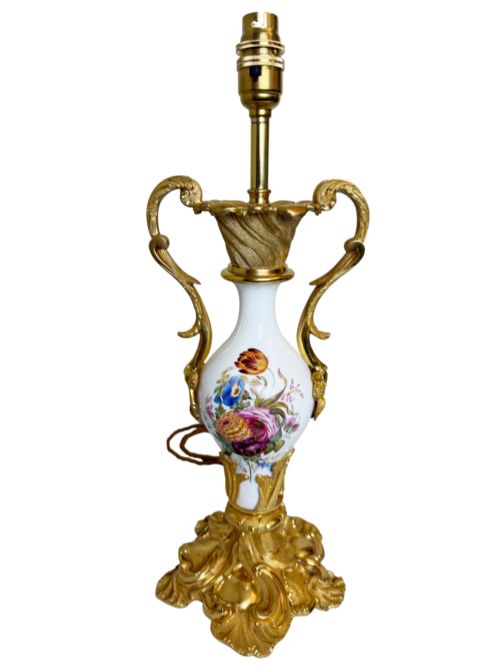
The choice of secondary materials dictates the tier of the piece, with hand-painted porcelain panels, solid marble plinths, and thick cut glass elevating standard items into exceptional specimens.
Current listings feature items spanning the 19th century through the Edwardian period, incorporating materials like bronze, porcelain, and marble.
The Victorian Bronze Bedside Lamp Glossary
- Ormolu
- Gilded bronze produced by applying a mercury and gold amalgam to a bronze base and heating it. This technique creates a durable, rich golden surface typical of luxury nineteenth-century decorative arts.
- Champlevé
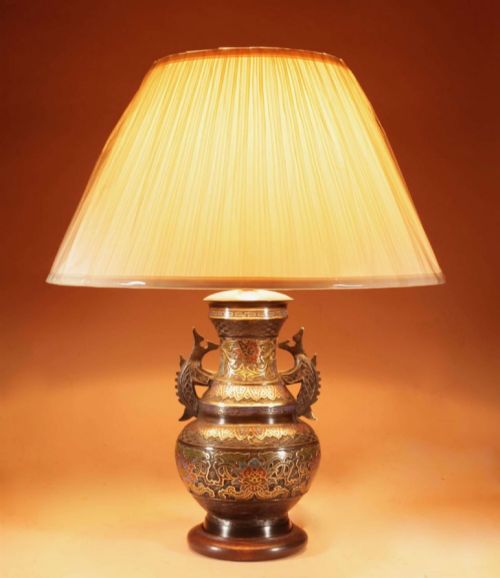
- An enamelling technique where troughs are dug into a metal surface and filled with vitreous enamel before firing. It frequently appears on decorative bronze items influenced by Japanese artistry.
- Ewer
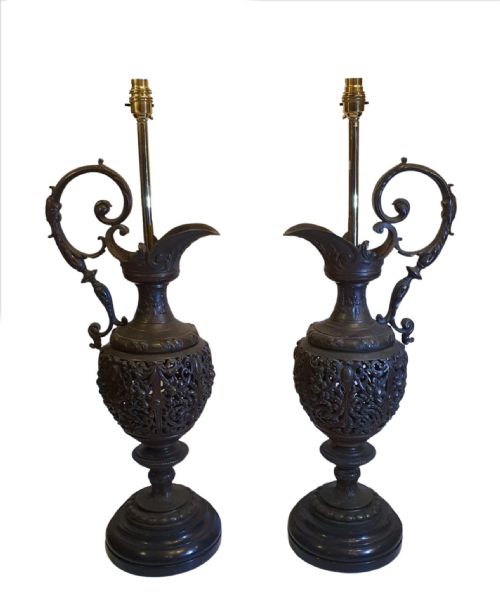
- A large jug with a wide spout traditionally used for water, which nineteenth-century makers often converted into lamp bases. Their sculptural handles and curved bodies lend themselves well to lighting adaptations.
- Candelabra
- A branched candlestick holder designed to hold multiple candles, frequently adapted into electrified table lamps by running wiring through the central stem.
- Console lamp
- A lighting fixture historically designed to sit on a narrow console table against a wall, typically featuring a flat back or directional profile.
Victorian Bronze Bedside Lamp: Frequently Asked Questions
How do I clean bronze and ormolu?
Dust the metal gently with a soft, dry brush to remove surface particles without scratching the patina. Avoid harsh chemical cleaners that strip the original gilding or bronze finish.
If the metal requires deeper cleaning, use a damp cloth with mild soap and dry immediately to prevent moisture damage to mounted porcelain or marble.
Can I replace the lampshade safely?
Replacement shades should match the proportional weight and scale of the heavy bronze base. Clip-on or fitter-ring styles depend on the specific vintage harp hardware attached to the lamp.
Choose fabric or glass shades that complement the period aesthetic, such as opaline or silk designs suited to nineteenth-century lighting.
How do I tell if a lamp is converted?
Converted pieces often show capped spouts, plugged candle nozzles, or drilled bases where wiring passes through original vessels. These alterations are standard for items originally made as ewers or candelabra.
Examine the underside and collar fittings to see how manufacturing holes integrate with modern brass threaded pipe and lamp hardware.