



Napoleon III Lighting
Napoleon iii lighting brings theatrical French Second Empire grandeur into a room through rich metals and sculptural forms.
Napoleon III Lighting
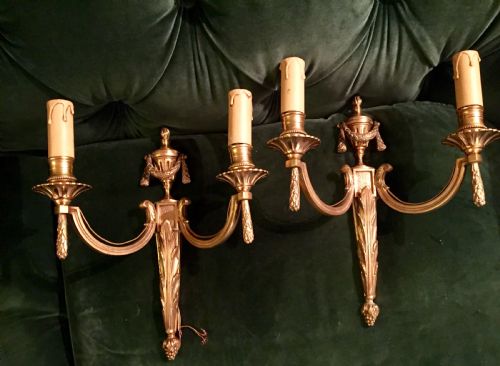
Napoleon iii lighting encompasses ornate metalwork pieces designed to illuminate period interiors during the nineteenth century. Buyers searching this phrase encounter substantial candelabra, wall sconces, girandoles, and converted oil lamps originating from France.
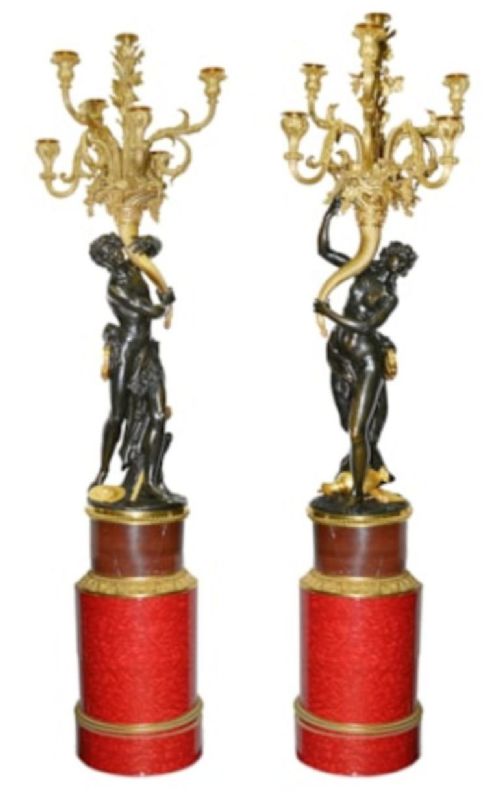
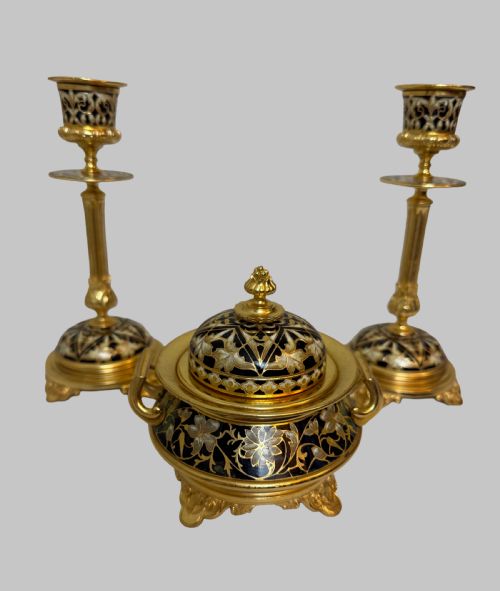
The objects appearing here draw heavily on Louis XVI style and Rococo Revival aesthetics. Most examples integrate cast bronze, ormolu, and brass, frequently mounted on marble bases or paired with porcelain bodies.
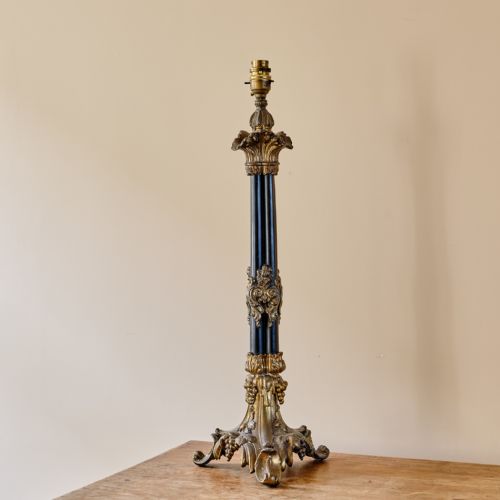
Candelabra and candlesticks dominate the selection, often featuring cherubs, detailed chasing, and multi-branch configurations. Converted oil lamps and table lamps also feature prominently, bridging historical utility with modern interior placement.
Materials and construction
Foundries utilised cast bronze, ormolu, brass, and silvered bronze to build the robust structures of these pieces. Metal elements receive intricate chasing and gilding, creating the reflective surfaces characteristic of the era.
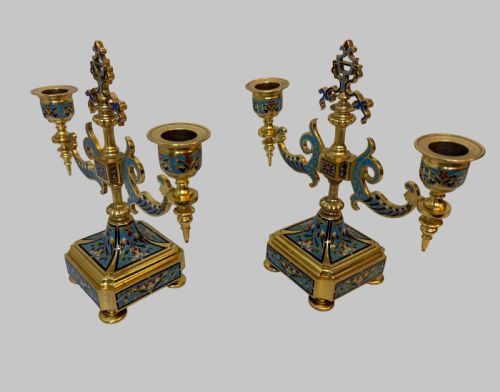
Many items incorporate decorative side materials such as champleve enamel, marble, glass, crystal, and Sevres porcelain. Boulle-work with tortoiseshell and brass accents appears on select decorative candlesticks.
Oil lamps and chandeliers often combine copper, brass, and faience ceramic bodies. Subsequent electrification converts many original oil and candle fixtures for contemporary use while retaining the antique metalwork.
Bronze cherubs appear frequently across these nineteenth-century pieces, presiding over candles and oil lamps with surprising frequency.
Assessing quality in french metalwork
The selection of secondary materials distinguishes finer examples, such as solid marble bases, vibrant champleve enamel panels, and genuine Sevres porcelain sections. Heavier gauge metals and balanced multi-branch arms indicate superior workshop standards.
Integration of original components matters when evaluating converted oil lamps and chandeliers. Pieces retaining harmonious proportions between the metal mounts, glass elements, and lighting branches command greater appreciation.
Ferdinand Barbedienne
The Napoleon III Lighting Glossary
- Ormolu
- Gilded bronze produced by applying a mercury-gilding amalgam to cast bronze. This technique creates a rich, durable golden surface seen across nineteenth-century French metalwork.
- Champleve
- An enamelling technique where troughs are dug into a metal surface and filled with vitreous enamel powder before firing. It creates vibrant coloured patterns on candlesticks and desk accessories.
- Girandole
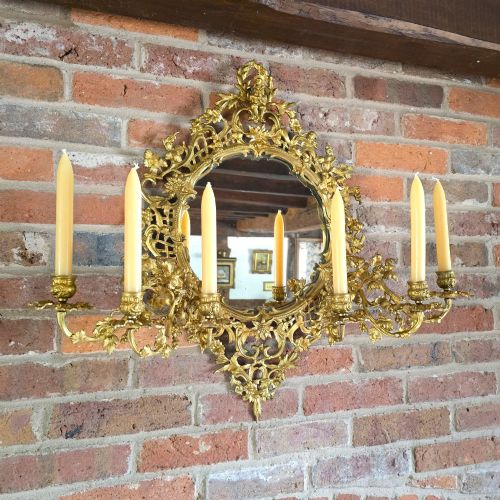
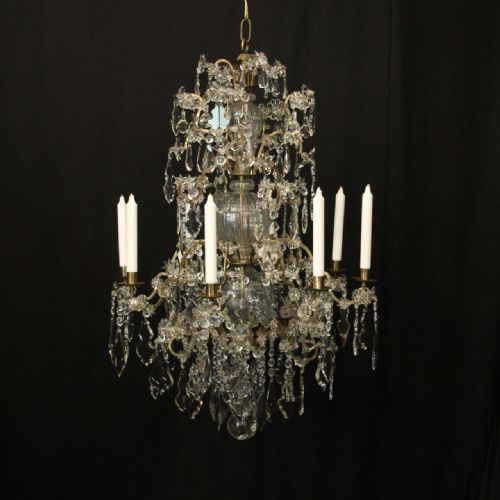
- An ornamental branched candlestick or wall-mounted sconce, frequently backed by a mirror to amplify light. These fixtures often feature crystal drops and elaborate bronze frames.
- Boulle-work
- A marquetry process using tortoiseshell and brass inlay developed in France. It appears on select decorative candlesticks alongside traditional metal casting.
- Faience
- Tin-glazed earthenware used for the bodies of decorative oil lamps. It introduces colourful ceramic glazes beneath bronze mounts.
Napoleon III Lighting: Frequently Asked Questions
What is napoleon iii lighting?
Napoleon iii lighting refers to nineteenth-century French decorative lighting fixtures produced during the Second Empire period. These pieces encompass bronze candelabra, wall lights, girandoles, and converted oil lamps.
Characterised by heavy metal casting and eclectic revival styles, the objects use materials like ormolu, marble, champleve enamel, and Sevres porcelain to achieve an opulent appearance.
How do I live with antique candelabra?
Antique candelabra and candlesticks function effectively as mantle ornaments, dining table centerpieces, or decorative accents on side tables. Their sculptural metal forms add historical weight to modern interiors.
Many pieces remain suitable for holding taper candles, while others have been wired for electricity to serve as permanent table lamps or wall sconces.
Were these oil lamps converted?
Numerous nineteenth-century oil lamps and chandeliers undergo later conversion to electricity. This adaptation allows fragile antique fixtures to function safely within modern homes.
Conversions typically retain the original bronze, brass, faience, or copper body while integrating internal wiring through the historical burner assembly.
How do I spot louis xvi style?
Louis xvi style in nineteenth-century lighting shows a turn toward classical symmetry, straight lines, and refined neoclassical ornamentation. You will notice laurel wreaths, urn motifs, and fluted columns.
This aesthetic contrasts with the more asymmetrical, flowing curves of the concurrent Rococo Revival pieces found from the same era.
What are girandoles?
Girandoles are ornate branched lighting fixtures, often designed as table candelabra or wall-mounted sconces featuring reflective backplates. The mirrored or polished metal surfaces multiply the candlelight within a room.
Nineteenth-century examples frequently incorporate crystal drops and elaborate bronze frames depicting cherubs or floral motifs.