





Victorian Brass Stud Chest
These robust victorian brass stud chest designs combine timber frameworks with hammered metalwork for travel and domestic storage.
Victorian Brass Stud Chest
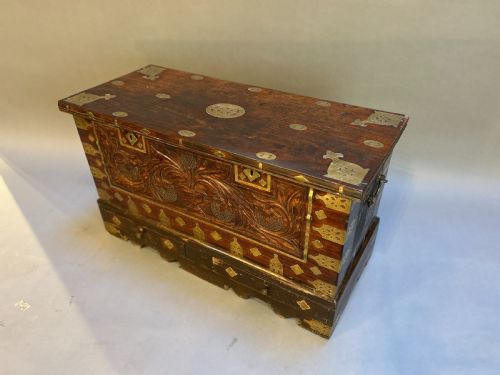
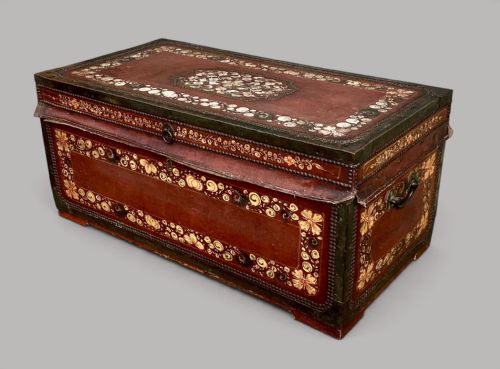
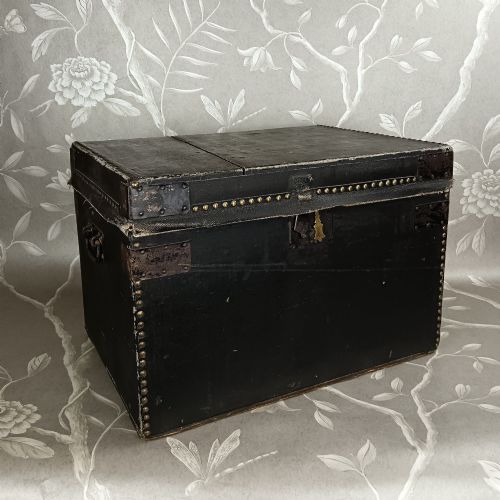
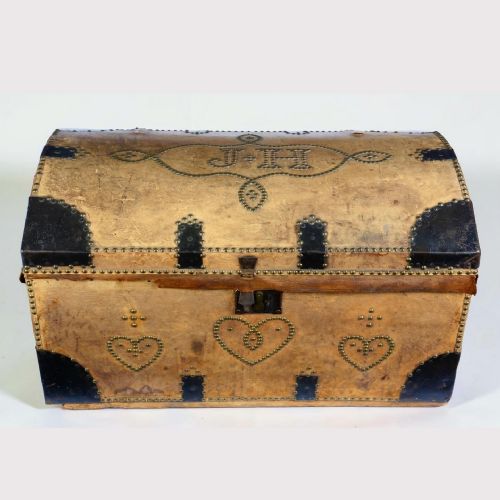
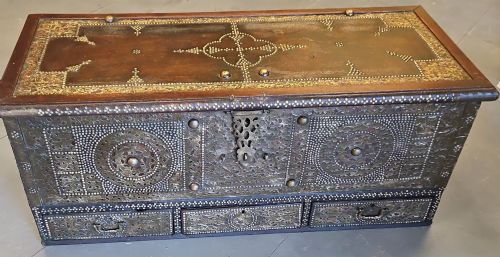
A victorian brass stud chest encompasses heavy storage forms built for travel and domestic use during the nineteenth century. These pieces include domed leather trunks, camphorwood campaign boxes, and Zanzibar chests ornamented with distinctive metal fastenings.
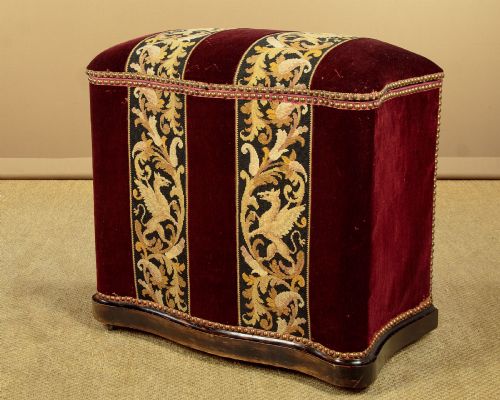
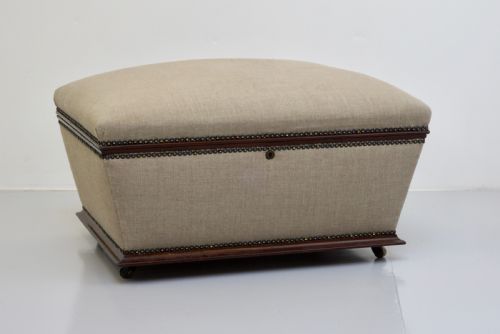
The versions most frequently met on this page span the Victorian period alongside Regency and mid-nineteenth-century examples. They appear as leather-covered travelling trunks, teak storage chests, and upholstered ottomans finished with individual metal pins.
Materials and construction
Makers constructed these storage forms using substantial timbers including teak, camphorwood, mahogany, rosewood, and pine. Frameworks were frequently bound in leather and secured with iron or brass elements to withstand long journeys.
Individual brass studs and tacks were hammered by hand along structural seams and lid borders to fasten leather coverings and reinforce joints. Brass caps and corner plates were added to high-wear areas for extra durability.
Victorian Brass Stud Chest Retail Price Guide 2026
Typical asking prices for victorian brass stud chest among the pieces listed under this phrase on Sellingantiques today, from the lower quarter to the upper quarter. They describe what is for sale here now, not the wider market.
Distinctions in craftsmanship
The distinction between standard utility boxes and finer examples rests in the selection of timbers and the precision of the metalwork. Denser tropical hardwoods like teak and camphor command attention alongside carefully applied brass stud patterns.
Superior pieces display integrated maker stamps, robust leather upholstery, and well-fitted internal compartments intended for coaching and travel. The regularity of the studwork and the weight of the brass mountings indicate the workshop standard.
Wm. Insall of Bristol·Arthur Wannop
The Victorian Brass Stud Chest Glossary
- Zanzibar chest
- A heavy storage chest featuring brass studwork and strapwork, originating from East African trade routes. These pieces often utilise teak or rosewood.
- Campaign trunk
- A portable storage box designed for military officers and travellers, typically fitted with carrying handles and reinforced corners.
- Camphorwood
- An aromatic timber frequently utilised for nineteenth-century travelling chests to protect contents from insects.
- Ottoman
- A low upholstered seat or storage box which functions as a blanket chest or footstool.
- Studwork
- Decorative or reinforcing patterns formed by hammering individual metal pins into leather or timber surfaces.
Victorian Brass Stud Chest: Frequently Asked Questions
What is a victorian brass stud chest used for?
These pieces function primarily as domestic storage for blankets, linens, and personal possessions. Their robust construction makes them suitable for use as coffee tables or accent furniture in living spaces.
Historically, similar trunks transported belongings across long distances via coach or ship. Today, they serve both decorative and practical roles in modern interiors.
How do I identify a Zanzibar chest?
Zanzibar chests are characterised by dense tropical hardwoods such as teak or rosewood combined with elaborate brass studwork and strapwork. They reflect nineteenth-century trade connections with East Africa.
These chests often feature compartmented interiors and heavy carrying handles on the sides. Their distinct ornamentation separates them from standard domestic English trunks.
What woods were used for these chests?
Nineteenth-century trunk makers utilised a variety of timbers depending on the intended destination and purpose of the piece. Common choices include mahogany, pine, and imported hardwoods like camphorwood and teak.
Camphorwood was specifically selected for travelling trunks due to its insect-repellent properties. Hardwoods provided the structural strength required for heavy transit.
How should I care for leather and brass?
Leather surfaces benefit from gentle cleaning and occasional conditioning to maintain suppleness and prevent cracking over time. Avoid harsh chemical cleaners that might damage the historic finish.
Brass studwork and mountings can be left with their natural aged patina or lightly polished with a soft cloth. Care should be taken to avoid getting polish on the surrounding leather or wood.