




Nineteenth Century Trunk
A nineteenth century trunk delivers sturdy utility and travel-worn character, built from timber and bound in metal for decades of movement.
Nineteenth Century Trunk
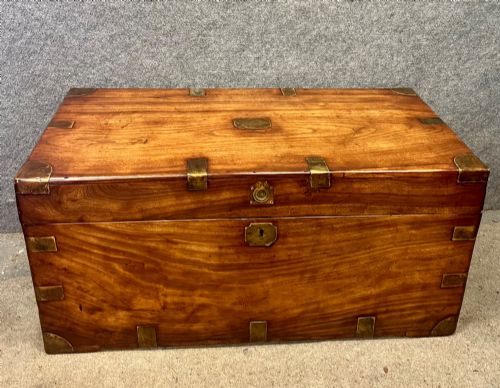
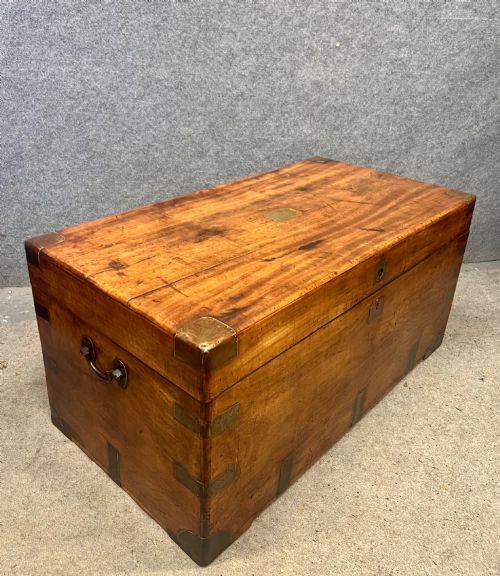
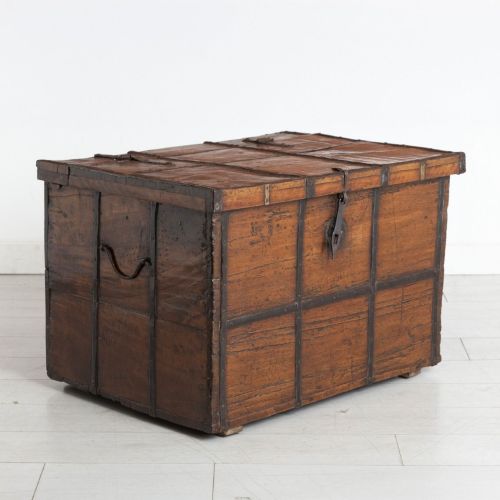
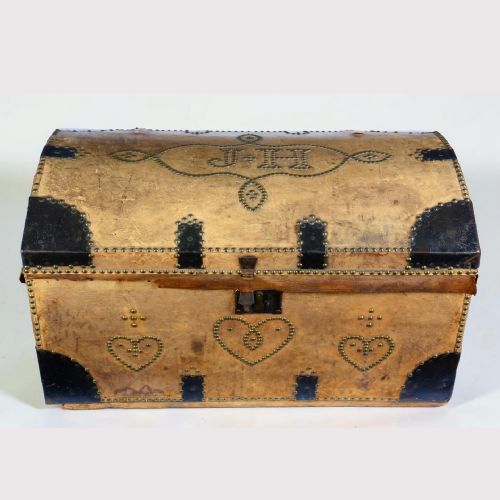
A nineteenth century trunk encompasses travel chests, campaign boxes, and blanket receptacles made to withstand rigorous transit or domestic storage. These pieces arrive in various structural formats, from dome-topped storage boxes to flat-lidded campaign furniture designed for officers on the move.
Camphorwood, teak, pine, and mahogany form the primary body timbers across these examples, frequently reinforced with brass corners, iron bands, or leather coverings. Regional variations range from Anglo-Indian and Middle Eastern imports to Scandinavian country pieces and British domestic pine boxes.
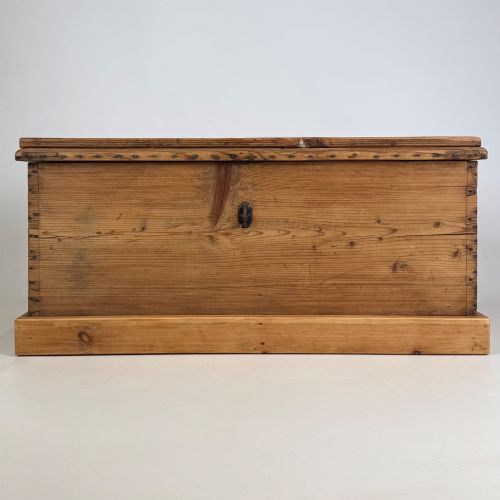
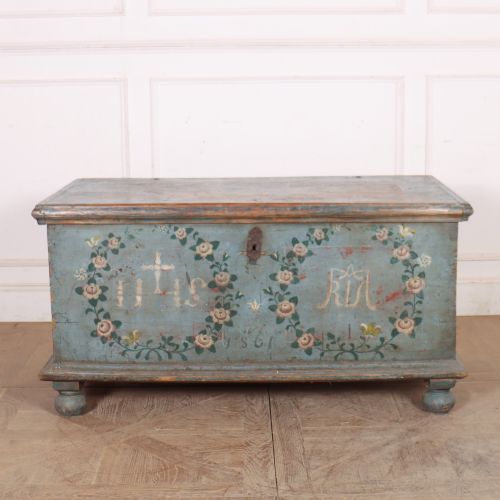
Buyers encounter domestic blanket chests alongside specialised military campaign chests and seaman's boxes bearing painted surfaces or simple dovetailed joints. Each variant reflects the specific demands of nineteenth-century life, whether for colonial transport, sea voyages, or country house storage.
Materials and Construction
Cabinetmakers and joiners utilised durable hardwoods like camphorwood, teak, and mahogany alongside accessible softwoods such as pine. Hardwoods offered natural resistance to insects during transport, while pine provided a light, dependable base for painted decoration or leather wrapping.
Metal reinforcement defined much of this output, utilising iron bands, brass studwork, and heavy corner brackets to protect the timber from the knocks of travel. Leather coverings and hide bindings, secured with brass tacks, added an extra layer of weather resistance to the exterior.
Surface treatments varied widely from plain polished wood to scumbled paint, grained finishes, and elaborate painted decoration. Dovetail joinery and internal compartmentalization completed the construction, ensuring the interior remained organised and structurally sound.
Nineteenth Century Trunk Retail Price Guide 2026
Typical asking prices for nineteenth century trunk among the pieces listed under this phrase on Sellingantiques today, from the lower quarter to the upper quarter. They describe what is for sale here now, not the wider market.
The listings demonstrate that nineteenth century trunks appear in pine, mahogany, camphorwood, and teak, combined with brass, iron, and leather.
Factors of Distinction
The choice of primary timber dictates much of the inherent quality, with dense camphorwood, teak, and figured mahogany sitting above basic pine. Original metalwork, including substantial brass binding, flush handles, and maker-stamped locks, elevates the standard of an individual piece.
The integrity of surface finish and original hardware influences the standing of a trunk. Retained leather coverings, intact brass studwork, and unpainted interior compartments show a higher degree of preservation than heavily altered or stripped examples.
Construction details such as tight dovetailing, well-fitted internal tills, and original painted motifs separate standard utility containers from finer bespoke or campaign pieces made for demanding patrons.
Arthur Wannop·Seabrook of St.Pauls London
The Nineteenth Century Trunk Glossary
- Campaign trunk
- A portable chest built in sections or fitted with carrying handles for military officers on the move. These pieces often feature brass corners and recessed hardware.
- Camphorwood
- An aromatic hardwood utilised in nineteenth-century chest construction for its insect-repellent properties. This timber frequently appears in Anglo-Indian and colonial luggage.
- Scumbled paint
- A decorative paint technique involving translucent layers dragged over a base coat to imitate wood grain or texture. It appears on domestic pine storage boxes.
- Seaman's chest
- A robust wooden box designed for sailors, often featuring internal tills and painted maritime motifs. These containers held personal possessions during sea voyages.
- Brass bound
- A method of reinforcing box edges and corners with strips and brackets of brass. This technique protected the timber and added rigidity to travelling luggage.
Nineteenth Century Trunk: Frequently Asked Questions
What were nineteenth century trunks used for?
These chests served primarily for transporting personal belongings, military equipment, and household goods during journeys by land and sea.
Travellers packed clothing, documents, and valuables inside, relying on sturdy timber and metal bindings to protect the contents from rough handling and weather.
How do I care for a wooden trunk?
Keep the timber away from direct heat sources and sudden humidity changes to prevent warping and splitting in the old wood.
Apply a light application of appropriate wax occasionally to nourish dry surfaces without damaging original painted or leather finishes.
How can I tell a campaign trunk apart from a standard chest?
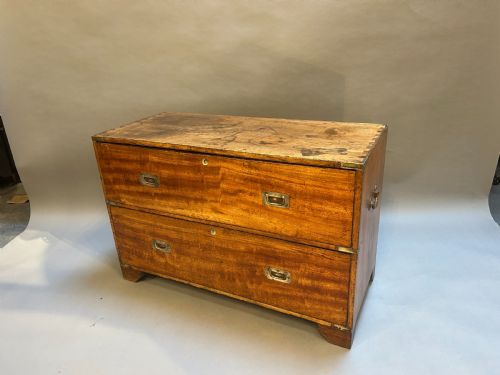
Campaign pieces typically incorporate recessed brass handles, reinforced corners, and occasionally two-part modular construction designed for easy dismantling.
Standard domestic chests lack these specialised travel modifications, featuring instead fixed plinths and traditional hinges intended for stationary home use.
Where should I place a trunk in a modern home?
A large chest functions effectively as a coffee table in a living room, providing hidden storage space for blankets and books.
Alternatively, smaller examples sit well at the foot of a bed or serve as hallway storage for everyday items.