


Victorian Brass Single Bed
A victorian brass single bed brings warmth and solid proportions to a bedroom, pairing polished metal framework with the practicalities of nineteenth-century sleeping quarters.
Victorian Brass Single Bed
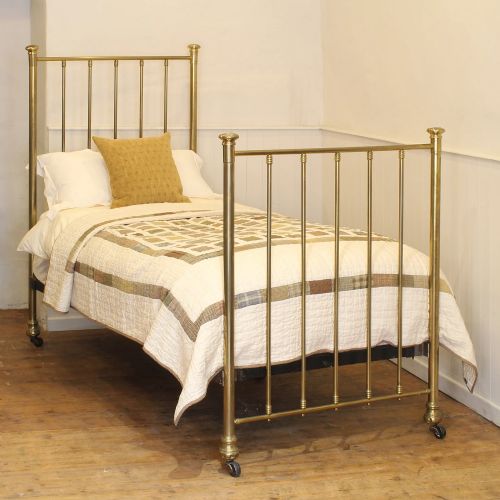
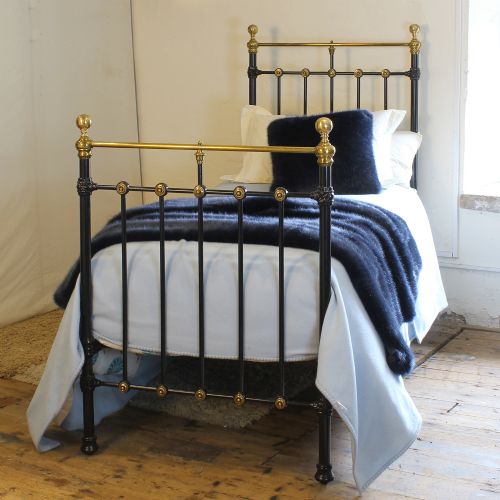
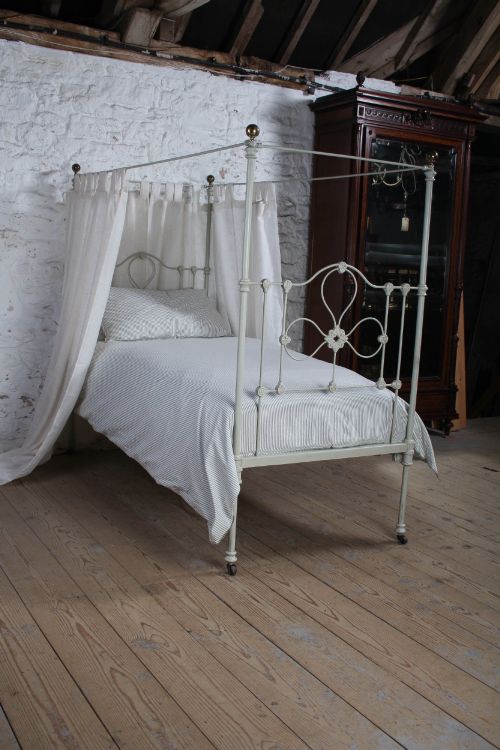
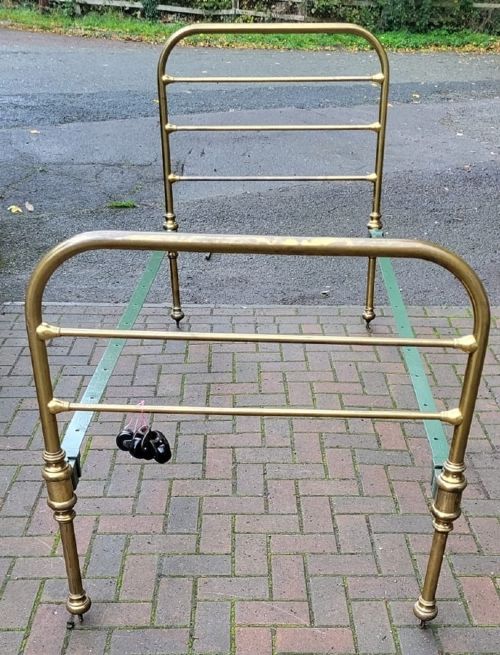
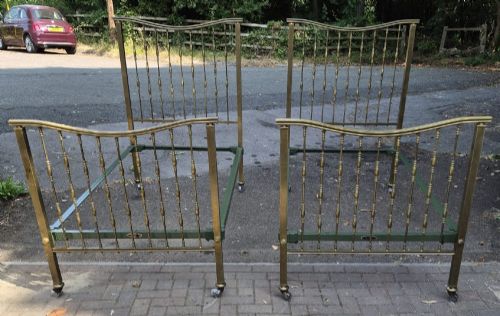
A victorian brass single bed encompasses iron and brass bedsteads sized for one person, emerging primarily from the Victorian and Edwardian periods alongside French Belle Epoque influences. These pieces appear as all-brass frames or combinations of cast iron, wrought iron, and brass components.
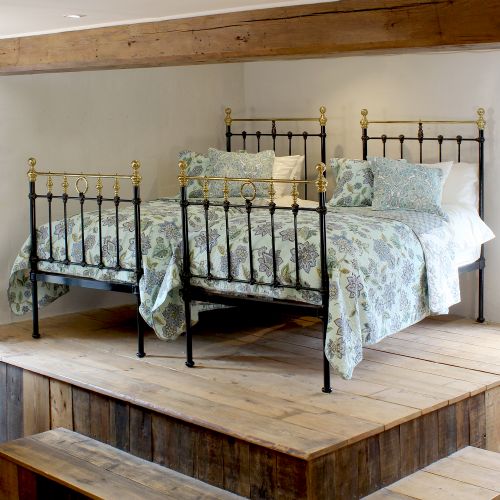
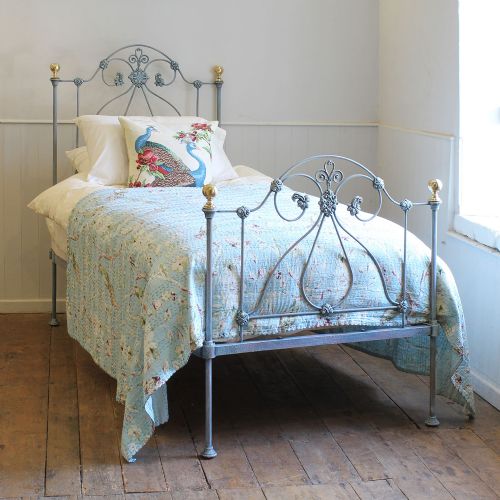
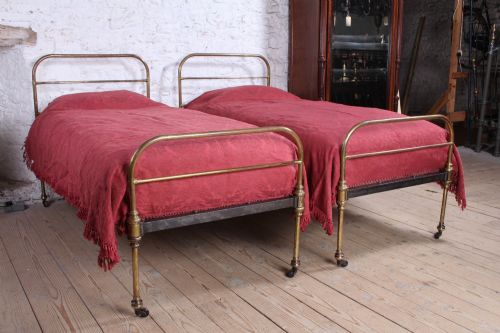
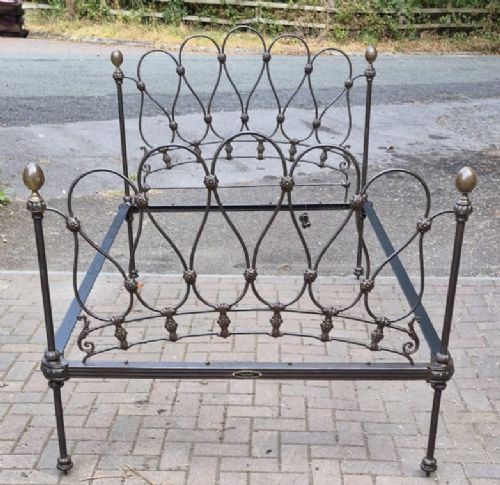
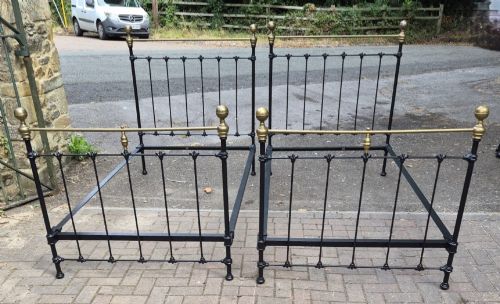
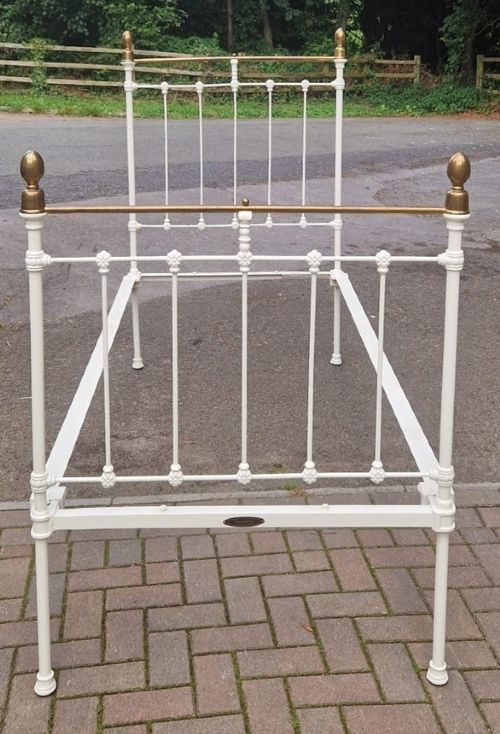
The selection ranges from simple single beds to large single variants, curly iron bedsteads, and pairs that can be joined together to form a wider sleeping space. Frameworks frequently feature decorative elements such as rings, hoop details, and painted finishes in black, white, or blue verdigris.
Dated examples span from the mid nineteenth century through to the early twentieth century, incorporating standard widths like three feet or three feet six inches. Buyers encounter everything from plain utilitarian iron frames with brass rails to opulent, ornate constructions.
Materials and Construction
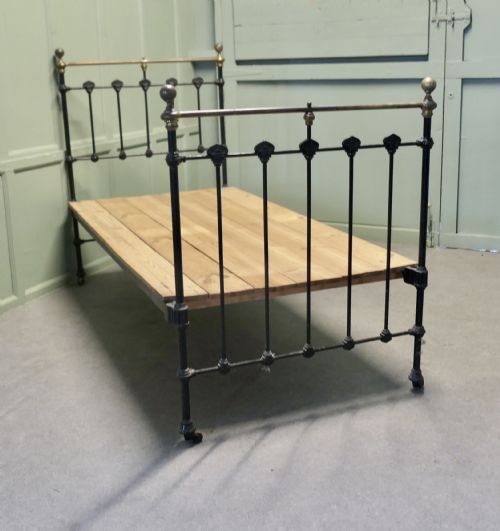
Makers constructed these bedsteads using a combination of heavy cast iron, hand-forged wrought iron, and spun or sheet brass tubing fitted over iron cores. Ceramic castors and wooden slats often supported the mattress base within the rigid metal frame.
Surface treatments included protective paint finishes in black, white, or verdigris applied to the iron components, alongside polished or lacquered finishes on the brass rails, knobs, and finials.
Victorian Brass Single Bed Retail Price Guide 2026
Typical asking prices for victorian brass single bed among the pieces listed under this phrase on Sellingantiques today, from the lower quarter to the upper quarter. They describe what is for sale here now, not the wider market.
Listings span periods from 1850 to 1910, uniting brass, cast iron, and painted finishes across single and large single proportions.
Judging Quality and Execution
Quality rests upon the weight and thickness of the brass tubing and the intricacy of the cast iron components, distinguishing robust workshop output from lighter mass-produced variants. Heavier frames maintain greater structural integrity and rigidity.
The finesse of the joints, the weight of the metal, and the retention of original maker markings or stamps set finer examples apart. Details like cast iron rings, hoop work, and ceramic fittings also indicate the original tier of manufacture.
Hoskins and Sewell·R W Winfield·Shoolbred·Maple and Co
The Victorian Brass Single Bed Glossary
- Bedstead
- The complete framework of a bed, including the headboard, footboard, and side rails. This structural skeleton supports the mattress and base.
- Cast Iron
- Iron shaped by pouring molten metal into a mould. It provides rigid structural support and intricate decorative detail on nineteenth-century bed frames.
- Wrought Iron
- Iron beaten and forged by hand into shape while hot. This material offers superior tensile strength for structural elements.
- Verdigris
- A green patina formed naturally on brass or copper over time. Certain period finishes intentionally replicate this weathered coloration.
- Finial
- A decorative ornament fixed to the top corner posts of a bedstead. These brass or iron caps finish the vertical members of the frame.
Victorian Brass Single Bed: Frequently Asked Questions
How do I fit a modern mattress?
Many nineteenth-century frames measure three feet or three feet six inches wide, which often aligns with standard single or small double sizes.
Custom mattress makers or modern manufacturers can supply bespoke dimensions to fit these historical iron and brass perimeters.
Can these beds be taken apart?
Most nineteenth-century bedsteads utilise slot-in dovetail joints or iron side-rail wedges that dismantle easily without specialised tools.
This modular construction allows for straightforward transport and reassembly within different rooms.
How do I clean brass and iron?
Painted iron surfaces respond best to gentle dusting and occasional wiping with a dry or slightly damp cloth to preserve the finish.
Brass sections can be polished with appropriate metal creams, though many owners prefer to leave an aged patina untouched.
Are pairs actually matching?
Matching pairs originate from the same workshop batch and share identical casting patterns, dimensions, and hardware.
Many of these pairs were built with matching fixings specifically so they could be joined together or placed side by side.