

Victorian Brass Fireside
Victorian brass fireside pieces bring warmth and polished metal character to the hearth through coal scuttles, companion sets, and fenders.
Victorian Brass Fireside
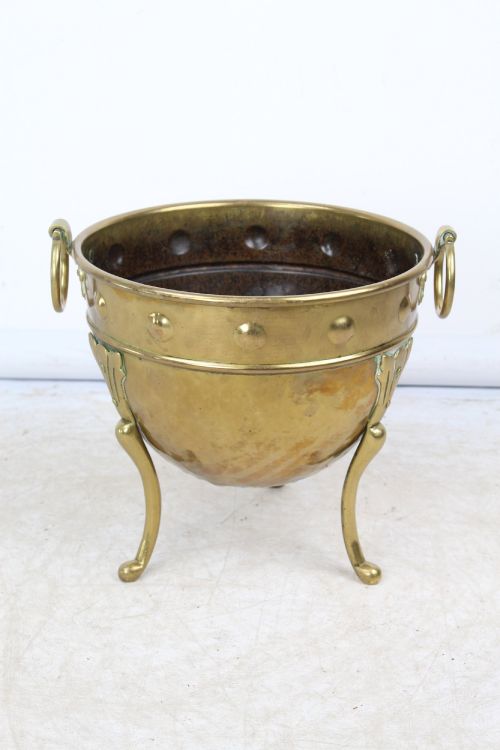
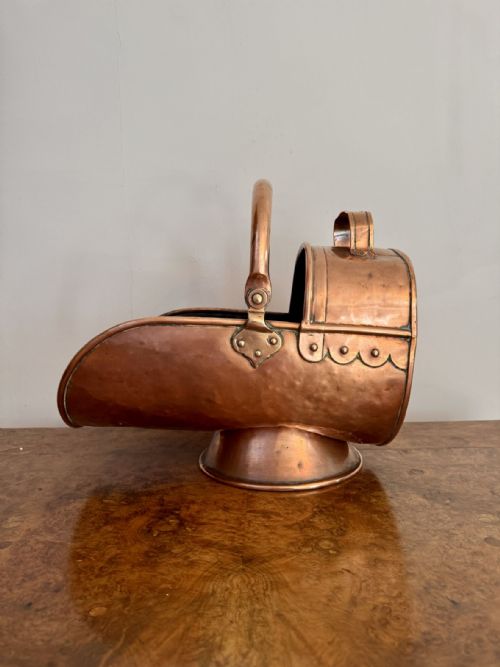
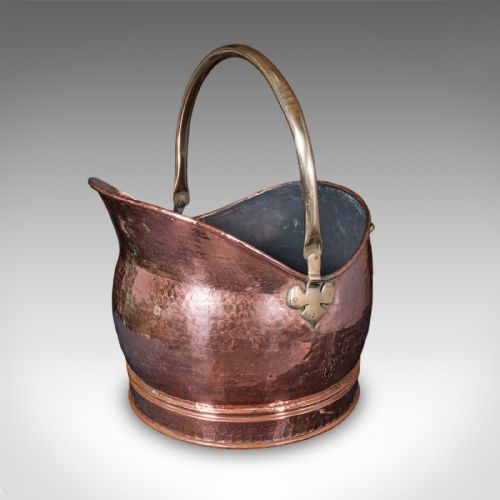
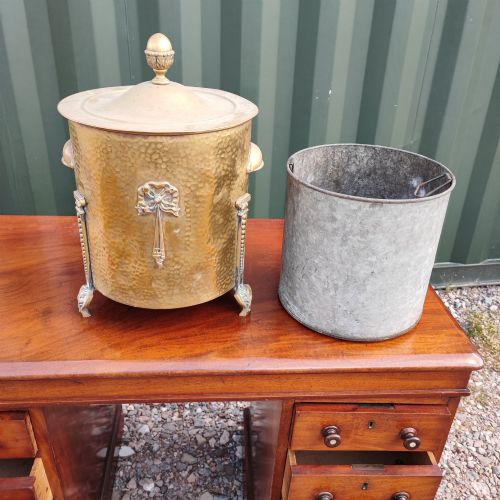
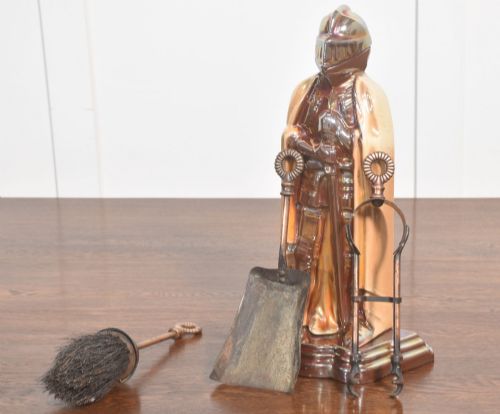
Victorian brass fireside accessories span utilitarian coal storage and decorative hearth furniture designed for nineteenth-century domestic life. The selection centres on coal scuttles, log bins, companion sets, and fire kerbs made primarily during the latter half of the nineteenth century and into the Edwardian period.
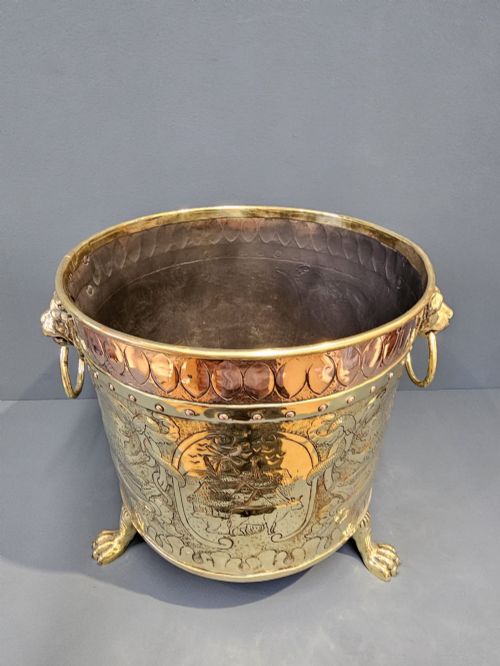
Buyers encounter heavy cast or sheet brass containers alongside structured iron and steel fenders finished with polished brass trim. Many items combine brass with complementary metals such as copper banding or wrought iron to withstand daily hearth use while maintaining an ornamental presence.
What varies in quality
Quality shows in the thickness of the brass gauge and the robustness of the structural joints. Heavier metal gauge prevents denting and ensures that scuttles and companion stands endure frequent handling around the hearth.
Refinement of detail distinguishes standard production from finer workshop output, visible in crisp embossing, hand-finished chasing, and the integration of complementary materials like copper banding or turned wooden handles.
The inventory records Arts and Crafts, Gothic Revival, and Aesthetic Movement influences across Victorian fireside accessories.
Henry Loveridge·Howard and Sons·Gillows·Hampton and Sons
The Victorian Brass Fireside Glossary
- Coal Scuttle
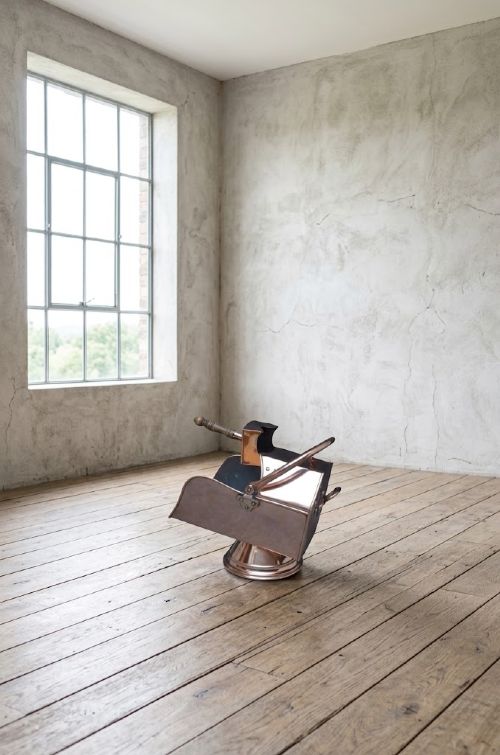
- A container specifically designed to hold fuel near the fireplace. These pieces often feature hinged lids and swing handles for carrying coal.
- Companion Set
- A collection of fireplace tools, typically including a poker, shovel, and tongs, housed on a dedicated stand or rest.
- Fender
- A low metal guard placed around the hearth to contain embers and ash. Victorian examples frequently incorporate brass rails, seats, or decorative pierced panels.
- Purdonium
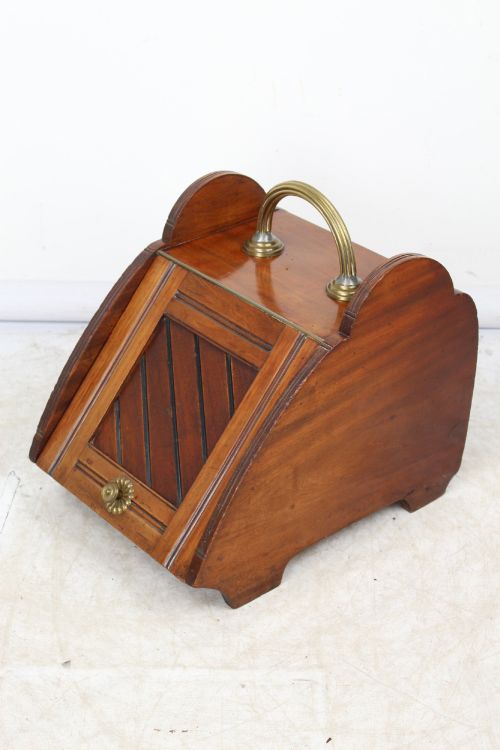
- A specialised cabinet or box designed for storing coal indoors. They frequently include a metal-lined interior and a drop-front mechanism.
- Embossing
- A technique for raising a design in relief against a background. This method appears frequently on the bodies of nineteenth-century brass log bins and scuttles.
Victorian Brass Fireside: Frequently Asked Questions
How do I clean a brass coal scuttle?
Clean brass surfaces using a soft cloth and a gentle, non-abrasive metal polish formulated for brass. Avoid harsh chemical cleaners that can strip away the aged patina accumulated over decades of use.
Take care to protect any adjoining copper bands, wooden bodies, or leather components during the polishing process. Regular dusting helps maintain the metal lustre without requiring frequent heavy cleaning.
What is a club fender?
A club fender is a low fireside bench featuring upholstered seats built over a metal frame. They allowed homeowners to sit comfortably close to the warmth of the fireplace.
These pieces typically combine steel or brass frames with leather seating pads. They emerged in country houses as both practical seating and decorative hearth boundaries.
How do I date a Victorian fireside piece?
Dating relies on stylistic markers, construction methods, and material combinations recorded across nineteenth-century manufacturing. Mid-Victorian items often display heavier cast brass and Rococo Revival influences, while late nineteenth-century pieces lean towards Arts and Crafts or Art Nouveau motifs.
Maker marks, registration stamps, and specific fastener types also help narrow down the production decade. Comparing the piece to documented archive examples provides further chronological context.
Are companion sets meant for daily use?
Most antique companion sets were built from robust brass and iron to handle actual fire tending. Tools typically include pokers for adjusting logs, shovels for clearing ash, and tongs for moving fuel.
While functional, many collectors choose to display them as decorative hearth accessories to preserve their aged finish. Using them gently ensures the historical materials remain intact.