


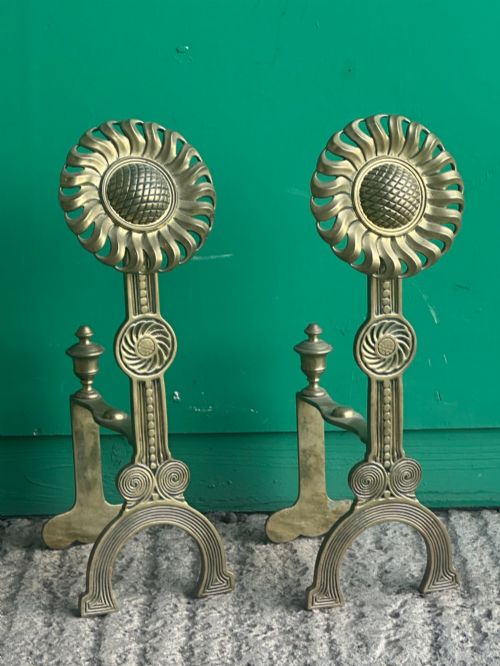
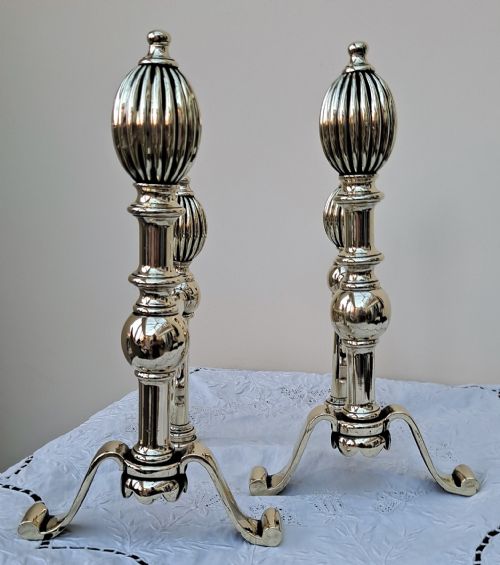
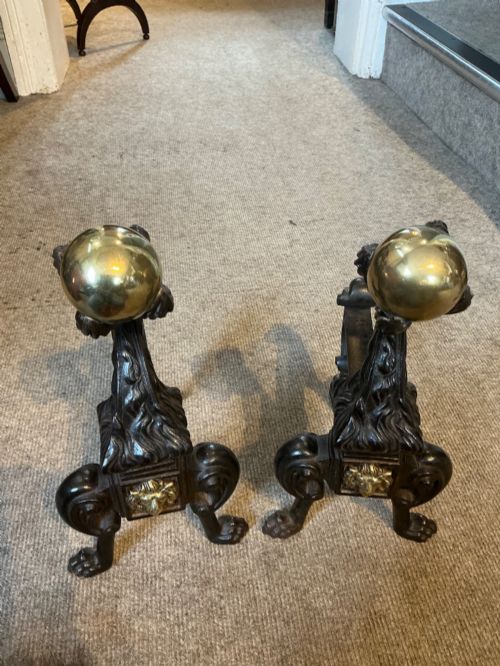
Victorian Brass Fire Dogs
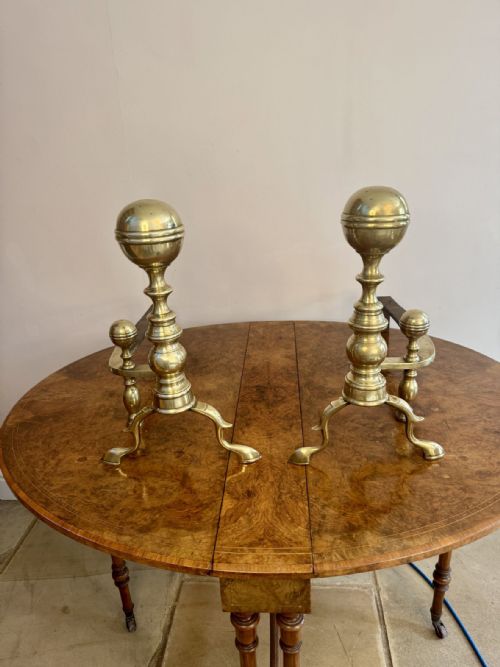
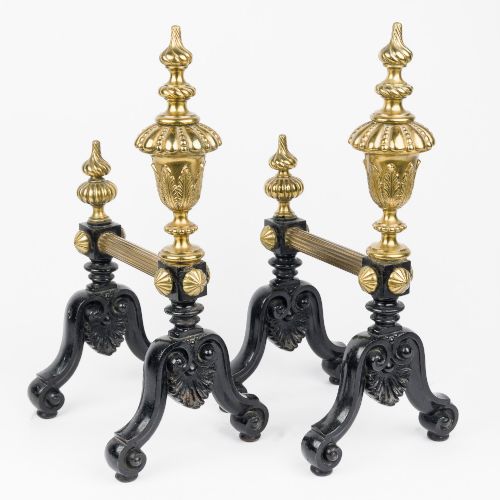
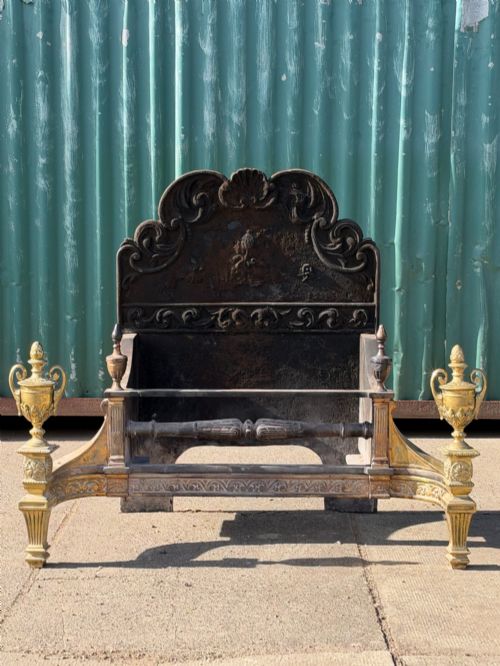
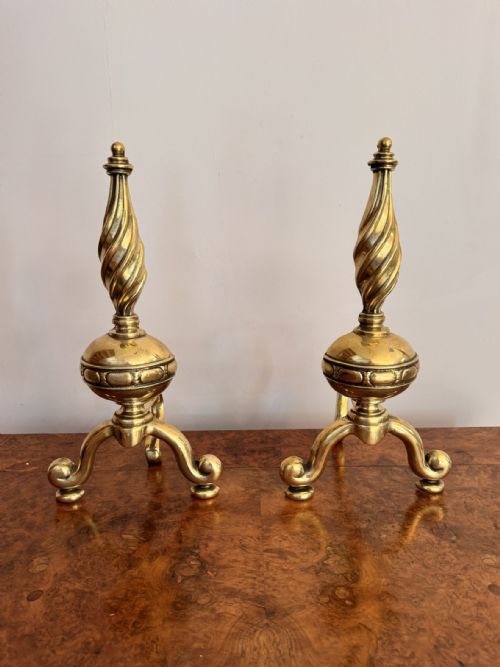
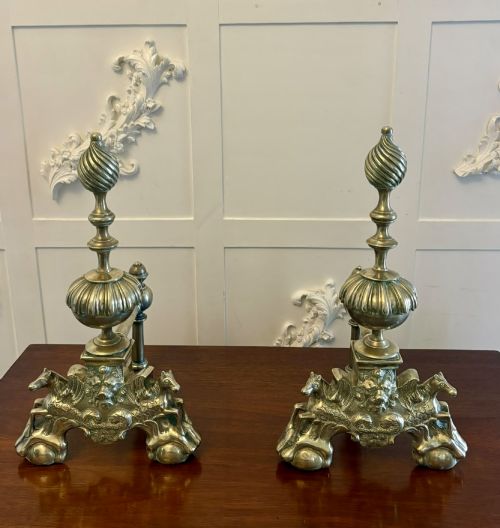
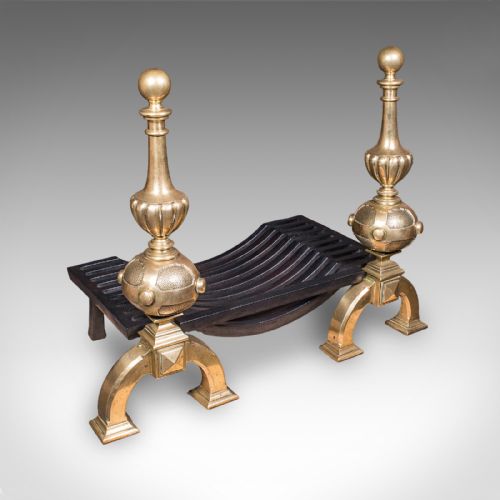
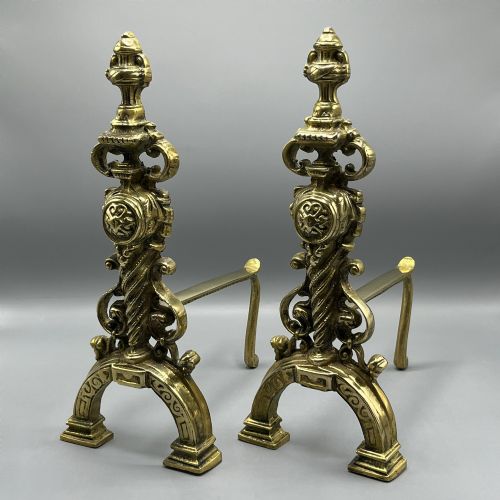
These robust victorian brass fire dogs supported fuel within the hearth while adding bright metallic display to the nineteenth-century chimney breast.
Victorian Brass Fire Dogs
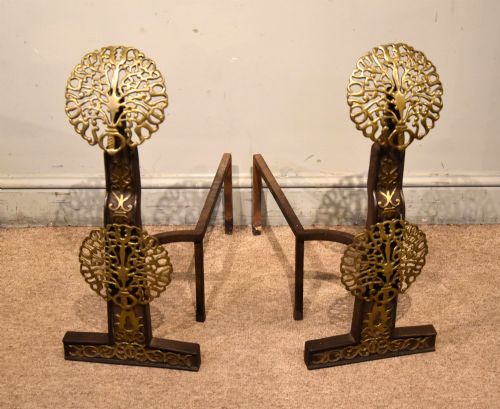
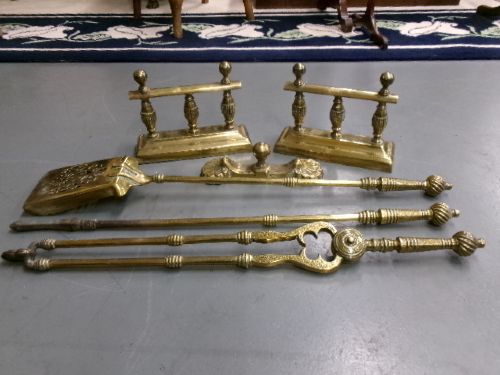
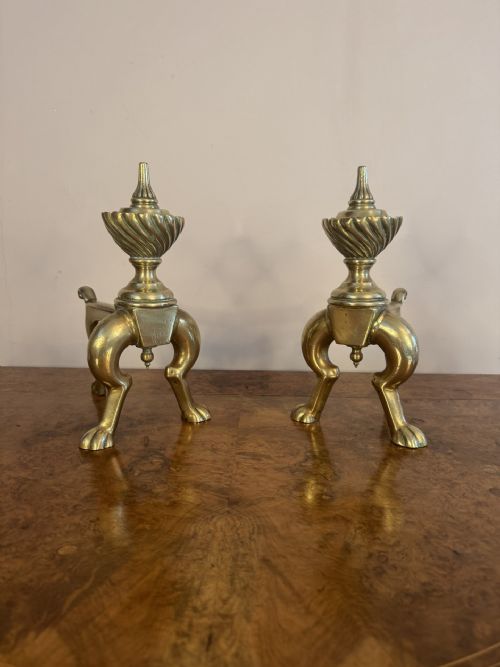
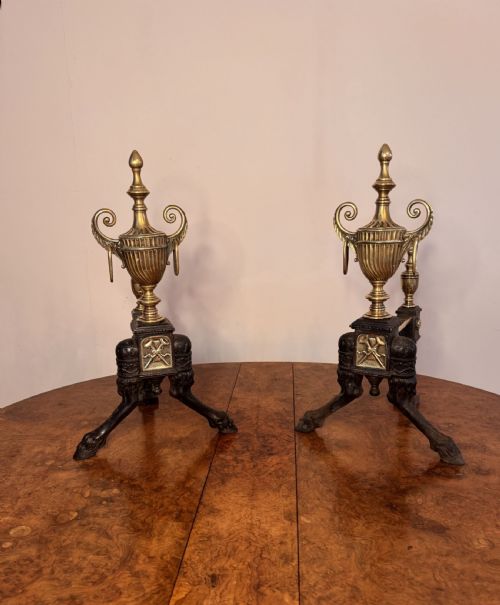
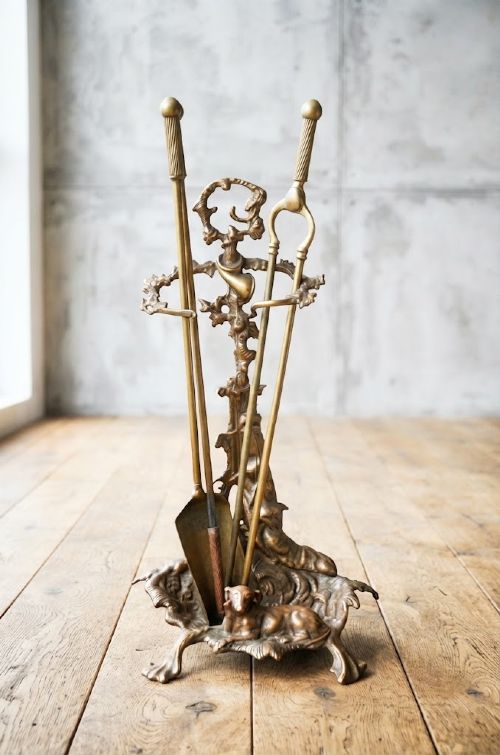
Victorian brass fire dogs, also known as andirons, form the structural supports used to elevate logs inside an open fireplace to improve air circulation and burning efficiency. Buyers searching this phrase meet matched pairs built primarily during the nineteenth century, often accompanied by matching fire irons or companion sets.
The objects vary from simple turned pedestals to heavily ornamented compositions featuring cast animal motifs like lions, owls, or griffins. Many examples incorporate iron or steel internal billets designed to bear the direct weight of burning wood while displaying polished brass fronts to the room.
Materials and Construction
Foundry work dominated the production of these pieces, utilising brass for visible decorative elements combined with iron or steel for load-bearing billets and shafts. Metalworkers employed sand-casting techniques to shape intricate components, later refining surfaces through filing, turning, and polishing.
Makers integrated various metals within a single assembly, joining solid brass finials and feet to wrought or cast iron bars. Copper accents occasionally appeared on Aesthetic Movement and Arts and Crafts iterations, providing tonal contrast against the bright yellow metal.
Victorian Brass Fire Dogs Retail Price Guide 2026
Typical asking prices for victorian brass fire dogs among the pieces listed under this phrase on Sellingantiques today, from the lower quarter to the upper quarter. They describe what is for sale here now, not the wider market.
Listings feature brass, cast iron, steel, and copper materials across periods spanning the early nineteenth to the early twentieth century.
Judging Quality
The distinction between standard utility items and superior examples lies in the crispness of the casting and the thickness of the metal. Finer pairs exhibit deep, hand-chased relief work on decorative motifs rather than smooth, shallow machine-pressed surfaces.
Weight serves as a reliable indicator of substance, with top-tier productions utilising heavy solid brass rather than thin hollow shells. The structural integrity of the joint between the vertical standard and the horizontal iron billet also separates master workshops from mass production.
William Tonks·James Cartland and Son
The Victorian Brass Fire Dogs Glossary
- Billet
- The horizontal iron bar extending backward from the front standard to support the fuel. This component bears the thermal stress of the fire.
- Chenet
- The French term for a fire dog or andiron, frequently applied to imported rococo or revival designs found in nineteenth-century interiors.
- Finial
- The decorative terminal ornament surmounting the top of the fire dog. These range from simple brass spheres to complex figural animals.
- Fender
- A low metal guard placed in front of the hearth to contain sparks and ash. They frequently match the design style of the accompanying fire dogs.
Victorian Brass Fire Dogs: Frequently Asked Questions
How do I clean antique brass fire dogs?
Maintenance requires gentle cleaning with a soft cloth and specialised metal polish to preserve the historical patina without removing surface detail. Avoid harsh abrasive compounds that can scratch the soft brass.
Regular dusting prevents soot accumulation from bonding with the metal surface. Leaving a light protective wax coating helps retard oxidation in damp environments.
Can these fire dogs hold burning logs today?
Most antique pairs retain robust iron billets capable of supporting wood fuel within a functioning hearth. Solid construction ensures they handle thermal loads safely.
Buyers intending regular fires should inspect the iron bars for deep oxidation or thinning. Many collectors prefer utilising them purely for decorative hearth display.
What is the difference between fire dogs and andirons?
The terms describe the exact same functional fireplace accessory used to elevate firewood. Regional terminology historically favored one over the other.
Catalogues and makers historically used both labels interchangeably for nineteenth-century brass hearth equipment. The physical design remains identical regardless of the name applied.
How do I date a pair of brass fire dogs?
Dating relies on stylistic clues, manufacturing marks, and construction methods associated with specific nineteenth-century design movements. Aesthetic and Arts and Crafts examples point to the later decades.
Earlier mid-century items often display French rococo or neo-classical revival motifs. Maker stamps or registry marks found on the metal surface provide precise chronological reference points.