


Victorian Brass Desk Casket
A victorian brass desk casket is a sturdy desktop repository for letters and valuables, prized for its combination of fine timber and metalwork.
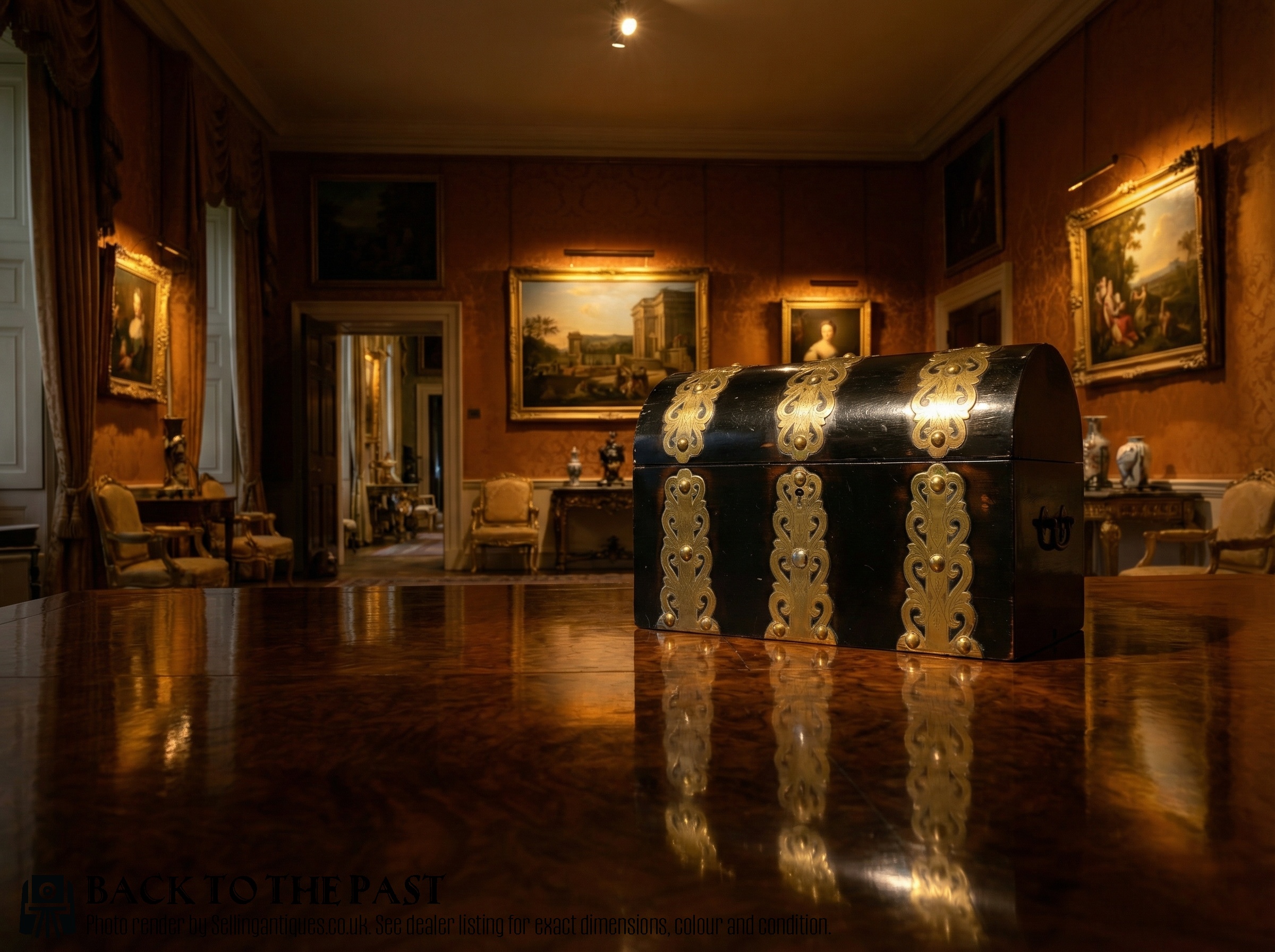
Victorian Brass Desk Casket
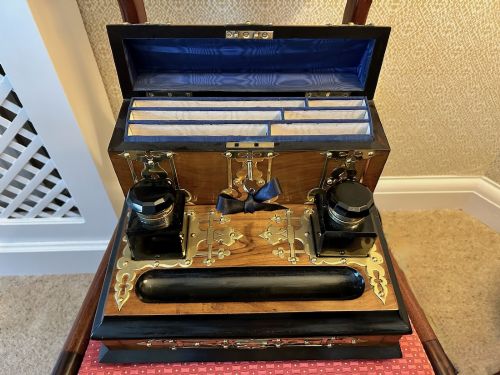
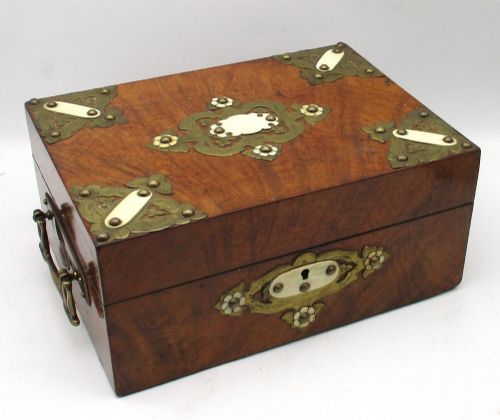
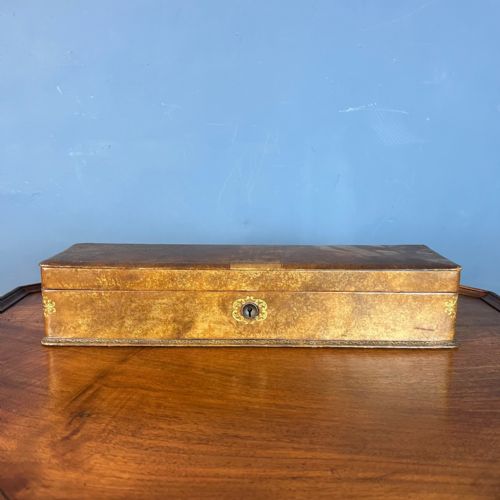
A victorian brass desk casket primarily takes the form of a stationery box, letter case or jewellery box designed for the nineteenth-century desktop. You will frequently encounter examples constructed from burr walnut or coromandel wood, accented with substantial brass mounts or strapwork.
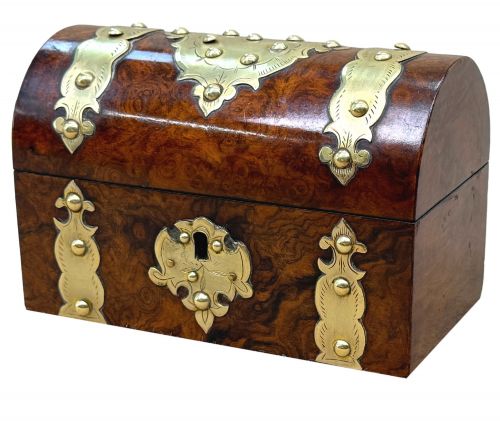
Many of these containers adopt architectural shapes, including dome-topped lids and sloping facades suited to housing folded correspondence. Styles range from plain brass-bound timber to Gothic Revival ornamentation and French ormolu mounts.
Materials and construction
Makers utilised dense hardwoods such as walnut, oak and coromandel as the foundational carcase, frequently choosing burr veneers for their rich figuring. These wooden structures were then reinforced and decorated with brass banding, hinges and cast mounts.
Surface decoration extended beyond metalwork to incorporate inset materials such as agate cabochons, porcelain plaques and pietra dura work. Interiors were often lined and fitted with compartments specifically sized for writing paper and envelopes.
Listings feature eighteenth and nineteenth-century dates, with the Victorian period providing the majority of the wooden stationery boxes and desk sets.
Judging the work
Quality rests heavily on the selection of timber veneers and the precision of the brass work fitted to the carcase. Pieces featuring figured burr walnut or dense coromandel display greater ambition than plain oak or standard softwoods.
The integration of decorative flourishes, such as hand-painted porcelain panels, pietra dura inlay or heavy ormolu and bronze mounts, distinguishes standard desk accessories from more elaborate presentation pieces.
C.G. Hope Hastings
The Victorian Brass Desk Casket Glossary
- Stationery box
- A desk accessory built to hold writing paper, envelopes and correspondence upright or in tiers.
- Coromandel wood
- A dense, heavy tropical timber with dark brown and black figuring, frequently utilised in high-end nineteenth-century boxes.
- Pietra dura
- An inlay technique utilising cut and fitted polished coloured stones to create decorative pictures on stone or wood surfaces.
- Ormolu
- Gilded bronze used for decorative mounts, feet and handles on nineteenth-century boxes and caskets.
- Gothic Revival
- An architectural and decorative style drawing on medieval forms, visible in pointed arches and heavy metal strapwork.
Victorian Brass Desk Casket: Frequently Asked Questions
What is a victorian brass desk casket used for?
These boxes were originally manufactured to store stationery, letters, pens and small valuables on a library or writing desk.
Today, they serve the same practical function while functioning as decorative tabletop storage for modern letters and trinkets.
How do I identify a Gothic Revival piece?
Gothic Revival pieces often feature architectural elements such as dome tops, pointed arches and heavy brass strapwork referencing medieval design.
These characteristics give the box a heavier, more structured appearance compared to plain brass-bound containers.
What woods were used for these boxes?
Common timbers include walnut, burr walnut, coromandel, pollard oak and standard oak. Dense exotic woods were frequently chosen for their distinctive grain patterns.
These timbers were often paired with brass banding to protect the edges and corners of the box.
Are desk caskets the same as stationery boxes?
The terms frequently overlap in nineteenth-century desk accessories, though some pieces are specifically fitted for writing paper while others store jewellery.
Both forms sit upon a table and utilise brass mounts or banding to secure the wooden carcase.