


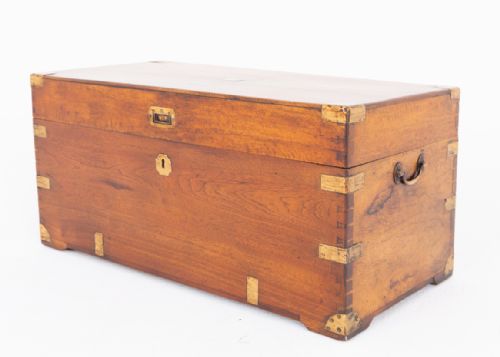

Victorian Brass Coffer
A victorian brass coffer combines utilitarian strength with domestic utility, serving as a robust travel container or storage chest defined by metal reinforcement.
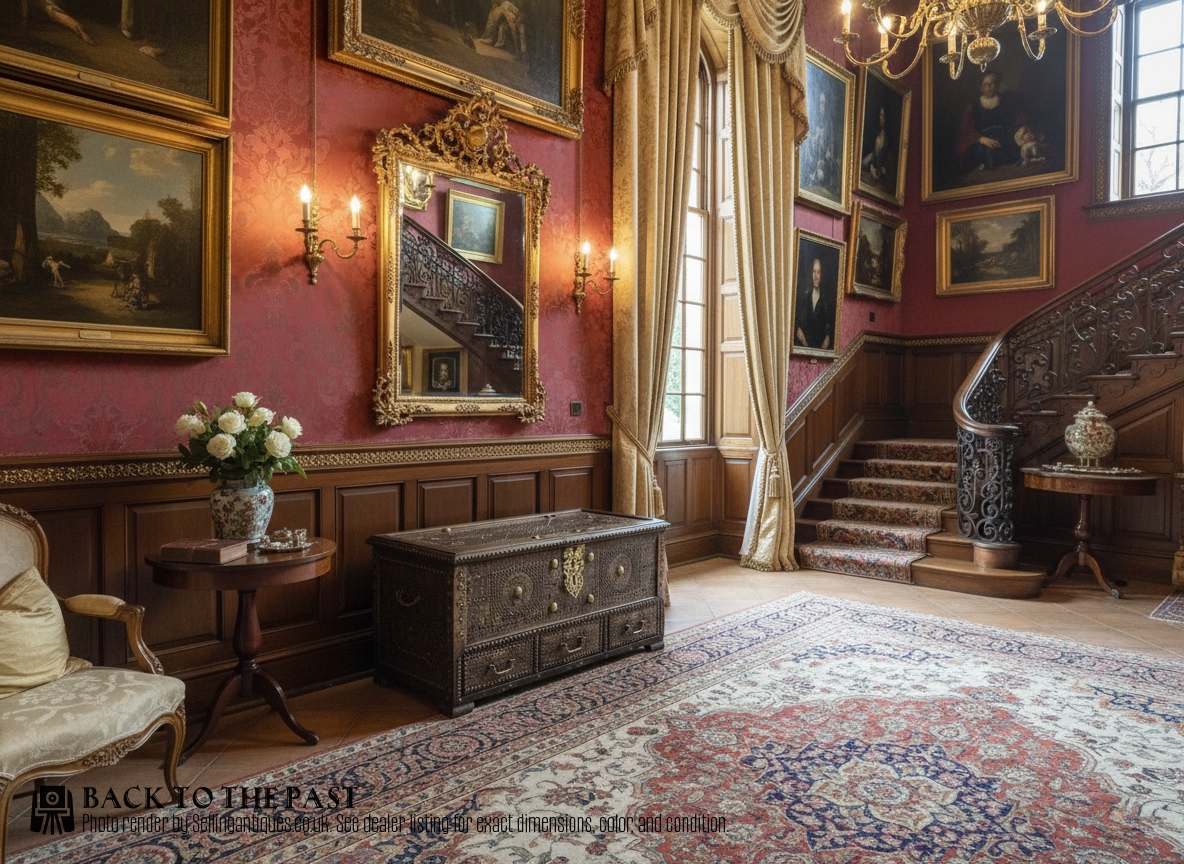
Victorian Brass Coffer
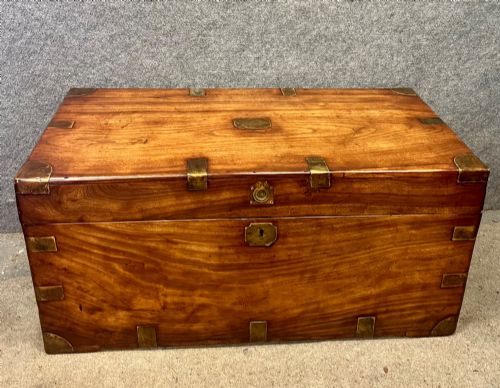
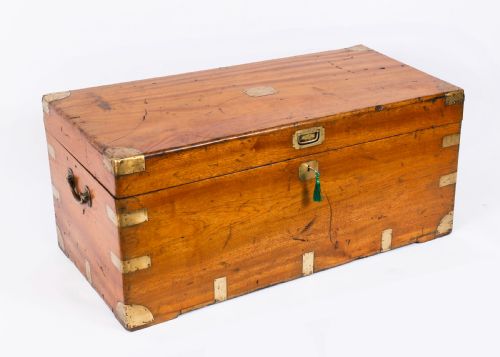
A victorian brass coffer or trunk is a heavy-duty storage container built to withstand the rigours of nineteenth-century travel and domestic relocation. These pieces emerge from the broader categories of trunks, chests, and campaign boxes spanning the nineteenth century.
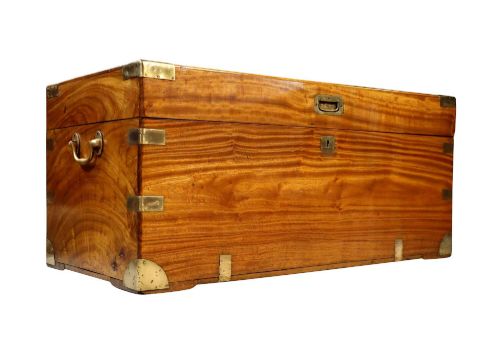
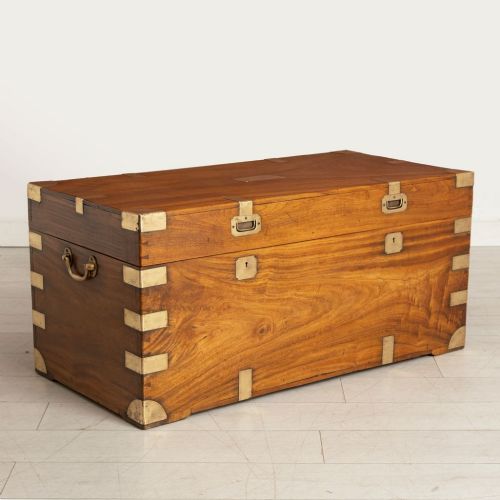
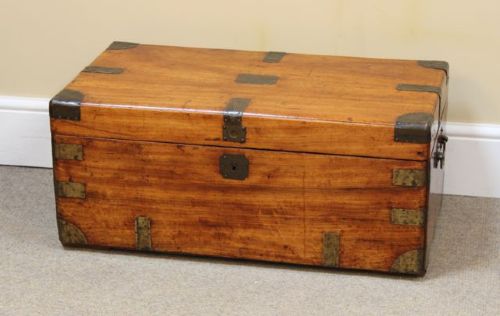
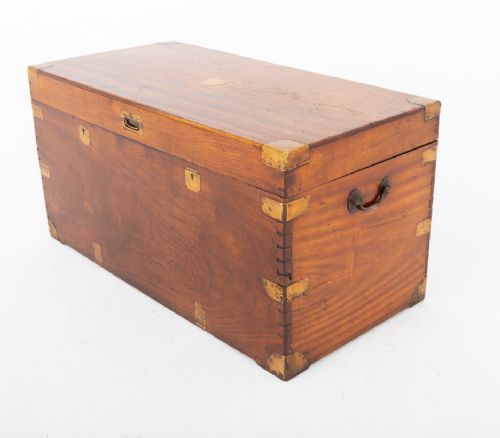
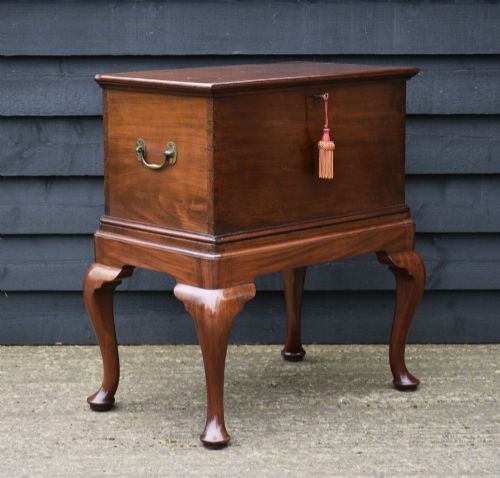
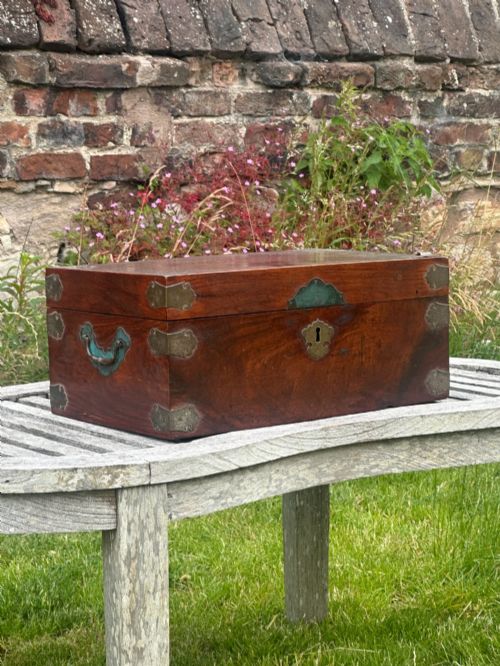
The version most commonly encountered on this page is the campaign chest or trunk constructed from camphor wood, teak, or mahogany, heavily reinforced with brass corners, straps, and hardware. They originate from British military and maritime use, designed to be packed easily and secured during transit.
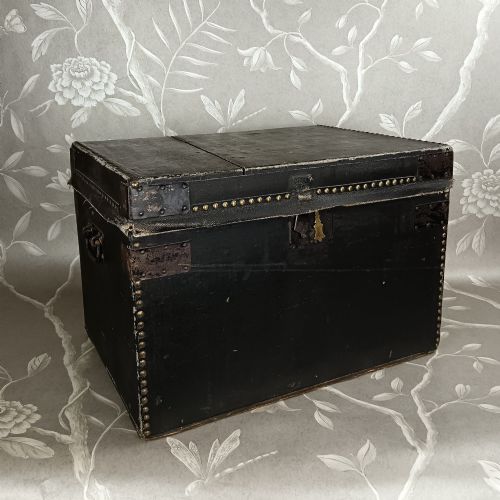
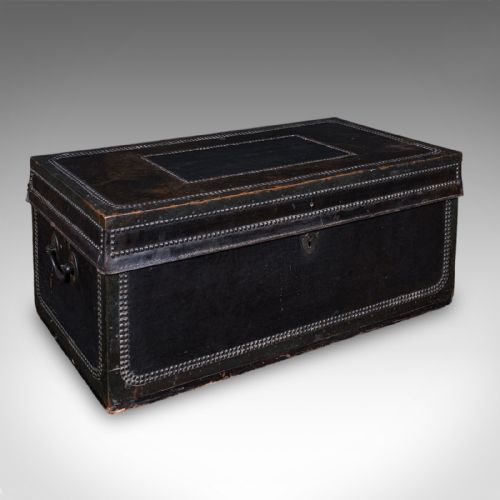
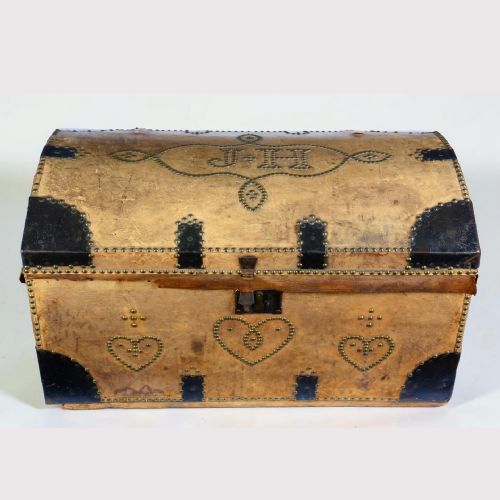
Beyond campaign chests, the selection includes leather-covered trunks with brass studwork, deed boxes, and smaller writing slopes or jewellery boxes mounted in brass. These items reflect the Victorian preference for organised, portable wealth and personal documents.
How they were made
Makers constructed these chests primarily from durable timbers such as camphor wood, teak, mahogany, and pitch pine, chosen for their resistance to warping and insects during long sea voyages. Wood was joined with secure corner joints and lined internally in many instances to protect contents.
Brass fittings, including corner brackets, strapwork, flush handles, and locking plates, were screwed or pinned directly into the wood to reinforce structural integrity against heavy handling. Leather-covered variants utilised heavy hides secured with dense rows of brass studs over timber frames.
Victorian Brass Coffer Retail Price Guide 2026
Typical asking prices for victorian brass coffer among the pieces listed under this phrase on Sellingantiques today, from the lower quarter to the upper quarter. They describe what is for sale here now, not the wider market.
Listings feature nineteen-century pieces predominantly in camphor wood, teak, and mahogany, reinforced with solid brass hardware.
What varies in quality
Quality rests in the integrity of the timber selection and the weight and finish of the brass hardware, where heavier plates and original recessed handles indicate higher grade commission. Lesser examples utilise thinner secondary woods and replacement brasses rather than period-accurate mounts.
The presence of original working locks, functional keys, and intact interior compartments or secret drawers distinguishes superior pieces from standard utilitarian trunks. Superior craftsmanship is also evident in tight dovetail joints and well-preserved wax or polished finishes on camphor wood and mahogany surfaces.
Wm. Insall of Bristol·Arthur Wannop·TANNS DEFIANCE LONDON
The Victorian Brass Coffer Glossary
- Campaign chest
- A modular storage chest designed to break down into sections for easy transport by military officers or colonial travellers during the nineteenth century. These pieces typically feature recessed brass handles and corner brackets to prevent snagging.
- Camphor wood
- An aromatic hardwood native to Asia, prized for campaign chests because its natural scent repels insects and protects stored textiles. It is easily recognised by its distinct fragrance when the trunk is opened.
- Deed box
- A smaller lidded storage container, often fashioned from mahogany, walnut, or pine with brass bindings, used to securely store legal documents and land titles. They frequently feature reinforced corners and reliable locking mechanisms.
- Brass bound
- A method of reinforcing wooden furniture and chests by applying strips and brackets of sheet brass along edges and stress points. This technique added both structural rigidity and decorative contrast to military and travel baggage.
- Studwork
- The decorative and functional application of small brass nails or studs in dense rows to secure leather or fabric coverings to a wooden trunk base. It provides a durable border while adding visual texture.
Victorian Brass Coffer: Frequently Asked Questions
What is a campaign trunk?
A campaign trunk is a portable storage chest built during the nineteenth century for military officers and travellers on the move. They were engineered for durability, featuring protective metal mounts to survive rough transit.
These chests often utilise timbers like camphor wood or teak, combined with recessed brass handles that lie flat against the sides to save space.
Why use camphor wood?
Camphor wood was selected for travel chests because its natural, pungent oil acts as an effective insect repellent. This protected uniforms and woollen garments from moths and pests during long voyages.
Over the decades, the wood retains much of its original aromatic quality, which remains a key identifier for authentic nineteenth-century campaign pieces.
How were brass mounts used?
Brass corners, straps, and braces were screwed onto wooden chests to reinforce the structural joints against heavy impact. They prevented the wood from splitting when lifted or stacked in transit.
In addition to structural strength, the polished brass provided a decorative contrast against dark mahogany, teak, or camphor wood surfaces.
Are these chests waterproof?
While tightly joined timber and fitted lids offered strong resistance against rain and sea spray, these trunks were not designed to be completely waterproof. Their primary function was secure containment and ease of handling rather than marine submersion.
The inclusion of brass hardware and secure locks primarily safeguarded the contents against theft and physical damage during transport.
How to date a trunk?
Dating a nineteenth-century trunk relies on examining the construction methods, timber types, and the style of the brass hardware used. Earlier pieces from the early part of the century often show different dovetailing and simpler recessed handle designs compared to later Victorian iterations.
The presence of maker stamps, specific lock manufacturers, or historical labels inside the lid also helps narrow down the period of manufacture.