



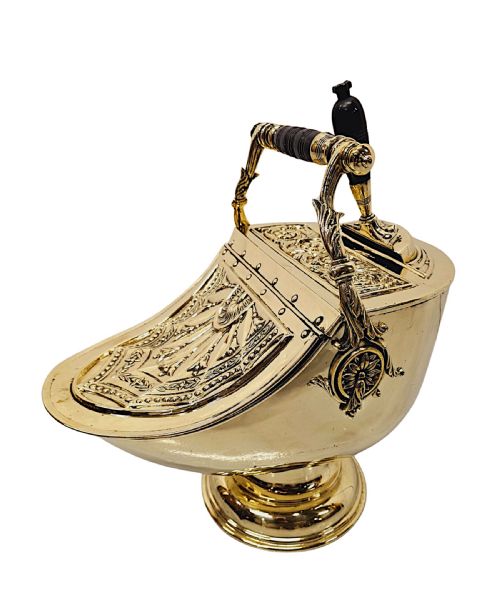


Victorian Brass Coal Hod
These robust victorian brass coal hod containers served hearths across the nineteenth century, combining utility with decorative metalwork.
Victorian Brass Coal Hod
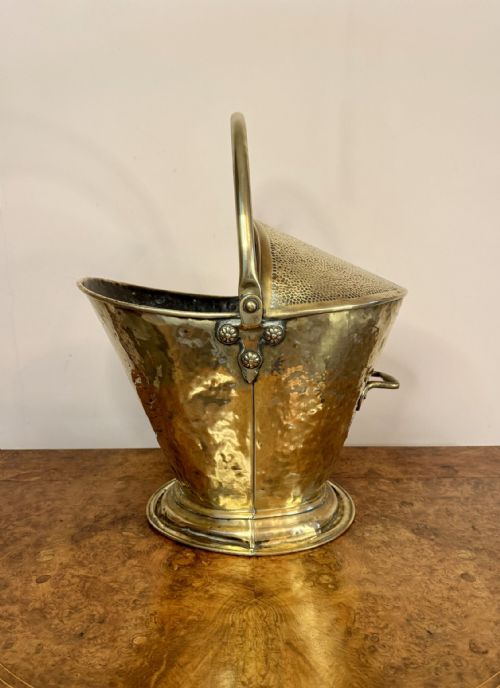
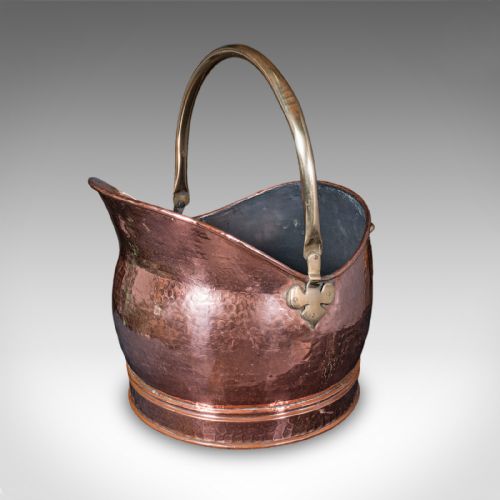
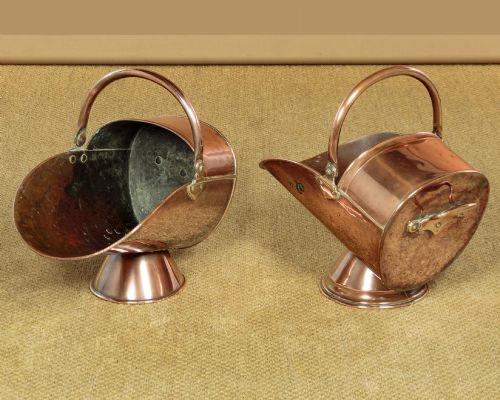
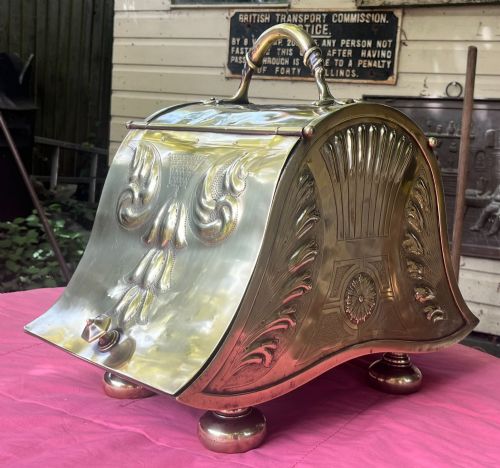
A victorian brass coal hod is a fireside receptacle designed for storing and transporting solid fuel to the hearth. These objects appear in forms such as coal scuttles, helmets, buckets, bins, and purdoniums.
The pieces listed on this page span the Victorian era alongside Regency, Georgian, Edwardian, and Arts and Crafts periods, reflecting changing fireside tastes. Metal bodies commonly pair with wooden elements like oak, walnut, and mahogany.
Helmet shapes and double-lidded buckets dominate the surviving examples, often accompanied by original brass shovels and liners. These utilitarian containers sat beside open fireplaces in sitting rooms and drawing rooms alike.
Materials and construction
Artisans constructed these vessels using heavy sheet brass and copper, frequently incorporating iron for structural rigidity. Hand-finished details and riveted joints ensure the containers withstand the daily weight of coal and logs.
Victorian Brass Coal Hod Retail Price Guide 2026
Typical asking prices for victorian brass coal hod among the pieces listed under this phrase on Sellingantiques today, from the lower quarter to the upper quarter. They describe what is for sale here now, not the wider market.
Listings combine brass and copper with wooden elements including mahogany, walnut, and oak across the nineteenth century.
Distinctions in quality
Quality rests upon the weight of the metal gauge and the integrity of the original construction. Substantial brass thickness and secure hand-finished joinery distinguish superior vessels from lighter utility wares.
The presence of matching accessories, such as original brass shovels and internal liners, elevates a piece. Form and decorative style also vary, with distinct Art Nouveau and Arts and Crafts examples showing specialised metalworking skills.
Benham and Froud
The Victorian Brass Coal Hod Glossary
- Coal hod
- A heavy container used to hold solid fuel near a fireplace. These vessels often feature carrying handles and drop-down lids.
- Coal scuttle
- A bucket-shaped receptacle designed for carrying coal, typically featuring a wide mouth and a hinged handle. Many examples adopt a distinct helmet profile.
- Purdonium
- A box-style coal container with a sloping front and a hinged lid, often incorporating a shovel compartment. These wooden or metal cabinets kept fuel neatly enclosed.
- Helmet coal scuttle
- A fireside bucket shaped like a traditional helmet with a flared opening and a raised back. This form allows fuel to be poured cleanly onto the fire.
Victorian Brass Coal Hod: Frequently Asked Questions
How were these coal hods used?
These vessels sat beside the fireplace to hold coal for daily hearth maintenance. Servants or homeowners used them to transport fuel from cellars to sitting rooms.
The matching shovels allowed clean transfer of fuel onto burning fires without spilling ash. Their decorative metal surfaces ensured they looked presentable in formal parlours.
Did these containers include inner liners?
Many surviving examples retain their original metal liners designed to hold coal. These removable inserts protected the outer brass and wood bodies from moisture and dirt.
Liners made emptying residual dust and small debris straightforward for household staff. Their presence adds authenticity to historical fireplace equipment.
What styles appear in these items?
The selection includes plain utilitarian buckets alongside decorative pieces from distinct design movements. Arts and Crafts and Art Nouveau examples display specialised surface hand-finishing.
Earlier Regency and Georgian forms feature simpler lines focused on robust metal construction. Late Victorian pieces often incorporate elaborate helmet shapes and sturdy handles.
How do I distinguish different periods?
Georgian and Regency examples tend to show heavier cast elements and classic proportions. Victorian and Edwardian pieces often utilise bright sheet brass and varied handle attachments.
Arts and Crafts models emphasise hand-hammered surfaces and simpler, honest construction methods. Materials like walnut and oak also help date pieces alongside specific metalworking techniques.