

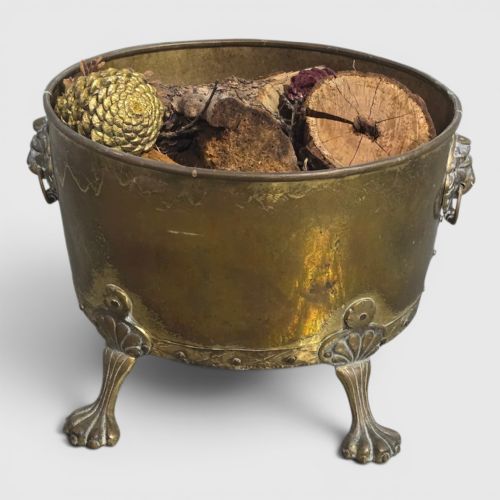


Claw Foot Coal Scuttle
A claw foot coal scuttle is a sturdy fireside container raised on decorative feet, designed to hold fuel with period style.
Claw Foot Coal Scuttle
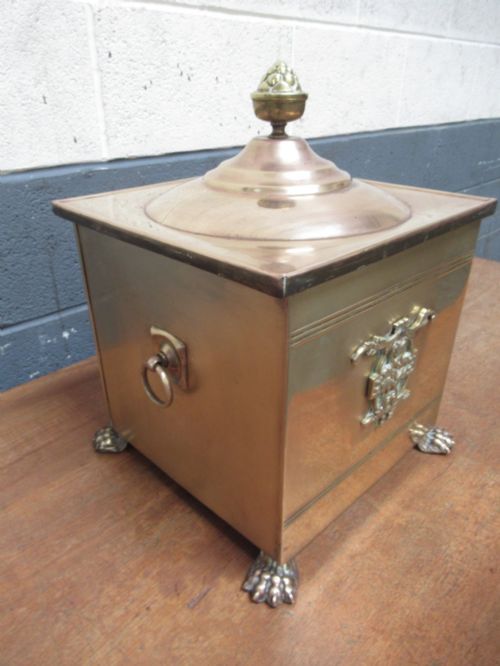
A claw foot coal scuttle sits near the hearth as a practical receptacle for solid fuel, appearing primarily in brass, copper, and wood across Victorian, Regency, and Edwardian periods. These fireside accessories serve as functional storage while bringing metallic warmth or polished timber into a traditional interior.
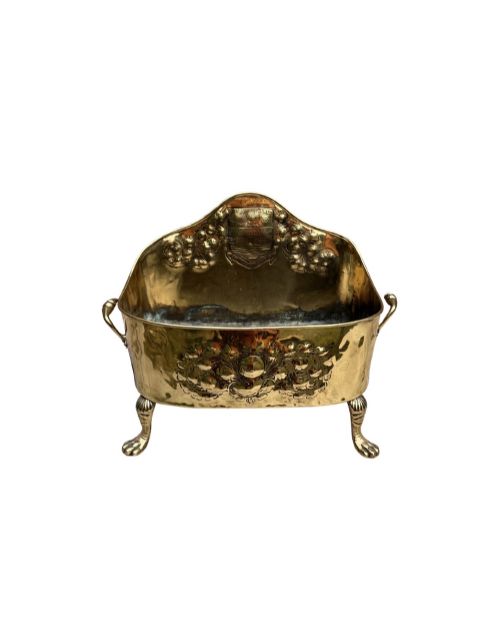
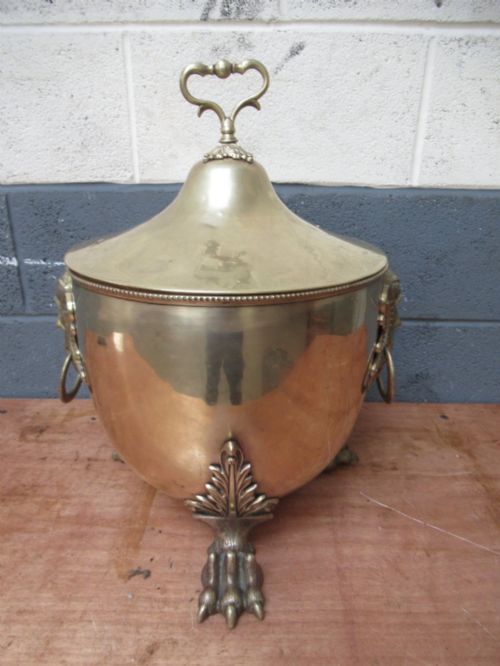
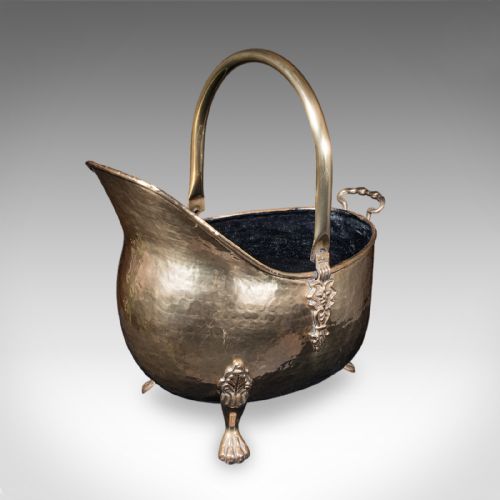
The specimens seen here range from plain metal buckets and lidded log bins to heavily embossed designs and handbeaten copper cauldrons. Most examples belong to the Victorian era, supplemented by Regency influences and later pieces from the early twentieth century.
Makers such as William Soutter & Sons contribute specific stamped or attributed forms to the selection, often pairing brass bodies with contrasting copper bands or sturdy swing handles. Buyers also encounter painted toleware and pine structures reflecting Aesthetic Movement tastes alongside standard metalwork.
Materials and construction methods
Metals form the core of these pieces, utilising sheet brass, handbeaten copper, and silver plate shaped into rounded buckets, bins, and scuttles. Artisans joined panels using secure rivets or seams, mounting the bodies on cast brass feet shaped like animal paws or claws.
Surface decoration relies on embossing, hammering, and applied bands of contrasting metal to catch the fireside light. Timber versions incorporate pine and ebony details, while paint finishes on toleware provide an alternative coloured surface.
Claw Foot Coal Scuttle Retail Price Guide 2026
Typical asking prices for claw foot coal scuttle among the pieces listed under this phrase on Sellingantiques today, from the lower quarter to the upper quarter. They describe what is for sale here now, not the wider market.
Assessing quality and craftsmanship
The distinction between standard utility items and finer pieces lies in the weight of the metal and the crispness of the handbeaten or embossed details. Heavier gauge brass and thick copper maintain their structural integrity better over decades of hearthside use.
Attention to detail in the mounting of the feet, the attachment of swing handles, and the integration of contrasting metal bands separates workshop production from mass manufacturing. Maker attribution, such as work by William Soutter & Sons, adds documented provenance to the construction.
William Soutter & Sons
The Claw Foot Coal Scuttle Glossary
- Coal scuttle
- A container designed to hold and transport solid fuel to a domestic fire. These vessels typically feature a wide mouth and a carrying handle.
- Log bin
- A deep receptacle intended for storing larger pieces of firewood rather than small coal. They frequently appear in brass, copper, or pine.
- Toleware
- Lacquered or enamelled metalware often decorated with paint. It offers a colourful alternative to plain brass and copper.
- Embossing
- A technique where a design is raised from the reverse of the metal sheet using punches and hammers. This creates textured surface patterns.
- Aesthetic Movement
- A late nineteenth-century design style emphasising visual beauty over narrative function. Pieces from this period often display refined artistic detailing.
Claw Foot Coal Scuttle: Frequently Asked Questions
How do I clean antique brass?
Antique brass benefits from gentle dusting and occasional cleaning with a mild, non-abrasive metal cleaner to preserve its natural patina.
Avoid aggressive polishing that strips away the aged appearance accumulated over the Victorian and Regency periods.
Can these containers hold logs?
Many larger metal buckets and wooden bins serve interchangeably for coal or logs depending on their capacity and internal depth.
Buyers often select specific log bins or cauldrons when they require storage for larger pieces of firewood rather than small coal.
How do I date a brass scuttle?
Dating relies on observing manufacturing techniques, material choices, and stylistic markers such as Aesthetic Movement motifs or Regency shapes.
Maker marks, where present, provide a direct link to specific nineteenth-century workshops and active production years.