




Victorian Brass Bound Trunk
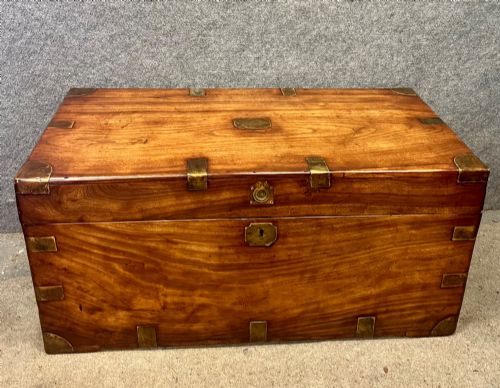
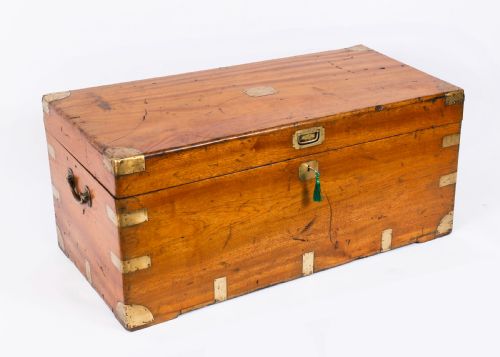
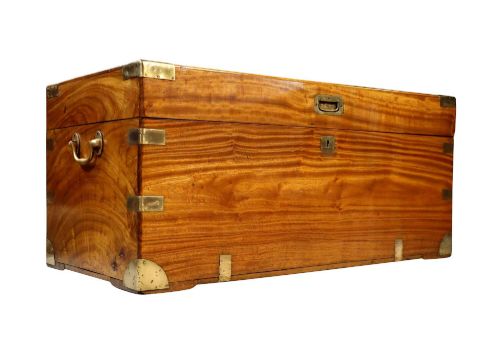
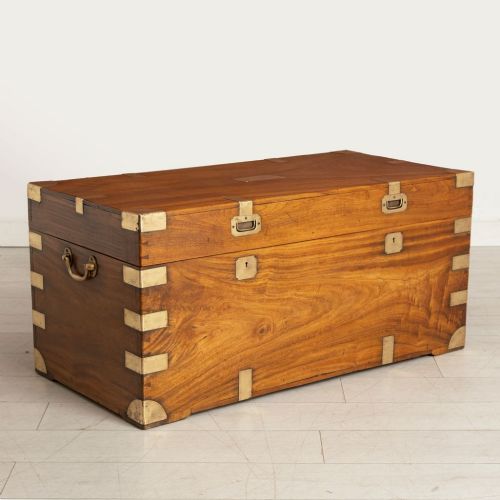
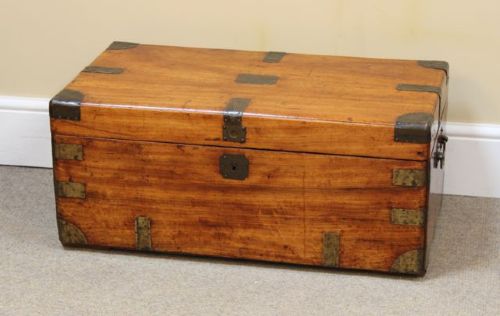
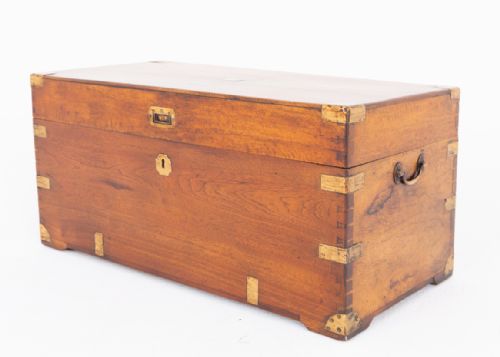
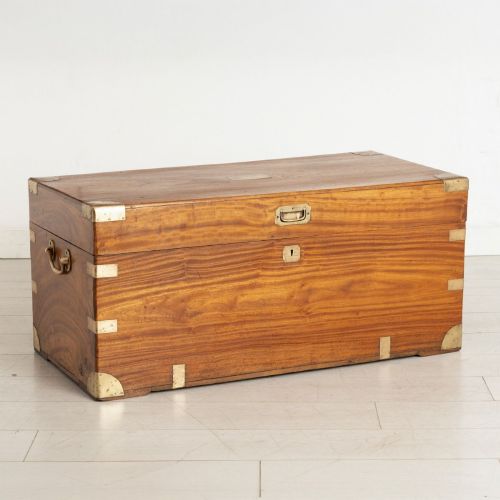
A victorian brass bound trunk is a travel chest built for military life, combining sturdy timber with protective metal corners.
Victorian Brass Bound Trunk
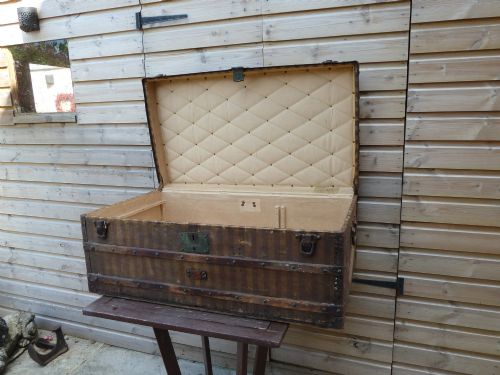
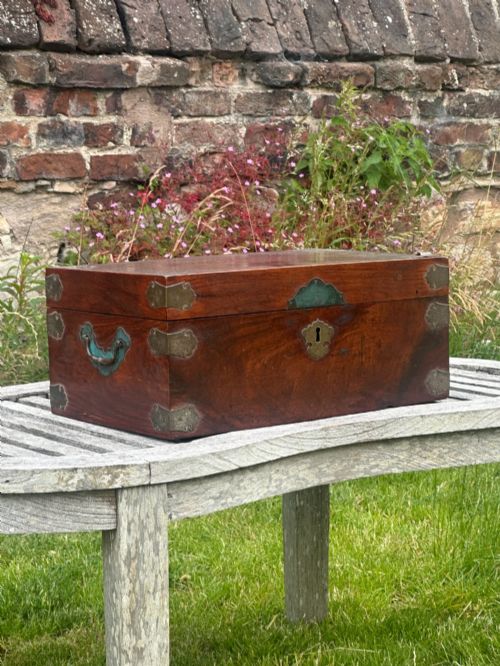
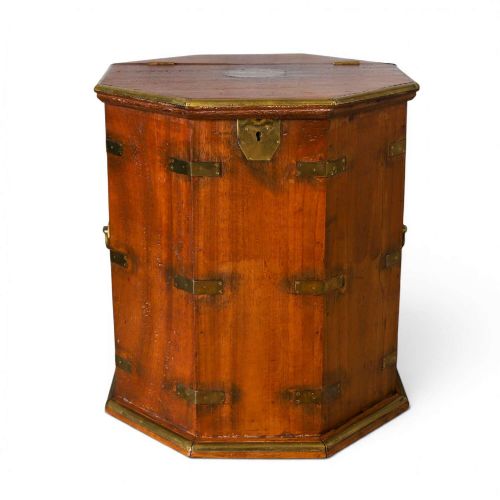
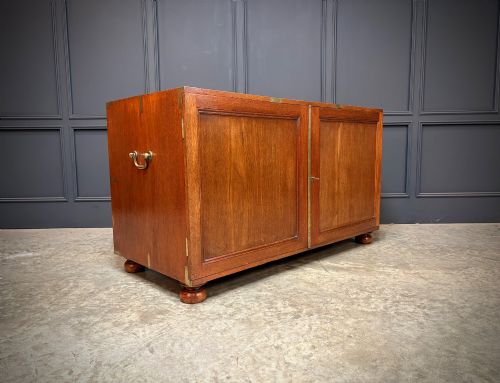
When you search for a victorian brass bound trunk, you encounter storage chests originally designed for transport by officers and merchants during the nineteenth century. These pieces emerge predominantly in camphor wood, teak, and occasionally pitch pine or leather.
The forms on this page range from plain lift-top campaign trunks to fitted travel boxes with internal drawers and candle boxes. Most examples connect directly to military campaign styles or Anglo-Indian workshops utilising durable hardwoods.
Materials and construction
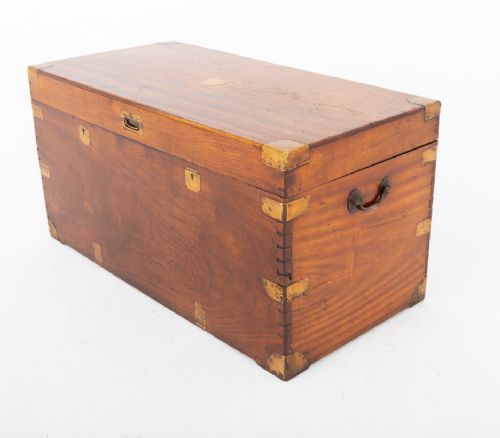
Cabinet makers built these trunks using resilient timbers such as camphor wood and teak to withstand tropical climates and sea voyages. They reinforced the corners, edges, and seams with heavy brass strapping and corner plates fixed by numerous screws.
Recessed brass carrying handles allowed the trunks to be stacked tightly inside ships and tents without protruding hardware. Dovetail joints and sturdy internal framing completed the construction to endure frequent relocation.
Some surviving trunks still retain their original internal candle boxes, preserving the exact scent of nineteenth-century camphor.
Judgement of quality
Quality rests upon the choice of primary timber, the thickness of the brass hardware, and the survival of original fitted interiors. Solid camphor wood or dense teak bodies show superior original utility compared to softer secondary woods.
The precision of the brass corner work and the retention of original locks, keys, and internal compartments elevate certain pieces above standard utilitarian boxes.
Drew & Sons
The Victorian Brass Bound Trunk Glossary
- Campaign trunk
- A portable chest constructed for military officers on active service abroad. These pieces feature recessed handles and brass reinforcement to survive rough transport.
- Camphor wood
- An aromatic hardwood native to Asia, chosen for campaign furniture because its natural scent repels insects. This timber forms the body of many nineteenth-century chests.
- Zanzibar chest
- An ornate style of storage chest featuring brass studwork and decorative straps, often produced in teak. These items reflect trade routes linking India, Africa, and Britain.
- Pitch pine
- A resinous softwood utilised in certain regional trunk construction during the nineteenth century. It provides a pale, durable alternative to imported tropical hardwoods.
- Deed box
- A small, portable container secured with a brass lock, designed for storing legal documents and valuable papers during travel.
Victorian Brass Bound Trunk: Frequently Asked Questions
What were victorian brass bound trunks used for?
These trunks served as portable wardrobes and storage containers for British military officers and colonial administrators travelling across the empire.
Officers packed uniforms, personal papers, and equipment inside them so their belongings remained protected during frequent relocations by ship, train, and cart.
Why use camphor wood?
Cabinet makers selected camphor wood because its strong natural fragrance repelled moths and other insects that damaged textiles in tropical climates.
The timber also resisted moisture and remained relatively lightweight while offering enough density to withstand hard travel.
How do I spot a campaign trunk?
Campaign trunks feature flush-mounted brass carrying handles and reinforced metal corners designed to prevent the wood from splitting during transit.
Many examples also divide into sections or contain internal fitted compartments and candle boxes for organised travel.
How do I care for these trunks?
Keep the wood nourished with appropriate wax and avoid placing the chest near direct heat sources that could cause the timber or brass to warp.
Allow the natural camphor scent to persist without applying heavy chemical treatments to the interior surfaces.