


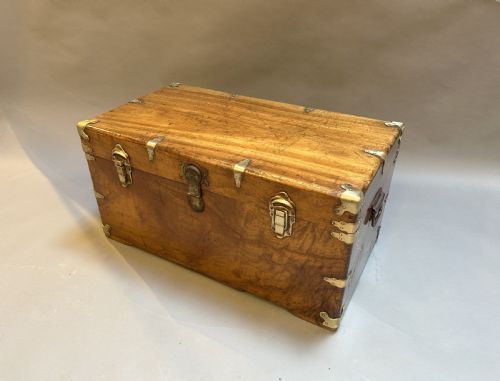
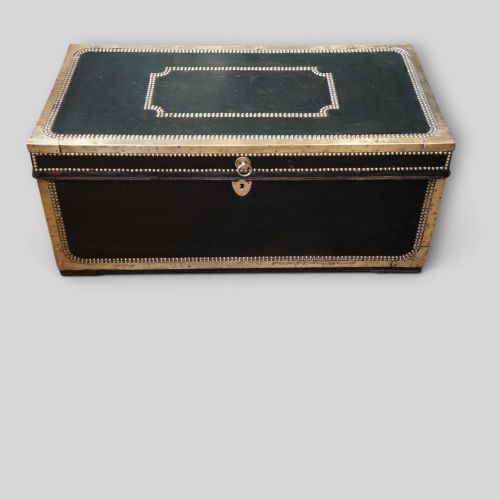
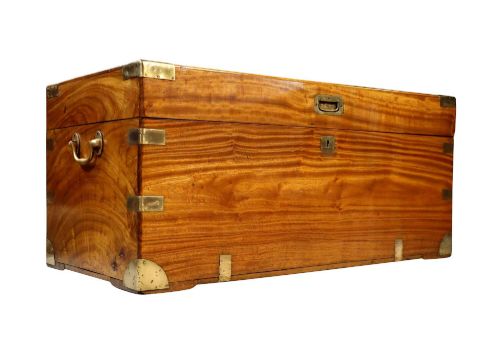
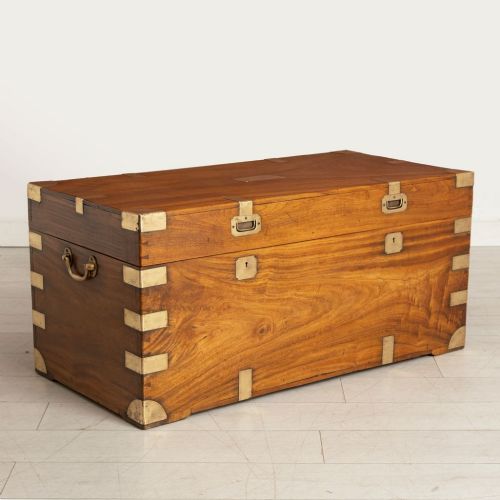
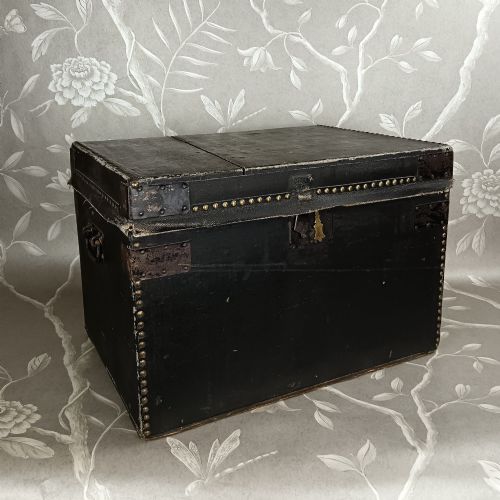
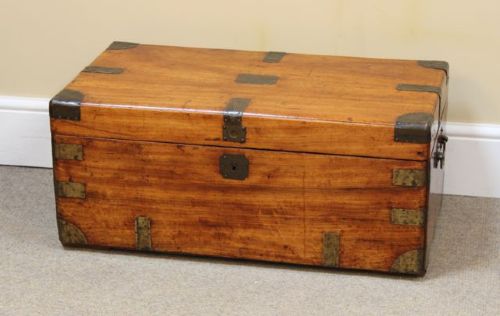
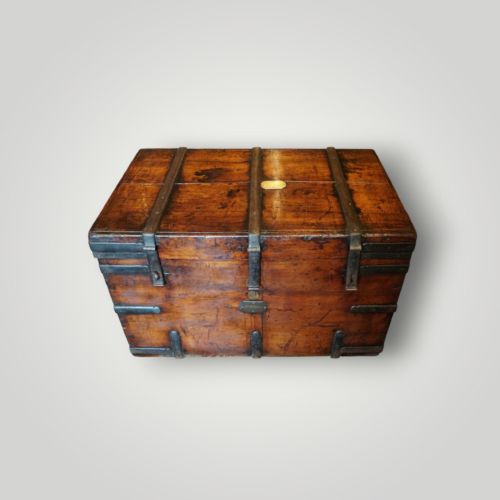
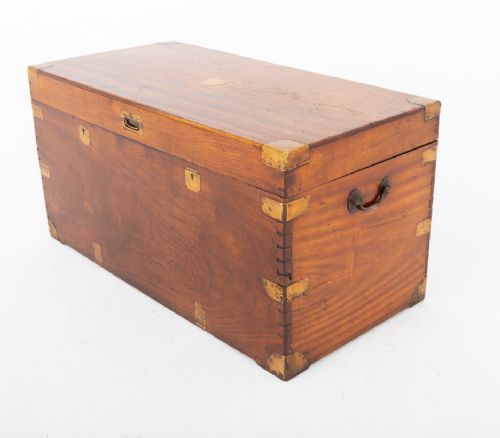
Antique Brass Campaign Trunk
An antique brass campaign trunk is a robust portable box designed for travel, combining tactile timber and gleaming metalwork to store belongings securely.
Antique Brass Campaign Trunk
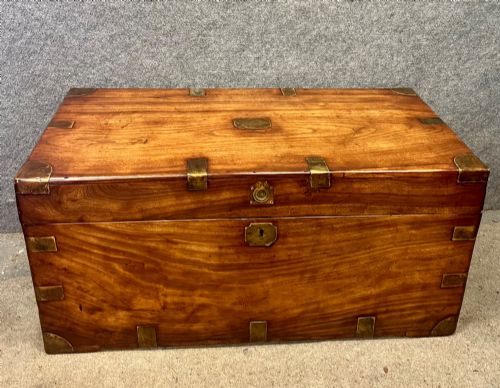
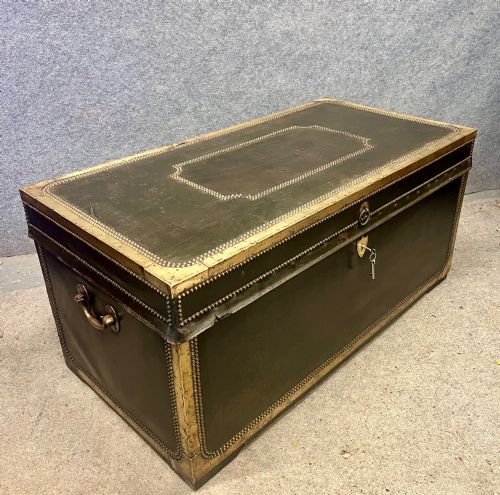
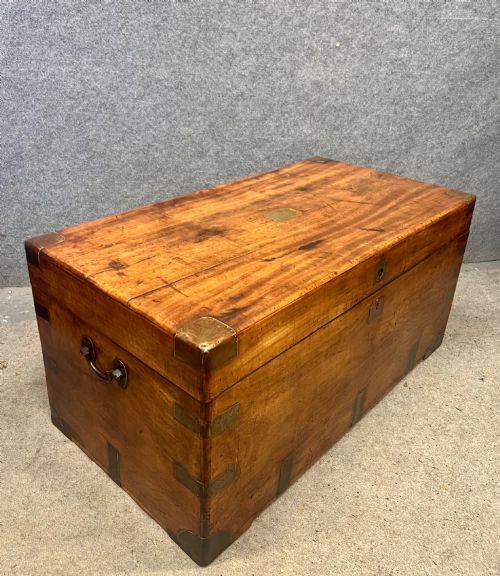
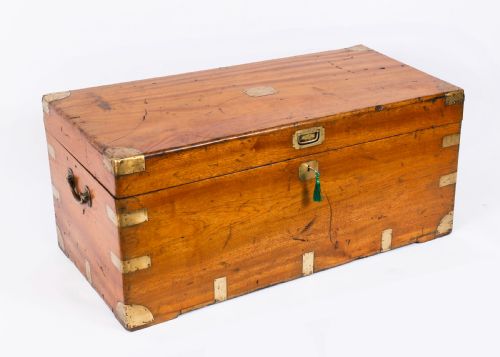
An antique brass campaign trunk is a heavy wooden chest reinforced with metal corners and straps, built to endure the rigours of military relocation and colonial travel across the eighteenth, nineteenth, and early twentieth centuries.
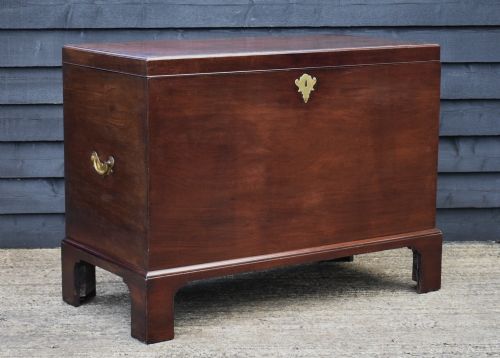
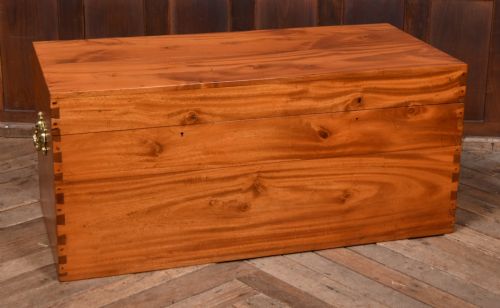
The versions most commonly met on this page are constructed from dense timbers such as camphor wood and teak, fitted with recessed brass handles and corner brackets to protect the edges during transit.
These pieces encompass various regional origins, including Anglo-Indian, Chinese export, and British workshops, often presenting as single chests or two-part modular drawers intended for officers on active service.
How they were made
Cabinetmakers utilised durable, insect-resistant timbers like camphor wood, teak, and mahogany, selecting them for their resilience against humidity and tropical pests.
Joinery involved tight-fitting joints and panel construction designed to withstand temperature shifts without splitting, reinforced by heavy brass straps secured with numerous small screws or rivets.
Hardware such as drop handles, lock plates, and corner braces were cast or beaten from brass, then meticulously flush-fitted into the wood surface to prevent snagging during movement.
Listings feature eighteenth, nineteenth, and early twentieth-century pieces, dominated by nineteenth-century examples in teak and camphor wood.
What varies in quality
The distinction between ordinary utility pieces and finer examples rests on the calibre of the timber selection and the precision of the brass hardware integration.
Superior trunks display substantial gauge brass fittings that sit completely flush with the wood plane, alongside well-figured grain in woods like camphor or teak rather than plain utility boards.
The complexity of the interior layout, such as hidden compartments, original locks by recognised makers, and robust side carrying handles, elevates the craftsmanship of an individual chest.
Samuel Pratt·Wm Insall of Bristol·Chapple & Sons
The Antique Brass Campaign Trunk Glossary
- Camphorwood
- An aromatic timber frequently utilised in campaign furniture because its natural scent repels insects. It is recognisable by its distinct medicinal aroma and warm reddish-brown hue.
- Brass-bound
- A method of reinforcing wooden furniture by attaching metal strips to edges and corners. This technique protects the vulnerable parts of a trunk during military transport.
- Recessed handle
- A grip sunk flush into the side or top of a chest. This design prevents protrusions that might catch during loading and unloading.
- Two-part chest
- A modular cabinet built in stacked sections for ease of handling. The upper and lower halves fasten together securely with brass hooks and pins.
Antique Brass Campaign Trunk: Frequently Asked Questions
What were campaign trunks used for?
Officers and diplomats utilised these heavy chests to transport uniforms, documents, and personal possessions during military campaigns and colonial postings.
The sturdy construction protected contents from moisture, dust, and rough handling while moving across land and sea.
Why use camphor wood?
Cabinetmakers selected camphor wood for its natural oils, which emitted an aroma that deterred moths and other destructive insects in tropical climates.
The timber also proved stable and relatively lightweight compared to dense oaks or mahoganies.
How do I date a trunk?
Dating relies on observing construction methods, screw types, and the style of the brass mounts alongside any identifiable maker's marks.
Earlier eighteenth-century examples often feature hand-wrought iron elements alongside brass, while Victorian pieces lean toward standardised brass hardware.
How do I live with one?
These trunks function well as coffee tables, blanket boxes, or bedroom storage while serving as striking focal points in a room.
Positioning them away from direct heat sources helps prevent the timber and camphor oils from drying out.