


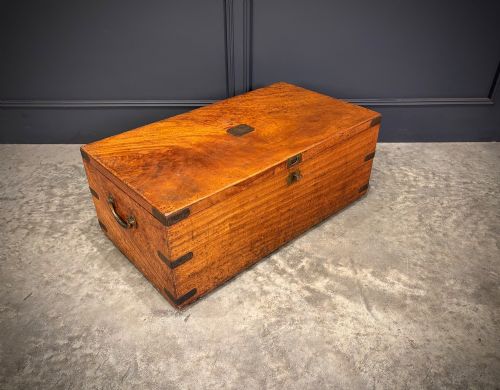
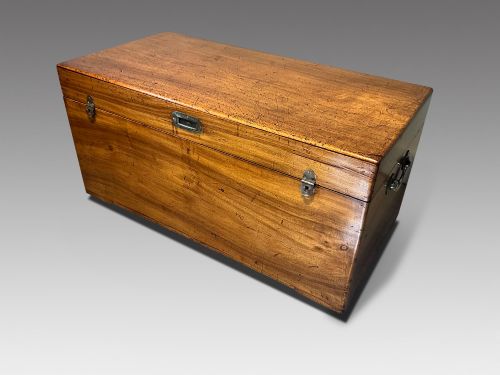
19th Century Campaign Coffer
A 19th century campaign coffer is a robust travelling trunk designed for officers on the move, combining utility with enduring craftsmanship.
19th Century Campaign Coffer
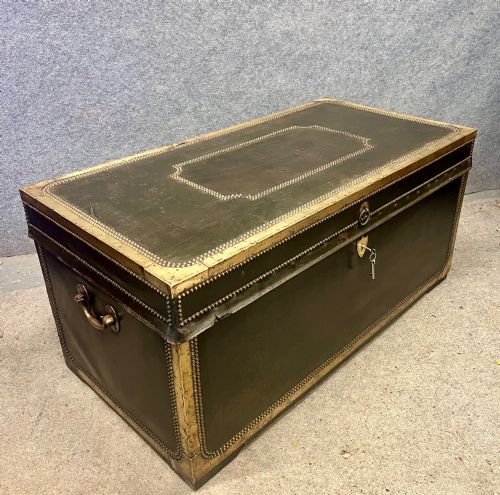
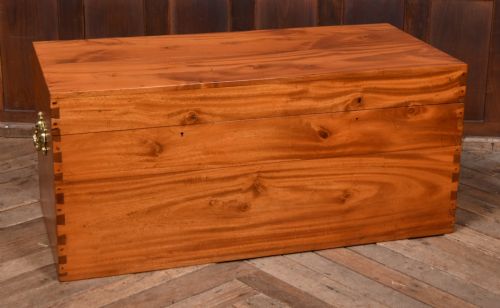
A 19th century campaign coffer is fundamentally a portable storage chest built to withstand the rigours of military transport across the empire. The examples found here span the Regency, Georgian, and Victorian periods, reflecting the shifting needs of officers and travellers on active service.
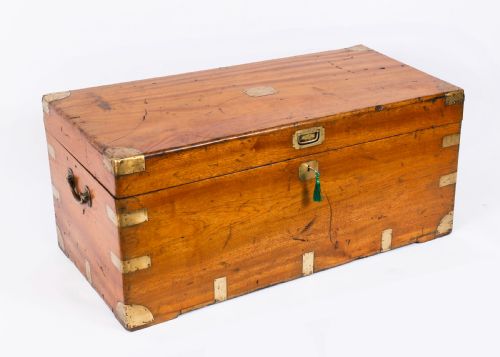
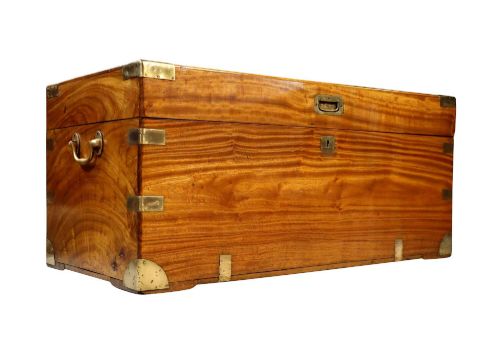
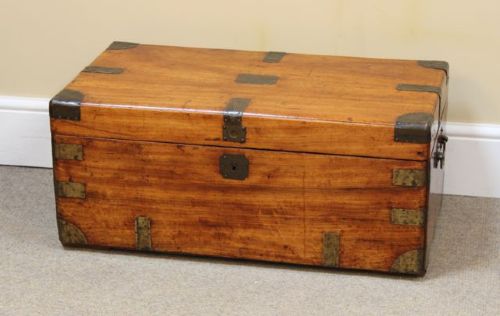
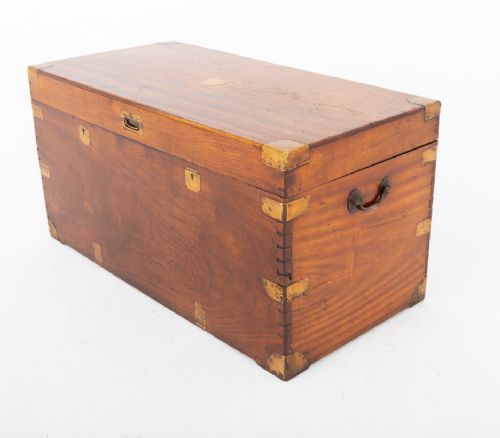
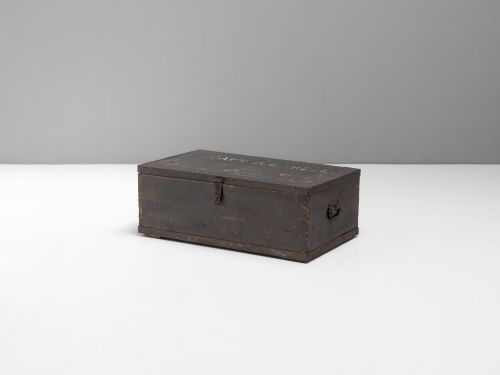
Most pieces encountered in this selection are constructed from camphor wood, chosen for its insect-repelling qualities, while teak, oak, walnut, and padouk also appear. These trunks commonly take the form of heavy-duty boxes and storage chests intended for field use.
Makers and traders produced various forms including blanket boxes, deed boxes, and travelling cabinets alongside standard trunks. The origins stretch from British workshops to China Trade and Anglo-Indian production centres.
Materials and construction
Carpenters built these coffers using dense timbers such as camphorwood, teak, and oak to endure moisture and rough handling. Wood panels were joined securely and often reinforced for heavy transit.
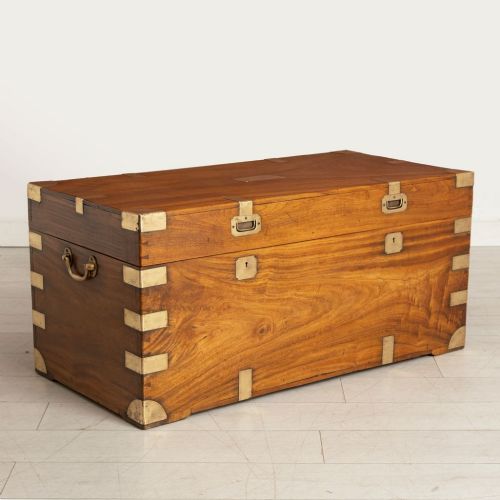
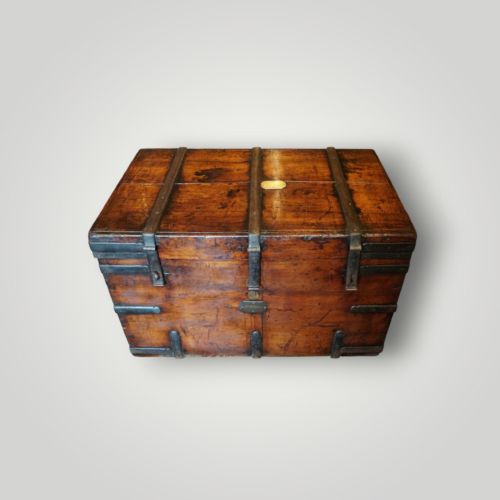
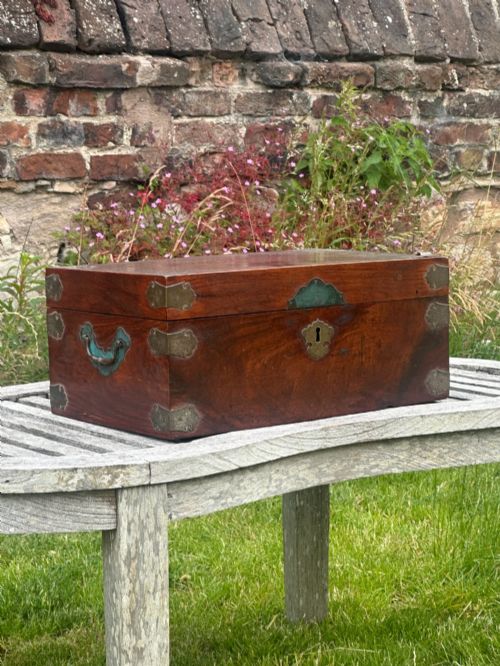
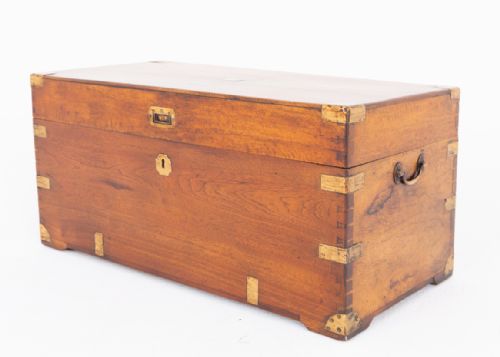
Metal reinforcement defines the genre, with brass, iron, and metal banding protecting corners and edges from impact. Studded leather and hide coverings also appear on travelling trunks designed to resist the elements.
Recessed brass handles and durable hinges allowed officers to pack and load chests efficiently onto transport wagons and ships.
Listings demonstrate periods from Georgian and Regency to Victorian times, utilising brass, iron, leather, oak, teak, and camphor wood.
Factors of quality
The choice of primary timber and secondary wood influences the substance of a coffer, with dense camphorwood and figured teak commanding attention. The weight and grade of the brass corners, straps, and lock plates signal the original cost and intended rank of the owner.
Original fitted interiors, such as secret compartments or specialised trays for silver and documents, elevate the character of a piece. The precision of the joinery and the survival of makers' marks or inscriptions provide documentary depth.
Samuel Pratt·Elkington·Seabrook of St.Pauls
The 19th Century Campaign Coffer Glossary
- Campaign coffer
- A portable chest or trunk made for military officers or travellers during the eighteenth and nineteenth centuries. These pieces utilised robust hardware to survive long journeys.
- Camphor wood
- An aromatic timber native to Asia, prized for its resistance to insects and dampness. It forms the primary material for many overseas trunks.
- Brass bound
- The method of reinforcing box edges and corners with brass plates and straps fastened by screws or rivets. This protected the timber from the knocks of military transport.
- China Trade
- Goods manufactured in China during the nineteenth century specifically for export to Western markets. These items frequently utilised camphorwood and traditional brass hardware.
- Silver chest
- A heavy-duty storage box lined to protect table silver or plate during travel. They typically feature robust oak or pine construction with iron banding.
19th Century Campaign Coffer: Frequently Asked Questions
What is a campaign coffer?
A campaign coffer is a portable storage chest used by military officers, diplomats, and travellers during the nineteenth century. These trunks were built to endure long sea voyages and overland transport.
They often feature reinforced corners and recessed handles to facilitate stacking and movement. Camphorwood was frequently employed to protect contents from tropical insects.
Why use camphorwood?
Camphorwood was selected for campaign furniture because its natural aromatic oil repels moths and silverfish. This made it ideal for officers storing uniforms and papers in damp climates.
The wood is also resilient and relatively lightweight while remaining strong enough for military transport.
How are periods identified?
Periods are identified through construction techniques, hardware styles, and timber choices characteristic of the Georgian, Regency, or Victorian eras. Early pieces often feature different brasswork designs compared to later Victorian items.
Inscriptions or makers' stamps on the brass or leather can also narrow down the date of manufacture.
Where were they made?
These pieces were produced in British workshops as well as colonial outports such as India and through the China Trade. British cabinetmakers supplied officers directly before departure.
Export workshops in Asia utilised local timbers like teak and camphorwood to build trunks for the European market.