
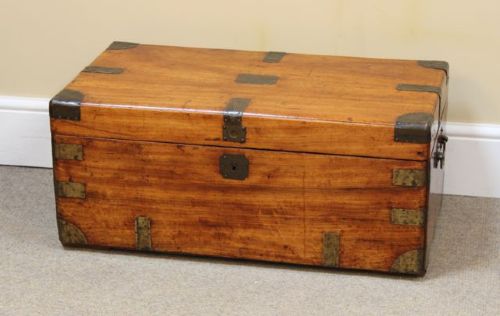
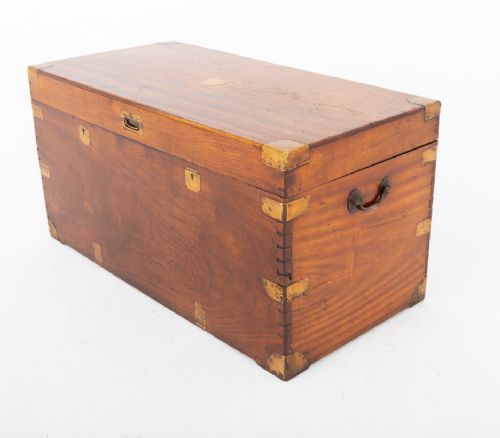
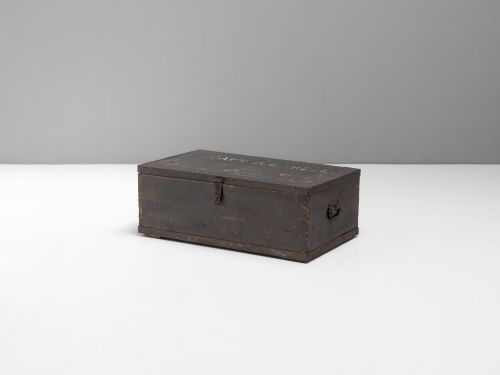
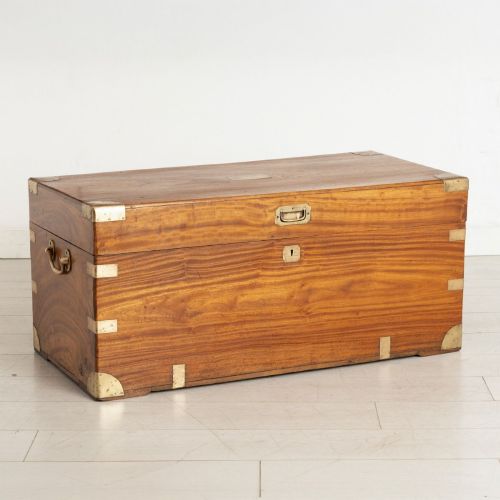


Naval Sea Chest
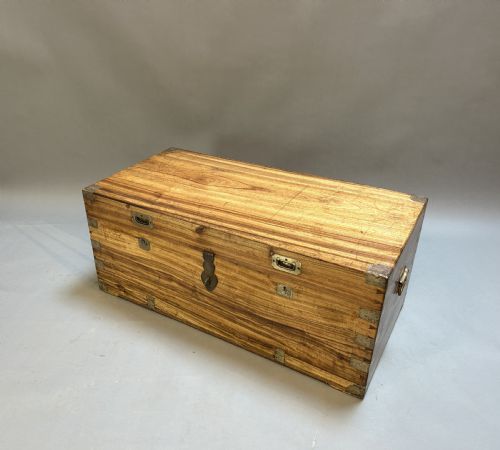
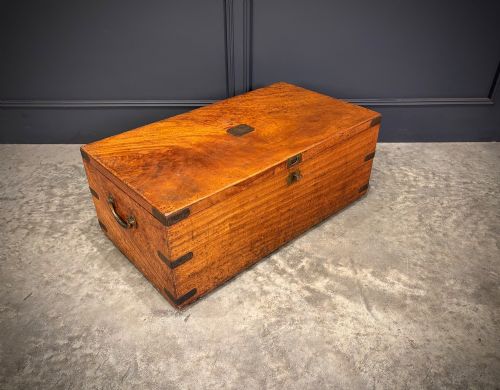
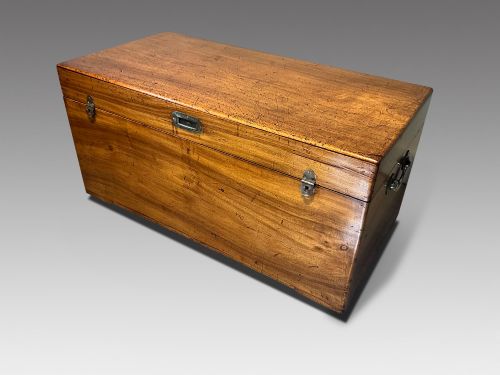
Naval sea chest examples are robust wooden trunks built to withstand harsh ocean journeys while storing an officer's personal gear.
Naval Sea Chest
A naval sea chest provides substantial storage capacity while doubling as a functional piece of campaign furniture used at sea or in transit. These vessels of wood were designed to endure the rigours of maritime life, featuring sturdy forms that could be lashed down on deck or stowed in cramped quarters.
You are most likely to encounter Victorian examples on this page, alongside pieces bearing the marks of 19th Century campaign styles. The forms span simple camphor wood boxes up to larger trunks fitted with metal hardware.
The origins of these trunks reflect both British naval utility and colonial deployment, with camphorwood serving as a preferred timber due to its natural insect-repelling properties. They survive as practical storage units that bring a distinct maritime character to modern interiors.
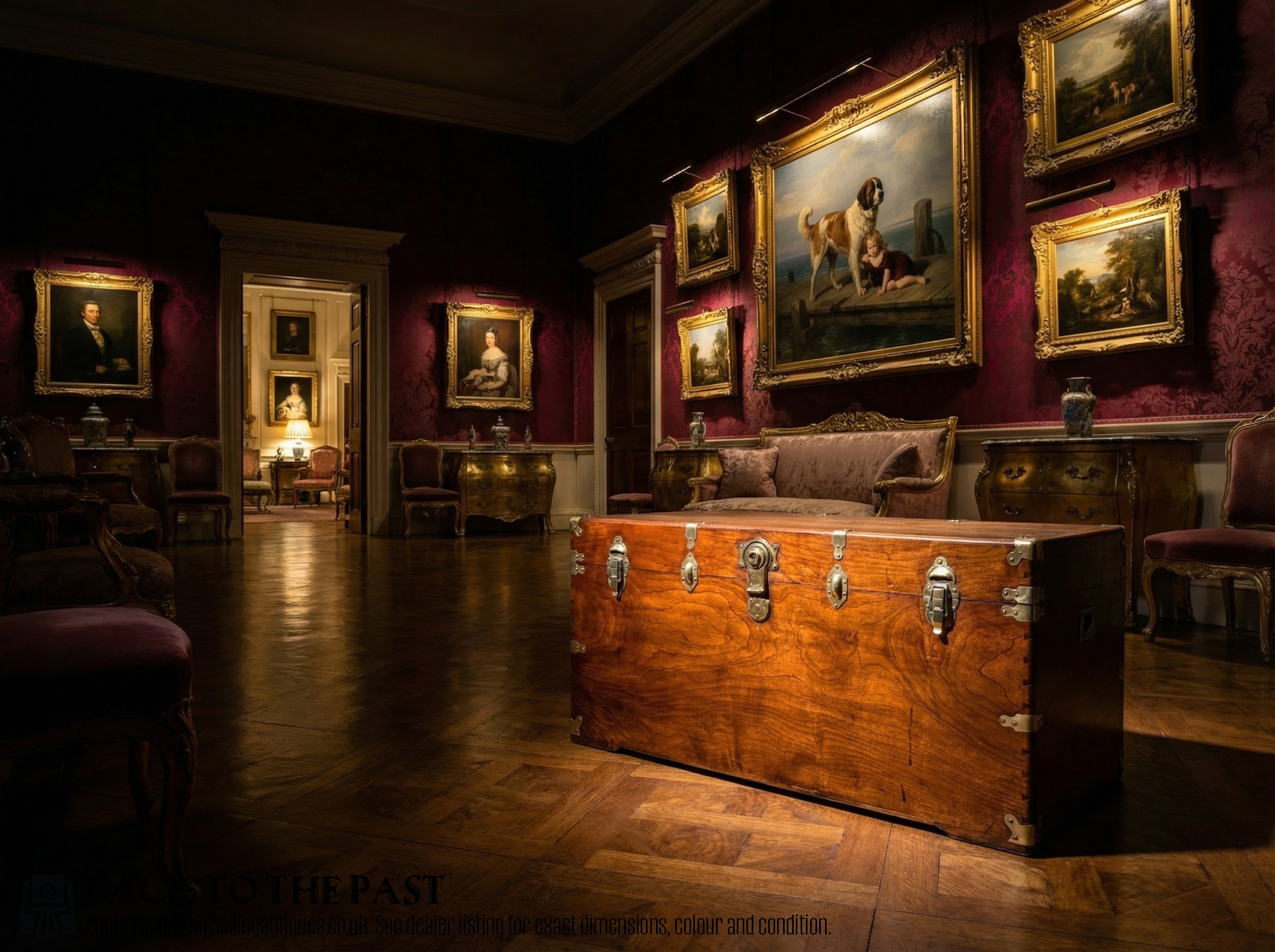
Construction and Materials
Makers built these pieces primarily using solid camphorwood, a durable timber selected for its aromatic qualities and resistance to pests in tropical climates. Oak also appears in name plaques, adding contrasting detail to the main body of the trunk.
Metal hardware including brass and iron reinforcement protected the corners and edges from heavy knocks during transit. Handles made of metal allowed teams of sailors or soldiers to lift and shift the loaded chests across decks and through rough terrain.
Retail Price Guide 2026
Typical UK retail prices for naval sea chest, calculated from the Sellingantiques database of over a million retail prices indexed since 2003. This retail price guide relies exclusively on Sellingantiques data; no external sources or auction records are used, so the figures do not describe the wider market.
Camphor wood smells strongly of mothballs, a built-in feature that kept tropical bugs away from woolen uniforms.
Judging Quality
The distinction between standard utility items and finer pieces lies in the integration of the hardware and the selection of the timber. Original brass fittings that sit flush against solid camphorwood indicate a higher standard of manufacture intended for an officer rather than ordinary crew.
Proportion and surface preservation also separate the ranges, where well-maintained grain and intact original plaques elevate a trunk above heavily weathered examples. Superior specimens retain their structural integrity alongside unblemished metalwork.
The Naval Sea Chest Glossary
- Camphor Wood
- A fragrant timber native to Asia, prized in campaign furniture for its ability to repel insects and withstand humid conditions at sea.
- Campaign Trunk
- A portable storage chest designed for military or naval officers on active service, featuring recessed hardware to prevent snagging.
- Brass Hardware
- Metal fittings made from an alloy of copper and zinc, utilised on better quality trunks for hinges, corners, and drop handles.
Frequently Asked Questions
What is a naval sea chest?
A naval sea chest is a durable wooden trunk built to store an officer's belongings during long voyages at sea.
They were constructed with portability and resilience in mind, often featuring metal handles and reinforced corners.
How were these chests used?
Officers utilised them to hold uniforms, navigational books, and personal valuables while aboard ship or moving across campaign trails.
Their robust nature allowed them to double as makeshift seating or tables in cramped cabins.
Where should I place one?
These trunks work well as coffee tables in living rooms or as blanket boxes at the foot of a bed.
Their large interior cavity provides practical hidden storage for household items.
How do I date a trunk?
Dating relies on observing the wood species, the style of the brass hardware, and any associated name plaques.
Victorian and 19th Century examples display specific construction traits that distinguish them from later reproductions.