
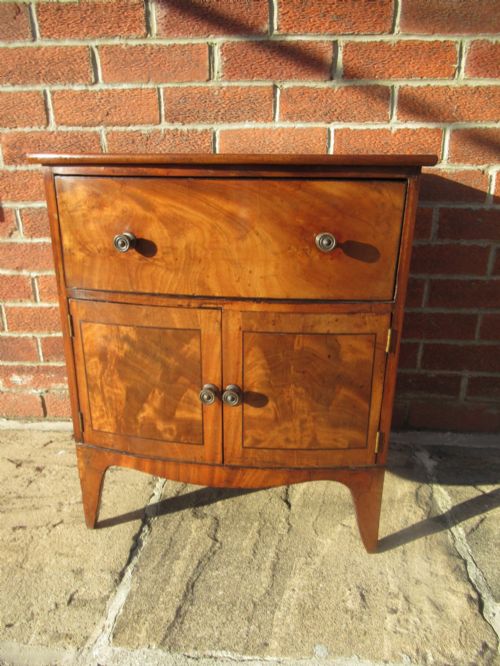
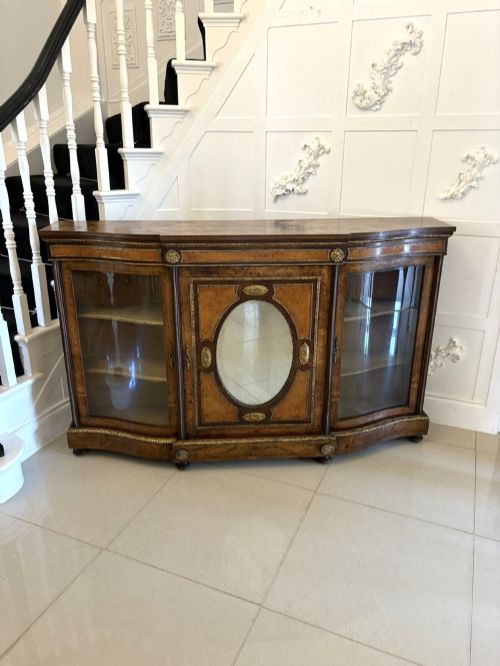
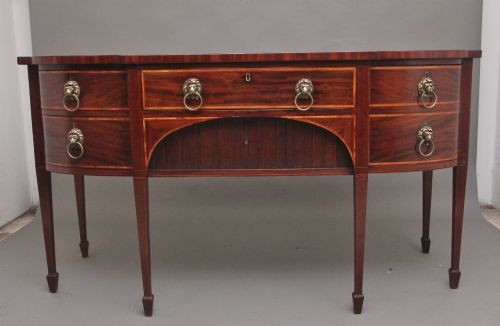


Victorian Bowfront Credenza
A victorian bowfront credenza brings curved presence and disciplined storage to a formal room, uniting glass, burr walnut, and ormolu mounts.
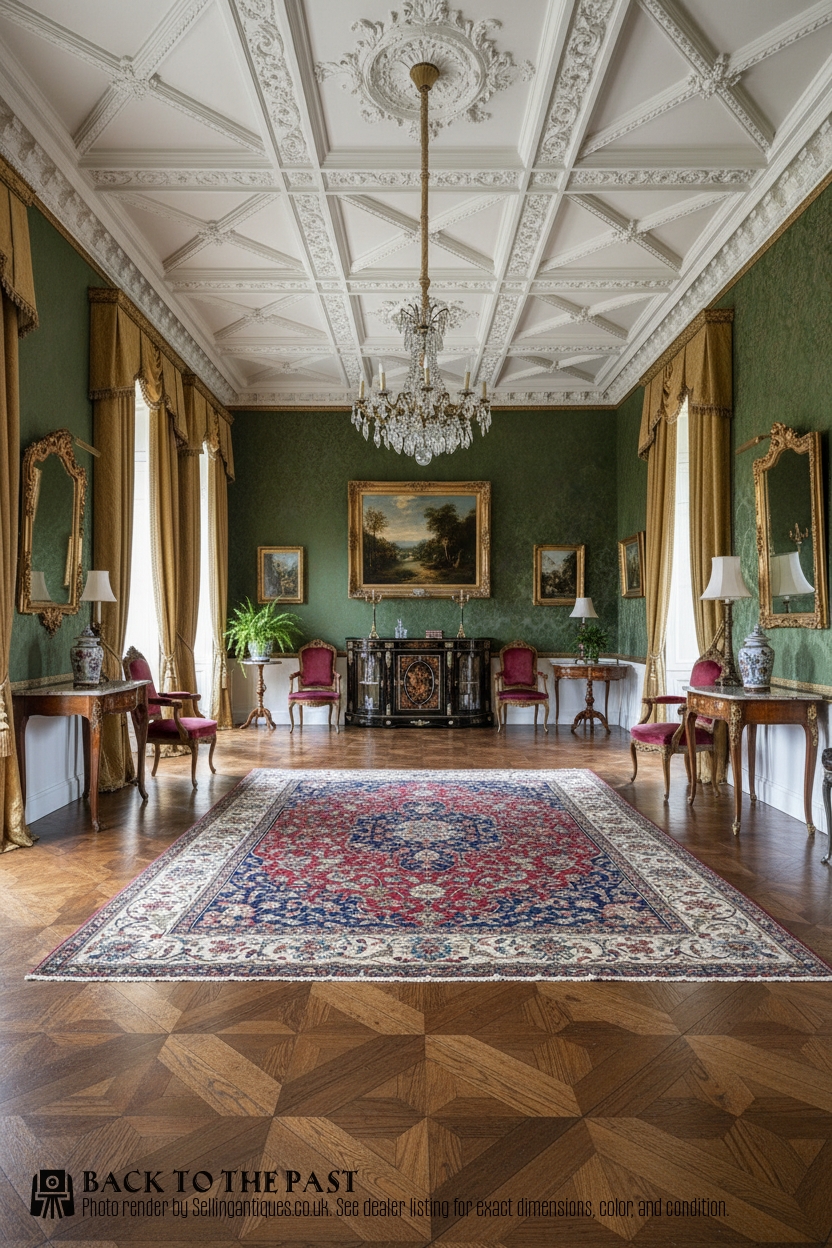
Victorian Bowfront Credenza
A victorian bowfront credenza is a substantial nineteenth century display and storage piece defined by its curved central door and flanking cabinets. These pieces emerge in burr walnut, mahogany, satinwood, and ebonised wood, often incorporating glass doors for the presentation of valuables.
The selection here spans from the 1850s through to the Sheraton revival of the late nineteenth century. Alongside central credenzas, buyers encounter side cabinets and sideboards sharing the characteristic bowed silhouette.
Makers and workshops of the period utilise grand styles including Grand Regency and William IV influences alongside standard Victorian design. The forms function primarily as focal points in dining rooms and grand reception spaces.
How they were made
Cabinet makers construct these pieces using dense hardwoods like mahogany and walnut, frequently applying burr walnut and satinwood veneers to prominent curved surfaces. Marquetry inlay and painted floral details adorn the panels, supported by structural timber foundations.
Gilded ormolu mounts and brass details accent the doors, pillars, and plinths, while glazed central and side sections house internal shelving. Ebonised wood finishes provide a contrasting dark ground for delicate marquetry work.
Floral marquetry panels bring perpetual indoor spring to these timber cabinets, complete with wooden petals that refuse to drop.
What varies in quality
The sophistication of the marquetry inlay and the selection of figured burr walnut or satinwood veneers dictate the visual weight of the piece. Cabinet makers who invested in exhibition quality execution achieved tighter joints and more complex floral motifs across the curved facade.
The proportion and weight of the cast ormolu mounts separate standard production from superior workshop output. Glazing clarity and the smoothness of the bowfront doors operating within their frames reflect the original joinery standards.
The Victorian Bowfront Credenza Glossary
- Credenza
- A low cabinet or sideboard, typically featuring a central door flanked by glass-fronted compartments. These pieces developed prominence in nineteenth century formal interiors for serving and display.
- Burr Walnut
- A mottled, highly figured wood grain harvested from walnut tree growths. Cabinet makers prize this material for creating decorative veneered panels on fronts and tabletops.
- Ormolu
- Gilded bronze or brass applied as decorative mounts and feet on furniture. This material provides metallic contrast against dark woods and veneered surfaces.
- Marquetry
- The art of applying pieces of veneer to a structure to form decorative patterns and pictures. Craftsmen utilise various coloured woods to achieve floral and geometric designs.
- Ebonised Wood
- Timber treated with a dark stain or finish to imitate ebony. This technique gained popularity in the nineteenth century for highlighting inlaid brass and marquetry.
Victorian Bowfront Credenza: Frequently Asked Questions
How do I date a credenza?
Dating relies on identifying the primary timbers, veneer choices, and stylistic revival markers present in the construction. Pieces from the middle of the nineteenth century typically feature burr walnut and floral marquetry, whilst later decades see Sheraton revival satinwood.
Examining internal secondary timbers and backboards helps confirm the period of manufacture alongside the exterior decorative vocabulary.
Where should I place a credenza?
These cabinets suit large reception rooms, hallways, or dining spaces where their curved silhouette can be viewed without obstruction. They function well against principle walls, anchoring artwork or mirrors hung above them.
Placement should account for the clearance required to open curved doors and side compartments safely.
Are credenzas and sideboards different?
Credenzas generally feature lower profiles and frequently incorporate glazed display sections alongside enclosed cupboards. Traditional sideboards lean towards solid wooden doors and drawers intended strictly for dining room storage.
Over the nineteenth century, the terms often overlapped in workshop catalogues and trade descriptions.
How do I care for burr walnut?
Maintaining burr walnut veneer requires stable room humidity and protection from direct sunlight to prevent fading and splitting. Regular dusting with a soft, dry cloth preserves the polished surface without chemical buildup.
Avoid placing damp items directly onto the wooden top to protect the historic polish and delicate underlying veneers.