


Victorian Blush Ivory Porcelain
Victorian blush ivory porcelain brings soft, tinted ceramic elegance to a room through delicate floral painting and subtle gilt enrichment.
Victorian Blush Ivory Porcelain
When searching for victorian blush ivory porcelain, collectors encounter pieces primarily originating from major potteries active during the late nineteenth and early twentieth centuries, spanning the Victorian and Edwardian periods.
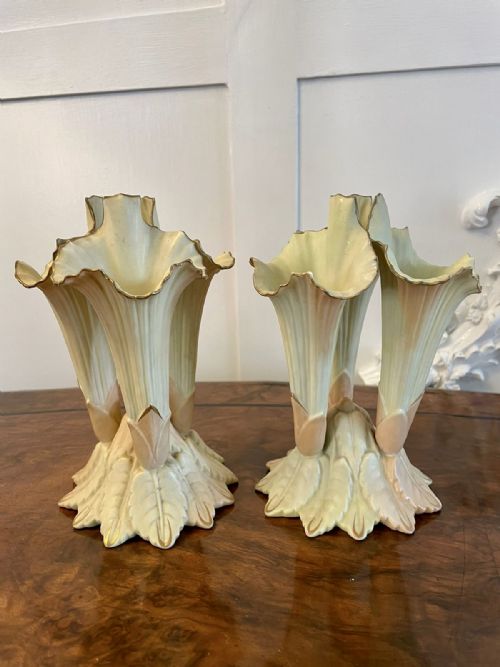
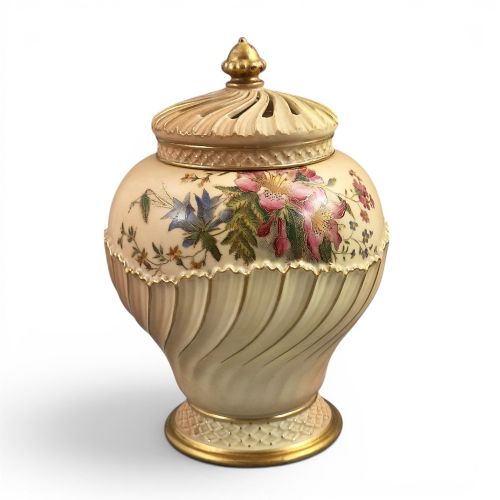
The objects take many functional and decorative forms, including spill vases, ewers, pot-pourri jars, jardinières, candlesticks, and figurative sculptures depicting subjects ranging from musicians to orientalist figures.
These items reflect various aesthetic influences, appearing in styles that encompass the Victorian Aesthetic Movement, classical revival, and orientalism alongside standard floral designs.
Materials and production methods
Potters achieved the signature soft, creamy background tone by applying a specialised ivory glaze directly onto ceramic bodies before firing.
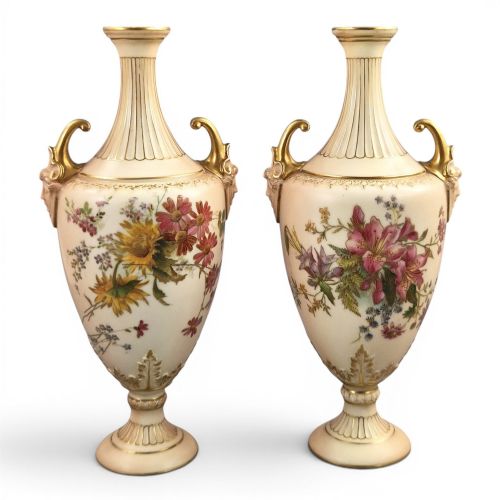
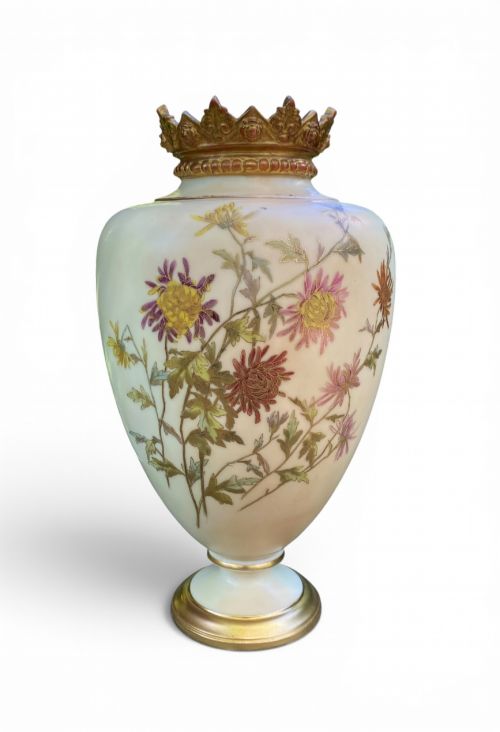
Decorators then layered hand-painted floral sprays and detailed motifs using enamel colours, often finishing pieces with accents of gold leaf, gilt, and gold gilding.
Victorian households could extinguish candles in style using ceramic extinguisher figures depicting domestic characters like Mrs Caudle.
Assessing quality in the pieces
Differentiation across the range depends heavily on the complexity of the form and the skill involved in hand-painting, particularly on pictorial figures and complex ewers.
The application of gilding and the precision of pierced handles or intricate modelling distinguish standard production items from masterworks designed by prominent modellers.
Royal Worcester·Locke And Co·Carlton Ware·Doulton Burslem
The Victorian Blush Ivory Porcelain Glossary
- Blush ivory
- A soft, creamy ceramic glaze developed to imitate the warm tone of elephant ivory. It serves as the characteristic background for late nineteenth-century floral decoration.
- Ewer
- A large, ornamental water jug with a shaped spout and handle. These decorative vessels were frequently produced in elaborate shapes for display.
- Spill vase
- A small vertical container designed to hold wooden spills used for lighting fires and candles. They often feature hand-painted floral motifs.
- Pot-pourri jar
- A covered ceramic vessel pierced to release the scent of dried aromatic plant materials placed inside. These items often include detailed moulded covers.
- Gilding
- The application of gold leaf or gold paint to ceramic edges, handles, and raised relief details. It provides a bright contrast against the matte ivory glaze.
Victorian Blush Ivory Porcelain: Frequently Asked Questions
What is blush ivory porcelain?
Blush ivory porcelain is a type of ceramic characterised by a warm, matte cream-coloured glaze that resembles natural ivory. It gained immense popularity during the late Victorian era for its soft appearance.
Potteries utilised this specialised finish as a backdrop for delicate, hand-painted floral sprays and gilt details, creating a distinct aesthetic that defined late nineteenth-century decorative arts.
How are these items dated?
Potteries used specialised systems of impressed or printed factory marks on the underside of ceramics to indicate the year of manufacture. Dots, letters, and symbols beneath the glaze reveal the precise production year.
Examining the specific shape numbers and registration marks also helps place pieces accurately within the Victorian, Edwardian, or later periods.
Where were these pieces made?
The vast majority of these ceramics originated in British manufacturing centres, most notably Worcestershire and Staffordshire. Skilled artisans worked in established factories to model and decorate each piece by hand.
Factories employed specialised artists and sculptors who signed or marked their work, leading to distinct regional styles within the British ceramic industry.
How do I display these ceramics?
These pieces suit display cabinets, mantels, and side tables where their delicate painted surfaces catch natural light. Pairing neutral decorative items allows the soft gilt highlights and floral colours to stand out.
Because the matte glaze can absorb oils and dust, pieces should be kept away from heavy kitchen grease and cleaned gently with a dry, soft cloth.