


Victorian Black Forest Table
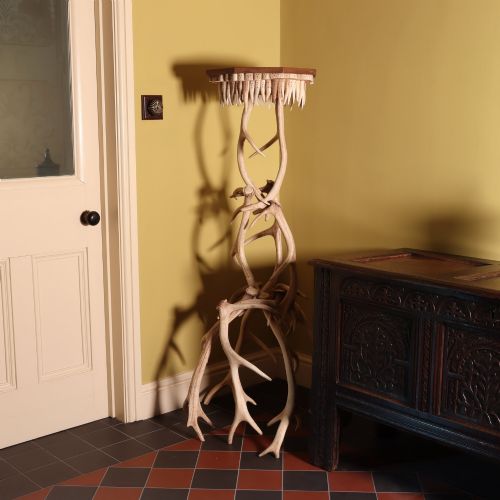
A victorian black forest table brings deep-carved woodland life into a room through walnut marquetry and limewood wildlife.
Victorian Black Forest Table
When you search for a victorian black forest table, you encounter nineteenth-century occasional, centre, side, and lamp tables shaped by Swiss and German wood carvers. These pieces integrate naturalistic animal supports, such as hounds, bears, or birds, with elaborate foliage and marquetry tops.
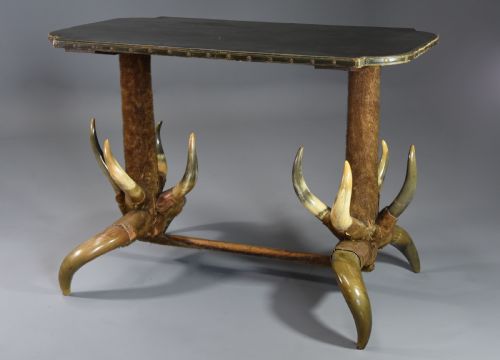
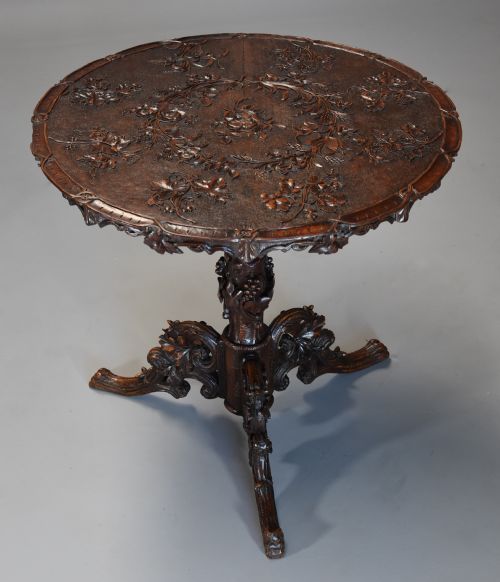
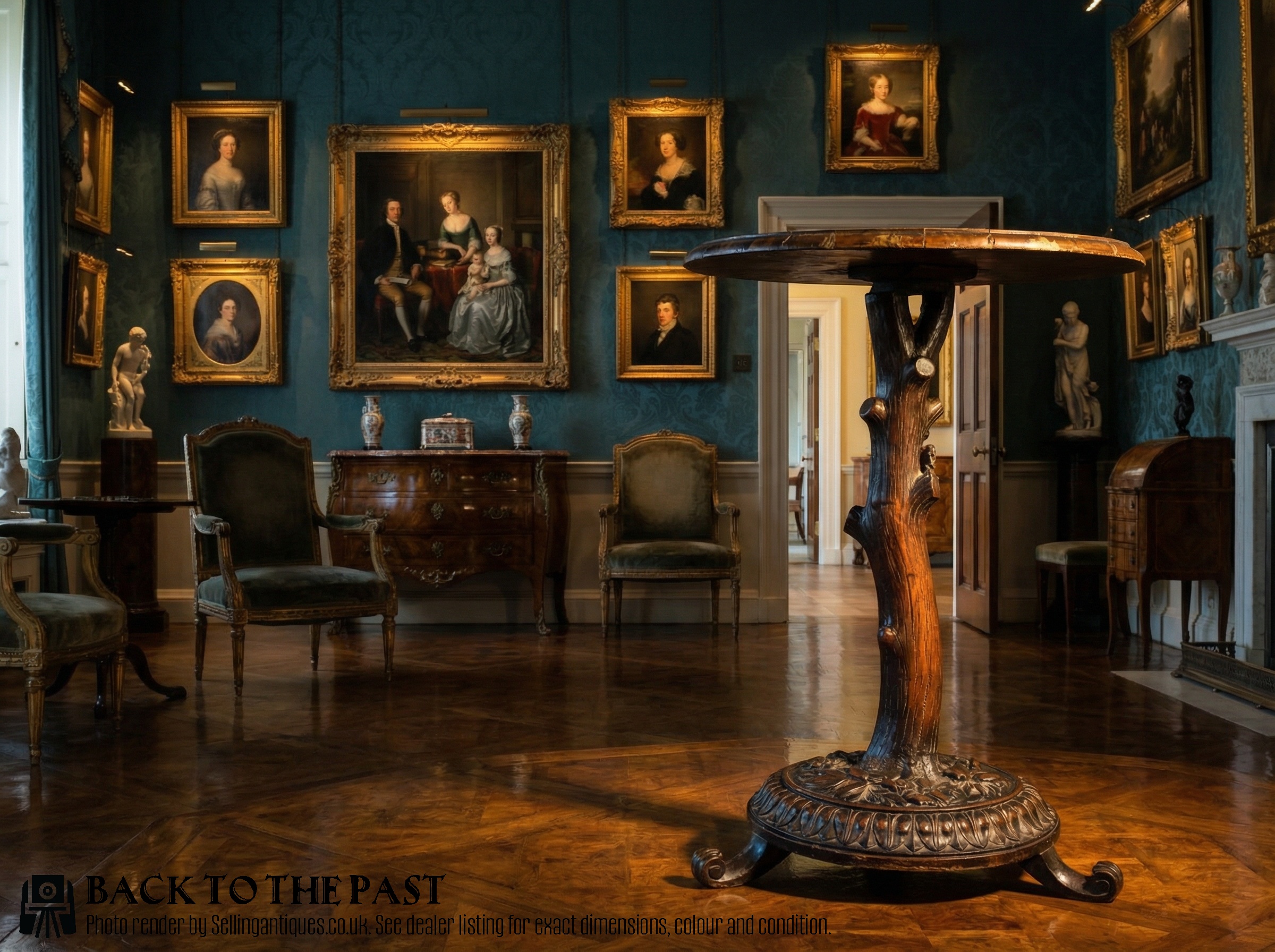
The versions most common on this page feature walnut marquetry or linden wood surfaces. Stands take the form of carved figures, naturalistic tree trunks, or hounds supporting circular and oval tops.
Originating primarily from the mountainous regions of central Europe during the Victorian era, these tables functioned as ornamental furniture for parlours and halls. They combine utility with dramatic figurative sculpture.
How they were made
Carvers utilised linden wood, lime wood, walnut, and oak to build the structural bases and decorative tops. Linden wood provided the soft, even grain necessary for deep undercutting and realistic fur and feather detailing.
Marquetry inlay on walnut table tops incorporated contrasting wood veneers to form geometric or floral patterns. Joinery relied on traditional cabinet-making methods, while structural supports combined solid carved timber with brass or iron internal fixings.
Carved hounds double as table legs, holding up the surface while staring intently at the floor.
What varies in quality
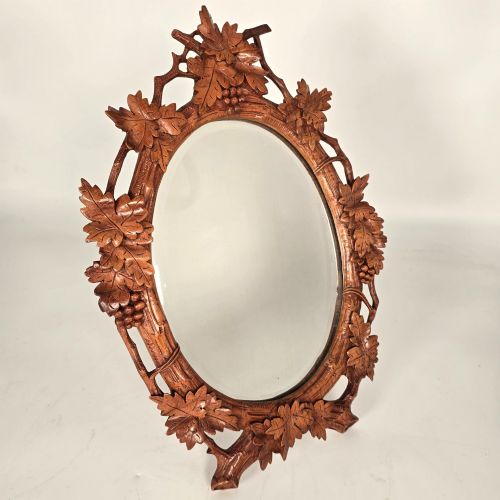
The depth and animation of the carving separate standard workshop pieces from superior examples. Skilled carvers rendered musculature, fur texture, and facial expressions with anatomical precision rather than mechanical repetition.
The choice of primary timber influences quality, with figured walnut and dense linden wood holding crisp edges over time. Marquetry precision and the preservation of original polish without over-restoration determine the integrity of the surface.
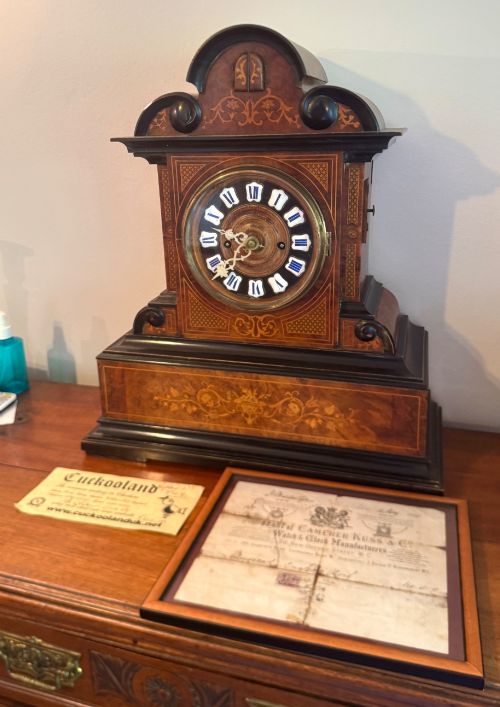
Bergen and Co·Beha·Lenzkirch
The Victorian Black Forest Table Glossary
- Linden wood
- A pale, fine-grained timber favoured by nineteenth-century carvers for its lack of prominent grain, which allowed for microscopic detail in animal and foliage carving.
- Marquetry
- The art of applying small pieces of wood veneer to a structure to form decorative patterns, frequently seen in walnut on table tops.
- Side table
- A small functional item placed against a wall or beside seating, often built here with specialised figural supports like seated hounds.
- Centre table
- A freestanding piece designed to be viewed from all sides, placing the carved pedestal or figural base on permanent display in the middle of a room.
- Alpine folk art
- The regional carving tradition originating from mountain communities that influenced the naturalistic animal forms found on these tables.
Victorian Black Forest Table: Frequently Asked Questions
What wood was used?
Makers predominantly utilised linden wood, lime wood, and walnut for these carved tables. Oak and brass also appear in specific structural components or stands.
Linden wood provided the soft density required for deep, realistic animal carvings, while walnut served as the primary base for detailed marquetry tabletops.
How do I date them?
Dating relies on stylistic markers from the nineteenth century, including Victorian rustic trends and Alpine folk art motifs. Documentation or maker stamps on related movements help anchor the timeline.
Construction techniques, such as the type of veneer application and hand-cut joinery, further confirm nineteenth-century origins without relying on precise years.
Where were they made?
These pieces originated in the forest regions of Germany and Switzerland during the Victorian era. Workshops in these areas specialised in carved wooden wildlife and furniture.
Export markets brought the tables to British homes, where they became fashionable additions to nineteenth-century parlours and halls.
How do I clean the carving?
Maintenance requires dry dusting with a soft brush to remove particles from deep undercuts in the wood. Moisture and harsh cleaning agents damage the historic polish.
Preserving the original surface involves minimal intervention and occasional application of appropriate wood wax by hand.