


Black Forest Side Table
These black forest side table pieces bring the spirited carving of nineteenth-century European forests straight into your room.
Black Forest Side Table
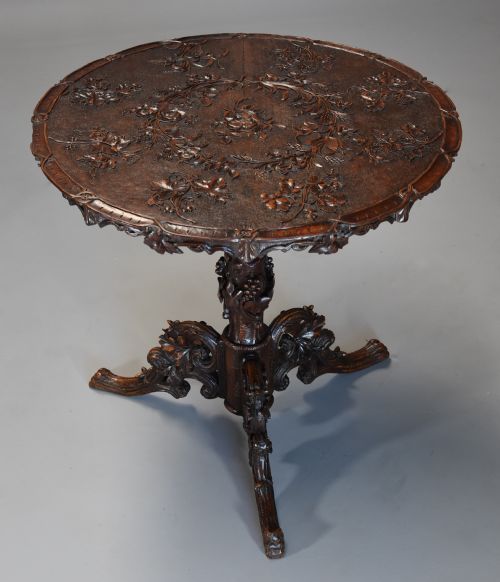
A black forest side table is an intricately carved wooden surface, often featuring naturalistic animal forms such as bears, hounds, and crouching figures. You are most likely to meet circular linden wood centre tables or occasional tables supported by figurative bases dating from the Victorian era.
The evidence shows these pieces span from the mid-nineteenth century into the early twentieth century, incorporating Swiss and German regional traditions. Forms range from tripod occasional tables to animal-form stands and musical tables.
Materials and construction
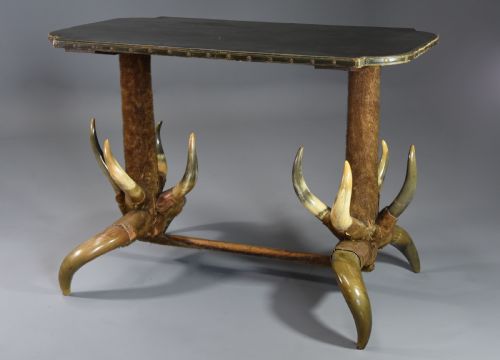
Carvers predominantly utilised linden wood and walnut, applying deep relief work and marquetry inlay to create textured surfaces. Beech, fruitwood, and cow horn also appear in the historical record alongside leather, hide, and brass accents.
Makers shaped structural supports into naturalistic motifs, such as seated hounds and carved bears, rather than turning standard timber legs. Hand-painted details and rustic joinery complete the construction of these folk art items.
The record spans the Victorian era, specifically capturing pieces dated from eighteen-sixty through to nineteen-twenty.
Judging quality
The distinction between ordinary and superior pieces rests entirely upon the depth and naturalism of the carving. Finely carved examples display anatomical precision in animal figures like hounds and bears, whereas lesser versions remain stiff and generalized.
Material selection and surface preservation dictate the upper tier of the range, with intact marquetry inlay and original linden wood surfaces commanding greater attention. Pieces combining multiple techniques, such as inlay paired with figural bases, demonstrate higher workshop ambition.
The Black Forest Side Table Glossary
- Marquetry inlay
- The art of applying pieces of veneer to a structure to form decorative patterns. Walnut and various fruitwoods form the geometric or pictorial designs seen on these tops.
- Linden wood
- A pale, fine-grained timber favoured by carvers for its softness and lack of prominent grain. It allows deep undercut relief work without splintering.
- Centre table
- A freestanding table finished on all sides designed to sit in the middle of a room rather than against a wall. Many examples in this genre utilise circular tops.
- Folk art
- Utilitarian items decorated or shaped by traditional artisans rather than academic sculptors. This encompasses the rustic animal stands and hand-painted surfaces in the archive.
Black Forest Side Table: Frequently Asked Questions
How were these tables used originally?
Victorians placed these tables in reception rooms, halls, and parlours to display lamps, ornaments, or reading materials. Some functioned as music tables or pedestals to entertain guests.
Their striking figural bases and animal forms served as conversation pieces in fashionable nineteenth-century interiors.
How do I live with a black forest side table?
Keep these tables out of direct sunlight and away from heat sources to protect the carved linden wood and prevent the timber from splitting. Dust the deep relief carvings regularly with a soft brush.
Treat the surface gently and use coasters to preserve the original polish and marquetry inlay.
How do I date a black forest side table?
Dating relies on examining the timber species, construction methods, and the style of the carving. Most recorded examples date from the Victorian period, roughly between eighteen-sixty and nineteen-twenty.
Look at the complexity of the marquetry and whether the base depicts animals like bears or hounds, which became popular during the late nineteenth century.